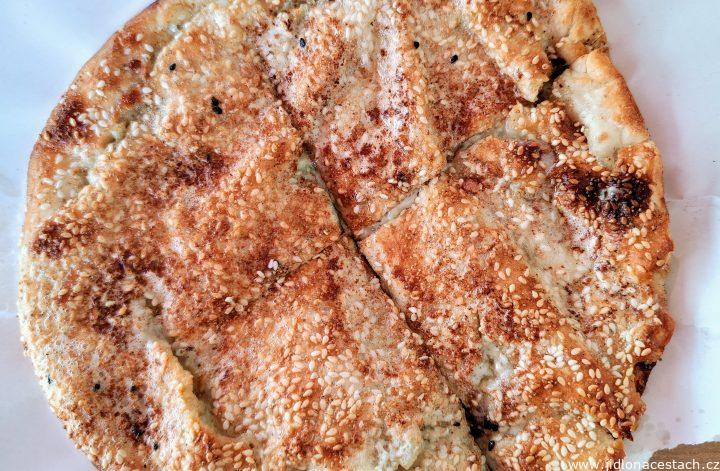
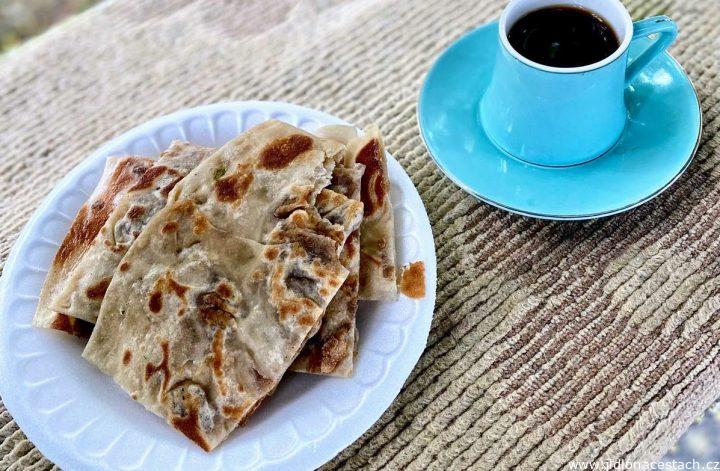
Cağ kebabı is a traditional Turkish specialty originating from the Erzurum province. It consists of horizontally stacked layers of marinated lamb meat that slowly rotate and roast over an open fire.
Unlike its vertical counterpart, which is often sliced into thin shavings, this dish is served in a specific way on small metal skewers. Thus, you don’t have a pile of meat on your plate, but rather a set of individual skewers where a roasted crust alternates with an incredibly juicy interior.
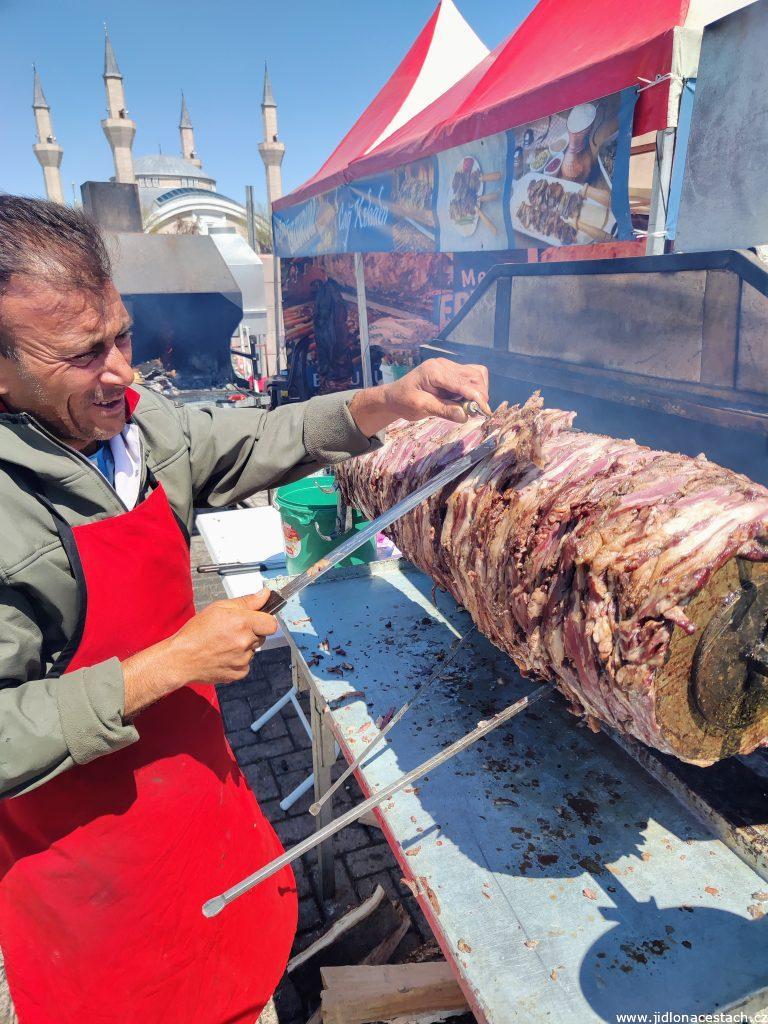
This dish has its roots deep in the history of Eastern Turkey, specifically in the Oltu and Tortum districts of the Erzurum province. In this rugged mountainous region, where winters tend to be long and harsh, sheep farming has always been a fundamental source of livelihood. Cağ kebabı originated as a festive meal for weddings and large family gatherings.
The logic of horizontal roasting, used long before the invention of the vertical grill in the 19th century, is well-founded. While with vertical döner the fat quickly drips down and away from the meat, with the horizontally rotating cağ kebab, the fat constantly “circulates” around the meat and soaks back in. The name itself refers to the tool – the word “cağ” in the local dialect denotes the metal needle or skewer onto which the meat is impaled during slicing.
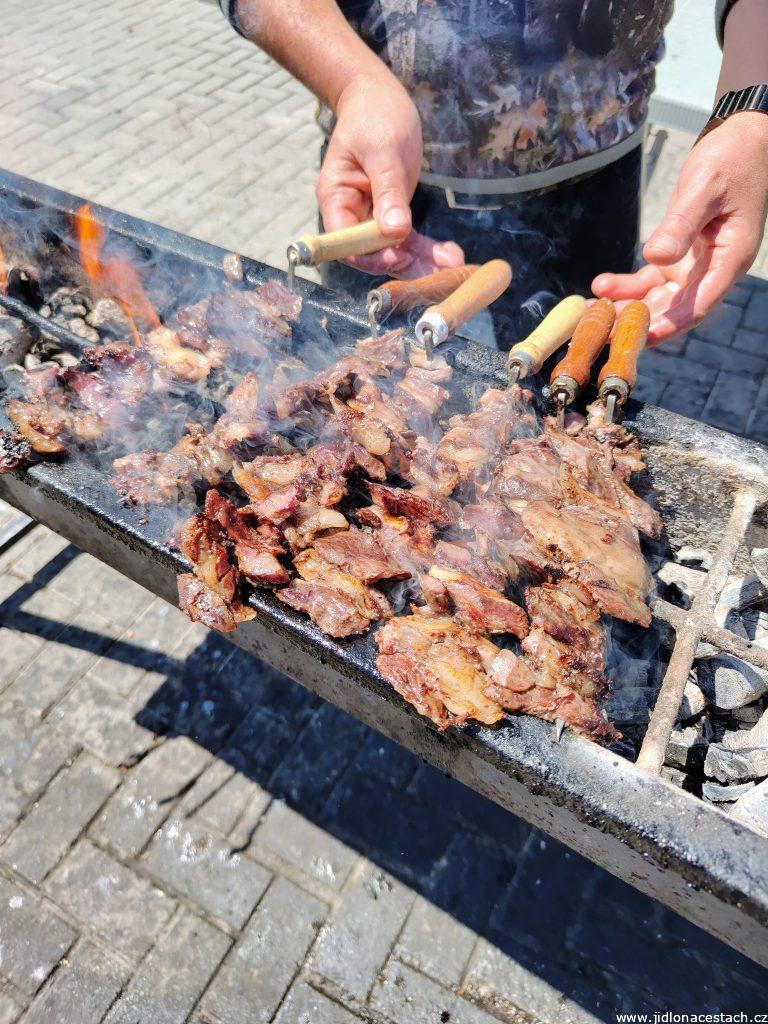
The foundation is unconditionally high-quality lamb. Meat from the leg is primarily used, stripped of the coarsest tendons but left with enough fat. The meat is sliced and placed in a marinade. Subsequently, the slices are skewered onto a large spit, carefully alternating fattier and leaner pieces so that the cylinder binds together. The entire roasting process takes place exclusively over charcoal or directly over wood, which gives the meat an unmistakable smoky aroma that you will never get on a gas grill.
Once the surface turns golden and begins to sizzle, the chef takes a small skewer (cağ), inserts it into the roasted part of the meat, and cuts off a strip with a long knife so that the meat remains on the skewer. This process is constantly repeated, so every piece you receive is freshly cut from the surface and carries that desirable crispy crust. The bottom part of the skewer is sometimes allowed to finish roasting for a moment.
The waiter usually doesn’t bring all the meat at once so it doesn’t get cold. He brings only a few skewers to the table at a time while you finish the previous ones. The meat is pulled off the skewer directly into a piece of soft, warm lavash. It is served with thinly sliced onions mixed with sumac, the acidity of which cuts through the richness of the lamb perfectly, as well as grilled green peppers (often spicy) and sometimes thick yogurt.

Although the photos in this article come from a food festival in the Anatolian city of Konya, I return elsewhere for the best cağ kebab. My absolute personal favorite is the Şehzade Cağ Kebap establishment (see Where to Eat in Istanbul). It is a mandatory stop for me on every visit to the city and a place where they simply make this dish unrivaled.
Bon appétit!
🇹🇷 Turkey on a plate and in your email! Subscribe to my newsletter and get exclusive access to information about Turkish cuisine for free. Discover lesser-known but still great Turkish foods!