What to Eat in Turkey: Typical Turkish Food and Specialties
Turkish cuisine ranks among the most diverse and richest in the world. Its roots reach back to the days of the Ottoman Empire, which combined influences from the Middle East, the Balkans, the Mediterranean, and Central Asia. Turkish dishes are characterized by balanced flavors, a varied use of spices, and quality ingredients. In Turkish gastronomy, traditional rural recipes intertwine with highly sophisticated dishes that were once served in the palaces of sultans.

Turkish cuisine is characterized by the extensive use of fresh vegetables, legumes, meat (especially lamb, beef, and chicken), yogurt, and quality olive oil. Bread plays an important role. Besides meat dishes, vegetarian dishes are also popular.
The Turkish National Dish
The Turkish national dish is kebab, primarily döner kebab, which originates from the Anatolia region. Döner kebab consists of slices of marinated meat (most often beef or chicken) that are roasted on a vertically rotating spit, traditionally served with local bread or rice.
The term "kebab" is used for a whole range of meat dishes prepared in various ways; you can taste, for example, Adana kebap (minced meat on a skewer) or şiş kebap (pieces of meat on a skewer). So, kebab is not just one dish.

Typical Turkish Food
Another popular typical Turkish food is pide, which is a flat leavened bread baked in an oven, topped with various fillings.

Lahmacun is a thin flatbread made of dough, onto which a mixture of minced meat, onions, tomatoes, and fresh herbs is applied before baking. Lahmacun is also a typically Turkish dish.
The most typical Turkish pastry is simit. Simit is a pastry in the shape of a ring with a hole in the middle. It is generously sprinkled with sesame seeds.

Sweets also have an important place in Turkish gastronomy. Among the most famous Turkish sweet specialties is baklava. Baklava is prepared from many layers of very thin filo dough interspersed with chopped nuts and, after baking, is doused with sugar or honey syrup.
Another typically Turkish dessert is lokum. Lokum is made from sugar, starch, and water with various flavors. A typically Turkish dessert is also the rice pudding sütlaç.

What to Eat in Turkey
- Döner kebab. Grilled meat (veal, chicken, or lamb) slowly roasted on a vertical spit, served in a wheat flatbread or with rice. The most famous Turkish food, renowned all over the world.
- Baklava. A sweet pastry made of thin layers of filo dough, filled with nuts (most often pistachios or walnuts), doused with syrup containing honey. It is associated with the Gaziantep region, where baklava has been traditionally made for hundreds of years.
- Türk kahvesi. Turkish coffee. Strong unfiltered coffee prepared in a cezve, served in small cups. An important part of Turkish culture, originating from the Ottoman Empire period.
- Çay. Turkish tea. Black tea prepared in a two-tiered teapot, served in typical glasses. Tea is an inseparable part of everyday Turkish culture.
- Lokum. A jelly sweet made from sugar and starch, flavored with rose water, lemon, or pistachios. Lokum originates from the Ottoman Empire and has become a symbol of hospitality.
- Pide. Open bread filled with cheese, meat, or vegetables. Every region in Turkey has its own specific version; it is especially popular in the Black Sea region.
- Lahmacun. A very thin flatbread covered with a mixture of minced meat, onions, tomatoes, peppers, and spices, quickly baked in an oven. Popular Turkish street food, typical especially for southeastern Turkey.
- Künefe. A warm dessert made of fine strands of kadayıf dough, filled with cheese, doused with sweet syrup, and sprinkled with pistachios. A typical dessert originating from the Hatay region and southeastern Turkey.
- Simit. A crispy circular pretzel sprinkled with sesame seeds. Typical street pastry that you will find on every corner, especially in Istanbul.
- Ayran. A refreshing drink made from yogurt, water, and salt. A traditional drink accompanying dishes like kebap or pide, popular all over Turkey.
- Dondurma. Turkish ice cream with a stretchy consistency thanks to the addition of salep. A popular treat originally from the Kahramanmaraş region.
- Köfte. Spiced meatballs or patties (most often beef or lamb), prepared on a grill. A traditional dish that has many regional variants throughout the country.
- Midye dolma. Mussels filled with an aromatic mixture of rice, spices, and herbs. Popular street food, typical especially for Istanbul and the coastal areas of the Aegean Sea.
- Börek. Pastry made of thin filo puff pastry, filled with cheese, spinach, minced meat, or potatoes. It dates back to the Ottoman Empire era and is a traditional breakfast or snack.
- Kokoreç. Grilled lamb or mutton intestines seasoned and chopped, served in a baguette. A very popular specialty of Turkish street food, especially in Istanbul.
- Kumpir. A potato baked in an oven, cut open and filled with cheese, butter, and various toppings. Known especially in Istanbul in the Ortaköy area, where it belongs among traditional street foods.
- Dolma. Vine leaves or vegetables (peppers, zucchini, eggplant) stuffed with rice, spices, and sometimes meat. A typical Turkish specialty with roots in Ottoman cuisine.
- Çiğ köfte. A Turkish vegan dish. Originally a dish prepared from raw meat, today available only in a vegan version made of bulgur, tomato paste, pepper paste, spring onions, and spices.
- Iskender kebap. Thin slices of grilled meat doused with hot butter and served with yogurt. A specialty originating from the city of Bursa.
- Şiş kebap. Pieces of meat (usually lamb or chicken) skewered on a spit and grilled over an open fire. This Turkish dish is popular in various versions all over the world.
- Balık ekmek. Freshly grilled fish served in bread with onions and salad. Typical street food in Istanbul, especially by the Galata Bridge.
- Gözleme. A thin Turkish flatbread manually filled with cheese, spinach, meat, or potatoes. It is baked on a special griddle. A typical street specialty all over Turkey.
- İrmik helvası. A dessert prepared from semolina, butter, sugar, and pine nuts. A typical Turkish sweet served on festive occasions and significant life events.
- Boza. A thick fermented drink made from wheat or millet. Popular in the winter season, it dates back to the Ottoman era and is popular especially in Istanbul, where traditional boza bars exist.
- Salep. A hot drink prepared from dried powder of orchid tubers, flavored with cinnamon. Especially popular in the colder months throughout the country, historically connected with Ottoman culture and Turkish tradition.
- Pişmaniye. A Turkish sweet similar to cotton candy, prepared from sugar and flour. The city of İzmit is renowned for the production of this traditional treat.
- Tavuk göğsü. A traditional Turkish milk pudding containing finely shredded chicken meat. It originates from the palace cuisine of the Ottoman Empire.
- Kısır. A salad made of finely ground bulgur mixed with tomato paste, pepper, onion, parsley, and spices. Popular especially in southern and southeastern Turkey.
- Mantı. Small pasta dumplings filled with minced meat, served with yogurt, butter, and spiced sauce. Typical food of the Kayseri region in central Anatolia.
- Menemen. Eggs fried with tomatoes, peppers, onions, and spices. A popular Turkish breakfast, originating from the Izmir region.
- Rakı. An alcoholic drink with an anise flavor, which is usually diluted with water. The national Turkish alcoholic beverage, traditionally accompanying long social dinners.
- Imam Bayıldı. Eggplant stuffed with a mixture of onions, tomatoes, garlic, herbs, and olive oil, which is subsequently baked. The name literally means "The Imam Fainted"; it comes from Ottoman cuisine and belongs among traditional vegetable dishes in all of Anatolia.
- Hünkar Beğendi. Stewed meat served on a creamy puree of roasted eggplants. A popular dish originating from Ottoman palace cuisine.
- Kadayıf. A sweet prepared from thin, hair-like strands of dough, baked with butter, nuts, and sweet syrup. A typical Turkish treat popular especially during holidays and festivities.
- Ezogelin çorbası. Traditional hearty soup made of red lentils, bulgur, tomatoes, onions, and spices. The name refers to the legendary bride Ezo from southeastern Turkey, where the dish originates.
- Pastırma. Cured beef seasoned with an aromatic mixture called "çemen" (fenugreek, garlic, paprika). A traditional delicacy originating from Central Anatolia, especially from the area of the city of Kayseri.
- Sucuk. Strongly spiced Turkish sausage made of beef with garlic and spices, typically fried or grilled for breakfast. A popular treat originally from the Central Anatolia region.
- Çılbır. Turkish eggs. Poached eggs served on garlic yogurt, drizzled with butter flavored with paprika. A popular traditional dish originating from the days of the Ottoman Empire.
- Midye tava. Fried mussels on a stick. A typical Istanbul specialty, a popular street treat in coastal areas.
- İçli köfte. Fried croquettes made of bulgur filled with spiced minced meat and onions and nuts.
- Adana kebap. Minced meat (most often lamb), grilled on a flat skewer. Typical for southern Turkey, especially the city of Adana, where it originates.
- Bulgur pilavı. Boiled bulgur prepared with tomatoes, peppers, and onions, a typical side dish to many Turkish meals.
- Kabak tatlısı. A sweet dessert made of pumpkin stewed in sugar syrup, served with walnuts or kaymak (clotted cream). A popular autumn treat all over Anatolia.
- Patlıcan kebabı. Pieces of eggplant alternately skewered with lamb or beef on a spit, grilled over a fire. Typical kebab especially for southeastern Turkey, the Gaziantep or Urfa region.
- Tavuk şiş. Chicken meat marinated in yogurt and spices, grilled on a skewer. A very popular type of kebab all over Turkey. In Iran, a similar dish is joojeh kabab.
- Ali Nazik kebabı. Grilled meat served on a puree of smoked eggplants with garlic yogurt. A popular dish of southeastern Anatolia, especially the city of Gaziantep.
Typical Turkish Drinks
The most famous Turkish drink is Turkish tea (çay). Tea is served in small tulip-shaped glasses, prepared in a two-tiered teapot, which allows controlling the strength of the tea by adding hot water. Tea is traditionally heavily sweetened with sugar and drunk throughout the day.

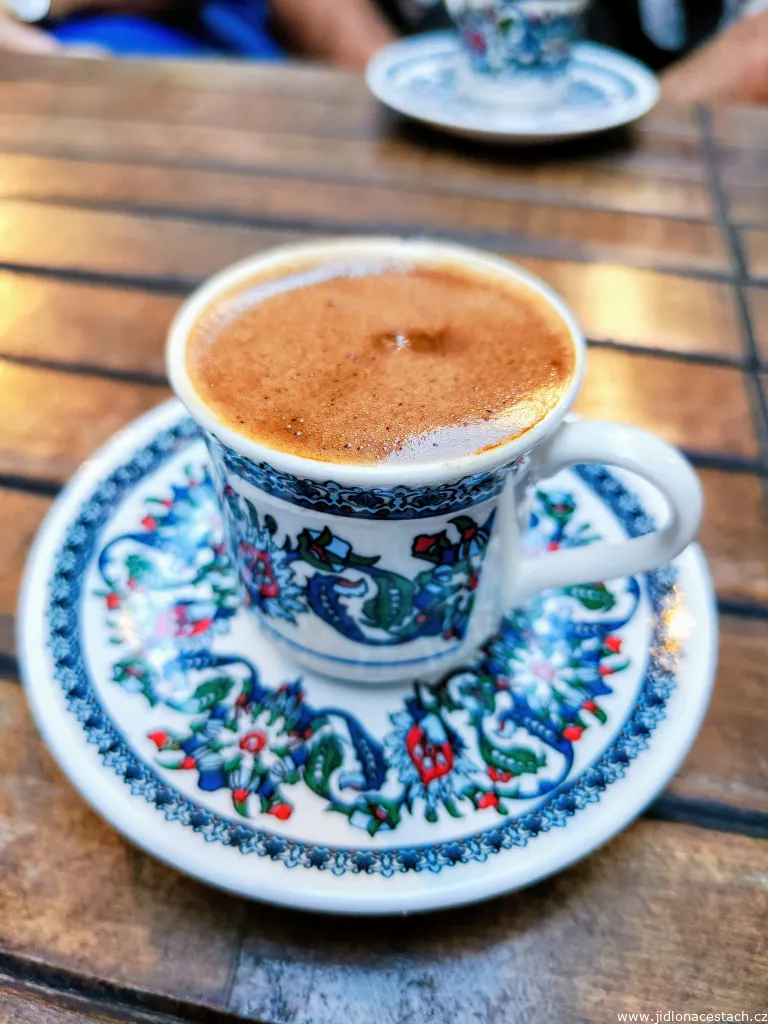
Another famous Turkish drink is Turkish coffee (türk kahvesi). Turkish coffee is prepared in a small metal pot called a cezve. Finely ground coffee is mixed with water and optionally sugar and heated until it starts to foam. Coffee is served in small cups.
Typical Turkish drinks also include ayran. Ayran is a refreshing drink made of yogurt mixed with water and salt. It is very popular during hot summer months, often served with dishes containing meat or spicy ingredients.
Alcoholic drinks typical for Turkey include rakı, an anise spirit, which is usually diluted with water. The most popular local beer brand is Efes.

How to Enjoy Turkish Food to the Fullest
- Head to a lokanta or ocakbaşı. Lokantas are traditional Turkish diners where homemade meals are served in a self-service style. Ocakbaşı are restaurants focused on grilling meat, where you can order food directly at the open grill and watch the master chef in action.
- Taste the Turkish breakfast "kahvaltı". Turkish breakfast is a ritual. You will have the best experience in smaller family establishments in the countryside or in the mountains, where you get the freshest cheese, honey, homemade jams, olives, and delicious bread.
- Go for lahmacun and pide to a small bakery that specializes in them.These crispy flatbreads taste best directly from a stone oven in a traditional bakery. Wash it all down with ayran, of course.
- Have a regional kebab. Every region of Turkey has its kebab specialty - in Adana taste the spicy Adana kebap, in Urfa the milder Urfa kebap, and in Gaziantep treat yourself to a kebab with pistachios.
- Don't be afraid of street food - especially in Istanbul. Midye dolma (mussels filled with rice), balık ekmek (sandwich with grilled fish), or kokoreç (intestines on the grill with spices) are a "must". You can recognize the best places by the long queue of locals (and of course by this website 😁❤️).
- Go to a historical cafe for Turkish coffee. Turkish coffee is completely different from what you get under this name in the Czech Republic. Let it be prepared slowly, in a cezve on hot sand, and enjoy it with a piece of lokum sweet.
- Sweets taste best in original patisseries. If you want to taste real quality, look for patisseries with a long tradition - try, for example, the Hafiz Mustafa chain in Istanbul. Another favorite Istanbul patisserie of mine is Karaköy Güllüoğlu.
- Visit Gaziantep, the capital of Turkish gastronomy. If you are a true gourmet (and you are!), head to Gaziantep - the local cuisine is renowned throughout Turkey.
- Stop at a Turkish meyhane bar. Meyhanes are places where people eat (and drink) slowly, a lot, and with joy. Order several small dishes and have a glass of Turkish alcohol rakı with it.

How to Say Thank You for Turkish Food
I always try to remember at least a few basic words in the local language. In Turkey, I try to express my satisfaction with the food not only with the basic thank you "teşekkür ederim" (tešekyr edérim) - thank you, but also with other phrases that locals will appreciate. For example, you can say "yemek harikaydı" (jemek harikajdy) - the food was great or even "eline sağlık" (eline sahluk) - health to your hands, which is a beautiful way to appreciate the cook's work.

Famous Turkish Chefs
- Nusret Gökçe (1983). Nusret Gökçe, known as "Salt Bae", is a Turkish chef and restaurateur who became famous for his characteristic style of salting meat. He opened his first restaurant Nusr-Et in Istanbul in 2010 and has since expanded his chain of steakhouses to several world capitals. His showman approach to food preparation attracts celebrities and gourmets from all over the world.
- Fatih Tutak (1985). Fatih Tutak is a renowned Turkish chef and owner of the restaurant Turk Fatih Tutak in Istanbul, which has earned two Michelin stars. After graduating from culinary school in Bolu Mengen, he gained experience in prestigious restaurants around the world, including Noma in Copenhagen and Nihonryori Ryugin in Tokyo. In 2019, he returned to Turkey to open his own restaurant focused on a modern interpretation of Turkish cuisine.
- Mehmet Gürs (1969). Mehmet Gürs is a Turkish-Finnish chef and restaurateur who is considered one of the most prominent figures of the Istanbul gastronomic scene. Born to a Finnish mother and a Turkish father, he grew up in Stockholm and Istanbul. After studying in the USA, he opened the restaurant Mikla in Istanbul in 2005, which combines Turkish and Nordic culinary traditions. Gürs is known for his emphasis on using local ingredients and collaborating with small producers. Mikla also received a Michelin star.

Turkish Michelin Restaurants
The Michelin Guide first included Turkish restaurants in its assessment in 2022, when it presented a selection for Istanbul. In this first edition, several restaurants were awarded, one of which received two stars and several others received one star. In subsequent years, restaurants from all over Turkey appeared in the selection.
There are 170 restaurants in Turkey included in the Michelin Guide, of which 2 restaurants have 2 stars, 15 restaurants have 1 star, and 39 restaurants are in my favorite Bib Gourmand category - exceptional value for money (January 2026). Among the most famous are:
- Turk Fatih Tutak. The restaurant Turk Fatih Tutak, led by chef Fatih Tutak, was awarded two Michelin stars. Located in the Şişli district of Istanbul, it offers traditional Turkish recipes reworked into a modern form with an emphasis on local ingredients. The menu changes according to seasonal ingredients.
- Araka. The restaurant Araka, led by chef Zeynep Pınar Taşdemir, earned one Michelin star. Located in the quiet Yeniköy district of Istanbul, it focuses on dishes prepared from fresh seasonal herbs and vegetables, combining various flavors and spices.
- Mikla. The restaurant Mikla under the leadership of chef Mehmet Gürs received one Michelin star. Based in Beyoğlu, it combines Anatolian traditions with an innovative approach. The restaurant also has a magnificent view of the Galata Tower and the city.
- Neolokal. The restaurant Neolokal, led by chef Maksut Aşkar, also earned one Michelin star. Located at Salt Galata in Beyoğlu, it offers traditional Anatolian meals, using bold techniques. The restaurant emphasizes support for local products and sustainability.
- Nicole. The restaurant Nicole, under the leadership of chef Serkan Aksoy, was awarded one Michelin star. Based in Beyoğlu, it offers diverse cuisine that combines traditional Turkish recipes with elements of Middle Eastern spices. The chef carefully selects ingredients from local producers from all over Turkey.
These restaurants represent the pinnacle of Turkish fine dining gastronomy.

Interesting Facts About Turkish Food
- Tavuk göğsü: a sweet made of chicken meat. Tavuk göğsü is an unusual Turkish dessert that contains chicken breast. The dessert has roots in the Ottoman Empire and is popular to this day.
- Traditional Turkish ice cream dondurma does not melt quickly. Turkish ice cream dondurma is special thanks to the addition of salep (powder from orchid tubers). This gives it a flexible, chewy consistency and ensures that it does not melt as quickly as regular ice cream (for example, the one from Italy). Dondurma sellers also often entertain customers with their tricks when serving.
- Turkish tea is a national symbol. Although Turkish coffee is known all over the world, in Turkey the most widespread drink is tea. Turkey is one of the largest consumers of tea in the world. Tea is served in small tulip-shaped glasses, and its preparation and drinking have their rituals. The Rize region on the Black Sea coast is the main center of tea cultivation in the country.
- History of street food dates back to the Ottoman Empire. Street food has a long tradition in Turkey. Already in the Ottoman Empire, it was common for dishes like kebab or sweets to be sold on the streets.
- The famous dessert baklava was considered a luxury treat. Baklava was a dish for the upper classes during the times of the Ottoman Empire, especially for sultans and their courts. The preparation of baklava was considered an art, and it was said that the best baklava comes from Gaziantep, a city in southeastern Turkey. To this day, Gaziantep has the reputation of the "capital of baklava".
- Baklava is not originally Turkish. Baklava has roots in the wider region of the Middle East and the Balkans, but it was the Ottomans (Turks) who played a key role in its perfection and popularization.
- The Imam fainted because of food. The dish called "imam bayıldı" (literally "the imam fainted") is a vegetarian dish made of eggplant. According to legend, the imam (spiritual leader) fainted when he first tasted this food. Either because of its delicious taste or because of the amount of expensive olive oil that was used in the preparation. Who knows how it really was!
- Turkey was a pioneer in growing pistachios. Pistachios, which are a key ingredient in many Turkish desserts such as baklava or kadayıf, have been grown in Turkey since ancient times. The Gaziantep region, known for its baklava, is also one of the largest producers of pistachios in the country. Globally, Iran produces the most pistachios today.
- Turkish spice markets are hundreds of years old. The famous Egyptian Bazaar in Istanbul was built in 1664 and is still one of the largest centers of the spice trade.
- Turkish sweets as a gift of love. Lokum is a traditional sweet made from sugar, starch, and various flavors. In ancient times, lokum was often given as a gift of love or friendship, a tradition that persists to this day.
- Pickle brine is a popular drink. In Turkey, a drink called "turşu suyu" is popular, which is brine from pickled cucumbers and other types of vegetables. It is popular especially in winter; it is believed to improve digestion.
- The ritual of serving rakı. Rakı, a traditional anise alcohol, has its firm place in Turkish cuisine. It is served with small dishes and drunk slowly, often during long social dinners.
Enjoy Turkey and the best Turkish food!



Turkish Coffee
Turkish coffee is a traditional drink made from very finely ground beans boiled in a small vessel called a cezve. This unique method of preparation originates from the times of the Ottoman Empire and today belongs to the UNESCO Intangible Cultural Heritage. Grinding coffee to fine dust is key for preparation. Sugar is added directly to the water during brewing, not at the table. The drink is not filtered, so grounds remain at the bottom of the cup.

Turkish Tea
Turkish tea is a strong, dark red drink prepared from black tea. Locals drink it by the liter instead of coffee. Preparation requires a special double teapot called a çaydanlık. A strong concentrate is created in its upper part, which is subsequently diluted with boiling water according to the guest's taste. Turkish tea is served in typical tulip-shaped glasses.

Döner Kebab: The Most Famous Turkish Dish
Döner kebab is a traditional Turkish dish made of meat prepared on a vertical rotating spit. Its history dates back to the Ottoman Empire, but the popular street version in bread was made famous by Turkish immigrants in Germany. The foundation is quality chicken or beef layered with fat so that it does not dry out during roasting and remains juicy. You can enjoy it as a dürüm roll in thin lavash, in fluffy round tombik bread, or served on a plate. However, the word kebab generally refers to any grilled meat.

Şiş Kebap: Grilled Meat on a Skewer
Şiş kebap is one of the most famous traditional Turkish dishes. It consists of pieces of meat marinated in an aromatic mixture of yogurt, garlic, spices, olive oil, and lemon juice, skewered, and grilled over hot charcoal. This method of preparing meat originated in Anatolia. Şiş kebap is traditionally served with sides such as bulgur, rice, or lavash, and is often enjoyed with ayran or Turkish tea.

Ciğer Kebabı: Traditional Turkish Liver Kebab
Ciğer kebabı is a traditional Turkish kebab made from lamb or veal liver, grilled on metal skewers over a charcoal fire. Thanks to the quick grilling process, the liver remains tender and juicy on the inside, while the surface develops a crispy texture. In Turkey, there are specialized restaurants called ciğerci that focus exclusively on this dish.

Turkish Meze: Small Dishes for Sharing
A vibrant variety of cold and hot appetizers, salads, cheeses, seafood, and other delicacies served in small portions - that's Turkish meze. Meze is served before the main course or as an accompaniment to the traditional drink rakı, often as part of the so-called rakı sofrası. It is a symbol of Turkish hospitality and sharing. In Turkey, there are even restaurants specializing exclusively in meze, called meyhane.

Çiğ Köfte: Traditional Turkish Vegan Dish
Çiğ köfte is a traditional Turkish dish made from bulgur, tomato and pepper paste, and spices, now prepared exclusively in a vegan version. Originally, however, it contained raw meat. Çiğ köfte is said to have been created as a result of an ancient ban on lighting fires.

Şiş Köfte: Grilled Minced Meat on a Skewer
Şiş köfte is a traditional Turkish dish made from minced meat skewered and grilled over an open flame. It is often served with fresh bread, vegetables, or the bean salad piyaz. Şiş köfte belongs to the broader category of Turkish kebabs.

Piyaz: Traditional Turkish Bean Salad
Piyaz is a traditional Turkish bean salad made from white beans, thin slices of onion, tomatoes, parsley, and herbs, topped with a tangy dressing of olive oil, lemon juice, and the spice sumac. In Turkey, piyaz is considered either a standalone dish or a side dish to meat dishes and is often served in restaurants specializing in köfte or kebabs.

Fırın Kebabı: Slowly Roasted Lamb
Fırın kebabı is a traditional Turkish dish made from lamb slowly roasted in a special stone oven. This delicacy originates from the province of Konya in Central Anatolia. The meat is roasted for 5 to 6 hours at a low temperature, making it incredibly tender and juicy. Traditional accompaniments include local bread, raw onion, tomato, and pepper.