What to Eat in Sicily: Typical Sicilian Food and Specialties
Sicilian cooking is the cooking of an island that the Greeks, Romans, Arabs, Normans, Spanish and French all swept across - and every one of them left something on the plate. The Arabs brought citrus, sugar, rice, almonds and pistachios, the Spanish tomatoes, cacao and prickly pears, and the French chefs of the local nobility (the monsù) timbales and ragù. The result tastes nothing like the rest of Italian cooking: sweet-and-sour caponata, pasta with sardines and raisins, fried rice balls, couscous in the west of the island and a pastry tradition that has no rival in Italy. Sicily, along with Apulia, is my favorite part of Italy, and the food has a lot to do with that.

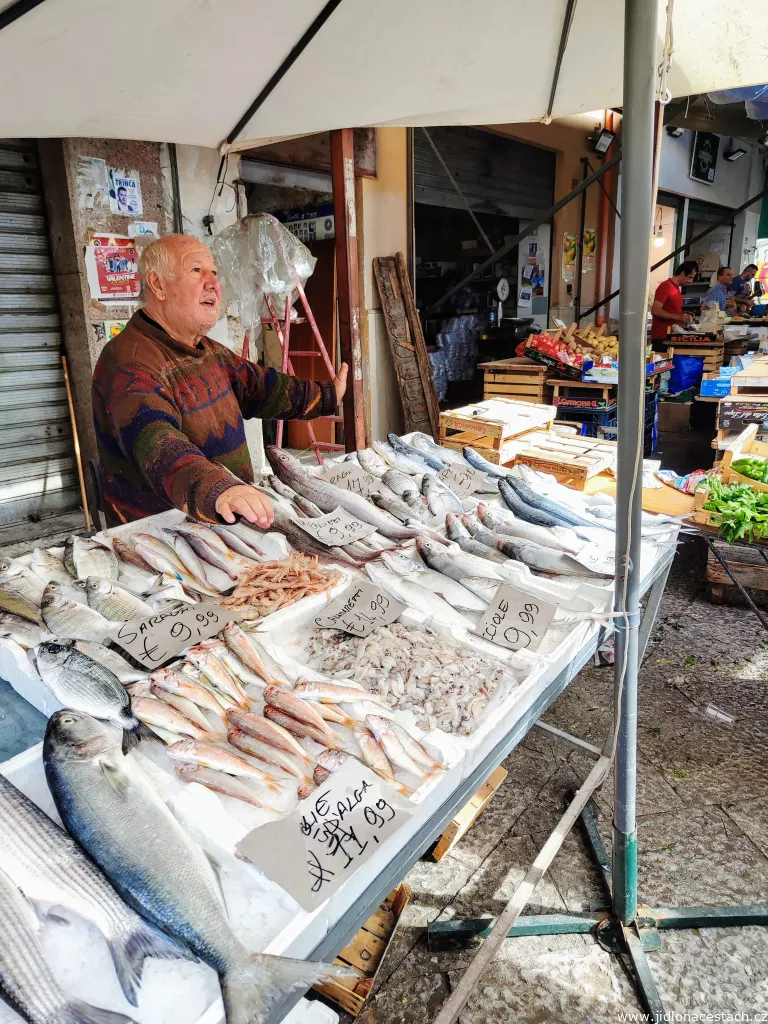
Palermo is one of the best street food cities I know. At the Ballarò, Vucciria and del Capo markets everything is grilled, fried and boiled right in front of you: arancini, sfincione, chickpea panelle, a roll filled with spleen, grilled intestines or boiled octopus. The east of the island around Catania and Syracuse lives off Etna instead - the volcanic soil gives pistachios from Bronte, blood oranges, prickly pears and Etna DOC wines. And there are pastry shops everywhere, with cannoli, cassata and granita.
Not everything you get in Sicily is Sicilian - and the other way round too. Pizza is Neapolitan, tiramisu is Venetian, parmigiana is claimed by Sicilians, Neapolitans and Parma alike, and the swordfish from the Strait of Messina is caught on the Calabrian shore just as much.
Symbols of Sicilian Cuisine
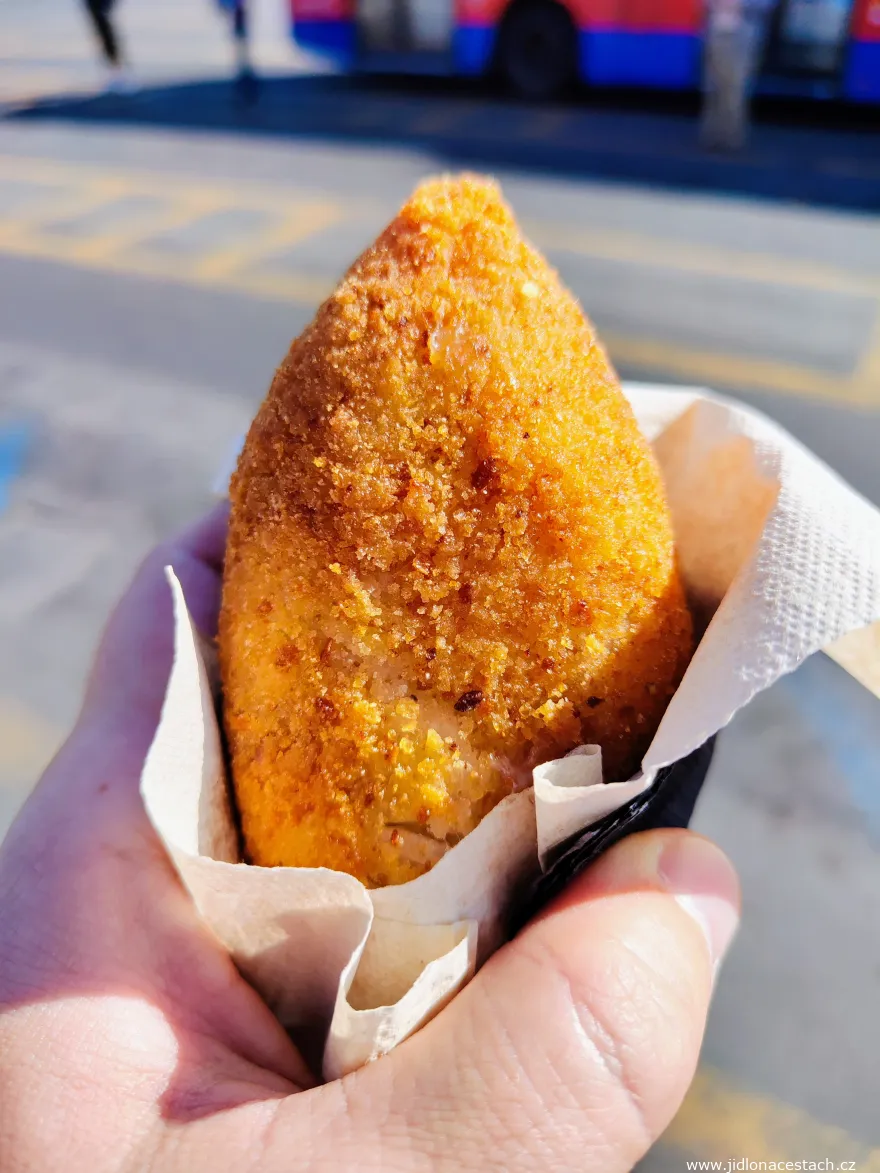
Two dishes stand for Sicilian cooking, one savory and one sweet. The savory one is arancini, balls of rice tinted with saffron, most often filled with meat ragù and peas, breaded and fried golden. They take their name from the orange (arancia), which they resemble in shape and color - the Arabs in Sicily routinely named round dishes after fruit that looked like them. In the west of the island the dish is called arancina (in Palermo they are round), in the east arancino, and in Catania they shape them into a point, supposedly after Etna. The row over the correct form of the word got as far as the Accademia della Crusca in 2016, which settled it diplomatically: both are right.
In Palermo, arancini are eaten instead of bread on December 13, the feast of St. Lucy. Tradition has it that a ship loaded with grain sailed into the harbor after a famine and people boiled the wheat as it was, without milling it - to this day nobody eats anything made of flour on that date, only arancine and sweet cuccìa made from boiled wheat. My own favorites are arancini with cheese and sausage; the best I ever had were in Palermo, where places like the Sfrigola bistro fry them to order.
The sweet symbol is cannoli - crisp tubes fried in lard and filled only just before serving with a cream of sheep's milk ricotta, finished with pistachios or candied orange peel. Palermo and Caltanissetta argue over where they came from (one legend places their birth in the harem of an Arab emir at the "castle of the women"), and the only certain thing is that you don't want cannoli sitting pre-filled in a display case - a proper pastry shop fills them in front of you.
Typical Sicilian Food
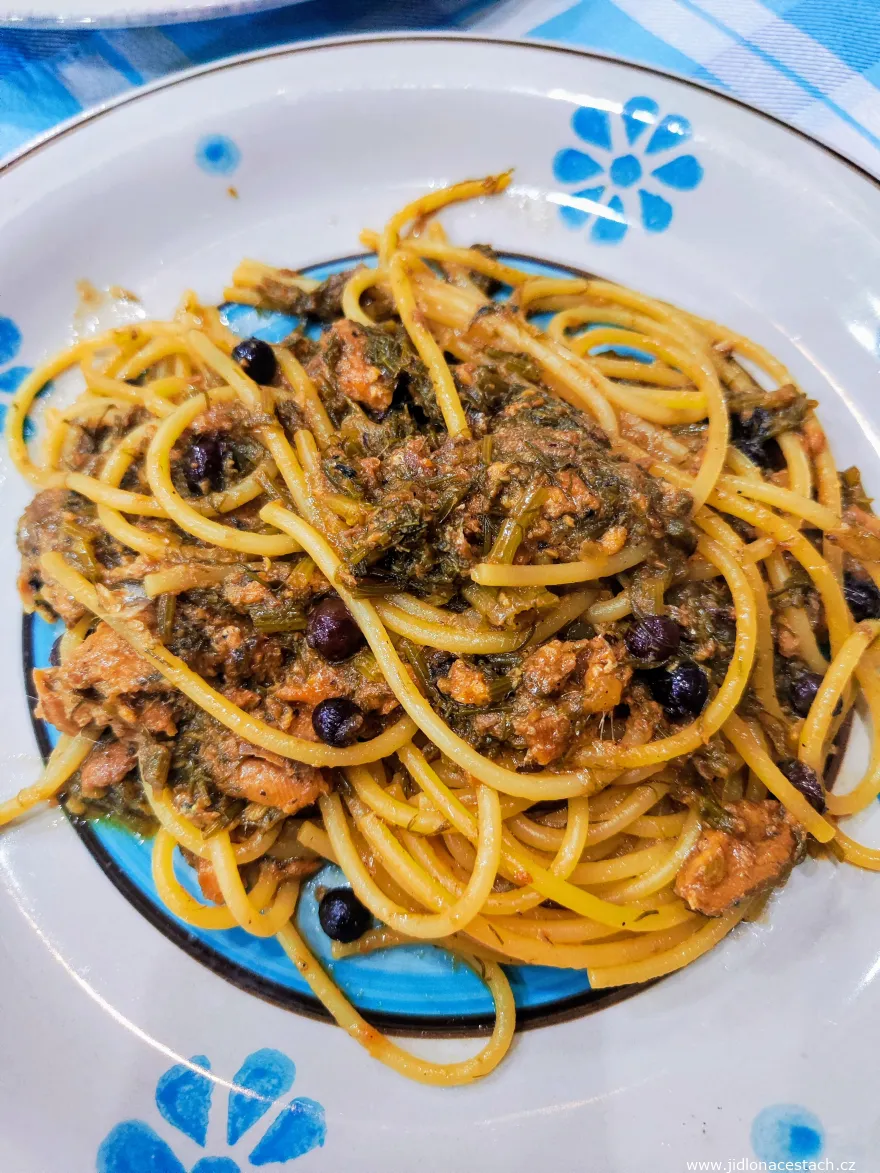
The most famous Sicilian first course is pasta alla Norma from Catania: pasta with tomatoes, fried eggplant, basil and grated salted ricotta (ricotta salata). It is named after Norma, the opera by Catania's own Vincenzo Bellini - the story goes that the writer Nino Martoglio exclaimed "this is a Norma!" over his plate, meaning a masterpiece. Palermo counters with pasta con le sarde: sardines, wild fennel, raisins, pine nuts, saffron and toasted breadcrumbs - a combination in which you hear Arab cooking on the very first forkful. Breadcrumbs toasted in oil (muddica atturrata) stand in for cheese here so often that they are known as the poor man's cheese.
The number one starter is caponata, a sweet-and-sour mix of fried eggplant, celery, onion, tomatoes, olives and capers, splashed with vinegar and a little sugar. There are countless recipes, every family has its own, and it is said to be best a day old. Sarde a beccafico come from the same poor and clever place - sardines stuffed with breadcrumbs, raisins and pine nuts, rolled up to look like the beccafico, the garden warbler the gentry used to eat and ordinary people didn't.
Palermo is the capital of Sicilian street food. Beyond arancini and sfincione (a thick, soft dough with tomatoes, onion, anchovies and breadcrumbs - it isn't pizza, however much it looks like it), there is pane e panelle (a roll packed with fried chickpea fritters, often with potato croquettes called cazzilli too), pani câ meusa (a roll with veal spleen and lung fried in lard), stigghiola (lamb intestines wound around a spring onion and grilled over charcoal) or frittola, fried veal offcuts sold out of a wicker basket. Catania answers with its rosticcerie (tavola calda) - the leavened cartocciata filled with ham, tomatoes and mozzarella, the cipollina and the bomba - and with crisp pizza secca, which you won't find anywhere outside Catania.
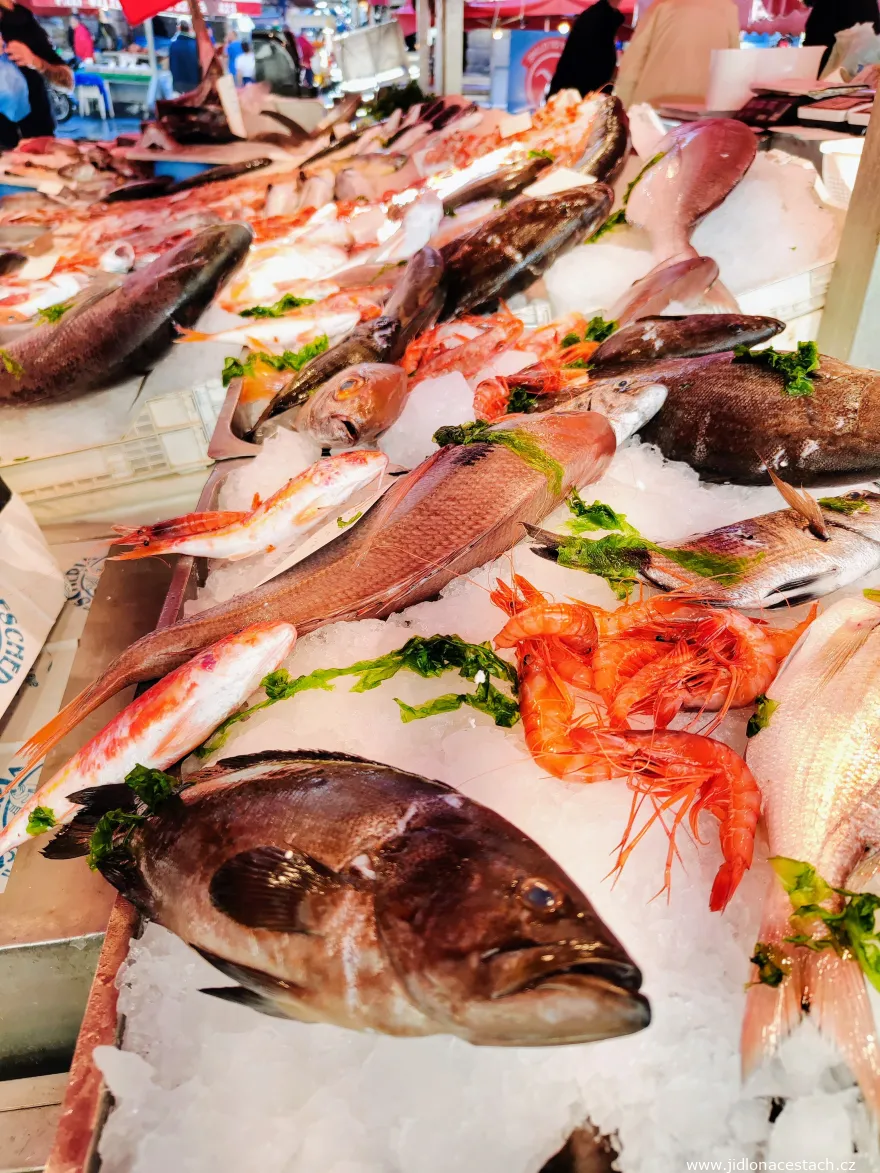
Fish and seafood are a given. Swordfish is caught in the Strait of Messina and turned into involtini (rolls filled with breadcrumbs, capers and cheese) or pesce spada alla ghiotta in tomato sauce with olives. At the markets in Palermo and Catania you buy raw shrimp, oysters, sardines, tuna and, in season, sea urchins. And around Trapani they eat couscous with fish - a legacy of the Arabs that Sicily shares with Tunisia, just across the water.
What to Eat in Sicily
- Arancini. Fried balls of saffron rice filled with ragù and peas, butter and ham, or cheese. The symbol of the whole island - round arancine in Palermo, pointed arancino in Catania.
- Cannoli. Crisp fried tubes filled with sheep's milk ricotta cream, finished with pistachios or candied peel. The best-known Sicilian dessert; Palermo and Caltanissetta argue over where it started.
- Pasta alla Norma. Pasta with tomatoes, fried eggplant, basil and salted ricotta. A Catania classic named after Bellini's opera and cooked all over Italy.
- Pasta con le sarde. Pasta with sardines, wild fennel, raisins, pine nuts and saffron. A Palermo dish with an Arab pedigree; the "a mare" version (without the sardines) is what you cook in lean times.
- Caponata. A sweet-and-sour starter of fried eggplant, celery, onion, olives and capers. Cooked all over Sicily in dozens of family versions; the Neapolitan "caponata" is an entirely different dish (a bread salad).
- Sfincione. Thick leavened dough with tomatoes, onion, anchovies, caciocavallo cheese and breadcrumbs. Palermo street food sold from carts; the white version without tomatoes is baked in Bagheria.
- Pane e panelle. A roll filled with fried chickpea flour fritters, often with cazzilli potato croquettes as well. A Palermo snack with Arab roots.
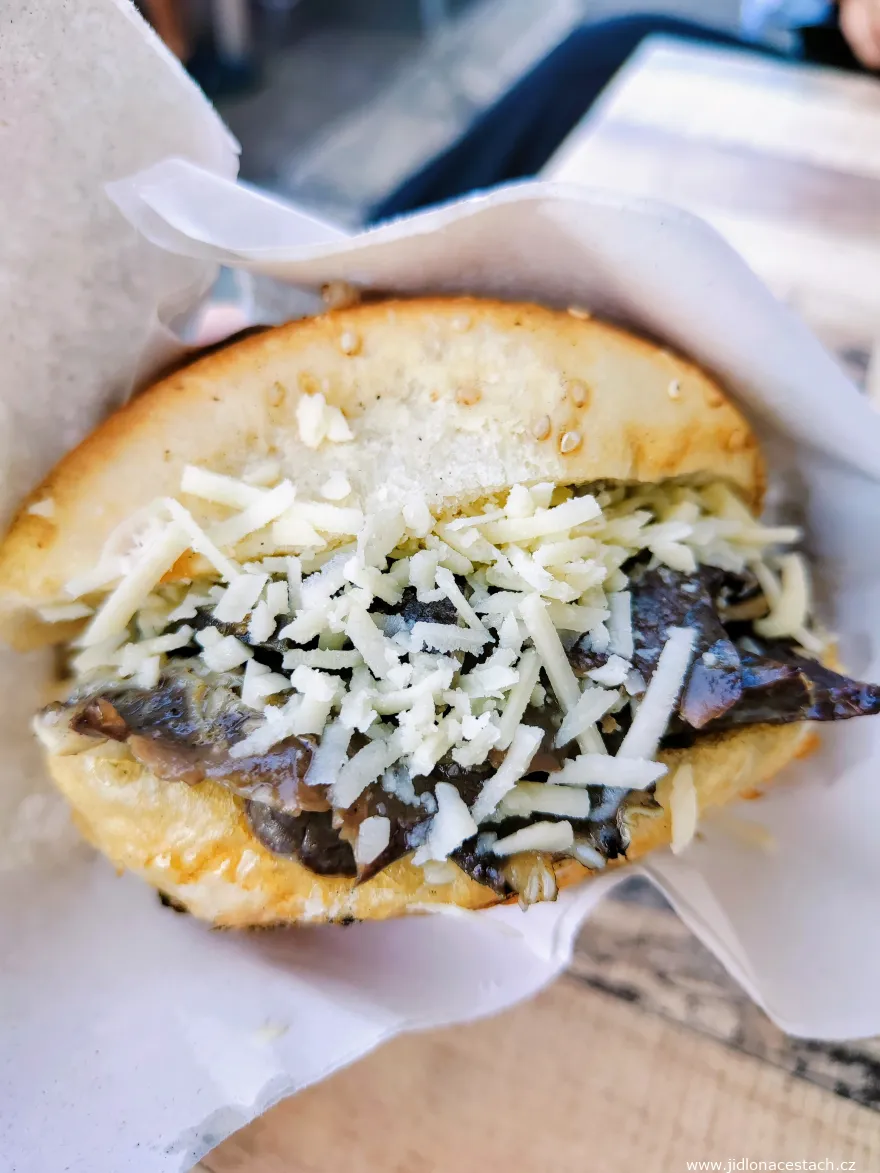
- Pani câ meusa. A sesame roll with veal spleen and lung fried in lard - "schettu" (single) with just lemon, "maritatu" (married) with ricotta and grated caciocavallo. A Palermo dish with roots among the city's medieval Jewish butchers.
- Stigghiola. Lamb or kid intestines wound around a spring onion, grilled over charcoal and sprinkled with salt and lemon; there is a veal version too. The stigghiularu sells them at Palermo's markets, but you'll come across them in Catania or Messina as well.
- Frittola. Offcuts of veal and cartilage, boiled and then fried in lard, sold out of a wicker basket under a cloth. Palermo street food for the brave, a tradition going back to the city's 15th-century slaughterhouses.
- Polpo bollito. Octopus boiled right there at the market in a big pot, sliced and dressed with lemon. A fixture of Palermo's Ballarò and Vucciria markets.
- Pizza secca. A thin, crisp sheet of dough with tomato paste and oregano, sold by weight in bakeries. A Catania specialty you won't run into anywhere else in Sicily.
- Cartocciata. Leavened dough filled with ham, tomatoes and mozzarella and baked golden - the flagship of Catania's rosticcerie, alongside the cipollina and the fried bomba. Catania takes as much pride in it as Palermo does in its arancine.
- Pani cunzatu. Warm bread topped with oil, tomatoes, anchovies, cheese and oregano, once the bread of the poor. It started around Trapani, but you'll also find it on the Aeolian Islands or in Catania.
- Sarde a beccafico. Sardines stuffed with breadcrumbs, raisins and pine nuts, rolled into the shape of a little bird. The Palermo version is baked, the Catania one with cheese is fried, and Messina makes it in tomatoes.
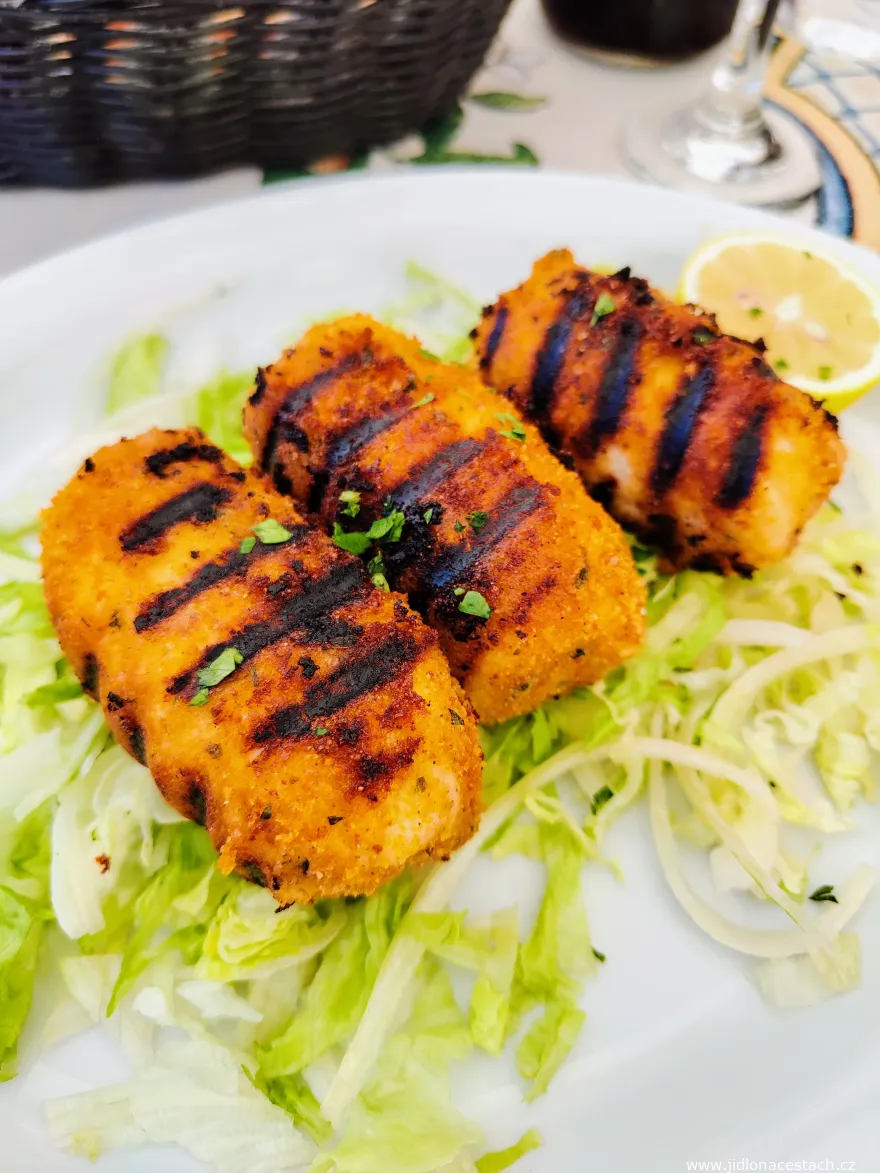
- Involtini di pesce spada. Swordfish rolls filled with breadcrumbs, capers and cheese, grilled over charcoal. A Messina specialty; the swordfish from the strait is caught on the Calabrian side too, where they cook it much the same way.
- Pasta c'anciova e muddica. Pasta with nothing but anchovies and toasted breadcrumbs, perhaps a little tomato paste. Palermo's cucina povera at its very best.
- Anelletti al forno. Baked ring-shaped pasta with ragù, eggplant and cheese, which people from Palermo take along on day trips and eat on holidays. A dish barely known outside the city.
- Cuscus di pesce. Couscous with fish stock and fish, at home in Trapani and in San Vito lo Capo, which throws the Cous Cous Fest for it every autumn. A Maghreb legacy Sicily shares with Tunisia but makes it its own way - with fish instead of meat.
- Busiate al pesto trapanese. Hand-twisted pasta from Trapani with a pesto of almonds, tomatoes, garlic and basil. Sicily's answer to Genoese pesto, which sailors from Genoa are said to have brought here.
- Scacce. Thin dough rolled up with tomatoes and caciocavallo cheese, or with ricotta and vegetables, and baked like a stuffed flatbread. A specialty of Ragusa and Modica in the south-east.
- Cassata. Sponge cake with ricotta cream wrapped in green marzipan, with white icing and candied fruit. An Easter dessert tied to Palermo's convents; the Neapolitan cassata is a different, lighter thing.
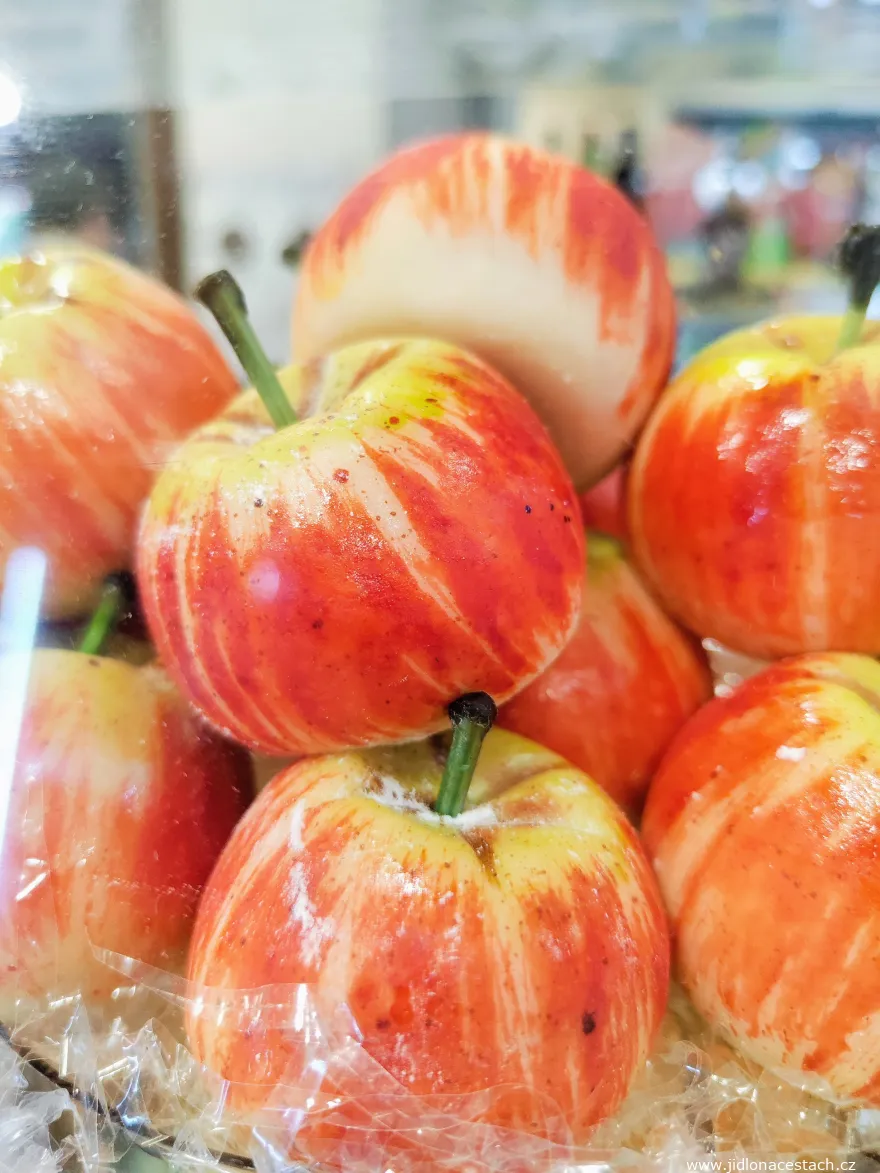
- Frutta martorana. Marzipan fruit and vegetables you can't tell from the real thing, originally from Palermo's Martorana convent. They are given to children on All Souls' Day, but pastry shops sell them all year round.
- Granita. A creamy frozen mix of water, sugar and fruit - lemon, almond, coffee, mulberry, pistachio. The Sicilian breakfast, eaten with a brioche; it has nothing to do with crushed ice.
- Brioche col tuppo. A sweet brioche with a "topknot" (tuppo) on top, for dipping into granita or filling with ice cream. It comes from the east of the island, but all of Sicily knows it, and so does neighboring Calabria.
- Iris. A fried brioche filled with ricotta and chocolate and rolled in breadcrumbs. A Palermo dessert named after Mascagni's opera Iris - not after the goddess of the rainbow, as you often read.
- Cartocci. Fried brioche tubes rolled in sugar and filled with ricotta, the little brother of cannoli. A Palermo breakfast to go with your coffee.
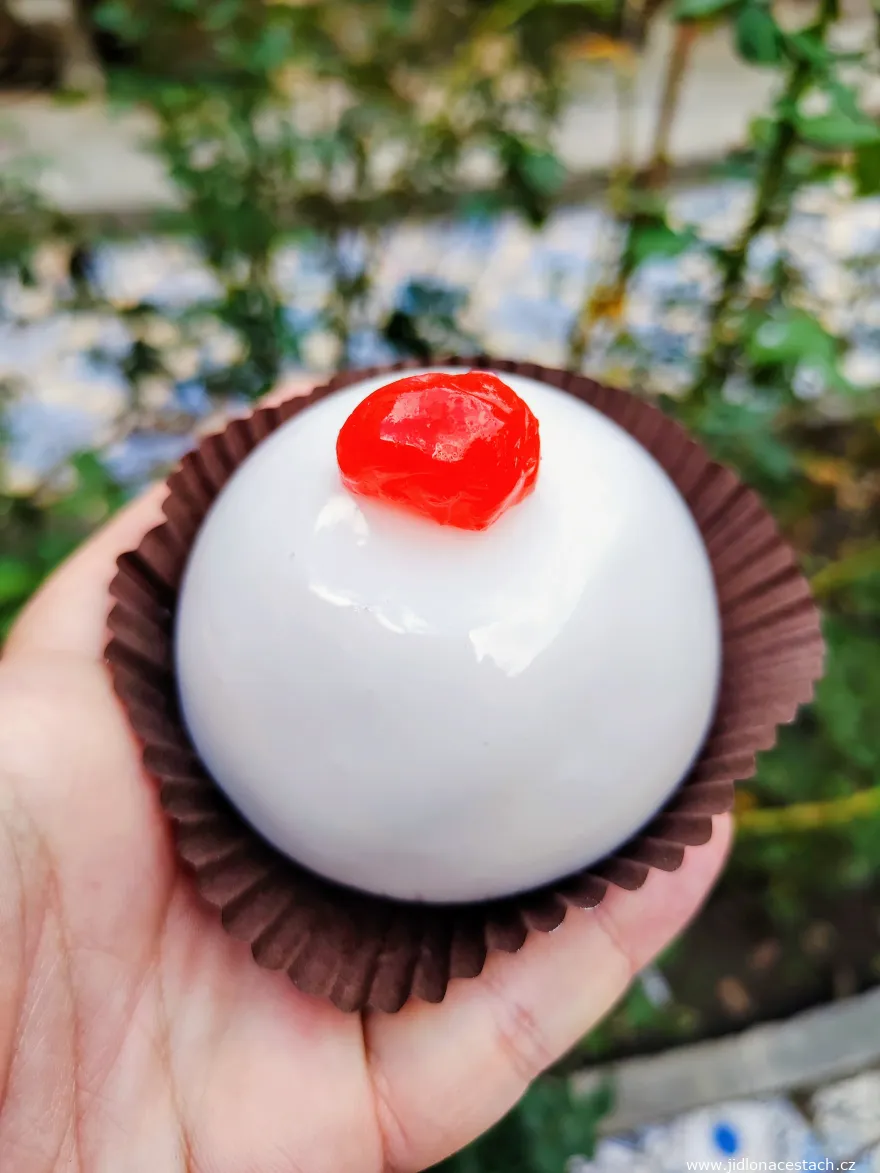
- Minne di sant'Agata. Small round cassate with white icing and a cherry on top, their shape a reference to the martyrdom of St. Agatha. Catania bakes them for her feast in early February.
- Rame di Napoli. Soft cocoa cookies with spices and almonds under a chocolate coating, baked in Catania for All Souls' Day. Despite the name they have nothing to do with Naples - the name recalls the copper coins of the Bourbons.
- Cuccìa. Boiled wheat with ricotta cream, chocolate and candied fruit, the dish of St. Lucy's feast on December 13. At home in Syracuse and Palermo, and both cities claim it.
- Buccellato. A Christmas ring of shortcrust pastry filled with dried figs, almonds and candied fruit. Palermo's pastry shops bake it all through Advent; in Sicilian it's cucciddatu.
- Pignolata. Little balls of fried dough stuck together in a mound and glazed half with lemon, half with chocolate. A Messina carnival dessert, though the pastry shops bake it year-round.
- Cioccolato di Modica. Grainy chocolate from Modica, worked cold by the Aztec method the Spanish brought over - the first chocolate in Europe with IGP status. My favorite souvenir from Sicily.
- Pistacchio di Bronte. Green pistachios from the slopes of Etna with protected DOP status, harvested only every other year. The base of pistachio ice cream, pesto and cannoli filling.
- Ficodindia dell'Etna. Prickly pears from around Etna, yellow, orange and red, sold at the markets already peeled. The Spanish brought the cactus over from the Americas and it has belonged to the Sicilian landscape, and the Sicilian table, ever since.
- Arancia rossa di Sicilia. Tarocco, Moro and Sanguinello blood oranges from the east of the island, with protected IGP status. In winter every bar squeezes them into a spremuta.
- Sicilian cheeses. Pecorino siciliano DOP, caciocavallo ragusano DOP, the "lost" tuma persa from Castronovo, piacentinu ennese with saffron and pepper, or baked ricotta (ricotta infornata). As categories, pecorino and caciocavallo belong to the whole of southern Italy, but these particular cheeses are Sicilian and nothing else.
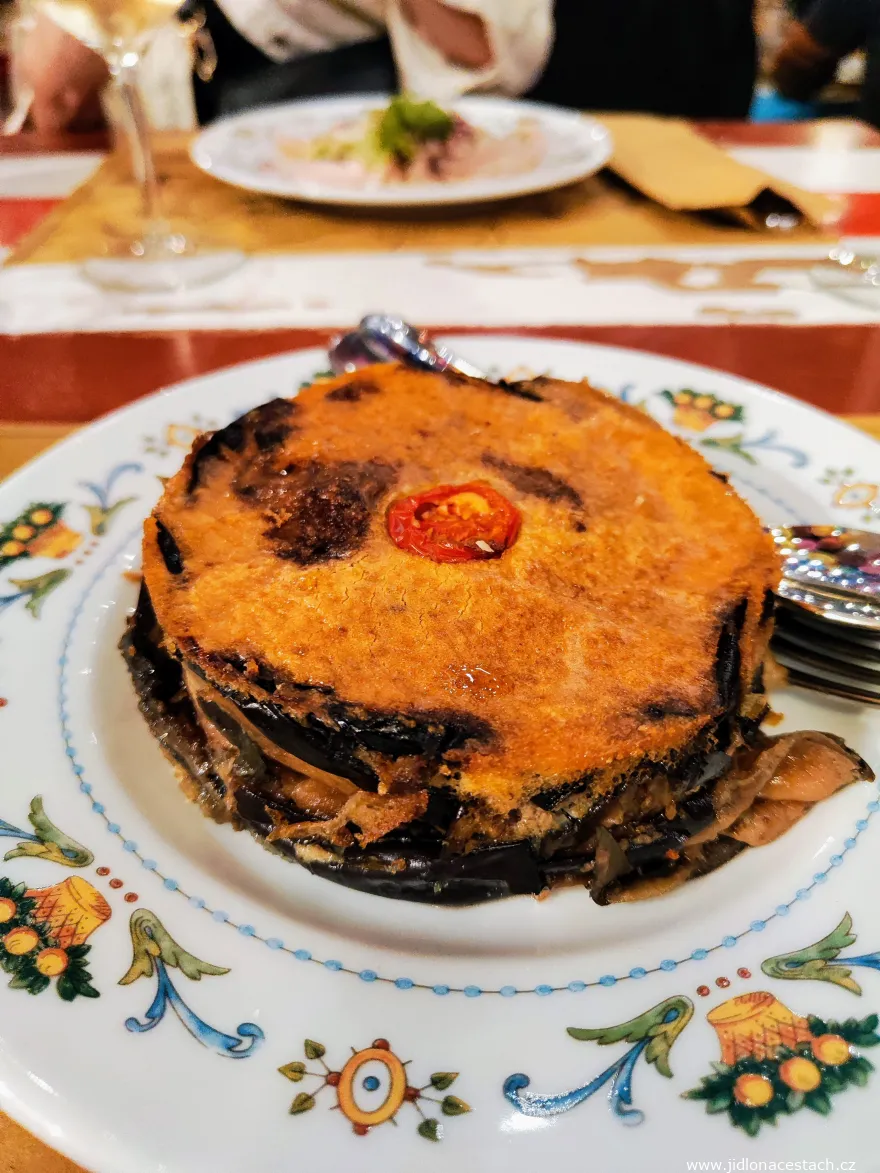
- Parmigiana di melanzane. Layers of fried eggplant, tomato sauce and cheese baked in the oven, with no béchamel. Sicily, Naples and Parma all claim it - the Sicilians say the name comes from "parmiciana", the wooden slats of a shutter that the layers of eggplant bring to mind.
- Pesce spada alla ghiotta. Swordfish stewed in tomatoes with olives, capers, onion and celery. A Messina dish shared with the other side of the strait in Calabria.
- Gelato. Ice cream, which Italians do like nobody else; the Sicilians add that they actually invented it - Francesco Procopio dei Coltelli, a Sicilian, founded the Café Procope in Paris. Ice cream in a brioche is an ordinary breakfast here, not a dessert.
- Cubbaita. Sesame nougat with honey and almonds, called giuggiulena in the east. An Arab legacy the whole Mediterranean knows in the form of sesame halva.
- … and dozens more Italian dishes from the list: What to Eat in Italy.
Typical Sicilian Drinks
Mornings in Sicily belong to coffee - and in the east of the island to granita with a brioche. An espresso standing at the bar, cappuccino before noon only, as Italian rules demand, and in Catania, Messina or Acireale an almond or coffee granita instead, with a brioche col tuppo to dip into it. In Messina they call it "mezza con panna": coffee granita at the bottom, whipped cream on top. Catania has a drink of its own, poured from the cast-iron kiosks on Via Etnea - seltz, limone e sale, soda water with fresh lemon and salt, which you drink standing at the counter and which is more refreshing than anything else. In winter there are blood orange spremute everywhere, and all year round latte di mandorla, almond milk from around Avola.
Sicily is Italy's largest wine region by vineyard area and Sicilian wines deserve an article of their own. The king of the reds is Nero d'Avola, which together with the Frappato grape makes Cerasuolo di Vittoria - the only Sicilian wine with DOCG status. On the slopes of Etna the vines grow in volcanic soil: red Etna Rosso from Nerello Mascalese and white Etna Bianco from Carricante convinced me that Sicilian wine isn't only cheap and heavy. Among the whites, try Grillo, Catarratto and Inzolia, and among the sweet wines Passito di Pantelleria from dried Zibibbo grapes (the "ad alberello" way of growing vines on Pantelleria has been on the UNESCO list since 2014) or Malvasia delle Lipari from Salina.
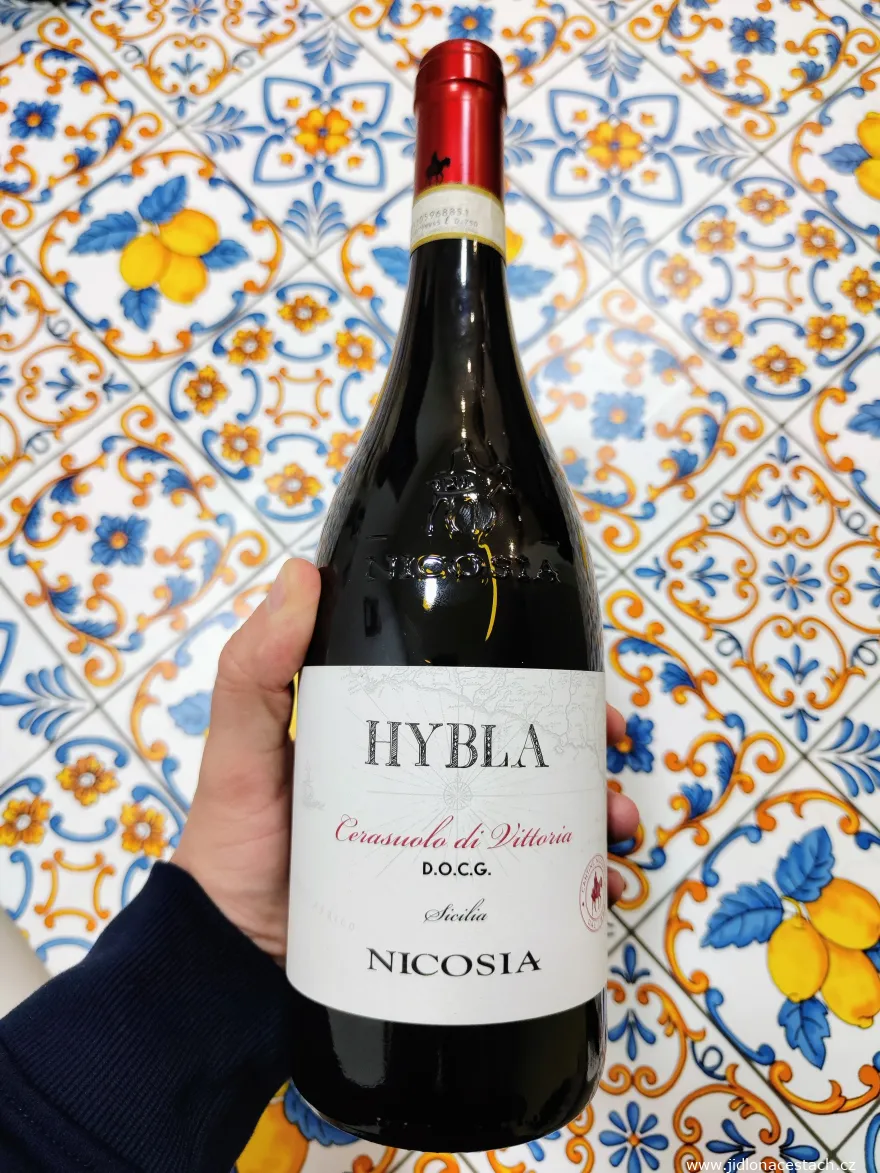
Marsala is a fortified wine from the town of Marsala in the west of the island, "invented" in 1773 by the English merchant John Woodhouse, who fortified the local wine with spirit so it would survive the trip to England. It isn't just for cooking: dry Marsala Vergine makes an excellent aperitif. After the meal comes amaro - the bitter herbal liqueur all of Italy drinks, though Sicily has brands of its own: Averna from Caltanissetta, made to a Benedictine recipe (since 1868), Amaro dell'Etna, or Amara, made from blood orange peel. Limoncello, sold here on every corner, is not Sicilian at all - it belongs to Sorrento and the Amalfi coast.
The Sicilian beer is Birra Messina - the brand of the brewery founded in Messina in 1923 now belongs to Heineken and is brewed mostly in Apulia, but fifteen former employees of the Messina brewery set up a co-operative of their own and brew Birra dello Stretto. I drank Messina with street food at Palermo's markets, and it does that job very nicely.
The Best Sicilian Food
If I had to pick three personal favorites, the best Sicilian food for me is:
- Caponata. The vegetarian caponata at the Palermo restaurant Al Vecchio Club Rosanero was the best I have ever eaten - eggplant without a trace of bitterness, the sweet and the sour beautifully balanced. A dish I'd go back to Palermo for.
- Sfincione. A piece from a small stall by the del Capo market, the base crisp to the point of being slightly burnt, the dough soft, the tomato topping bold. It blew me away and reminded me of the focaccia barese in Bari, which I consider the best I have ever eaten. If you only have time for one piece of street food in Palermo, make it sfincione.
- Cannoli. Over the years I've been traveling to Italy I have eaten more than my share, but the cannolo from the convent pastry shop I Segreti del Chiostro in Palermo beat the lot - filled in front of me, with a generous helping of pistachios and candied peel. Fair warning: it sets the bar very high.

How to Enjoy Sicilian Food to the Fullest
- Have breakfast at the market. Palermo's Ballarò, Vucciria and del Capo markets, or Catania's Piscaria, are the best restaurants in town: raw shrimp and oysters shucked in front of you, boiled octopus, baked ricotta, stuffed sardines, grilled intestines. Add the shouting of the vendors (the abbanniata), which belongs to a Sicilian market the way oregano belongs to sfincione.
- Don't be afraid of offal. Pani câ meusa, stigghiola di vitello, frittola or quarume aren't for everyone, but they are more Palermo than anything else. What sold me on veal intestines was a singing stigghiularu at Ballarò, and they tasted like lightly sautéed liver. Excellent hangover food.
- Have your cannoli filled in front of you. A tube filled half an hour ahead goes soft. A good pastry shop - like I Segreti del Chiostro in Palermo - fills them while you wait, and offers minne di sant'Agata, cassata and marzipan fruit alongside.
- Try granita with a brioche for breakfast. In the east of the island that's a normal way to start the day. Almond, coffee or pistachio granita with a brioche col tuppo you tear off and dip in, and an espresso to go with it. It isn't crushed ice - a proper granita is creamy and eaten with a spoon.
- In a bar, pay at the till first. At the Touring bar in Palermo and everywhere else in Sicily, the Italian rule applies: the till and the receipt (scontrino) first, the counter afterwards. The cashier often stands in the middle of a long display case, so just pointing will do. And expect a coperto, the cover charge, in restaurants.
- Go looking for food beyond Palermo and Catania. To Trapani for fish couscous and busiate with pesto, to Modica for grainy chocolate, up Etna for Bronte pistachios and wine, to Messina for swordfish and "mezza con panna" granita, to Syracuse for Avola almonds. Every corner of the island cooks differently.
- Take Sicily home with you. Busiate and caserecce pasta, Modica chocolate, cheeses from small makers, candied orange peel, anise cookies and a bottle of amaro - my tips for food souvenirs from Sicily run longer than for anywhere else, and they still don't cover a fraction of what the island has.
How to Say Thank You for Sicilian Food
The Italian "grazie" (GRAHT-see-eh) - thank you and "grazie mille" - thanks a million will do anywhere, and in Sicilian you'll hear "grazzi" or "grazzi assai" - thanks a lot. Before a meal people wish you "buon appetito" - enjoy your meal, and over a glass of wine you toast with "salute" or "cin cin" - cheers. If you liked it, say "era buonissimo" - that was excellent, and you ask for the bill with "il conto, per favore" - the bill, please. In a Palermo restaurant for locals you won't get far in English, but that's actually a good sign - the waiter at Al Vecchio Club Rosanero smiled and answered in Italian no matter what language we tried (we don't speak Italian), and we understood each other just the same.
Regional Sicilian Cuisine and Specialties
Palermo and the West
Palermo eats in the street. You start the morning with raw shrimp at the Ballarò market, during the day an arancina, sfincione or a panelle roll will find you, and in the evening it's pani câ meusa and stigghiola off the grill, with a song from the stigghiularu thrown in. Anyone who wants to go further tries frittola out of the wicker basket or octopus boiled right there at the market. And then there are the convents: cannoli, cassata, frutta martorana, iris, cartocci and the Christmas buccellato were all born behind Palermo's convent walls, and the I Segreti del Chiostro pastry shop still sits inside one of them. Among the pasta dishes the city owns pasta con le sarde and baked anelletti al forno, which people from Palermo take out of town on holidays. In the hills behind the city, around Corleone and Godrano, they make caciocavallo palermitano - a cheese mentioned in writing as far back as the 15th century.
Catania and Etna
Catania stands on lava and Etna decides what gets eaten here. Its slopes give the Bronte pistachios, prickly pears and honey from Zafferana Etnea, the plain below it blood oranges, and the vineyards on volcanic soil the Etna DOC wines. In the city itself you eat pasta alla Norma, pointed arancini and baked goods from the rosticcerie - cartocciata, cipollina, bomba - along with crisp pizza secca from the bakeries and, in February, minne di sant'Agata. When it's hot, the people of Catania get a seltz with lemon and salt at a cast-iron kiosk on Via Etnea, and in the morning they have granita with a brioche instead of breakfast. The Piscaria fish market below the cathedral is worth the early start: fish, shrimp and the shouting of the vendors, which in Catania is called vuciata.
Messina and the Strait
Messina lives off swordfish, caught in the strait from feluca boats. It ends up on the plate as involtini filled with breadcrumbs and capers or as pesce spada alla ghiotta in tomatoes with olives - and in all honesty, they make it exactly the same way across the water in Calabria. Add focaccia messinese with tuma cheese, anchovies and endive, the fried pidone with the same filling, and two sweet traditions: "mezza con panna" granita (coffee granita with whipped cream on top) and the carnival pignolata with its lemon and chocolate glaze. And when I washed down street food at Palermo's markets with a Messina beer, I was drinking (no surprise) beer from Messina - they've brewed it there since 1923.
Syracuse, Noto and Avola
The south-east of the island smells of almonds. Avola is home to the pizzuta variety, which goes into almond milk, granita and pastries, and in Noto, Corrado Assenza turns it into the almond granita at his Caffè Sicilia that people cross half the island for. Syracuse claims both the cuccìa of St. Lucy and pasta alla siracusana - eggplant, pepper, anchovies, olives and caciocavallo, the local answer to Catania's Norma, which I ate here at the Locanda del Collegio restaurant. From the surrounding area come Pachino IGP tomatoes and sweet Moscato di Noto.
Ragusa, Modica and the South-East
People come to the baroque towns below the Hyblaean Mountains for the food as much as for the architecture. Modica has its grainy chocolate worked cold by the Aztec method and the sweet 'mpanatigghi, into which nuns, so the legend goes, hid beef between chocolate and almonds. Ragusa has the stuffed scacce flatbreads, ragusano DOP cheese and cavati or ravioli with ricotta in a pork ragù, the villages around it the Giarratana onion, and Vittoria the only Sicilian wine with DOCG status, Cerasuolo di Vittoria.
Trapani, Marsala and the Egadi Islands
The westernmost tip of Sicily lies closer to Tunisia than to Naples, and its cooking doesn't hide it: in Trapani and San Vito lo Capo they eat couscous with fish and fish stock, and San Vito throws a festival for it every autumn. Local specialties are hand-twisted busiate with a pesto of almonds, tomatoes and basil, IGP salt from the salt pans near Trapani, and the red garlic of Nubia. Marsala gave its name to the wine an English merchant "invented" here in 1773, and Favignana gave its name to tuna - the Florio family set up canning it in oil here in the 19th century, and bottarga still comes from these waters. People drive up to Erice for coffee and genovesi pastries.
Agrigento, Enna and the Interior
The interior is a land of sheep, wheat and monasteries. Enna gives piacentinu ennese DOP, a sheep's cheese with saffron and whole peppercorns; in the countryside around Agrigento a poor man's legume soup is cooked on St. Joseph's Day, and priests used to be served a coffee with cinnamon and cocoa that is still called "priest's coffee". Amaro Averna was created in Caltanissetta to a recipe from Benedictine monks. In the north, in the Madonie, manna is still gathered from ash trees - the sweet sap nobody else in Europe collects any more - and in the Nebrodi mountains the black pig is raised semi-wild and provola is aged.
The Aeolian Islands and Pantelleria
On the islands they cook with whatever survives the wind and the salt: capers from Salina and Pantelleria, pane cunzato topped with capers, dried tomatoes and anchovies, sweet Malvasia delle Lipari from Salina and Passito di Pantelleria from dried Zibibbo grapes, whose low "ad alberello" cultivation has been on the UNESCO list since 2014. From Pantelleria it's closer to Tunisia than to Sicily - and you can taste it.
Famous Sicilian Chefs
- Corrado Assenza (1960). The pastry chef of Caffè Sicilia in Noto, a shop founded in 1892, and the central figure of an episode of the Netflix series Chef's Table: Pastry. He saved the local Romana almond variety and makes pastry in which sugar never drowns out the almonds, the cherries from Etna or the mandarins from Ciaculli.
- Ciccio Sultano. Chef of the Duomo restaurant in Ragusa Ibla, with two Michelin stars he has held since 2006. He cooks Sicilian food from local ingredients in a way that keeps them recognizable on the plate.
- Pino Cuttaia. La Madia restaurant in Licata, two stars since 2009. A chef who builds on the "cooking of memory" - the dishes of a Sicilian childhood retold in a modern way.
- Martina Caruso. Chef of the Signum restaurant on the island of Salina, in 2016 the youngest Italian woman to hold a Michelin star and three years later named Michelin Chef Donna. She cooks with the capers, fish and vegetables of the Aeolian Islands.
Sicilian Michelin Restaurants
According to the Michelin guide 2026, Sicily has 22 starred restaurants, four of them with two stars: Duomo in Ragusa, La Madia in Licata, St. George by Heinz Beck in Taormina and I Tenerumi on the island of Vulcano. One star goes to, among others, I Pupi in Bagheria near Palermo, Signum on Salina, Locanda Don Serafino in Ragusa, Principe Cerami in Taormina and Sapio in Catania. I haven't been to any Michelin restaurants in Sicily yet - that experience is still ahead of me.
Interesting Facts About Sicilian Food
- The first dried pasta in Italy was made in Sicily. In 1154 the Arab geographer al-Idrisi described the village of Trabia near Palermo, where mills produced a thread-like pasta called itriyya and exported it all over the Mediterranean. Sicily's claim to pasta is older than Naples'.
- Arancino, or arancina? Palermo says arancina (after the Italian arancia, orange), Catania says arancino (after the Sicilian aranciu). They argued about it for so long that in 2016 the Accademia della Crusca weighed in: both are correct. The pointed shape of Catania's arancini is said to resemble Etna.
- Vucciria doesn't mean noise, whatever people say. The name of the Palermo market comes from the French "boucherie", butcher's shop - the market originally served for slaughtering animals. Its paving stones are, as the saying goes, "forever wet" from the fishmongers, and when someone from Palermo says something will happen "when the stones of the Vucciria dry", they mean never.
- Palermo is the fifth best street food city in the world. In a ranking of ten cities published by Forbes based on a VirtualTourist poll, Palermo came in behind Bangkok, Singapore, Penang and Marrakesh - the only European city on the list.
- Pani câ meusa exists thanks to medieval Jewish butchers. They weren't allowed to take money for their work at Palermo's slaughterhouses, so they kept the offal instead - they boiled the spleen and lung, fried them in lard and sold them in bread. After their expulsion from Sicily in 1492 the trade was taken over by the local cheesemongers (the caciottari).
- Modica chocolate was the first chocolate in Europe with protected IGP status (since 2018). It is made cold by the Aztec method the Spanish brought to Sicily in the 16th century - the sugar never dissolves in it, which is where that grainy texture comes from.
- Bronte pistachios are harvested only every other year. In even years the growers strip the buds in May so the trees on volcanic soil can put all their energy into the odd year's crop. That's why the "green gold of Etna" is so expensive.
- Marsala was invented by an Englishman. A storm forced the Liverpool merchant John Woodhouse to stop in Marsala in 1773; he tasted the local wine and fortified it with spirit so it would survive the journey to England. English families then built the wine industry in Marsala, and in 1833 the Palermo entrepreneur Vincenzo Florio joined them.
- Cannoli, cassata and granita all have Arab roots. Sugar cane, almonds, citrus and the sherbet (sharbat) technique arrived with the Arabs in the 9th century; the snow for chilling was hauled down from Etna and the Nebrodi mountains into pits called neviere. Sicilian pastry was then perfected by convent nuns - and Sicilians will tell you it is the best in Italy.
- Frutta martorana started as a joke on a bishop. When he was due to visit Palermo's Martorana convent in autumn, the nuns are said to have hung marzipan fruit on the bare trees in the garden so the trees would look like they were bearing fruit. To this day marzipan fruit is given to children on November 2 as a "gift from the departed".
- Sicily has over 50 products protected by the Slow Food movement. From Salina capers to the manna of the Madonie ash trees, the Nebrodi black pig and the Giarratana onion. The island has more than thirty DOP and IGP designations - from Bronte pistachios to Trapani salt.
Enjoy Sicily and the best Sicilian food!



Pani Cunzatu: The Bread of Shame
It looks like a pizza, but don't expect one: pani cunzatu is a halved loaf of Sicilian bread, drizzled with olive oil while still hot and piled with tomatoes, anchovies and pepato cheese. They call it the bread of shame - it used to be the food of people who couldn't afford anything better. Today Sicilians line up for it.

Pizza Secca: The Dry Pizza from Catania's Bakeries
Pizza secca is Catania's "dry pizza": a sheet of dough rolled out to a few millimeters, brushed with tomato paste, oil and oregano and baked until crisp. The bakeries of Catania sell it cold and by weight, and nowhere else in Sicily will you find it. This piece explains why a dry flatbread is called pizza, how it differs from sfincione and where I bought mine.

Pizzeria Timilia: Pizza from an Ancient Wheat in Palermo
Pizzeria Timilia on Palermo's via Maqueda takes its name not from a family but from tumminia, an ancient Sicilian wheat that goes into every dough the place mixes. What it bakes is pizza in teglia: in a tray, sold by the piece and by weight, warmed through just before it reaches you. What that format is, where it came from, and what the two pieces I picked out of the display case cost.

Frutta Martorana: Sicilian Marzipan Fruit
Frutta martorana is Sicilian marzipan fruit and vegetables you can't tell from the real thing from a meter away. They're named after a Palermo convent whose nuns weren't allowed to make them, and on All Souls' Day dead relatives leave them for the children. What the almond paste is made of, why it's softer than the marzipan we know back home, and how to tell hand-painted from spray-painted.

What to Bring Back from Sicily?
From Sicily I bring back busiate and caserecce pasta, cheeses from small local producers and grainy Modica chocolate with its protected IGP label. Add candied orange peel, anise cookies made just outside Palermo and a small bottle of bittersweet amaro that even makes it through airport security. And cheap ceramics with Sicilian motifs make a gift that always lands well.

Bar Touring: The Genovese Family's Palermo Bar for Locals
An Italian bar is not a place for a night out but a daytime institution - and Bar Touring, by the Villa Giulia park in Palermo, has been one since 1959. From early morning until midnight the Genovese family sells coffee, cornetti, cannoli and the flagship arancina bomba, all 400 grams of it. Plus a tiramisu that shouldn't have stood a chance in a temple of Sicilian sweets - and won anyway.

Gelateria Al Cassaro: Gelato on the Oldest Street in Palermo
Gelateria Al Cassaro stands on the oldest street in Palermo and carries its old Arabic name - Cassaro, the fortress. The display case rotates through some thirty flavors of gelato, including a peanut specialty named after the shop itself; Gambero Rosso listed it among the best gelaterias in Sicily. It's open until midnight, so gelato here is still an option long after dinner.

Sfrigola Bistro: Arancini Fried to Order in Palermo
Street food you wait for: the Palermo bistro chain Sfrigola fries its arancini only once you've ordered and puts the whole operation behind glass. Who is behind a place named after the sound of sizzling fat, why the arancina is always a woman here, and how my version with porchetta, cheese and pickled porcini tasted.

Sfincione: A Tall Leavened Flatbread from Palermo with Onion and Anchovies
Sfincione is a tall, spongy leavened flatbread from Palermo with slow-cooked onion, tomatoes, anchovies and breadcrumbs with cheese, one that not even the Italians can quite place - somewhere between pizza and focaccia. The name "Sicilian pizza" came from America. Where it comes from, why it originally had no tomatoes and how it tasted from a cart by the del Capo market.

Sarde a Beccafico: Sicilian Sardines Stuffed with Breadcrumbs and Raisins
Sarde a beccafico are Sicilian sardines opened out like a book, stuffed with toasted breadcrumbs, raisins and pine nuts and baked with the tail sticking up, so that they look like the little bird they are named after. Palermo bakes them, Catania fries them with cheese, Messina stews them in tomatoes. I bought mine at the del Capo and Ballarò markets, two pieces for a euro.