What to Eat in Israel: Typical Israeli Food and Specialties
Israeli cooking is among the youngest in the world, and yet it lets you taste traditions thousands of years old. It only took shape over the past century, as Jews from all over the world came to the country and every community brought its own recipes - Ashkenazi Jews from Poland and Eastern Europe, Sephardi Jews from the Mediterranean and Mizrahi Jews from the Middle East and North Africa. That's how influences from Iran, Iraq, Turkey and Morocco end up on a single plate.
Israeli cooking also shares plenty of dishes with Palestinian cooking and with the whole Middle East - everyone here loves hummus, falafel and pita bread alike. And Jewish tradition has a say in what people eat, what they eat it with and when: the kosher rules and Shabbat. Shabbat, when the entire country gradually comes to a halt on Friday afternoon, is every bit as much a part of Israeli food as hummus.
Typical Israeli Food
Israeli food is largely street food - quick, fresh and eaten with your hands. Falafel, shawarma and the sabich sandwich come stuffed into pita bread with salad and tahini sauce, with pickles on the side. Hummus has places of its own: a hummusia, a place built around hummus, often serves practically nothing else - and people line up outside it anyway.
The other face of Israeli cooking is holiday food. The sweet challah bread is baked for Shabbat and sufganiyah doughnuts are fried for Hanukkah. And if you want to understand the local cooking, you should be there on Friday, in the hours before Shabbat, when the country stocks up for its day of rest.
And third, vegetables and freshness. Israeli salad, finely diced cucumber and tomato, comes as a side with almost everything, and tahini, the sesame paste, goes into savory and sweet dishes alike. Vegetarians eat extremely well here and nobody bats an eye.
The Israeli National Dish
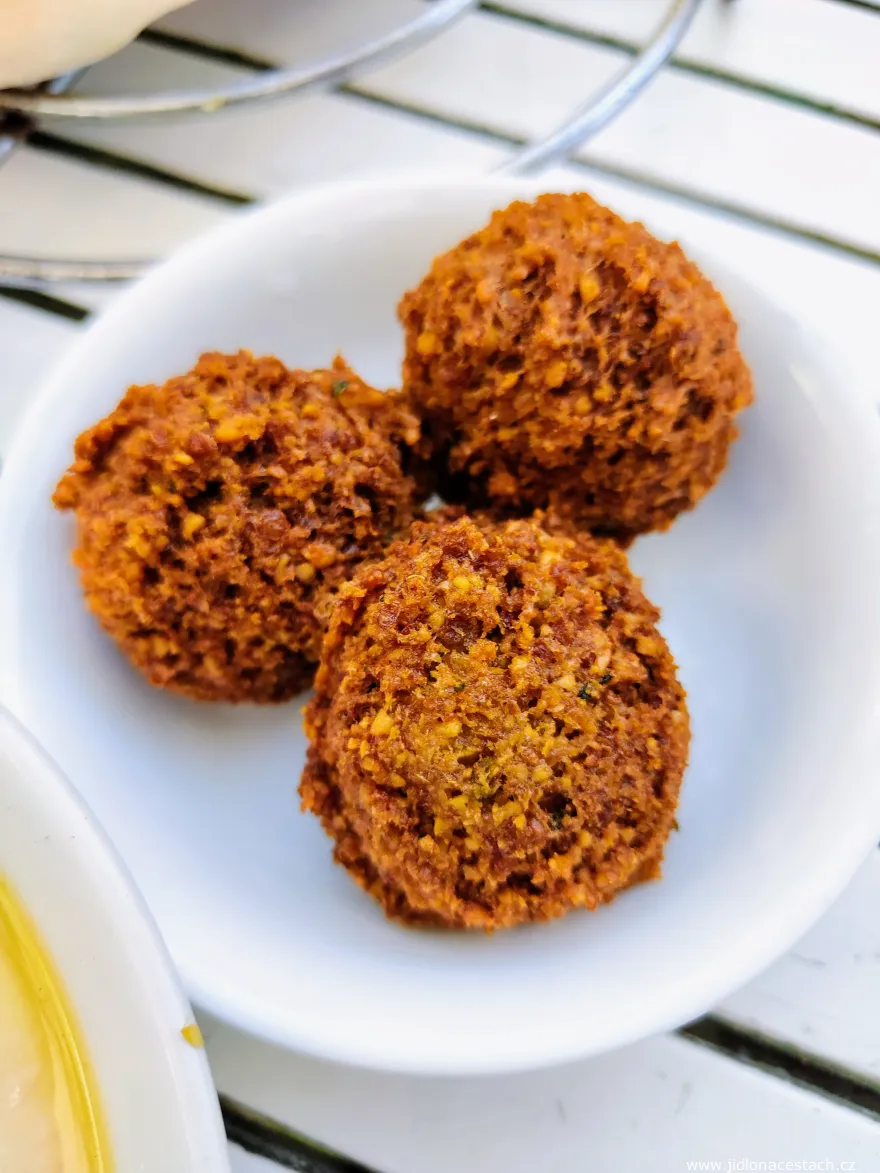
The dish most often named as Israel's national dish is falafel - fried balls of ground chickpeas with herbs and spices. It's served stuffed into pita bread with salad, hummus and tahini sauce, and you can buy it on every corner. It reached Israel from Egypt, and it settled in so completely that every other place you pass sells it today.
The national dish is a sensitive subject in Israel, though - the origins of falafel and hummus are fiercely disputed with the Arab neighbors and you shouldn't expect a clear winner. I'll stay out of the argument, but my own mind is made up: if I could have only one single dish in Israel, it would be hummus. That creamy paste of chickpeas and tahini, swimming in olive oil, is the high point of Israeli cooking for me.
What to Eat in Israel
A list of Israeli dishes, sweets and drinks worth tasting:
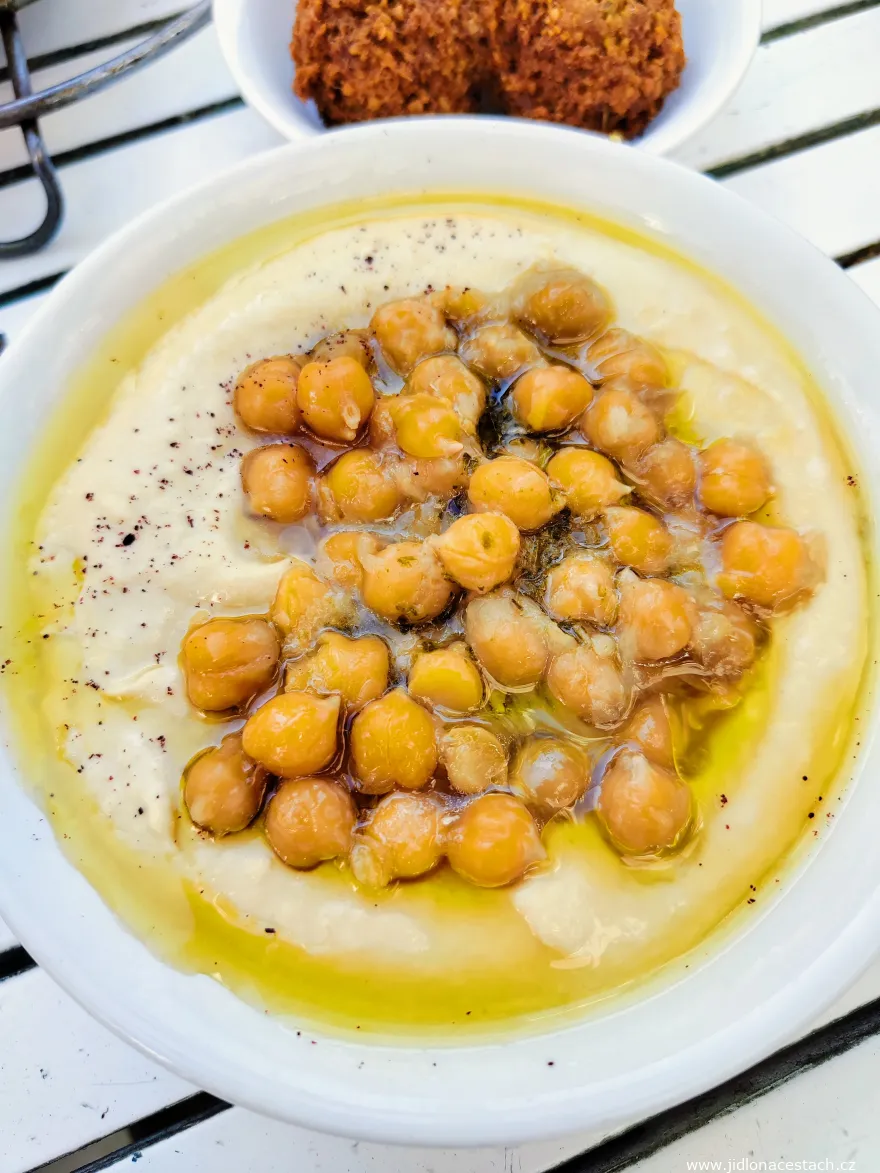
- Hummus. A creamy paste of mashed chickpeas, tahini and lemon juice under a pool of olive oil. In Israel it's a national passion and hummusias are among the best loved places to eat in the country.
- Falafel. Fried balls of ground chickpeas with herbs, served in pita with salads and sauces. The most widespread Israeli street food and the usual candidate for the national dish.
- Shakshuka. Eggs poached gently in a thick tomato sauce with peppers. Jews from North Africa brought it to Israel and today you'll find it for breakfast almost everywhere.
- Shawarma. Meat roasted on a vertical spit and shaved into pita or into thin lafa bread.
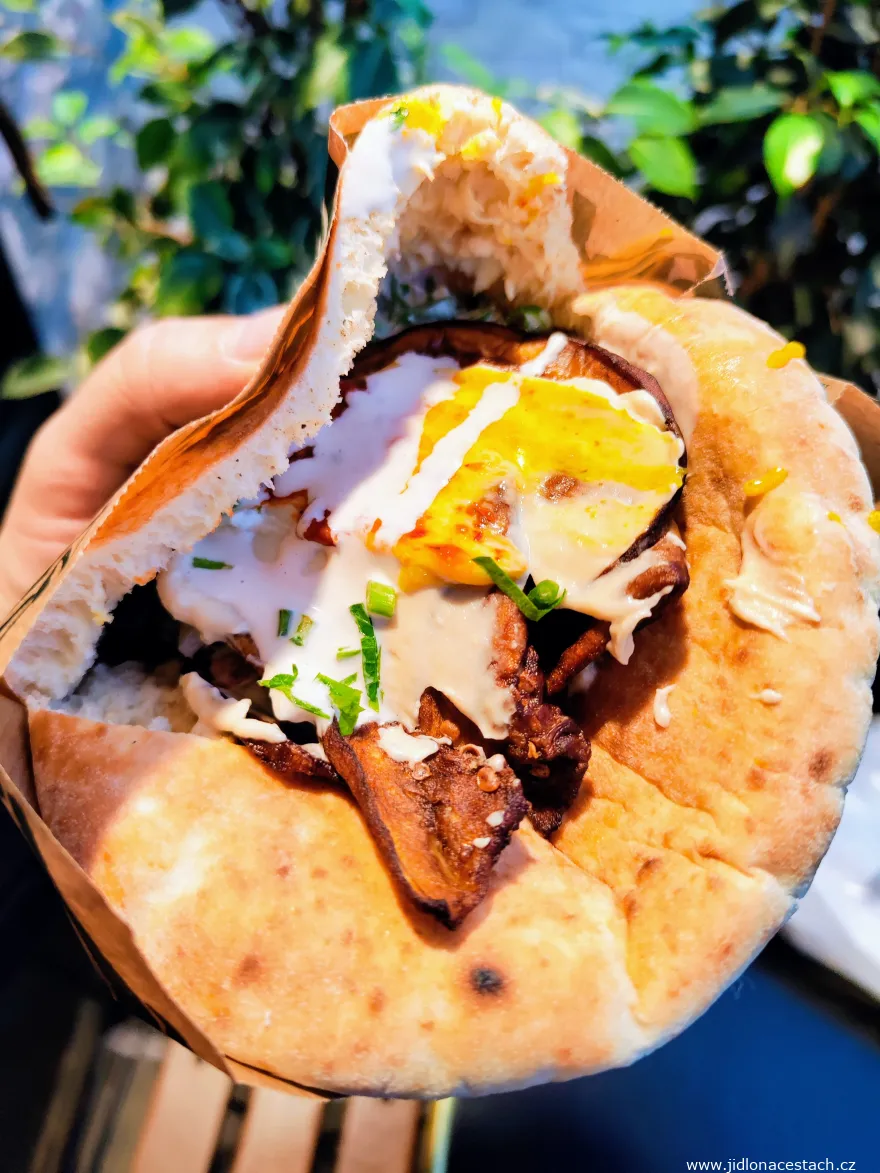
- Sabich. A sandwich of fried eggplant, boiled egg and vegetables in pita bread. Iraqi Jews came up with it after arriving in Israel, originally as a quick Saturday breakfast.
- Pita bread. A soft flatbread with a pocket you can fill. In Israel you get it as a side with practically everything.
- Israeli salad. Cucumber, tomato and onion cut into tiny cubes with lemon and olive oil. Locals simply call it katzutz - chopped.
- Bourekas. A filled puff pastry with cheese, potato or spinach. In Israel they cut it open and add a boiled egg and a pickle.
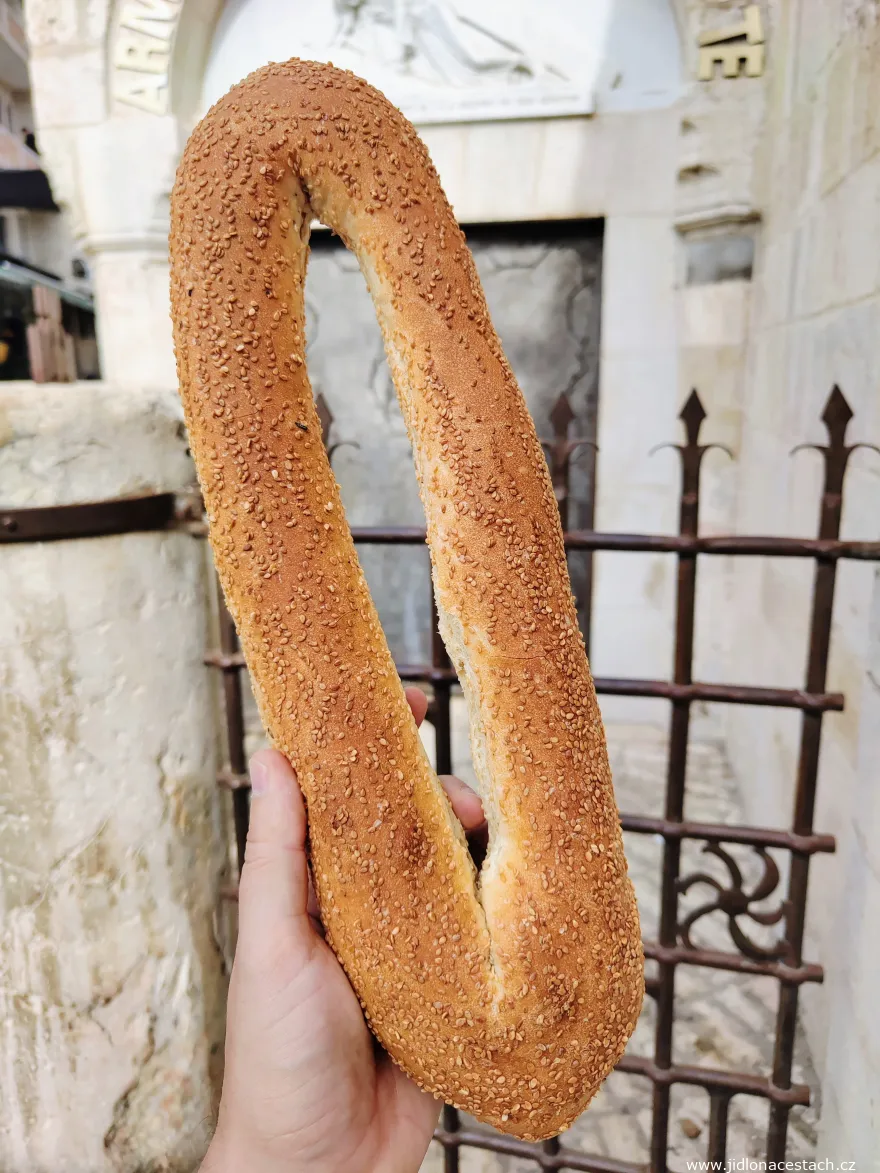
- Jerusalem bagel. An oblong yeasted bread with a crunchy sesame crust which, unlike the classic bagel, is never boiled, only baked. It's sold at the gates of Jerusalem's Old City.
- Challah. A sweet braided bread baked for Shabbat and for Jewish holidays. It's close to the sweet braided loaf we bake back home for Christmas, only softer.
- Me'orav yerushalmi. The "Jerusalem mixed grill" - chicken hearts, livers and pieces of lamb seared on a flat griddle with spices. It got its start at the Machaneh Yehudah market in Jerusalem and several places still argue over who invented it.
- Marak kubbeh. A soup with semolina dumplings stuffed with ground meat; the best known version is deep red with beets. Kurdish and Iraqi Jews brought it to Israel.
- Tahini. A smooth paste of ground sesame seeds. The base of hummus, of sauces and of sweets - in Israeli cooking it really is everywhere.
- Za'atar. A spice blend of Syrian oregano, thyme, savory and sesame with sumac. It gets sprinkled on bread, stirred into olive oil and scattered over labneh.
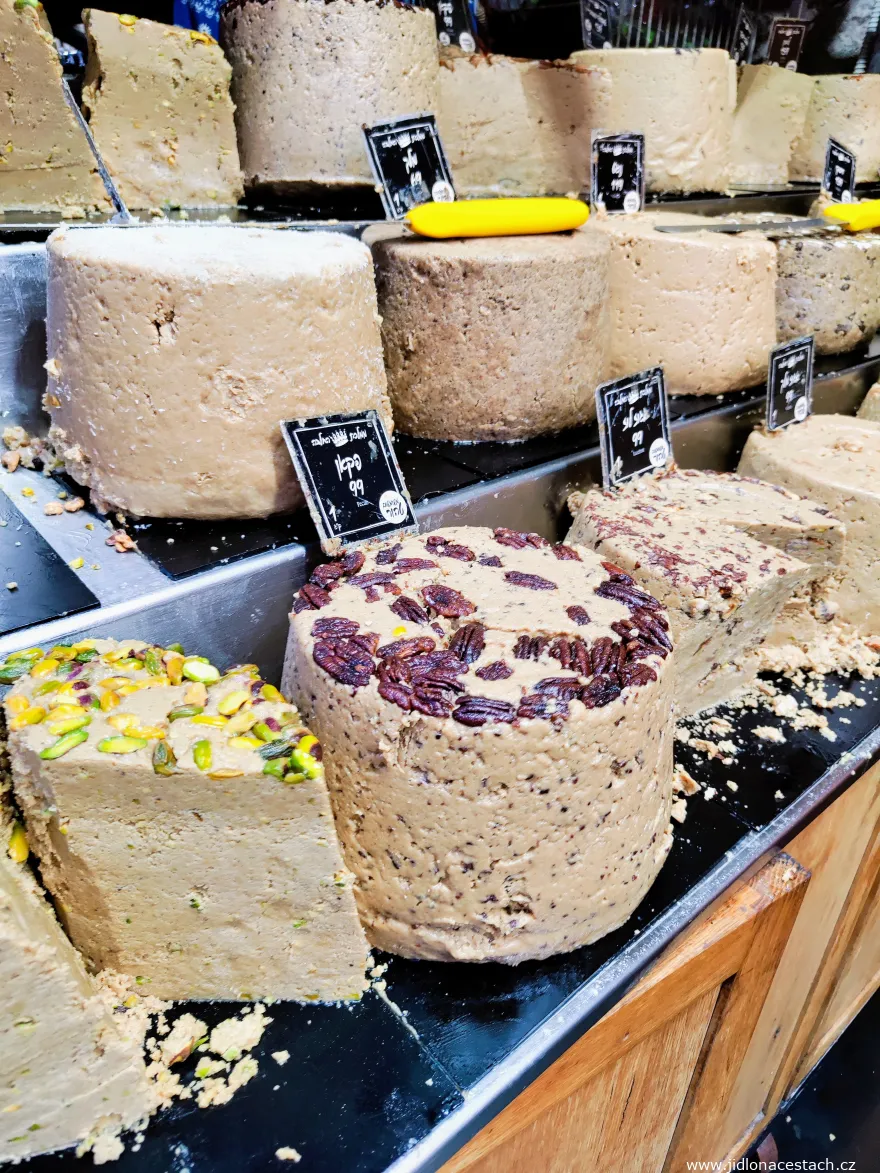
- Halva. A crumbly sweet of ground sesame and sugar in dozens of flavors. At some market stalls they press it right in front of you - my favorite is the pistachio one.
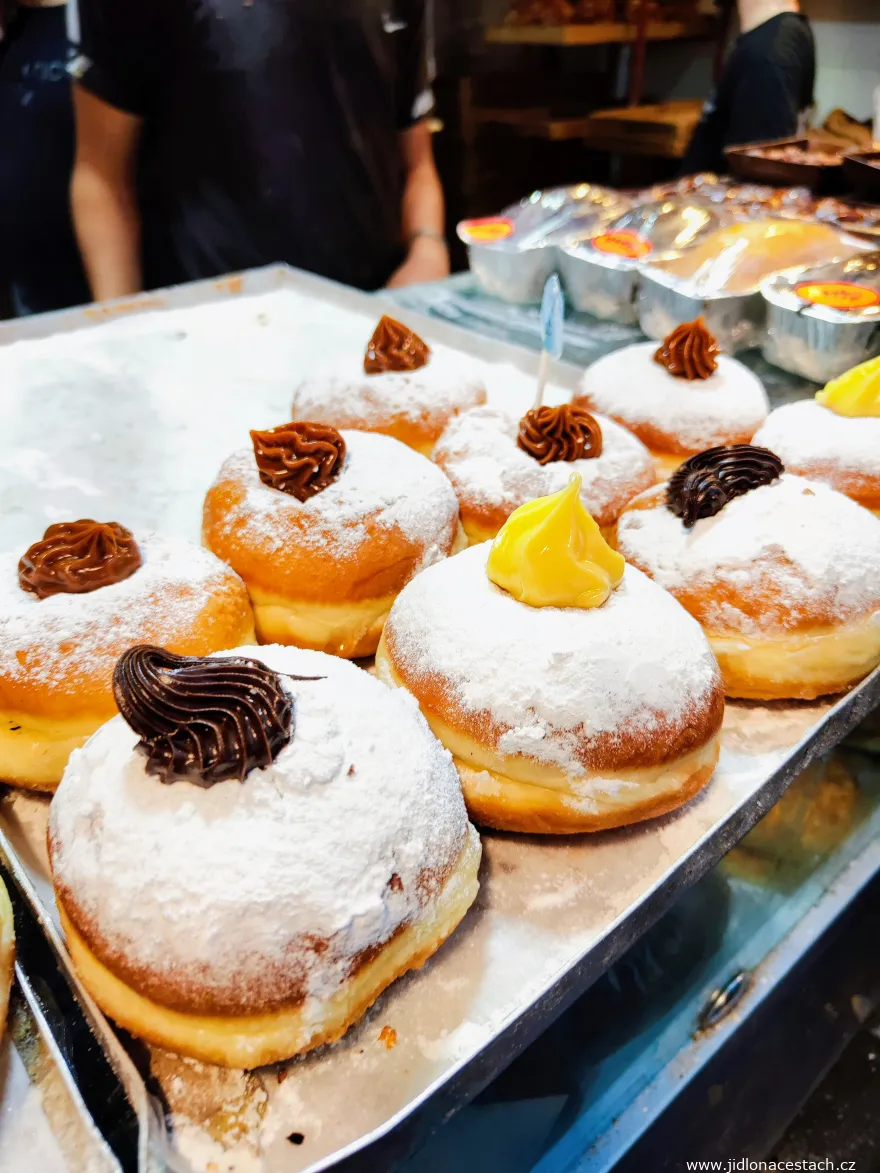
- Sufganiyah. A fluffy fried doughnut with jam or cream. Most of them get eaten at Hanukkah, when tradition calls for fried food.
- Rugelach. Rolled crescents, most often with a chocolate filling. A Jewish sweet with roots in Poland, and in Israel every bakery has them.
- Malabi. A delicate milk pudding with rose water, syrup and a topping of nuts or coconut. A Sephardi dessert that also sells as street food in a cup.
- Knafeh. A warm dessert of sweet cheese and fine kadaif threads soaked in syrup and smothered in pistachios. The Palestinian city of Nablus made it famous, but everyone has fallen for it.
- Baklava. Layers of thin pastry, nuts and syrup. Israeli markets stack it into tempting pyramids next to the halva and dried fruit.
- Jaffa oranges. A sweet variety with a thick, easy-peeling rind and hardly any seeds. Bred in the Middle East and famous all over the world.
- Ptitim. Tiny rice-shaped pasta, known back home in Czechia as Israeli couscous. It was created in the 1950s as a substitute for scarce rice and also goes by "Ben Gurion's rice".
- Bamba. Peanut puffs made from puffed corn that hold a quarter of the Israeli salty snack market. Practically identical to the peanut puffs we have back home in Czechia.
- Bisli. A crunchy snack shaped like little pasta, made from seasoned wheat flour. The second most popular Israeli snack right after bamba.
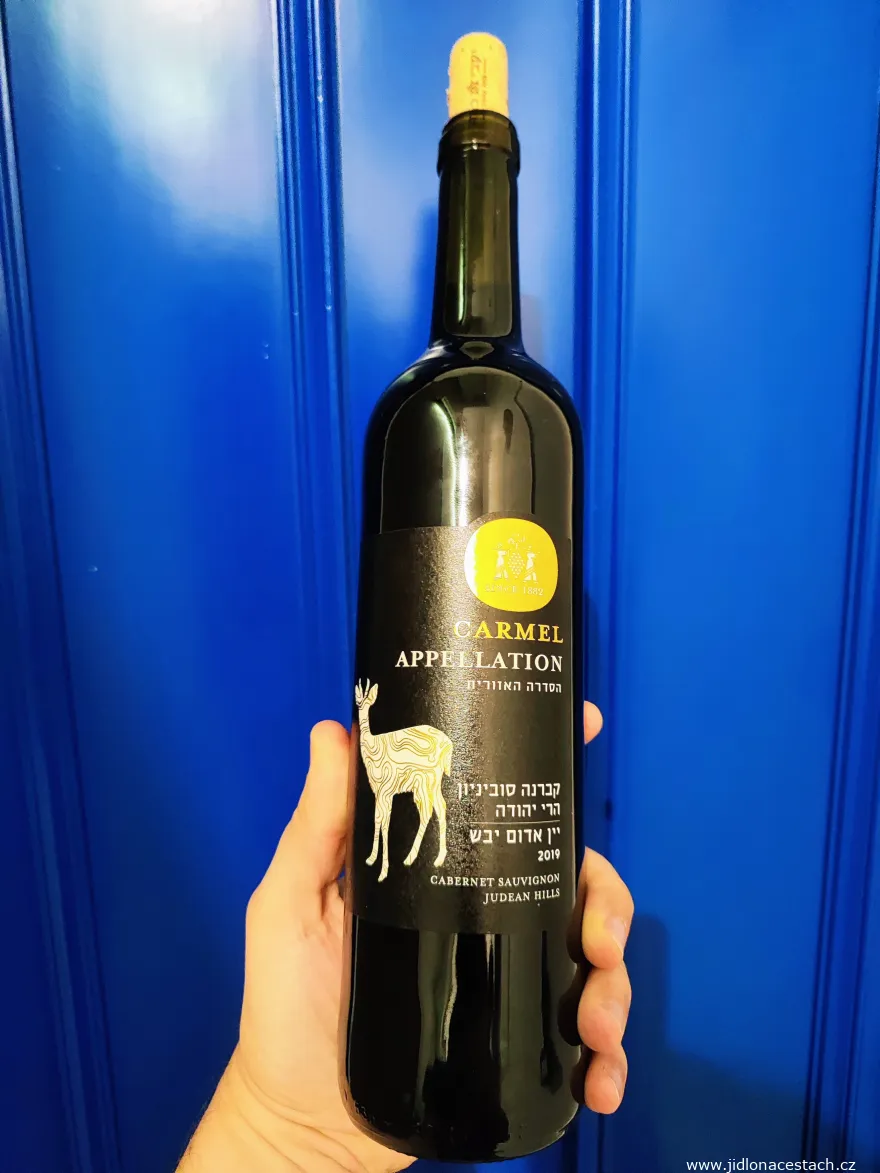
- Israeli wine. Top-quality kosher wines from five wine regions, including the Judean Hills near Jerusalem. Almost unknown back home in Czechia, which is a shame.
- Israeli beer. The best-selling brand is Goldstar, a kosher lager. Do expect beer to be expensive in Israel, though.
- Limonana. Iced lemonade with fresh mint, a lifesaver in the summer heat. The name is a blend of limon (lemon) and nana (mint).
- Cardamom coffee. Strong black coffee brewed with ground cardamom and served in small cups. It tastes best in the bustle of an Arab market.
Typical Israeli Drinks
Cardamom coffee is the Israeli drink that stayed with me the most - strong, thick and spiced, served in small cups. At the Damascus Gate in Jerusalem, sitting down with a coffee costs more, but the vendors will happily hand you one to go for half the price - and you get the bustle of the market either way.
Limonana is Israel's answer to the summer heat - lemonade blended with fresh mint and ice. The story behind it is the fun part: it caught on in the 1990s thanks to an ad campaign for a product that didn't actually exist. People started ordering it anyway, so the restaurants simply started making it.
Israeli wines were one of the biggest surprises of my trip. Vines grow in five regions, including the Judean Hills, where Jerusalem sits. Most of the production is kosher - a Jew has to take part in making it - and there is also mevushal wine, an oddity that is heat-treated. Baron Rothschild revived the winemaking tradition here in the 19th century, bringing vines straight from France.
Beer is easy to find in Israel too, of course, and the best known is the kosher lager Goldstar. Be ready for it to cost several times what you'd pay back home in Czechia, though.
How to Enjoy Israeli Food to the Fullest
- Plan around Shabbat. From Friday sunset to Saturday sunset, practically everything in Jewish neighborhoods is closed - shops, restaurants and bakeries alike. Do your shopping on Friday morning.
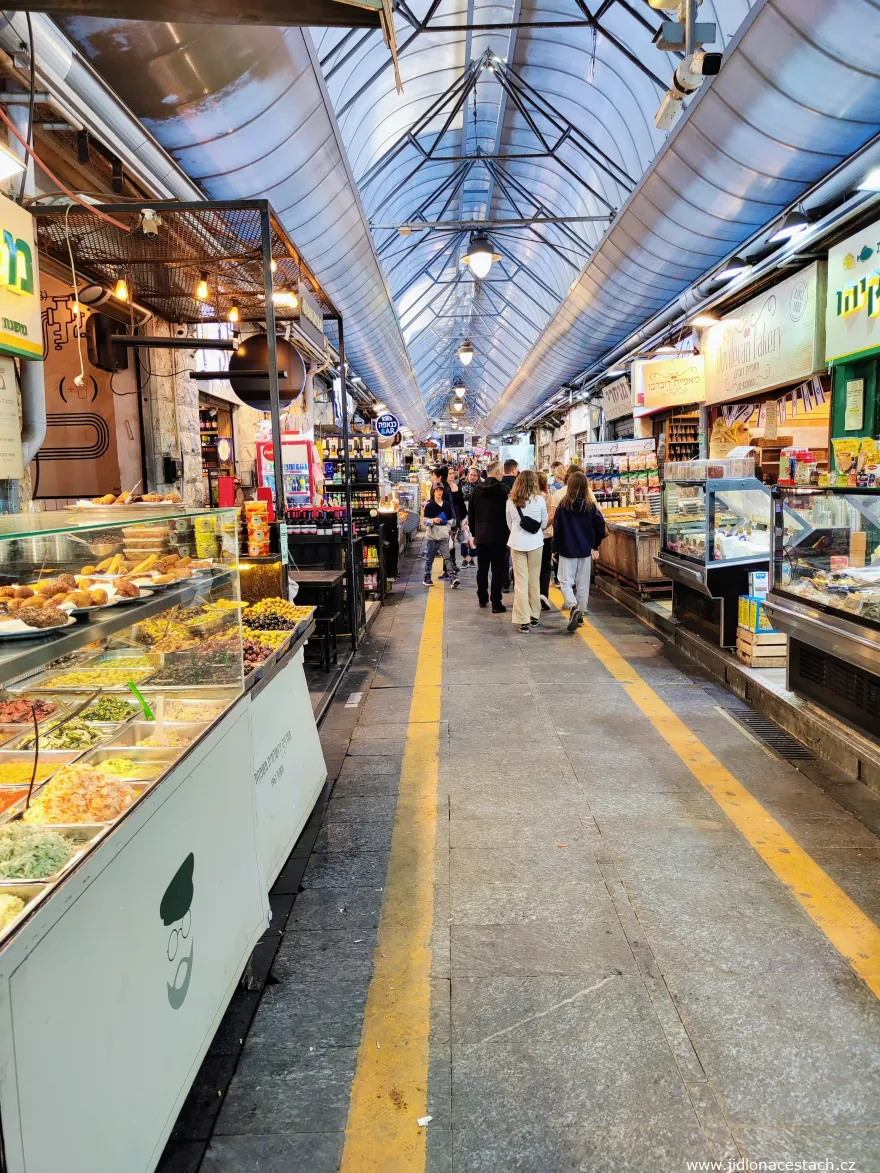
- Catch the market just before Shabbat starts. On Friday afternoon at the Machaneh Yehudah market, vendors shout out their discounts and the lanes are impossible to walk through. The moment the first star appears, the whole place empties within minutes - I've never seen anything like it anywhere else.
- Go for hummus at a hummusia. Places like Hummus Ben Sira in Jerusalem have been making hummus for decades and you can taste it.
- Buy your bread straight from the bakeries. In Jerusalem, get lost in the lanes of the Old City and find a small bakery - a Jerusalem bagel costs a fraction of what the stalls by the gates charge. The bakers threw in something extra with my bagel: za'atar wrapped in newspaper.
- Respect the kosher rules. Kosher places won't serve you milk and meat together - a cheeseburger is simply not on offer. It isn't anyone being difficult, but a tradition thousands of years old that belongs to Israeli food as much as the food itself.
- Go looking for food outside the cities too. On the shore of the Dead Sea you'll find the lowest bar in the world - refreshments 420 meters below sea level. You won't get an espresso with a view like that anywhere else.
The Best Israeli Food
If I had to pick three personal favorites, the best Israeli food for me is:
- Hummus. I've never eaten better hummus than the one they served me at Hummus Ben Sira in Jerusalem. Unbelievably smooth, swimming in olive oil and with pita still warm from the oven.
- Sabich. My very first meal in Israel - and it set the bar high. Fried eggplant with egg in pita is a combination that can't go wrong.
- Rugelach. Dense chocolate crescents that the baker pulled out of the oven right in front of me. A pack of twelve disappeared suspiciously fast.
How to Say Thank You for Israeli Food
Israelis appreciate it when you try a few words of Hebrew - and these are the ones that come in handy around food:
"תודה" (toda) - thank you. It will get you through almost anywhere. To thank someone more warmly, say "תודה רבה" (toda raba) - thank you very much.
"בתיאבון" (beteavon) - bon appétit. Literally "with appetite for the meal", you'll hear it from the staff as they serve you and there's nothing to stop you wishing it to the others at your table.
"טעים" (taim) - tasty. The simplest compliment you can pay a cook. One word with a smile goes down well at a food counter and at the market.
Kosher Cooking and Shabbat
The kosher rules set out what an observant Jew may eat - and in Israel you run into them at every turn. At its core is keeping meat and milk apart, since the two can't be combined in one dish, which is why many places run either a strictly meat kitchen or a strictly dairy one. There's kosher wine, which a Jew has to oversee, and even kosher versions of popular snacks. None of it makes the food any less tasty - kosher food is just ordinary food prepared by the rules.
Shabbat changes the rhythm of the whole country. From Friday sunset until Saturday night, Jewish shops, food counters and restaurants are closed and public transport stops running. Friday morning is therefore all about shopping - locals make one last run to their favorite eateries and bakeries. For Shabbat they bake the sweet challah bread, and before it goes into the oven a symbolic offering is set aside from the dough.
Shabbat can catch a visitor off guard, but it can also reward you. I planned a Saturday morning walk through the deserted Old City of Jerusalem out to the Damascus Gate - the contrast between the silent lanes and the humming Arab market, which carries on as usual on Shabbat, is one of the most powerful moments of my whole trip.

Interesting Facts About Israeli Food
- Ptitim pasta is known as "Ben Gurion's rice". It was created in the 1950s on the orders of Prime Minister Ben Gurion as a substitute for scarce rice, and it's still made today.
- Bamba peanut puffs hold a quarter of the Israeli salty snack market. And they have done without a break since 1964; there are strawberry and caramel versions too.
- The Israeli army buys hundreds of thousands of doughnuts for Hanukkah. The defense ministry reportedly gets up to 400,000 sufganiyah a year for its soldiers.
- Israel is one of the main suppliers of citrus fruit to the EU. It exports up to half of its annual harvest, and the best known are Jaffa oranges, bred precisely for long journeys.
- Israel's vineyards are among the smallest in the world by area. They cover just 4,300 hectares - the area under vines back home in Czechia is roughly four times bigger.
- Limonana came about thanks to an ad for a product that didn't exist. The celebrity campaign was so convincing that people started asking for the drink - and the bars and restaurants really did start making it.
- Shakshuka was brought to Israel by Jews from North Africa. The dish from Tunisia and Libya caught on so well in the 1950s and 1960s that it's now part of Israeli army rations.
- Iraqi Jews invented the sabich sandwich. After arriving in Israel they turned it into a quick breakfast - every ingredient could be prepared the day before, which kept it within the Sabbath rules.
- Nobody agrees on who invented the Jerusalem mixed grill, me'orav yerushalmi. Several places by the Machaneh Yehudah market claim it, and the argument has been running for decades.
- The za'atar blend gives Israeli food its characteristic flavor. It's sprinkled on bread and stirred into oil, and the exact recipe differs from family to family.
Enjoy Israel and the best Israeli food!



Sabich: Iraqi Sandwich with Eggplant and Egg
Sabich is a pita stuffed with fried eggplant, hard-boiled egg, tahini and amba, a pickled mango sauce. Iraqi Jews came up with it in Israel - it was born in 1961 at a stall in Ramat Gan and it's named after the man who first sold it. Today Israel calls it the national sandwich, and in Jerusalem there's a kosher bistro that makes nothing else.

Sufganiyah: Israeli Doughnuts
It looks like an age-old Hanukkah tradition, but Israel's biggest holiday food was pushed by the trade unions in the 1920s to keep bakers employed. Sufganiyah is a yeast doughnut with jam or cream - next to the ones back home it's a hefty thing, and Israel eats millions of them in a season. I bought mine at a Jerusalem bakery where the line never went away.

Rugelach: The Chocolate Crescents of Ashkenazi Cooking
Rugelach are small yeasted pastries of Ashkenazi origin that made themselves at home in Israel: triangles of dough spread with chocolate and rolled up into little crescents. The name literally means "little horns" and shares a Slavic root with the Czech rohlík. I explain why they are not a Jewish croissant, why they are usually dairy-free and what a pack of mini rugelach tastes like warm from the oven in Jerusalem.

Bourekas: Filled Puff Pastry
In an Israeli bakery the shape tells you the filling: a triangle means cheese, a square potato. Bourekas, a filled parcel of flaky puff pastry, was brought to Israel by Sephardi Jews from the Ottoman Empire - along with a name that is grammatically a plural. And in Jerusalem there's a bistro that has been doing nothing else since 1959.

Hummus Ben Sira: A Hummusia in the Center of Jerusalem
A short street in central Jerusalem is named after an ancient sage, but these days people come for the hummus. Since 2005, Hummus Ben Sira has been serving warm hummus with whole chickpeas and olive oil, with fresh falafel and pita alongside. The article also explains what a hummusia is, why you wipe hummus up with pita, and why you shouldn't show up just before Shabbat.

Katzutz: Israeli Salad of Finely Diced Cucumbers and Tomatoes
Katzutz, Hebrew for "chopped", is a salad of cucumbers, tomatoes and onion cut into the smallest dice possible, with parsley, lemon and olive oil. In Israel it sits on the table with almost every meal, from the kibbutz breakfast to falafel in a pita. The world calls it Israeli salad, but its cousins get chopped all across the former Ottoman lands, from Turkey to India.

Israeli Wine: Kosher, Mevushal and Four Bottles from Jerusalem
Almost every bottle in an Israeli supermarket is kosher, and some of them are pasteurized so a non-Jewish waiter can pour them. Wine is made in five regions, but Jerusalem has a story of its own: the Shor family was pressing wine here before Baron Rothschild brought vines over from France. I'll explain what kosher and mevushal mean, and finish with four bottles from the Judean Hills.

Geula Bakery: Pastries by Weight in Mea Shearim
Geula Bakery sits in the ultra-Orthodox neighborhood of Mea Shearim in Jerusalem - a few minutes' walk from the modern center, and a good century away. Sweet turnovers filled with farmer's cheese or chocolate are sold by weight here, and you pay in cash only. If you want a taste, you also have to accept the rules of a neighborhood that deliberately keeps itself apart from the city around it.

Israeli Beer: Goldstar, the Kosher Lager
Goldstar is the best-selling beer in Israel: an amber lager with 4.9% alcohol, a kosher certificate and a six-pointed star on the label that doesn't come from Israeli symbolism at all, but from medieval German brewing tradition. Israelis are among the most moderate beer drinkers in the world, and the country's beer history started in the 1930s with a Pilsner recipe brewed for British soldiers.

Challah: The Braided Bread for Shabbat
Challah is a braided yeast bread of flour, eggs, oil and sugar that Jews in Israel and all over the world put on the table on Friday night and on holidays. It takes its name from the piece of dough separated from every batch as an ancient tax owed to the priests. The braid comes from medieval Central Europe, and the dough has no butter in it so that the bread can be eaten with meat.