What to Eat in Port Louis
Port Louis is the capital and largest port of Mauritius, founded in 1735 by the French governor La Bourdonnais and named after King Louis XV. To me, it's mainly a city of markets: I kept coming back for the street food from its market halls and sidewalk carts - nowhere else on the island did I eat as cheaply as right here, out of a paper wrapper and standing up.
The History Behind the Food of Port Louis
Practically all of Mauritian cuisine sailed in through the harbor of Port Louis. The French turned the town into a supply stop for ships sailing between Europe and Asia around the Cape of Good Hope; after slavery was abolished, the British shipped in indentured laborers from India - by 1920, more than 450,000 of them had passed through the immigration depot at Aapravasi Ghat, now a UNESCO World Heritage Site right in the city center. They were the ones who brought the flatbreads, legumes and curries the island's national dishes are built on today.
The city's Cantonese community has its own quarter, too: from the 1780s onward, they built Camp des chinois around what is now Rue Royale - today's China Town, one of the oldest Chinese quarters in all of Africa. People still come here for Chinese food, from dim sum to little baked cakes, and once a year the quarter hosts a big Chinese food festival. And then there are the markets: there's been a market on the same spot in the center for about three hundred years, and the covered hall of the Central Market has been in use since 1845. If you want to understand Mauritian cuisine, this is the place to start.

What to Eat in Port Louis
- Dholl puri. A thin flatbread filled with a paste of yellow split peas and topped with curry and pickled vegetables - the national dish, if you ask the islanders. It came over with the Indian laborers who were put ashore right here in Port Louis, and nowhere on the island is it easier to find: just about everyone sells it, at the markets and from mobile carts on the sidewalks. At one of those carts, I clocked about twenty seconds per portion.
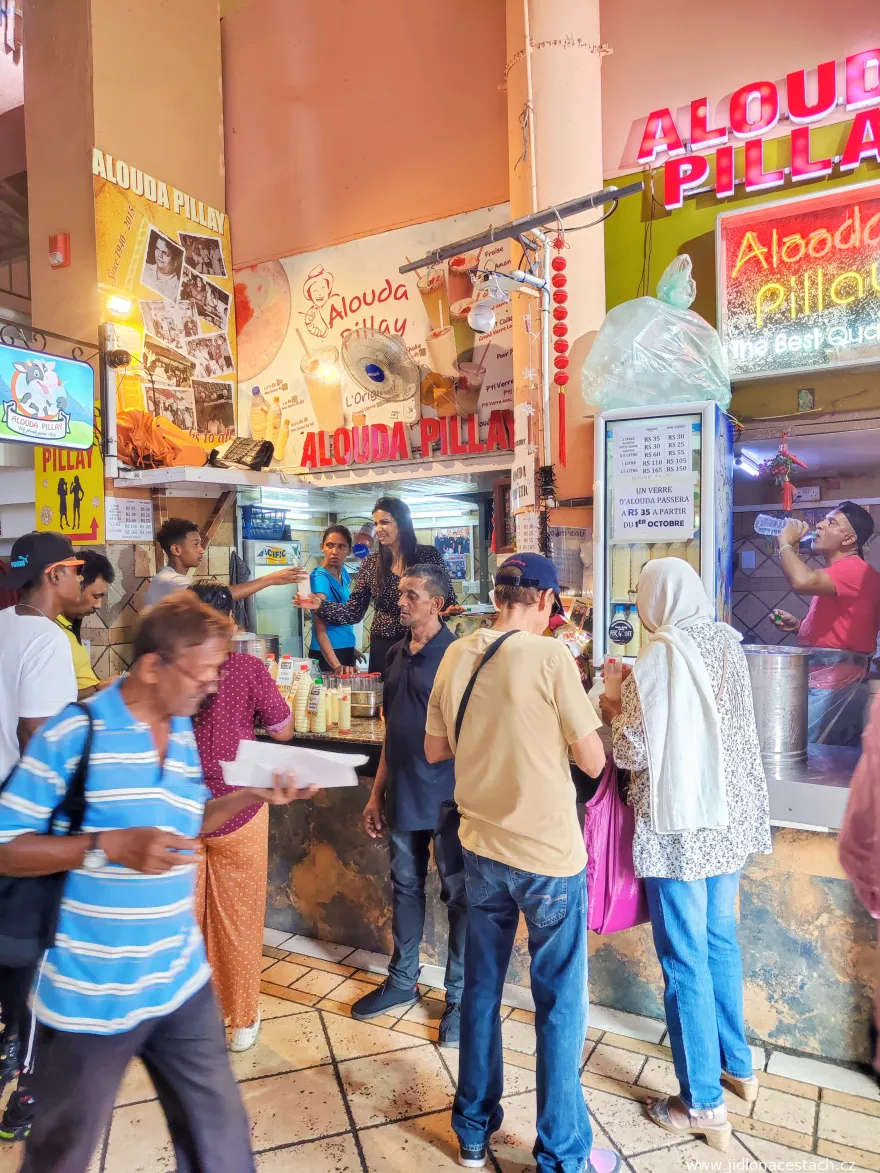
- Alouda. A thick, cold drink made from milk, flavored syrup, basil seeds and grated jelly, usually with a scoop of ice cream on top. You'll find it all over the island, but the most famous alouda is poured at the Central Market in Port Louis, where the same family has stood behind the counter of the Alouda Pillay stall since the 1930s.
- Sugarcane juice. It's pressed fresh on the ground floor of the Central Market, the same floor where the alouda is mixed, and served over crushed ice. I was expecting liquid sugar and got a faintly sweet drink with a green, almost grassy note that did more for me in the midday heat than anything out of a fridge.
- Fruit confit. Freshly peeled pineapple dusted with chili, with green mango or cucumber from a vinegar brine on the side - a snack in a bag, sold at the markets and from display cases bolted onto scooters. It's the only food in Mauritius where I went back to the seller before I'd even finished the first bag.
- Haleem. A thick soup of cracked wheat, legumes and meat cooked down to a smooth porridge, a dish from Mauritius's Muslim community. In the city, it's easiest to find in the Plaine Verte neighborhood north of the center.
- … and dozens more Mauritian dishes, if you want the whole list: What to Eat in Mauritius.
Where to Eat in Port Louis
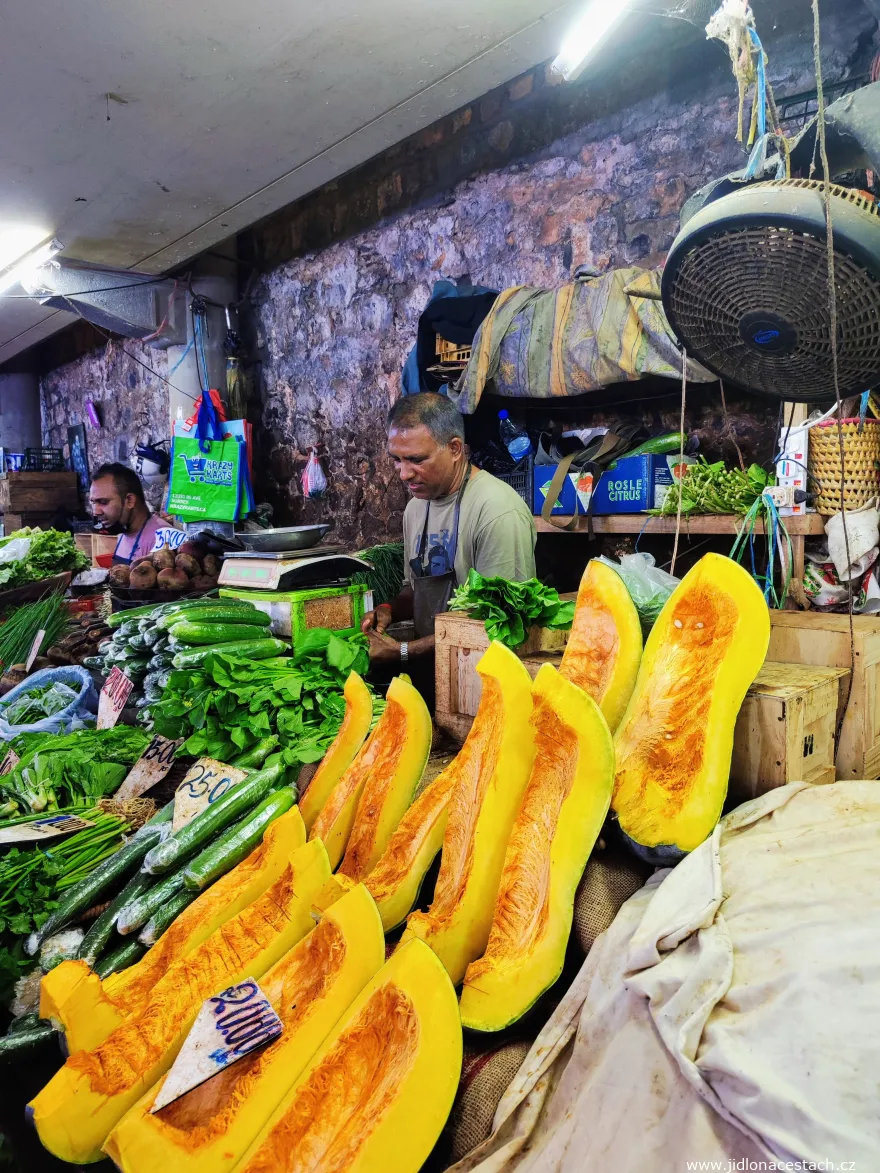
- Central Market (Bazar). The island's largest covered food market and a national monument: the main hall is given over to fruit, vegetables, herbs and spices, the side halls to meat and fish, and a separate two-story building houses small bistros. The fruit here is fresh and leagues better than the fruit that travels halfway around the world to reach us back home in Czechia; my tip is peeled coconut, sold by the piece. It's busiest on Saturdays - if you want the freshest produce and heat you can still bear, come at around nine in the morning.
- Alouda Pillay stall. The most famous alouda on the island: a stall at the Central Market right next to the entrance to the Mauritian food section, where the Pillay family has stood behind the counter since the 1930s. You can't miss it - a neon sign, framed old photographs and a line that moves fast thanks to glasses poured in advance. Order it with a scoop of ice cream; there's also a less sweet version, or one without ice cream.
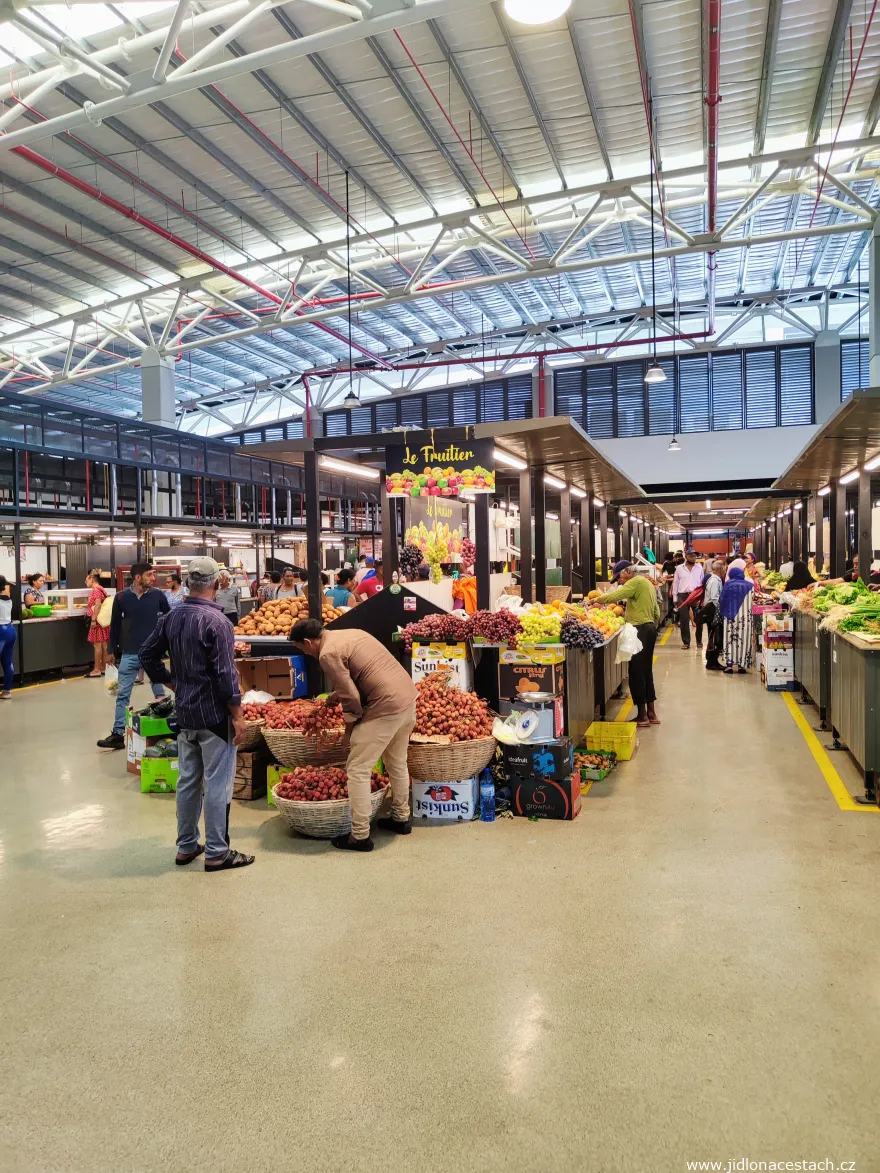
- Victoria Station Market. A market hall inside the Victoria Urban Terminal, the transport hub where buses leave for the south and west of the island and where the Metro Express stops: fruit stalls and takeaway windows selling dholl puri, roti and gâteaux piments to go. Food for the journey gets wrapped in paper a few steps from the platform, and there's also a Winners supermarket on the ground floor.
And if I could take just one flavor home from Port Louis? Alouda from the Pillays - milk, ice and a scoop of ice cream are three upgrades I'd happily pay the family for all over again.
Enjoy eating your way around Port Louis!



Dholl Puri: Mauritian Flatbread Filled with Yellow Split Peas
Dholl puri is a thin flatbread filled with a paste of yellow split peas, brought to Mauritius by Indian indentured laborers after 1834; it's cooked dry here, even though it's named after a deep-fried bread. It's sold by the piece, wrapped in paper, topped with bean curry, rougaille and pickled vegetables. In Port Louis, a street cart puts one together in twenty seconds.

Fruit Confit: Pineapple with Chili and Pickled Mango
Mauritian markets sell fruit in a way no one back home would expect: fresh pineapple gets a dusting of chili and green mango ends up in a vinegar brine with salt and sugar. The snack is called fruit confit, konfi in Creole. They'll mix you a bag for pocket change at the market in Port Louis and down by the beaches; practically the same thing is sold on the sister island of Réunion.

Alouda: The Mauritian Milk Drink with Basil Seeds
Alouda is a thick Mauritian drink made of milk, syrup, basil seeds and grated agar jelly, usually with a scoop of ice cream. It's an offspring of the Indian falooda that lost its noodles and a letter of its name on the way across the ocean. I drank it at the source - at the Alouda Pillay stall in the Central Market in Port Louis, where they've been selling it since the 1930s.

Central Market in Port Louis: The Bazaar of the Mauritian Capital
The covered market in the center of Port Louis has been selling fruit, vegetables, spices and fish since 1845 - its ornate cast-iron gates sailed in from Glasgow. The main hall smells of herbs and masala, the side halls belong to meat and fish, and a separate building houses small bistros serving alouda. Saturday is the busiest day, and you only haggle upstairs among the souvenirs.

Victoria Station Market: Street Food in the New Port Louis Terminal
The Victoria Station Market is a market hall inside the Victoria Urban Terminal, a transport hub in the center of Port Louis with buses to the south and west of Mauritius and the Metro Express to Quatre Bornes and Curepipe. Under the same roof as the station you'll find fruit stalls, windows serving dholl puri, roti and gâteaux piments for the road, and a supermarket.