What to Eat in Jerusalem
Jerusalem (Hebrew ירושלים, Arabic القدس) is the capital of Israel and one of the oldest continuously inhabited cities in the world. More than five thousand years of history, holy sites of three religions - and on top of all that, a fantastic city to eat in. The Old City is divided into four quarters (Muslim, Christian, Jewish and Armenian), and each of them cooks a little differently. That variety is exactly what I enjoyed most about Jerusalem's food.
Jerusalem was my base for the whole of my last trip to Israel. For breakfast I had bagels from the gates of the Old City, for lunch sabich and hummus at well-known local spots, and in the evenings I tasted wines from the Judean Hills.
Shabbat in Jerusalem
Shabbat shapes eating in Jerusalem more than any menu does. From sundown on Friday to sundown on Saturday, practically every Jewish grocery store and restaurant closes. That's why Friday afternoon at the Machaneh Yehudah Market is one of the best shows in town - vendors shout as they sell off their stock, the lanes are too packed to get through, and once the first star appears, the whole market empties within minutes.
If you don't get your shopping done in time, you won't go hungry over Shabbat: the Arab markets by Damascus Gate in the Muslim Quarter keep going without a break. A Saturday morning walk through the deserted Old City that ends with the bustle of the Arab market swallowing you up is one of my most vivid memories of Jerusalem.

What to Eat in Jerusalem
A list of specialties with a documented connection to Jerusalem - they taste best here, or they were born here:
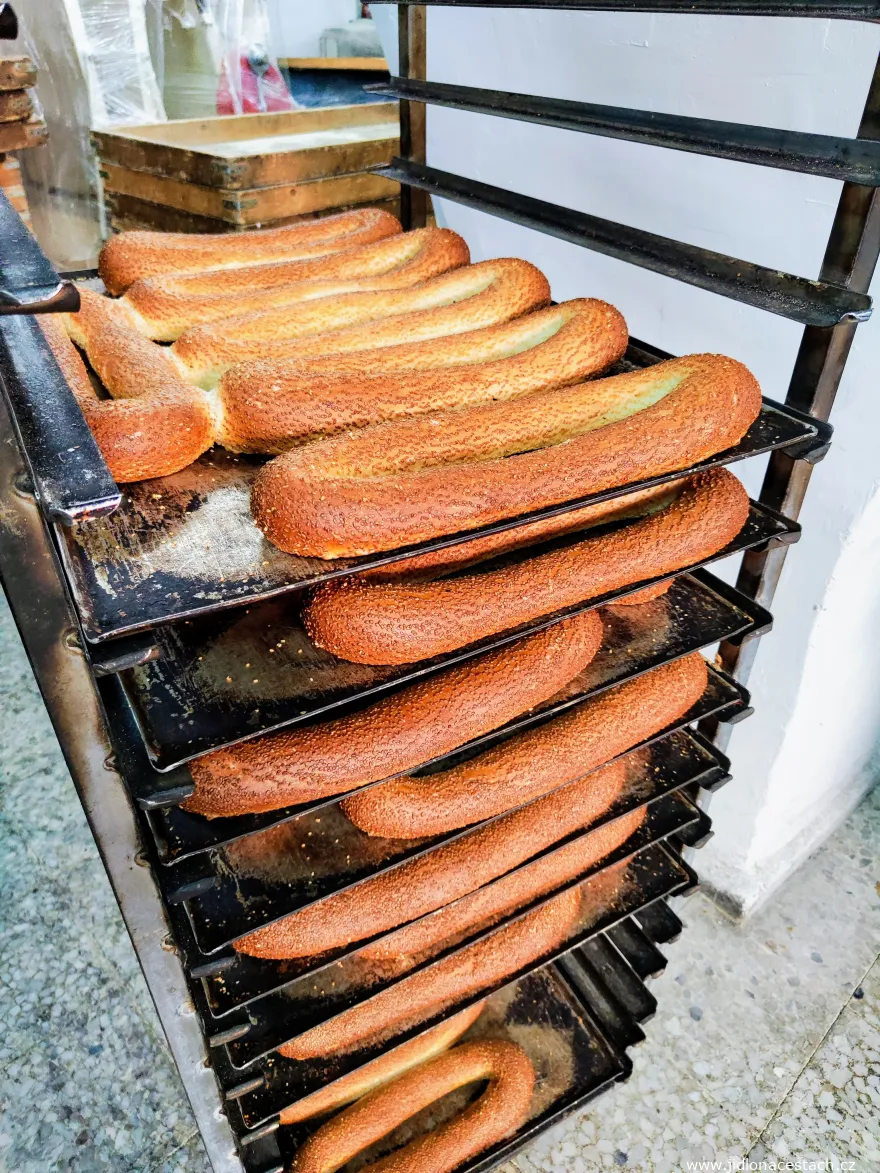
- Jerusalem bagel. An elongated yeast bread with a sesame crust that, unlike classic bagels, isn't boiled, only baked. It's named after the city itself, and you'll find a stall selling it at almost every gate of the Old City.
- Me'orav yerushalmi. "Jerusalem mix" - chicken hearts, livers and pieces of lamb seared on a flat griddle with turmeric and cumin. It was born in the eateries by the Machaneh Yehudah Market, and the places on Agripas Street still argue over who came up with it.
- Marak kubbeh. A soup with semolina dumplings stuffed with meat; the best-known version is the red one made with beets. Kurdish and Iraqi Jews brought it to the city, and the eateries around the Machaneh Yehudah Market turned it into a Jerusalem classic.
- Fresh halva. A crumbly sesame sweet that some vendors at the Machaneh Yehudah Market press right on the spot - you won't find it this fresh anywhere else. My favorite is pistachio.
- Rugelach. Little rolled pastries, most often with a chocolate filling. Practically every pastry seller in the lanes of the Old City has them, and they're best still warm from the small bakeries.
- Wines from the Judean Hills. Jerusalem sits right inside one of Israel's five wine regions. The city is home to the Zion winery, which the Shor family founded here back in 1848, as well as Jerusalem's only cooperative winery.
- … and several dozen more Israeli dishes on the list: What to Eat in Israel.
Where to Eat in Jerusalem
- Hummus Ben Sira. I've never had better hummus in my life - incredibly smooth, swimming in olive oil, with fresh falafel and warm pita. You order on a touchscreen in English, and then the server walks through the place with your food, calling out your name. Right before Shabbat the line stretches around the corner; the rest of the time it's no problem.
- Aricha Sabich. A kosher spot that makes nothing but the sabich sandwich. It was my first meal in Israel - and the staff were really friendly and happily showed me the whole process. You can pay by card too.
- Burekas Musa. A kosher place that has made nothing but bourekas since 1959 - with cheese, egg and pickled cucumber. Twice I left empty-handed because they'd sold out, so don't show up late in the afternoon.
- Geula Bakery. A small bakery in the ultra-Orthodox neighborhood of Mea Shearim, where sweet turnovers filled with farmer's cheese or chocolate are sold by weight. Bring cash - you can't pay by card - and dress modestly for the neighborhood, with your shoulders and legs covered.
- Machaneh Yehudah Market. Hundreds of stalls selling fruit, spices, sweets and halva, with little eateries tucked in between serving falafel and shawarma. The perfect place to taste a bit of everything.
- Arab markets by Damascus Gate. Fresh vegetables, olives, bread and sweets in the Muslim Quarter - and a lifesaver when everything else closes for Shabbat. Stop at one of the cafés for a strong coffee with cardamom and watch the bustle go by.

Jerusalem is a place you need to taste at least once in your life. Few places in the world bring together as many cultures on a single plate as this one.
Enjoy eating your way around Jerusalem!



Sabich: Iraqi Sandwich with Eggplant and Egg
Sabich is a pita stuffed with fried eggplant, hard-boiled egg, tahini and amba, a pickled mango sauce. Iraqi Jews came up with it in Israel - it was born in 1961 at a stall in Ramat Gan and it's named after the man who first sold it. Today Israel calls it the national sandwich, and in Jerusalem there's a kosher bistro that makes nothing else.

Sufganiyah: Israeli Doughnuts
It looks like an age-old Hanukkah tradition, but Israel's biggest holiday food was pushed by the trade unions in the 1920s to keep bakers employed. Sufganiyah is a yeast doughnut with jam or cream - next to the ones back home it's a hefty thing, and Israel eats millions of them in a season. I bought mine at a Jerusalem bakery where the line never went away.

Rugelach: The Chocolate Crescents of Ashkenazi Cooking
Rugelach are small yeasted pastries of Ashkenazi origin that made themselves at home in Israel: triangles of dough spread with chocolate and rolled up into little crescents. The name literally means "little horns" and shares a Slavic root with the Czech rohlík. I explain why they are not a Jewish croissant, why they are usually dairy-free and what a pack of mini rugelach tastes like warm from the oven in Jerusalem.

Bourekas: Filled Puff Pastry
In an Israeli bakery the shape tells you the filling: a triangle means cheese, a square potato. Bourekas, a filled parcel of flaky puff pastry, was brought to Israel by Sephardi Jews from the Ottoman Empire - along with a name that is grammatically a plural. And in Jerusalem there's a bistro that has been doing nothing else since 1959.

Hummus Ben Sira: A Hummusia in the Center of Jerusalem
A short street in central Jerusalem is named after an ancient sage, but these days people come for the hummus. Since 2005, Hummus Ben Sira has been serving warm hummus with whole chickpeas and olive oil, with fresh falafel and pita alongside. The article also explains what a hummusia is, why you wipe hummus up with pita, and why you shouldn't show up just before Shabbat.

Katzutz: Israeli Salad of Finely Diced Cucumbers and Tomatoes
Katzutz, Hebrew for "chopped", is a salad of cucumbers, tomatoes and onion cut into the smallest dice possible, with parsley, lemon and olive oil. In Israel it sits on the table with almost every meal, from the kibbutz breakfast to falafel in a pita. The world calls it Israeli salad, but its cousins get chopped all across the former Ottoman lands, from Turkey to India.

Israeli Wine: Kosher, Mevushal and Four Bottles from Jerusalem
Almost every bottle in an Israeli supermarket is kosher, and some of them are pasteurized so a non-Jewish waiter can pour them. Wine is made in five regions, but Jerusalem has a story of its own: the Shor family was pressing wine here before Baron Rothschild brought vines over from France. I'll explain what kosher and mevushal mean, and finish with four bottles from the Judean Hills.

Geula Bakery: Pastries by Weight in Mea Shearim
Geula Bakery sits in the ultra-Orthodox neighborhood of Mea Shearim in Jerusalem - a few minutes' walk from the modern center, and a good century away. Sweet turnovers filled with farmer's cheese or chocolate are sold by weight here, and you pay in cash only. If you want a taste, you also have to accept the rules of a neighborhood that deliberately keeps itself apart from the city around it.

Halva: The Crumbly Sesame Sweet of the Eastern Mediterranean
Halva is a sweet that breaks into threads: sesame tahini boiled with sugar sets into blocks that market vendors carve up piece by piece. It belongs to the whole eastern Mediterranean, from Nablus through Turkey to Greece, and Israel has been making it on a large scale since 1929. I tasted mine at the Machaneh Yehudah market in Jerusalem, where it is sold by the kilo but eaten by the slice.

Machaneh Yehudah Market: The Jerusalem Souk That Transforms Before Shabbat
The Machaneh Yehudah market is the main marketplace of West Jerusalem: more than 270 stalls selling olives, spices and halva, with bistros and bars tucked in between them. It borrowed its name from a neighborhood it doesn't belong to, and its whole week builds toward Friday afternoon - the sell-off before Shabbat, after which the packed lanes empty out in a matter of minutes. I was there to see it.