

İçli köfte is a Turkish stuffed meatball. The name literally means “stuffed köfte,” which accurately captures the essence of the dish – while ordinary köfte is simply minced meat, here there are two layers.
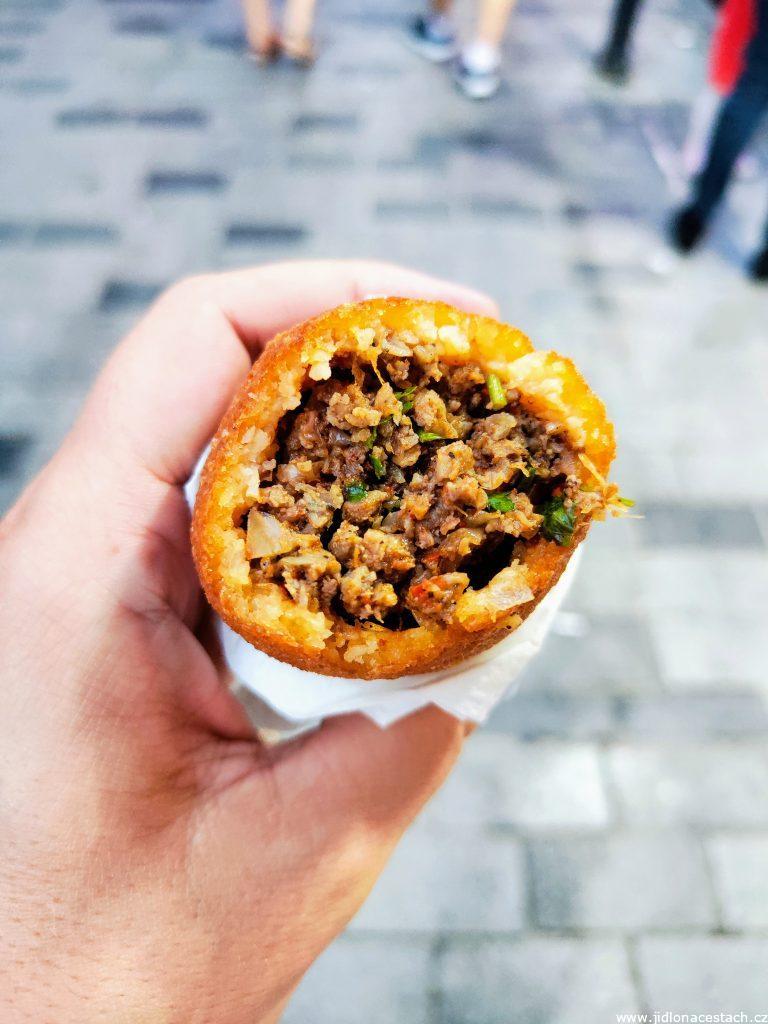
The origins of this dish reach deep into the history of the Levant and Mesopotamia, from where it spread to all of southeastern Anatolia, especially to gastronomic centers like Gaziantep or Şanlıurfa. In Turkey, it is originally a dish for special occasions or weekend family gatherings, for a simple reason – its preparation is laborious and time-consuming. Traditionally, women would gather to shape dozens of these balls together, because making a thin yet firm wall requires practice and patience.
The base of the outer layer is very fine bulgur, often mixed with a bit of semolina and flour. After soaking and thorough kneading, this mixture must be malleable and smooth; it must not crumble. Hidden inside is usually fattier minced beef or lamb, which is first sautéed on a large amount of onions. It is the onions that add natural sweetness and necessary moisture to the filling.
Making it is a test of the chef’s skill. Everything begins with preparing the filling, which must cool down completely before stuffing – a hot mixture would compromise the structure of the shell, and the ball would crack during frying. The cook then takes a piece of the bulgur mass and, using a moistened index finger in the palm of the other hand, begins to create a hollow with a circular motion. The goal is to create a wall just a few millimeters thick that is uniform around the entire circumference. The meat mixture is pressed into the resulting pocket with a spoon, the opening is carefully closed, and the typical point is shaped on both ends with the palms. There are two main methods of final preparation. The most common is frying in oil, which creates that irresistible, dark golden, and crispy crust. However, in eastern Turkey, for example around the city of Kahramanmaraş, the boiled version (haşlama) is also popular; it is lighter, paler, and allows the taste of the bulgur itself and the meat to stand out more without an oil film.
İçli köfte is most often served hot, just moments after being fried.
In the Arab world, especially in Syria, Lebanon, Palestine, and Jordan, this dish is known as kibbeh (kubbeh). The principle is identical, only the shape can sometimes be more rounded and the spices differ slightly. In Iraq, this dish is called kubba, and on Cyprus, you will encounter a variant called koupes, which is often longer, more cylindrical, and features more fresh parsley and onion in the filling. Thanks to Levantine immigrants, this dish even made it as far as Latin America, where, for example in the Dominican Republic or Brazil (kibe), it has become a popular snack.
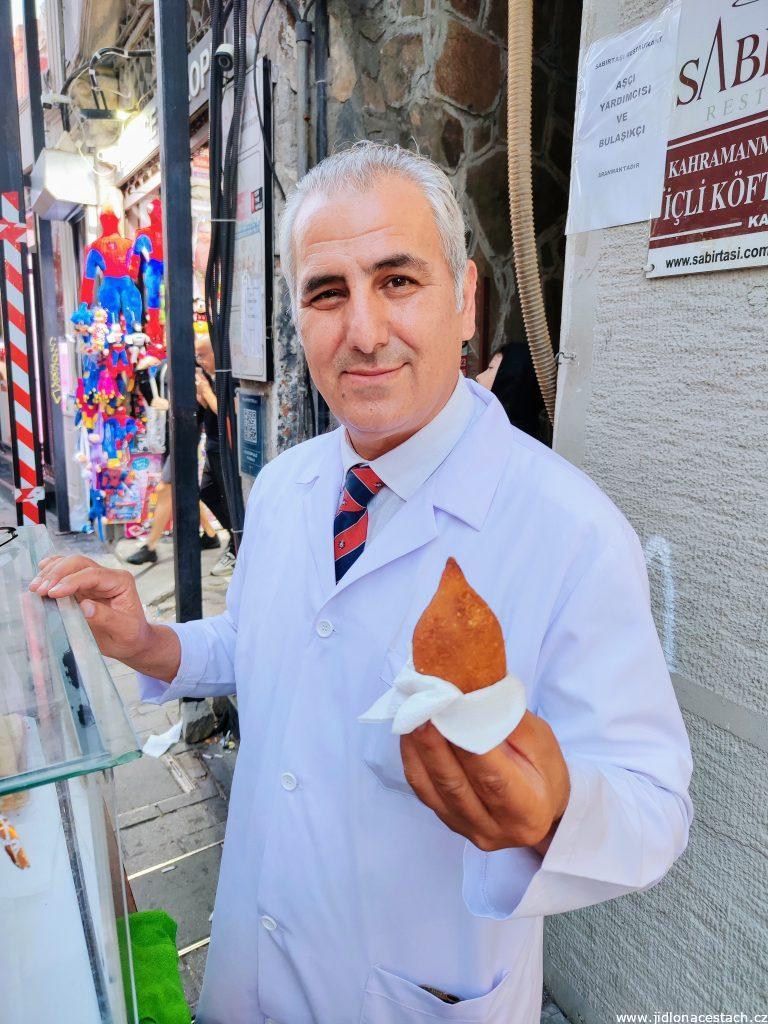
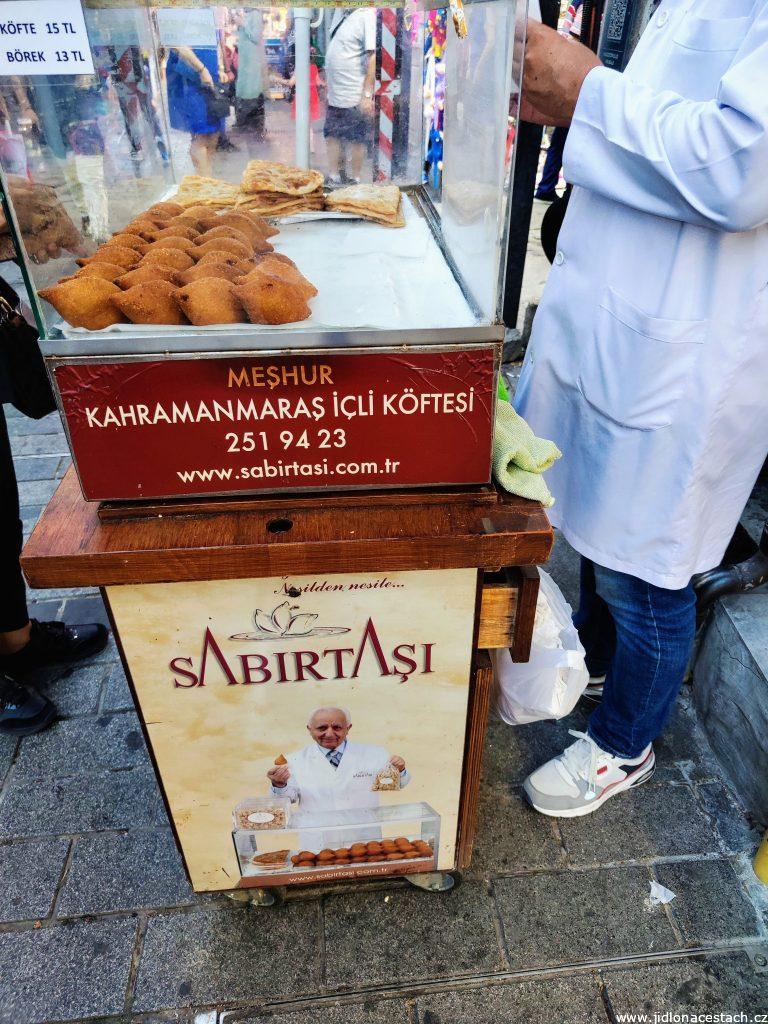
I tasted içli köfte in its most authentic form in Istanbul, specifically at the Sabırtaşı Restaurant establishment on the bustling Istiklal Avenue (see Where to Eat in Istanbul). It is a legendary place known for the fact that their vendor in a white coat sells these balls from a cart directly on the street, while the restaurant is on the floor above him. I received a piece freshly fried, so hot it could barely be held. The crust was incredibly thin and crispy, the nuts inside were distinct, and the meat was juicy without excess fat dripping from it. One portion cost 15 TRY (0.80 EUR). It was an ideal, filling snack.
Bon appétit!
🇹🇷 Are you a fan of kebab or Turkish "pizza" pide? Want to discover more Turkish foods? Subscribe to my newsletter and I will send you for free everything you need to know about Turkish food and drinks.


