Cappadocia is a geological marvel, whose soft volcanic rocks and bizarre rock formations have shaped the lives of local people for centuries. The inhabitants learned to coexist perfectly with this inhospitable yet malleable landscape and cleverly used it to their advantage. They carved not only dwellings into the rocks but, above all, extensive cave spaces which, thanks to their stable climate, served as natural cold storage for the year-round storage of potatoes, lemons, and other fruit.
The diet of Cappadocia’s inhabitants has a traditionally earthy and modest character, stemming from the needs of agricultural life. Thanks to the historical influence of the Hittites, early Christians, and later Turkic tribes, the typical flavors are very natural, with an emphasis on the ingredient’s own taste, not on excessive seasoning. The region has preserved authenticity in food preparation, producing dishes that are hearty and energy-rich.
Food in Cappadocia
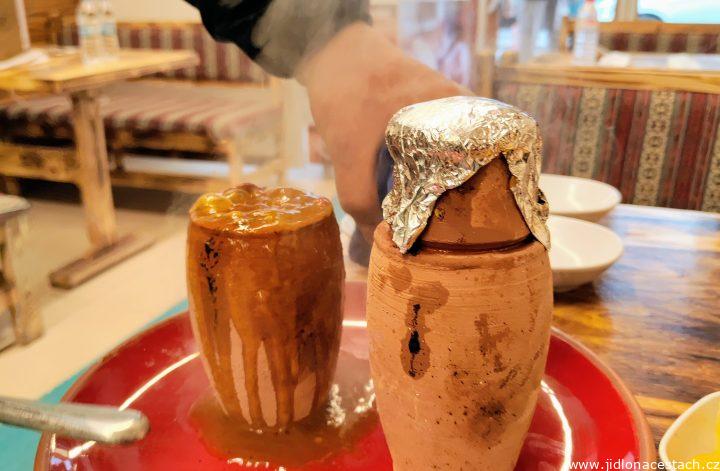
Testi kebabı: a dish typical of the Cappadocia region.
Ingredients Typical for Cappadocia
The typical cuisine of the Cappadocia region is based primarily on cereals, legumes, potatoes, grapes, and meat. The area has a specific continental climate with volcanic soil which is exceptionally fertile, which fundamentally affects the quality of local crops.
Local gastronomy is dominated by preparing dishes in clay vessels and cooking in traditional earth ovens. Popular dishes include testi kebabı, where meat and vegetables are hermetically sealed in a clay jug and slowly stewed in their own juices for several hours.
Widely used vegetables are pumpkin, eggplant, potatoes, and legumes such as chickpeas or beans. An absolutely essential ingredient is grapes, which are not only processed into wine but also boiled into a thick molasses called pekmez. This sweet substance is often used instead of sugar in dessert preparation or consumed for breakfast. A typical technique is also the drying of apricots and raisins in the hot Anatolian sun.
Gastronomy is now one of Cappadocia’s important tourist attractions. Traditional cave restaurants offer not only culinary experiences but also a visual show, for example, when serving testi kebab, when the clay vessel must be broken in front of the guest. The region supports the preservation of traditional winemaking and pottery, which are inextricably linked with the local cuisine. Wine and gastronomy festivals are held annually, promoting local grape varieties and traditional Anatolian recipes against the backdrop of fairy-tale fairy chimneys.
Lamb testi kebabı.
What to Eat in Cappadocia
Testi kebabı. Meat and vegetables slowly stewed in a ceramic vessel which is broken upon serving. Thanks to traditional pottery in the town of Avanos, it is the most famous symbol of Cappadocia’s gastronomy.
Çömlek Fasulyesi. Beans slowly baked with tomatoes and peppers in a clay pot (çömlek). Associated with the region thanks to traditional pottery and the long tradition of slow cooking in ceramic vessels.
Nevşehir Tava. A typical local dish of meat (usually lamb or beef) with vegetables, baked in an oven. Associated with the city of Nevşehir.
Dolaz. A simple dessert made of flour, butter, and grape syrup (pekmez), traditionally associated with the rural areas of Cappadocia. Popular mainly due to the availability of local ingredients.
Köftür. A sweet made from grape must thickened with flour and nuts, dried in the sun. A regional specialty thanks to the traditional cultivation of grapevines in Cappadocia.
Kuru Kaymak. Dried thick clotted cream, typical specifically for Cappadocia. The local method of preserving dairy products distinguishes it from other Turkish regions.
Gilaburu Şerbeti. A local non-alcoholic drink prepared from guelder rose (gilaburu), typical for the surroundings of Nevşehir. Popular due to its refreshing taste and the traditional use of this regional fruit.
Üzüm Hoşafı. Compote made from dried grapes, typical for the region thanks to the historical cultivation of grapevines and the traditional way of preserving fruit during the winter period.
Ayva Dolması. Quinces stuffed with a meat mixture and baked in the oven. Associated with the region thanks to the local tradition of growing quinces and their use in cuisine, especially around Nevşehir and Ürgüp.
Ürgüp Köftesi. Meatballs prepared according to a specific local recipe, typical for the town of Ürgüp. They are associated with the local culinary tradition.
Üzüm Pekmezi. Thick grape syrup traditionally produced in the region thanks to the abundance of grapevines. Typical for Cappadocia as a natural sweetener and energy food.
Nevşehir Simidi. A type of pastry characteristic specifically for the city of Nevşehir. A popular regional bakery specialty.
Kabak Çekirdeği. Roasted pumpkin seeds are a popular regional snack. A specific variety of pumpkin known precisely for its seeds is traditionally grown in Cappadocia.
Cevizli Sucuk (Köme). Nuts threaded on a string and dipped in thickened grape syrup, then dried. This sweet is typical thanks to local grape and nut production and the traditional method of preservation.
Ürgüp Şarabı. Wine from the town of Ürgüp and its surroundings, typical thanks to the region’s unique volcanic bedrock, which gives the wines a characteristic taste. Cappadocia is among the few Turkish regions with a significant winemaking tradition.
… and potentially dozens of other Turkish dishes from the list: What to Eat in Turkey.
Where to Eat in Cappadocia
Kadin Kooperatifi Göreme. A simple canteen run by a women’s cooperative. Traditional Turkish dishes, very cheap by Göreme standards.
Fatih Firini Göreme. A bakery with a wide range of pastries, open even early in the morning.
Testi kebabı is a regional specialty of the pottery town of Avanos. It consists of meat (lamb, beef, or chicken), vegetables, and spices slowly baked in a sealed ceramic pot. The pot is symbolically broken directly at the table during serving. Testi kebabı is now popular throughout Turkey, but in Avanos, it retains its authentic character.