

Znoud el sit (زنود الست) is a traditional Levantine dessert that is particularly popular in Lebanon, Syria, and Iraq. It is a fried phyllo dough roll filled with a delicate cream. The name literally translates to “lady’s arm” or “lady’s upper arm,” referring to the cylindrical shape and light color of the dough, which resemble a woman’s arm.
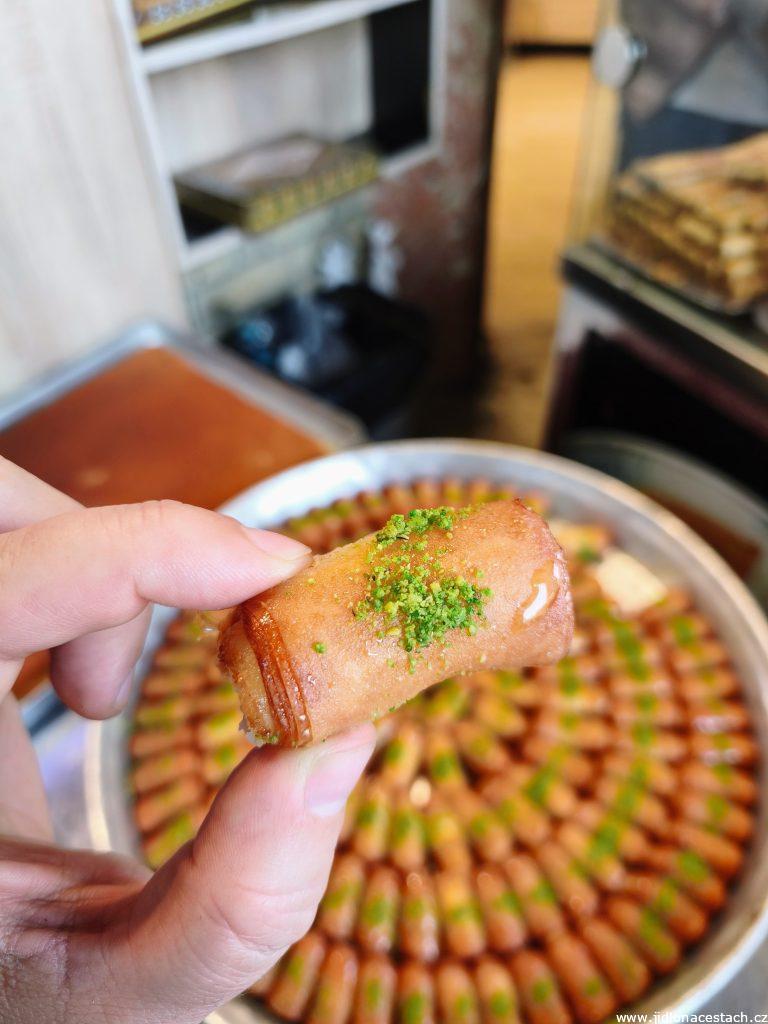
Preparing znoud el sit requires ingredients typical of Arab confectionery. The base consists of very thin phyllo dough. Confectioners fill this dough with a special milk cream called ashta (or qashta). Ashta is made by curdling milk and cream, often thickened with cornstarch, semolina, or flour so that the filling does not leak out during cooking. The traditional recipe requires the use of clarified butter (ghee) for brushing the individual layers of dough.
The cream is wrapped in several layers of dough to form a firm roll. The filled rolls are then fried in hot oil or clarified butter. There are also oven-baked variants, but frying is considered the more classic method for achieving maximum crunchiness. Immediately after frying, the hot rolls are dipped into cold sugar syrup called atar. The syrup is often flavored with orange blossom water or rose water.

Znoud el sit enjoys great popularity in many Middle Eastern countries. This dessert has a very strong tradition in Iraq, where it is considered a national sweet. Legend has it that the name originated at a feast hosted by one of the rulers of Baghdad (some sources cite Barbar Pasha, the governor of Baghdad in the 19th century). When this new dessert was served, one of the guests remarked that the rolls looked like “znoud el sit” (lady’s arms), and the name stuck.
The Iraqi version of znoud el sit often differs from the Lebanese or Syrian one in several details:
- Dough: In Iraq, a specific type of dough (sometimes called “baqlawa”) is often used, which is extremely thin.
- Filling: The Iraqi filling (qaimar or geymar) is a very specific type of thick cream made from buffalo milk, which is immensely popular in Iraq and gives the dessert a richer and fattier taste than the common cow’s milk ashta used elsewhere.
- Syrup: In Iraq, the syrup (shira) is often more strongly flavored with cardamom, which is a typical spice for Iraqi sweets, while rose water prevails in the Levant.
The consumption of znoud el sit is strongly linked to the fasting month of Ramadan. Muslims often seek out the dessert after sunset as part of the Iftar meal or during later evening gatherings. The high sugar and fat content quickly provides the body with energy after a day of fasting. Znoud el sit is best when still hot. At that moment, the dough retains its characteristic crispness, and the contrast between the hot, crunchy shell and the delicate creamy filling is most pronounced. Over time, the phyllo dough absorbs moisture from the cream filling, softens, and thus loses its texture. Arabic coffee or black tea is usually served with the dessert.
Bon appétit!


