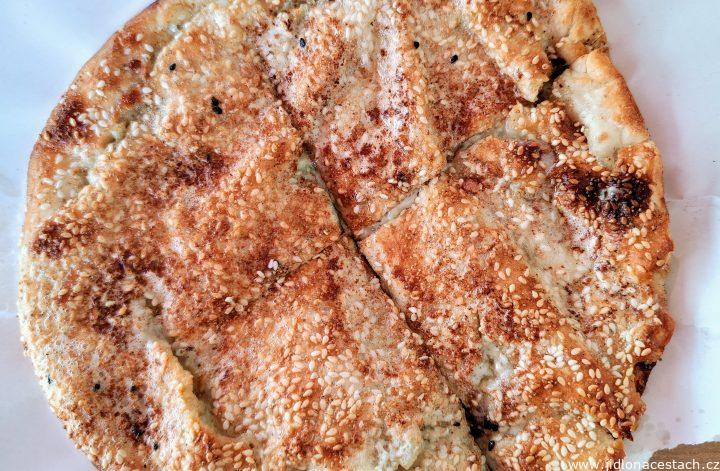
Etli ekmek is a traditional Turkish dish originating from the city of Konya, which at first glance resembles an extremely elongated, thin pizza, the length of which often exceeds one meter.
However, it is not a variation on the most famous Italian dish, but an interesting dish with a specific baking method. The base is a very thin dough that does not sag under the weight of the meat mixture, but instead retains its crispiness. Unlike the better-known pide, which has a boat shape and thicker edges, etli ekmek is flatter, longer, and focused on the perfect balance between a minimal amount of dough and a juicy layer of filling.

The etymology of the name is simple: “etli” means with meat and “ekmek” means bread. Literally, you are eating bread with meat. The history of etli ekmek is closely linked to the culture of public ovens. In the past, and this still applies in many neighborhoods today, people prepared their own meat mixture (iç) at home according to a family recipe and brought it to the local bakery. The baker then only provided the dough, shaped the long flatbreads, baked them, and handed them back for a small fee.
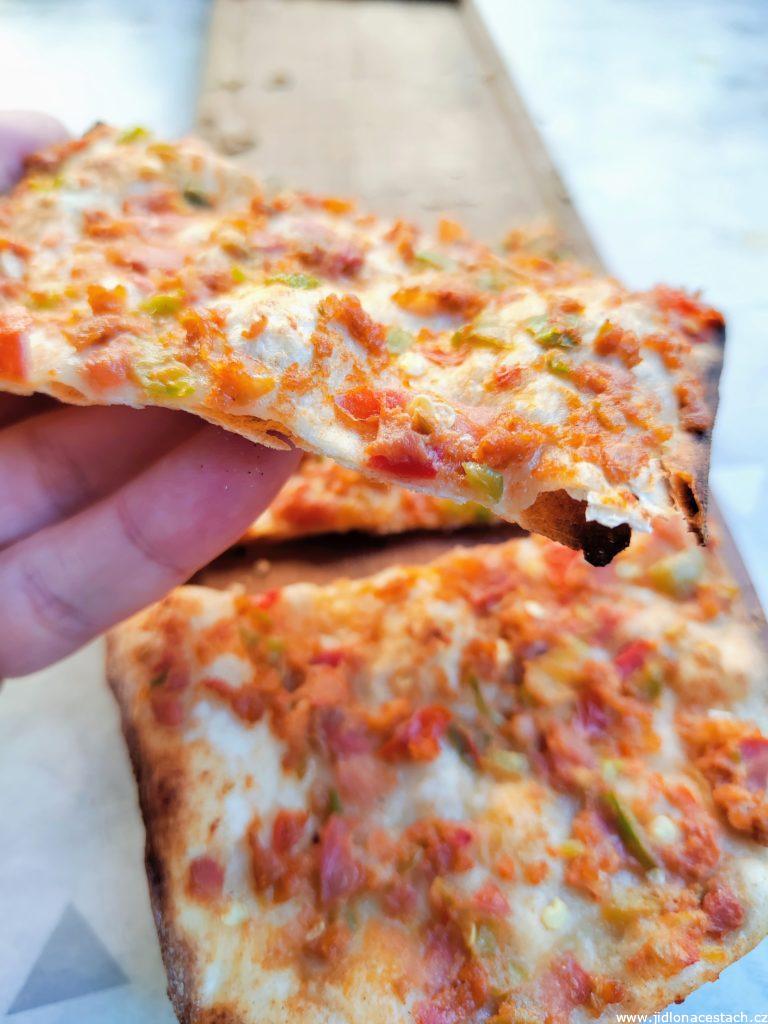
The secret to great etli ekmek lies in the quality of the minced meat and its ratio to vegetables. Traditionally, beef is used, ideally from ribs or another fattier cut, or a mixture of beef and lamb. Fat is (as you know) a carrier of flavor and ensures that the meat does not dry out in the intense heat. Finely chopped tomatoes, green peppers, onions, and parsley are added to the meat. It is important that the vegetables are not blended into a mush but cut into very small pieces so that they retain their structure and release their juice only in the oven. The resulting mixture is spreadable, which is key for it to bond with the dough and create a unified whole.

The preparation of etli ekmek requires a great deal of skill. The baker takes a ball of leavened dough and begins to stretch it by hand on a floured surface. The meat mixture is applied to this prepared base using fingers dipped in water or oil. It must be spread evenly and thinly so that the meat has time to cook through in the same amount of time as the thin dough. Just before placing it into the oven, the dough is stretched lengthwise until it is paper-thin. An experienced master can create a flatbread over one and a half meters long, which fits just right on a long wooden peel. Baking takes only a few minutes. The dough puffs up immediately, the edges turn golden and blacken in places, and the fat from the meat begins to bubble and sizzle.

Etli ekmek is served hot, straight from the oven, usually on a long wooden board that mimics its shape. The staff cuts it into smaller, roughly twenty-centimeter rectangles. It is eaten exclusively with hands. You will enjoy it best with yogurt ayran.
In the world of Turkish cuisine, there are several “relatives” that an uninformed diner might confuse with etli ekmek. The most famous is lahmacun, which is, however, round, the dough is even thinner, and the mixture contains more vegetables and garlic, so the meat flavor is not as dominant. Another relative is the classic pide, which has a boat shape, thicker edges folded inward, and the filling can be cheese, egg, or pieces of meat.
Bon appétit!
🇹🇷 Do you love Turkish food? Subscribe to my newsletter and I will send you for free comprehensive information about Turkish dishes, drinks, and other specialties.