What to Eat in Iraq: Typical Iraqi Food and Specialties
Iraqi cuisine, often referred to as Mesopotamian, is among the oldest in the world. Its roots reach thousands of years back into the history of the ancient civilizations of Sumer, Babylon, and Assyria.
Thanks to its location, Iraq served for centuries as a crossroads of trade routes, enabling the exchange of ingredients and gastronomic techniques with neighboring countries (Iran, Turkey, and Syria).
Food in Iraq
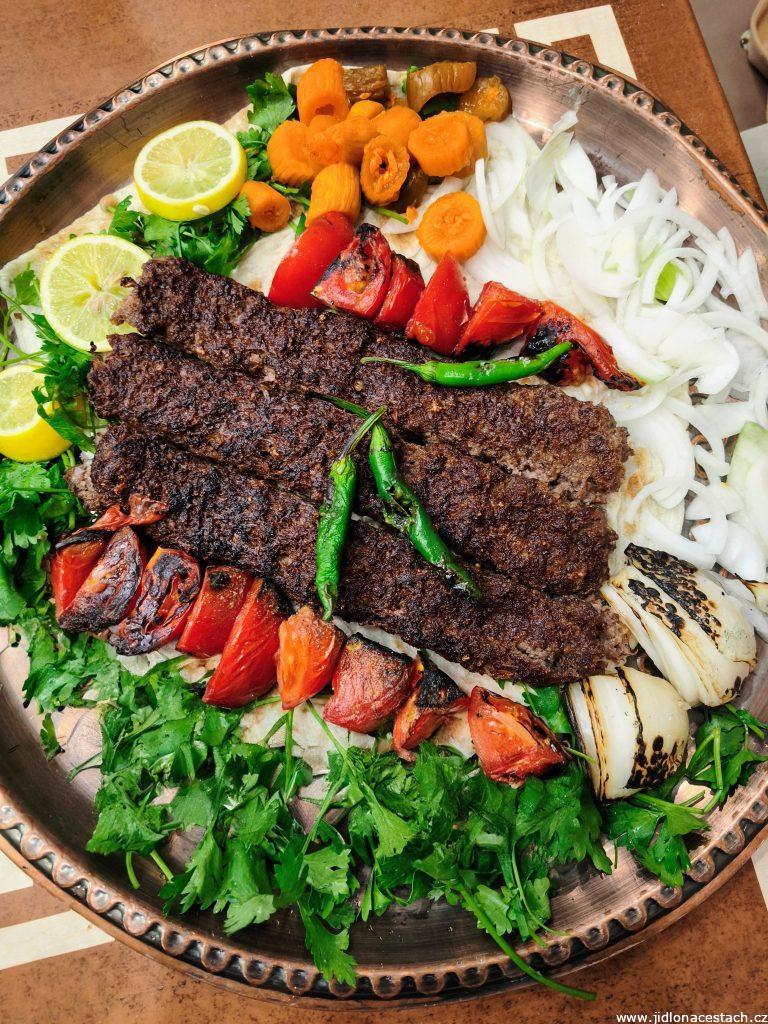
Typical Iraqi food: lamb kebab.
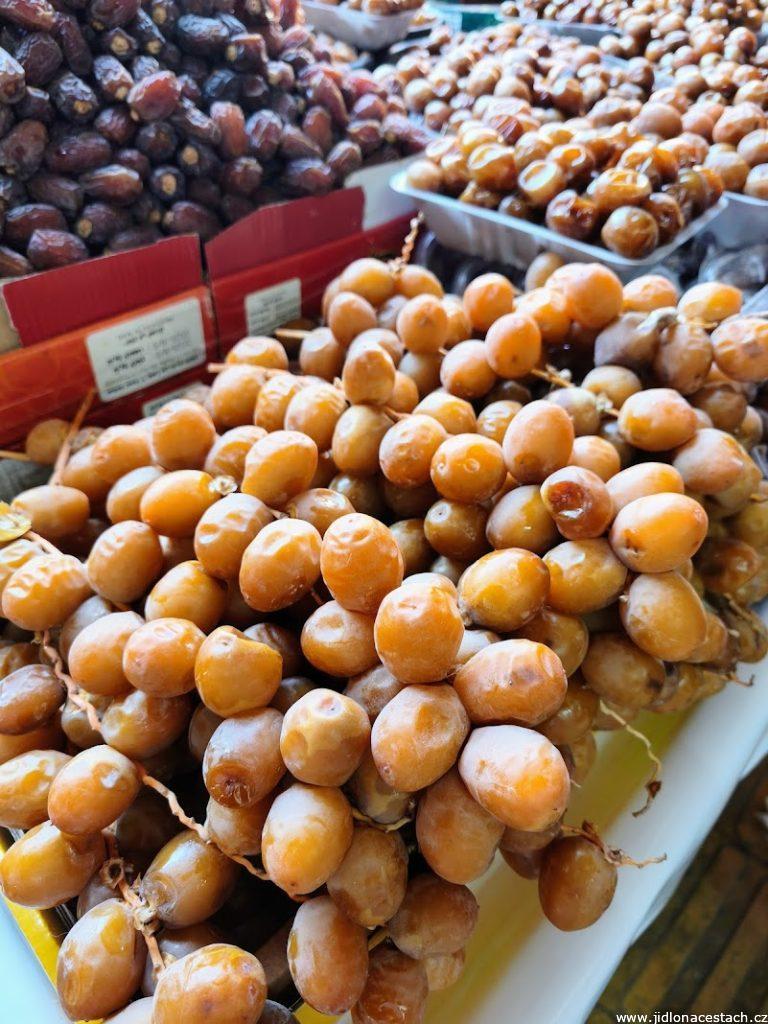
The basis of the local menu consists of cereals, primarily wheat and rice, legumes, and an abundance of vegetables and fruit, especially dates, which are grown here in massive quantities. As for meat, lamb and mutton are consumed most frequently, followed to a lesser extent by beef and poultry, while pork is completely unavailable for religious reasons.
Iraqi National Dish
Masgouf is considered the Iraqi national dish. It is a freshwater fish related to the carp, which is roasted in a specific way over an open fire. The tradition of this dish is strongly tied to the Euphrates and Tigris rivers, which flow through the country and provide plenty of fish.
In Baghdad, especially along the banks of the Tigris, there are many restaurants specializing in this very delicacy. Due to the long preparation time, it is advisable to order masgouf in advance.
Iraqi national dish: masgouf. Juicy and perfectly seasoned fish, grilled for several hours on a special fire pit.
Typical Iraqi Food
One of the most typical and widespread dishes in Iraq is dolma. In the local rendition, it is not just stuffed vine leaves, but a varied mixture of different vegetables cooked in a single pot. Cooks hollow out and stuff onions, eggplants, zucchinis, peppers, and even tomatoes. The filling consists of spiced rice mixed with minced meat, herbs, and tomato paste.
For festive occasions and large family gatherings, a dish called quzi is typical. Its base is lamb meat, which is slowly roasted whole until it is completely tender and falls easily off the bone. The meat is served on a large tray with richly seasoned rice. In Iraqi culture, quzi is often the main course at weddings or when visiting distinguished guests.
A typical Iraqi sweet is kleicha cookies. These are baked especially during religious holidays. The dough is filled primarily with date paste, which is directly related to the large number of date palms growing in the region.
Fresh dates at an Iraqi market.
What to Eat in Iraq
Masgouf (مسكوف). Iraqi national dish. Freshwater carp cut lengthwise and roasted for several hours over an open fire.
Tea (شاي). Tea is more than a drink in Iraq. You cannot avoid drinking tea; it is a social necessity. The Iraqi one is typical for its very dark color, strong taste, large amount of sugar, and cardamom aroma.
Kebab (كباب). Iraqi kebab is renowned for its juiciness, achieved by a higher ratio of lamb fat in the minced meat; unlike the Turkish one, it is less spiced so that the taste of the meat stands out.
Quzi (قوزي). A festive dish; a whole lamb is stuffed with rice, vegetables, and nuts; the Iraqi version differs from others in the Persian Gulf by a specific spice blend with a predominance of cardamom and cinnamon.
Dolma (دولمة). Although stuffed vegetables are known throughout the region, Iraqi dolma is unique for its distinct sourness thanks to tamarind and dried limes, and the fact that besides vine leaves, layers of onion and other vegetables are also stuffed, which is specific to Iraq.
Pacha (باجة). A very traditional and heavy dish made from boiled head, trotters, and innards. The “nose to tail” principle brought to perfection.
Kleicha (كليجة). The Iraqi national cookie essential for Eid holidays; the dough is often flavored with cardamom and nigella seeds.
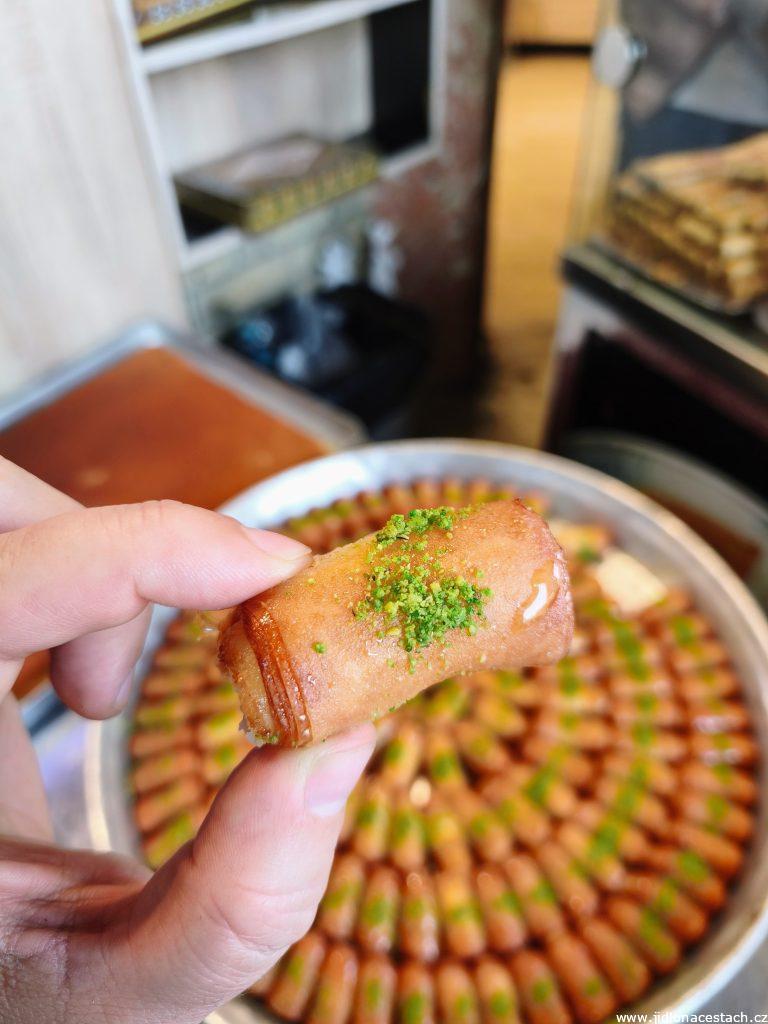
Znoud el sit (زنود الست). A famous dessert whose name literally means “lady’s upper arms”; these are rolls of phyllo dough filled with thick cream, which are fried or baked and subsequently dipped in sugar syrup.
Tepsi baytinijan (تبسي باذنجان). A popular homemade baked dish of eggplant, minced meat in the form of meatballs, potatoes, and onions, which, unlike Greek moussaka, is not layered with béchamel but stewed in a thick, sweet and sour tomato sauce.
Marag bamya (مرقة بامية). Stewed lamb meat with okra, which in the Iraqi rendition is specific for its thick consistency, amount of garlic, and sour taste.
Geymar (قيمر). Very fatty and rich clotted cream obtained from the milk of water buffaloes living in the marshes of southern Iraq, which has a completely unique taste and texture, different from ordinary cream or Turkish kaymak.
Kahi (كاهي). Pastry made from layered puff pastry, which is poured over with sweet syrup. Traditionally eaten for breakfast in combination with the aforementioned buffalo cream geymar.
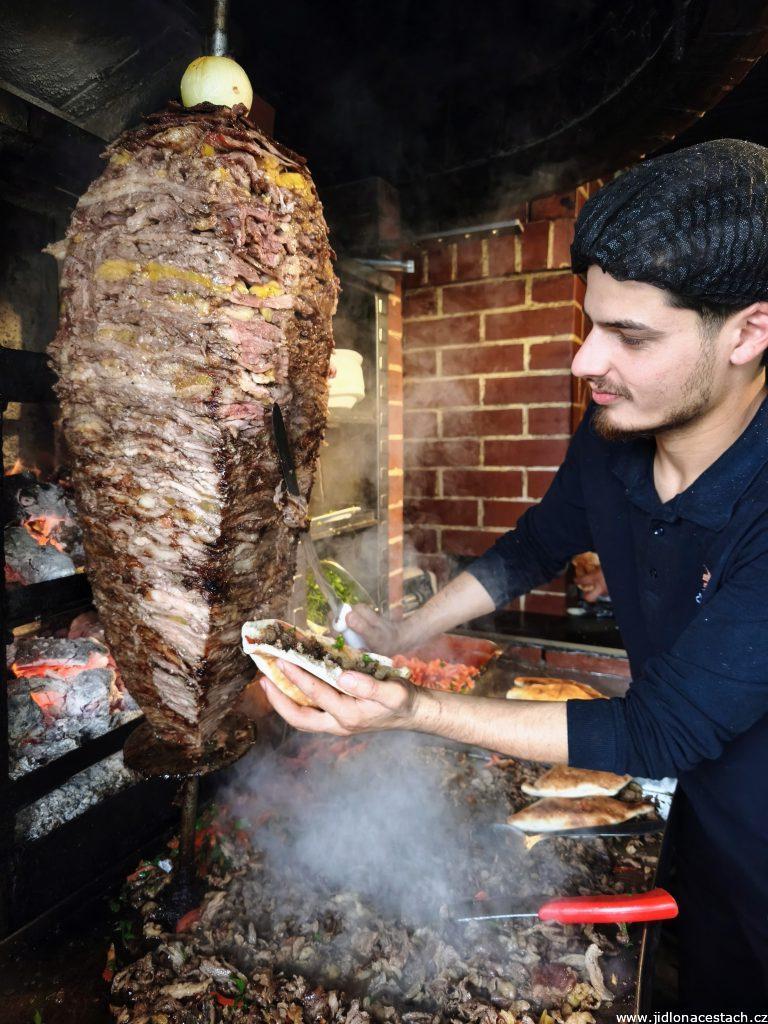
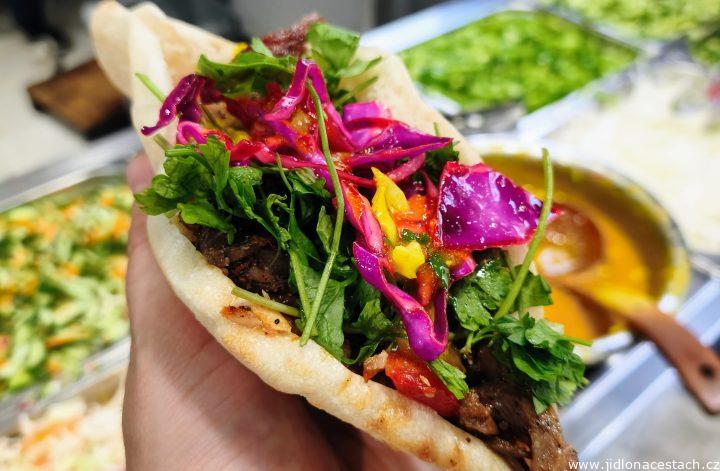
Guss (قص). The Iraqi version of shawarma; usually made from veal or lamb meat, which is sliced from a vertical spit and placed into samoon bread with amba sauce.
Tashreeb (تشريب). A traditional “peasant” dish, which consists of soaking Iraqi bread in broth (most often chickpea with lamb meat); the bread soaks up the flavors and becomes the main, mushy component of the dish.
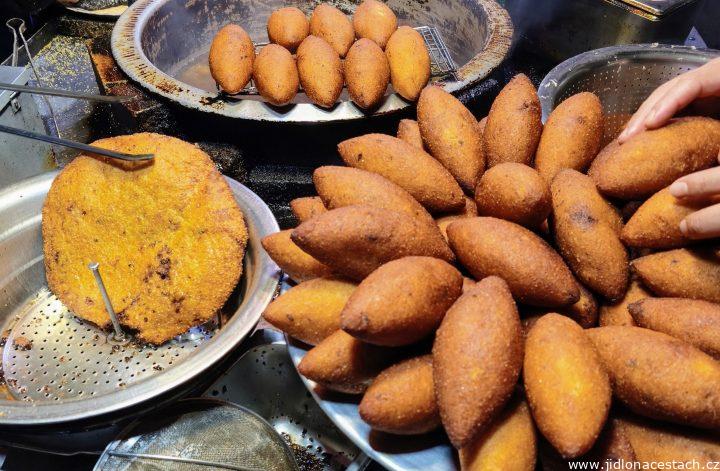
Kubba Mosul (كبة موصل). A specialty from the city of Mosul, which differs from common fried “kibbeh” by its shape.
Samoon (صمون). Traditional Iraqi bread in the shape of a boat, characterized by its crispy crust and soft, airy crumb, ideal for dipping into sauces.
Margat qeema (قيمة). A dish cooked especially during the Ashura holiday in the Najaf region; it is a sauce where meat with chickpeas is overcooked and beaten to such an extent that a stringy paste is formed.
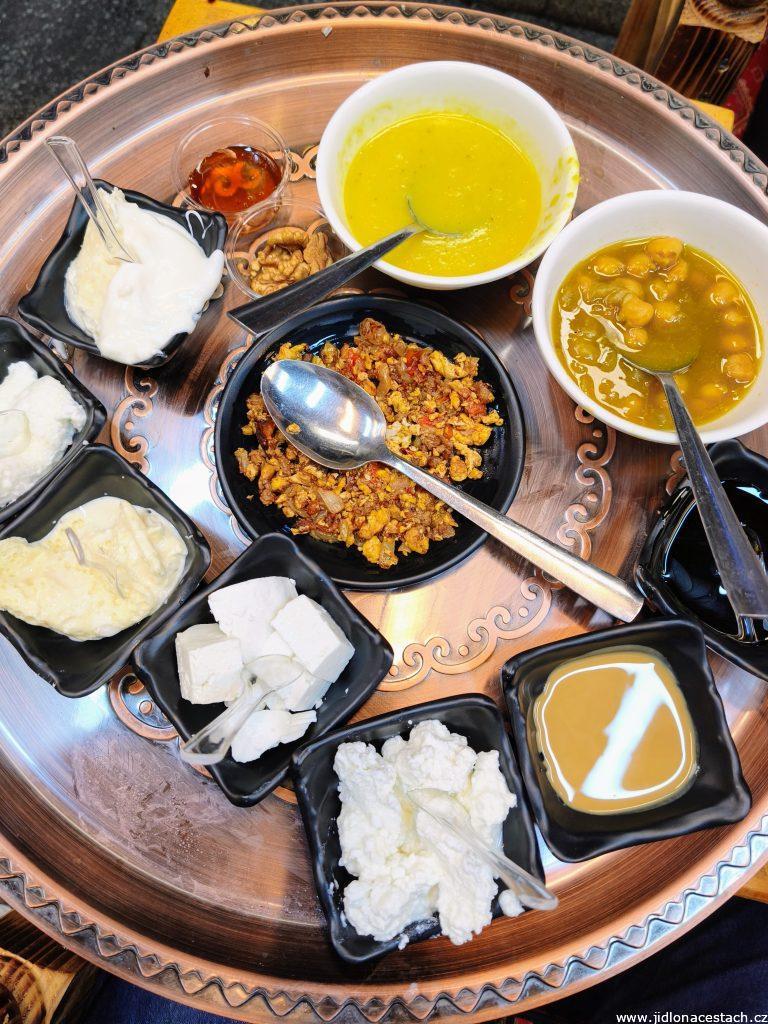
Makhlama (مخلمة). A breakfast specialty of minced meat fried with onions and tomatoes, into which eggs are stirred only at the very end.
Shalgam (شلغم). A specific winter treat sold on the street from large carts; it is turnip boiled until soft in date syrup, which gives it a dark color and sweet taste.
Daheen (دهين). An extremely sweet and fatty dessert famous in the city of Najaf, made from flour, milk, sugar, ghee, and date syrup, which has the texture of dense caramel after baking. It is sprinkled with coconut.
Noomi Basra Chai (شاي نومي بصرة). A hot drink prepared from dried limes (noomi basra), which come from the south of the country; the tea has a strongly sour, earthy taste, and is drunk for refreshment and health benefits.
Amba (عمبة). A spicy sauce made from pickled mango; the Iraqi version is specific for fermentation and the significant use of fenugreek, making it an indispensable part of Iraqi sandwiches.
Kubba Saray (كبة سراي). A specific type of kubba from Baghdad, cooked in tomato soup with chickpeas and dried limes. Traditionally sold to workers at the Saray market.
Timman bagilla (تمن باقلاء). A traditional rice dish with fresh fava beans and a large amount of dill, usually served with lamb meat and yogurt, typical for the spring season in Iraq.
Mann al-Sama (من السما). A confection similar to nougat, the basic ingredient of which is manna (natural resin collected in the mountains of Kurdistan), mixed with sugar, egg whites, and nuts, considered a “gift from heaven”.
Kaster (كاستر). A simple but omnipresent yellow custard, which is immensely popular in Iraq.
Iraqi national dessert: znoud el sit (sweet roll filled with cream).
Typical Iraqi Drinks
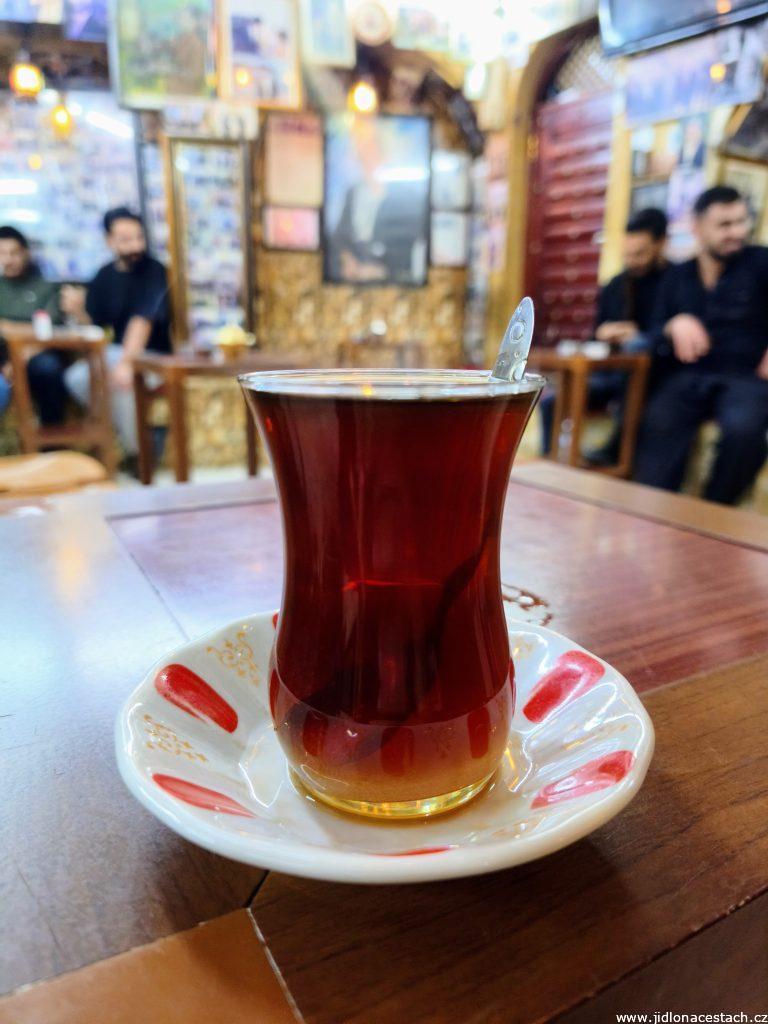
The foundation of Iraqi culture is tea, which is drunk throughout the day. Locals prepare it very strong and sweet. It is served in small glasses called istikan. Arabic coffee also plays a significant role, but unlike tea, it is served rather on formal occasions.
Given the hot climate, specific refreshing drinks are also popular in Iraq. Very widespread is a drink called noomi basra, which is made from dried limes. It has a dark color and a distinct sour taste, which is usually softened with sugar; it is served both hot and ice-cold. Traditional ayran is often drunk with food, helping digestion and cooling the body. Ordinary water plays an irreplaceable role, which in traditional households is still sometimes stored in clay jugs.
Typical Iraqi drink: tea.
How to Fully Enjoy Iraqi Food
Start the day with a traditional breakfast of kahi and geymar. This famous Iraqi breakfast consists of puff pastry (kahi), which is dipped into thick buffalo cream (geymar) and poured over with date syrup or honey.
Taste the national dish masgouf right by the Tigris River. Masgouf is a carp cut lengthwise, skewered on stakes, and slowly roasted over an open fire of apricot wood.
Try the Iraqi variant of the dish kubba. Iraq has dozens of types of kubba (balls of bulgur or rice filled with minced meat).
Go for street falafel and amba sauce. Iraqi falafel is specific in that it is almost always served with amba sauce, which is pickled mango with fenugreek and turmeric.
Finish the meal with Iraqi tea. Iraqi tea is very strong, heavily sweetened, and always brewed with whole or crushed cardamom pods.
Test your courage with the traditional dish pacha.This dish might be only for strong stomachs. Pacha is traditionally eaten in winter or early in the morning as a very hearty breakfast. Once you see the contents of the pot, you will understand.
Typical Iraqi breakfast: makhlama, several types of cheese, thick cream, tahini, nuts, honey, date syrup, and soups.
How to Thank for Iraqi Food
Hospitality is sacred in Iraq. In no other country have I been invited for tea as many times as here.
Iraqis use specific phrases wishing health to the cook or abundance to the house where the meal was eaten. The absolute basis and most used phrase directly for the cook is “Ashat idak” (عاشت ايدك), if you are speaking to a man, or “Ashat idich”, if you are thanking a woman. Literally, it means “Long live your hand”.
Another beautiful and deep phrase is “Sufrah daymah” (سفرة دايمة), which the guest usually says to the host at the moment when rising from the table after finishing the meal. The literal translation sounds like “permanent table” or “lasting table”, but the meaning is much broader. You are not just praising the taste of the food, but wishing the host prosperity with the words: “May this table always be full of food and may you always have enough resources to host like this.” It is a very polite gesture showing respect to the house that received you.
If you want to sound very traditional and humble, you can use the phrase “Na’am Allah alaych” (نعم الله). It means “God’s grace upon you” and stems from the belief that food is a gift. With this sentence, you acknowledge that the host shared this gift of God with you.
If you want to simply and straightforwardly praise the taste of the dish itself and say that the food was excellent, Iraqis most often reach for the expression “Al-akl ykhabbul” (الأكل يخبل). The verb “ykhabbul” in the Iraqi dialect literally means “drives crazy” or “maddens”, but in this context, it is used in a purely positive sense for something that is so good it is unbelievable. It is a very expressive and enthusiastic way to say that the food was fantastic.
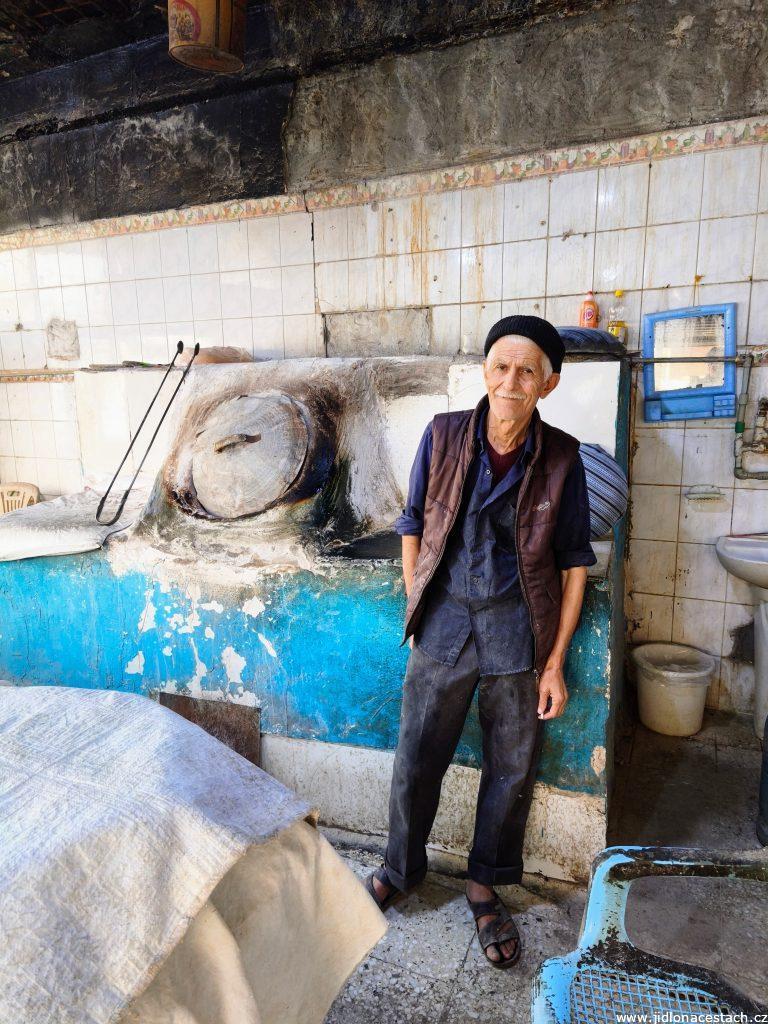
Kurdish baker.
Best Iraqi Food
If I had to choose three personal favorites, then the best Iraqi food for me is:
Masgouf. I love grilled foods and this fish is prepared perfectly, it is juicy and excellently seasoned. Its preparation is also very interesting.
Kebab. In the whole region, they know how to perfectly prepare minced lamb meat on the grill, and Iraq is no exception.
Guss. In Iraq, you can still find places that prepare shawarma (or “Turkish” döner kebab) on charcoal. If you find such a place, do not hesitate for a minute and order. The taste is perfect.
Iraqi guss: meat preparation on charcoal.
Interesting Facts About Iraqi Food
The oldest cookbook in the world is from Babylon. The Yale Babylonian Collection contains three tablets dated around 1700 BC. These contain 35 recipes. Mostly they are meat broths and stews that utilized garlic, leek, and onions. One recipe even describes a “vegetarian goulash” with beer and herbs.
The invention of the drinking straw is related to drinking Sumerian beer. The Sumerians (southern Iraq) invented beer, but it was very cloudy and full of malt and bread residues. To be able to drink it without swallowing sediments, they invented the straw. Archaeologists found a luxurious gold straw over a meter long in the tomb of Queen Puabi in Ur, which served for drinking from a communal vessel.
Masgouf has a recipe thousands of years old. The method of preparing the dish masgouf (the national dish of Iraq), where the carp is cut open, skewered on stakes, and roasted vertically next to a wood fire, has roots in Sumerian times. Assyrian reliefs depict fishermen and banquets where fish are prepared in a very similar way, pointing to a continuity lasting over 4000 years.
A 10th-century Baghdad cookbook is a testament to the Golden Age of Islam. The book Kitab al-Tabikh (The Book of Dishes), written by Ibn Sayyar al-Warraq, contains over 600 recipes and is the oldest surviving Arabic cookbook. It describes the luxurious court cuisine of the Abbasid caliphs, including rules of dining, hygiene, and dietetics, and shows Baghdad as the gastronomic center of the world at that time.
Kleicha: a cookie with Babylonian roots. The Iraqi sweet kleicha has origins in the Babylonian New Year festival Akitu. At that time, cakes called qullupu were baked as an offering to the goddess Ishtar. The shape and symbolism changed, but the tradition of baking this type of pastry during holidays has remained uninterrupted in Iraq for millennia.
The Iraqi designation for rice “timman” is a unique linguistic mystery. While most of the Arab world uses the word “ruz” for rice, Iraqis strictly use the term “timman”. Linguists believe that this word has roots in ancient Akkadian or Sumerian (possibly related to a rice variety imported in ancient times).
Date syrup as an ancient sweetener. Before the spread of sugar cane, the main sweetener in Mesopotamia was dibis – thick date syrup. Ancient texts describe its production and use in the kitchen as well as in alcohol production. It is still a used ingredient in Iraq today.
First farmers and domestication of grain. The Fertile Crescent, the heart of which is present-day Iraq, is the place where humanity first domesticated wheat and barley. This allowed the transition from hunting and gathering to settled agriculture, leading to the invention of bread and beer.
Vinegar and fermentation were key for survival in the hot climate. Ancient Babylonians were masters of food preservation and produced dozens of types of vinegar from dates, beer, or grapes. This tradition of strongly sour tastes and pickling vegetables has persisted in Iraqi cuisine to this day, where acidity often balances the fattiness of dishes.
Masgouf is the Iraqi national dish prepared from a carp-like fish. It is slowly grilled over an open fire. This specialty has a history dating back to ancient Mesopotamia. The basis is an absolutely fresh fish cut along the back and rubbed with salt or marinade. The meat is skewered on spikes and placed vertically near the fire pit, where it bakes indirectly for several hours.
Guss is the Iraqi variant of the dish known as shawarma or döner kebab. The foundation is beef or lamb alternated with layers of mutton fat. Iraqis serve this delicacy in a traditional diamond-shaped bread called samoon. Guss is necessarily complemented by the spicy mango sauce amba, pickled vegetables, and fresh parsley.
Qeli is a traditional Kurdish meat dish created by long cooking and subsequent confit of meat in its own fat. This hearty specialty is inseparably linked to the Iraqi city of Akre. No complex spice blends are used in the preparation; the main flavor is provided by the meat itself. An essential accompaniment is qeysi, a warm sauce made from dried apricots. Its sweet and sour taste perfectly balances the richness of the meat.
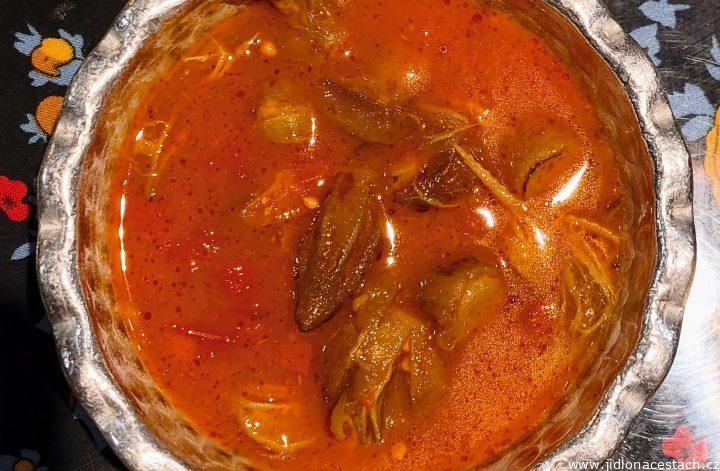
Marag bamya is a hearty stew built on a combination of young okra, lamb, and tomato sauce. This Iraqi specialty distinguishes itself from similar okra preparations in surrounding countries mainly by its thickness and intense flavor. A key role is played by the slow stewing of the meat with the bone, a large amount of garlic, and an unmistakable acidity.
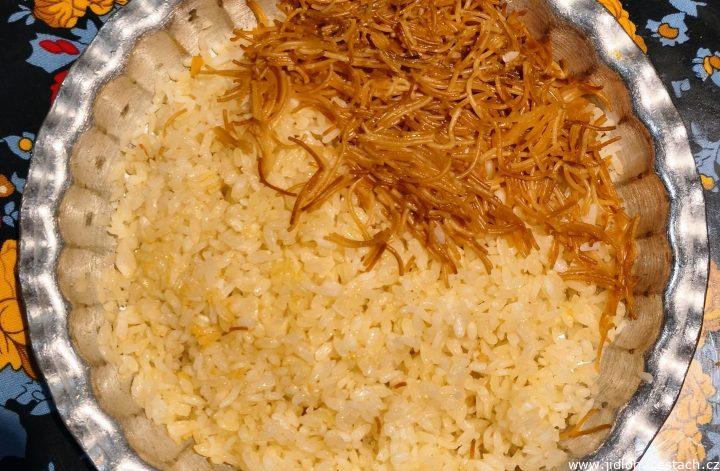
Timman sha’riyah is a traditional Iraqi side dish combining fluffy rice with golden-fried angel hair noodles, known as vermicelli. In other parts of the Arab world, this dish is called ruz bil sha’riyeh. In Iraq, it is served with stewed meats or vegetables with a rich sauce.
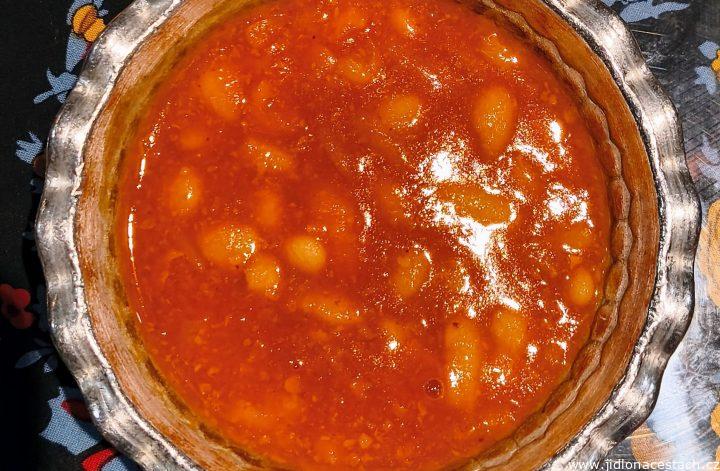
Fasolia is a thick soup made of white beans in a rich tomato sauce, often served with white rice. The dish has roots in the days of the Ottoman Empire, relying on simplicity and honest ingredients. The Iraqi variant avoids complex spice blends. The dish dominates festive Friday lunches when the whole family gathers at the table.
Makhlama is a traditional Iraqi breakfast scramble combining eggs with minced meat and vegetables. Although it is sometimes served with whole eggs on top, in ordinary bistros it is often prepared as a mixed scramble. The base is beef or lamb minced meat sautéed on onions with pieces of tomato. The mixture is subsequently combined with beaten eggs and seasoned with spices such as curry, turmeric, and black pepper. This hearty breakfast is served in Iraq with fresh bread and strong tea.
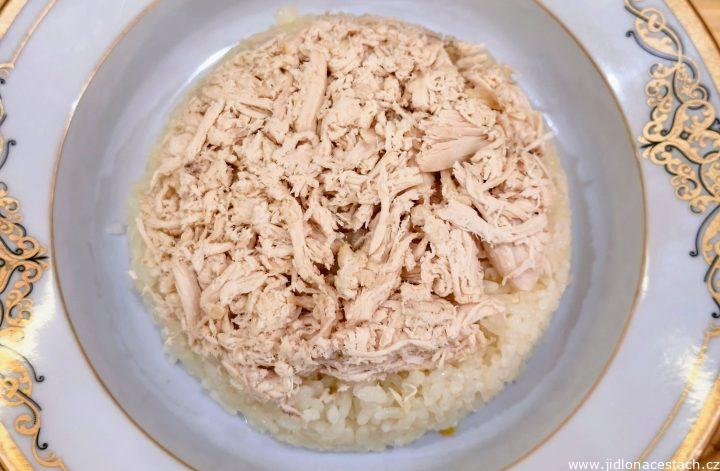
Kasa brinj is a traditional dish from Iraqi Kurdistan. It is steamed rice with finely shredded boiled chicken meat. For this recipe, the chicken is not roasted but slowly simmered in water until completely tender. Subsequently, the meat is manually stripped of bones and skin and shredded into smaller pieces so that only pure meat remains on the plate. A bowl of sauce is an inseparable part of the meal. Most often, you will be served a tomato ragout made of white beans or okra with it.
Bagilla is an Iraqi street food made from slowly boiled fava beans, traditionally served with a generous layer of sour sumac spice. This specialty, with roots reaching back to ancient Mesopotamia, is created by boiling dried legumes for several hours in giant cauldrons right on the city streets. The Iraqi version stands out for its brilliant simplicity and emphasis on the pure taste of the beans and sumac.
Kubba is a fried Iraqi street food consisting of minced meat encased in a crispy bulgur dough. Historically, this dish originated in the Levant as a clever way to utilize scarce meat. In Iraq, you will find two main forms of this dish. The traditional version resembles a pointed ball, while the specialty called Kubba Mosul has the shape of a thin disc. After frying, it is usually sliced into pieces similar to a pizza.