Falafel: Fried Chickpea Ball
You take a bite and stop short: it's green inside. That's not a flaw and not an undercooked center - green is part of falafel, and it tells you the kitchen didn't skimp on fresh herbs.
Falafel (Hebrew: פלאפל) is a ball of raw ground chickpeas with parsley, cilantro and cumin, fried crisp in oil - and today it's probably the first thing Israeli cuisine will put in your hand. In a 2022 survey, Israelis voted it their national dish. Quite a career for a dish almost certainly invented by someone else.
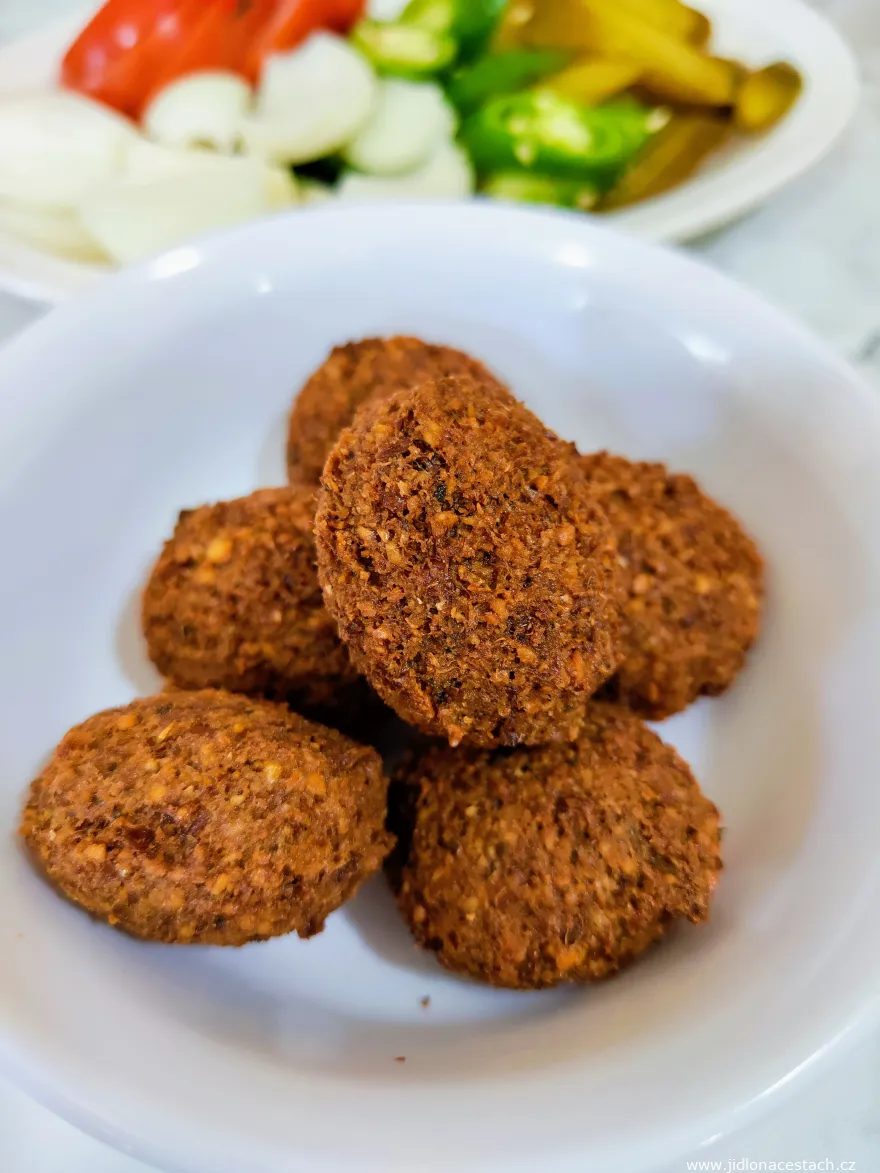
Who Owns Falafel and What Its Name Means
Short answer: nobody knows, and half the Middle East argues about it. The etymology of the name is full of gaps - the Coptic theory, which makes it mean roughly "lots of beans", gets quoted most often, linguists counter with an Aramaic plural meaning "little balls", and there's no agreement in sight. Only one thing is certain: for all the resemblance, falafel has nothing to do with the Hebrew word pilpel, meaning pepper - the Academy of the Hebrew Language had to spell that out officially. The geography is just as broad: in Egypt it's made with fava beans and called ta'ameya, Lebanon, Syria and Jordan stick with chickpeas, and Syrians like to roll the balls in sesame. Falafel is shared across the whole region - and maybe that's exactly why everyone claims it.
From Fasting Food to a Hit Song
The prevailing hypothesis places the origin of falafel in Egypt in the first half of the first millennium, among Coptic Christians who needed something just as filling to stand in for meat on fast days. Nobody has an exact year or a document to go with it, so let's be clear: it's the best-supported guess, not a certainty. The Israeli contribution is younger and easier to pin down: in the 1920s, someone in Tel Aviv tucked the balls into a pita - and turned a street snack into a full meal you can eat on the move.
The rest is a history of popularity. By 1958 Israel had a song called "And We Have Falafel", and stalls were outdoing each other with signs reading falafel teimani, Yemenite falafel. What that label really sells is a good reputation: in Yemen, chickpea falafel was never traditionally eaten. Yemenite Jews were, though, among the first to fry it and sell it on Israeli streets, and they gave it the heat of their own chili paste - so they earned the fame, just not in the way the signs claim.
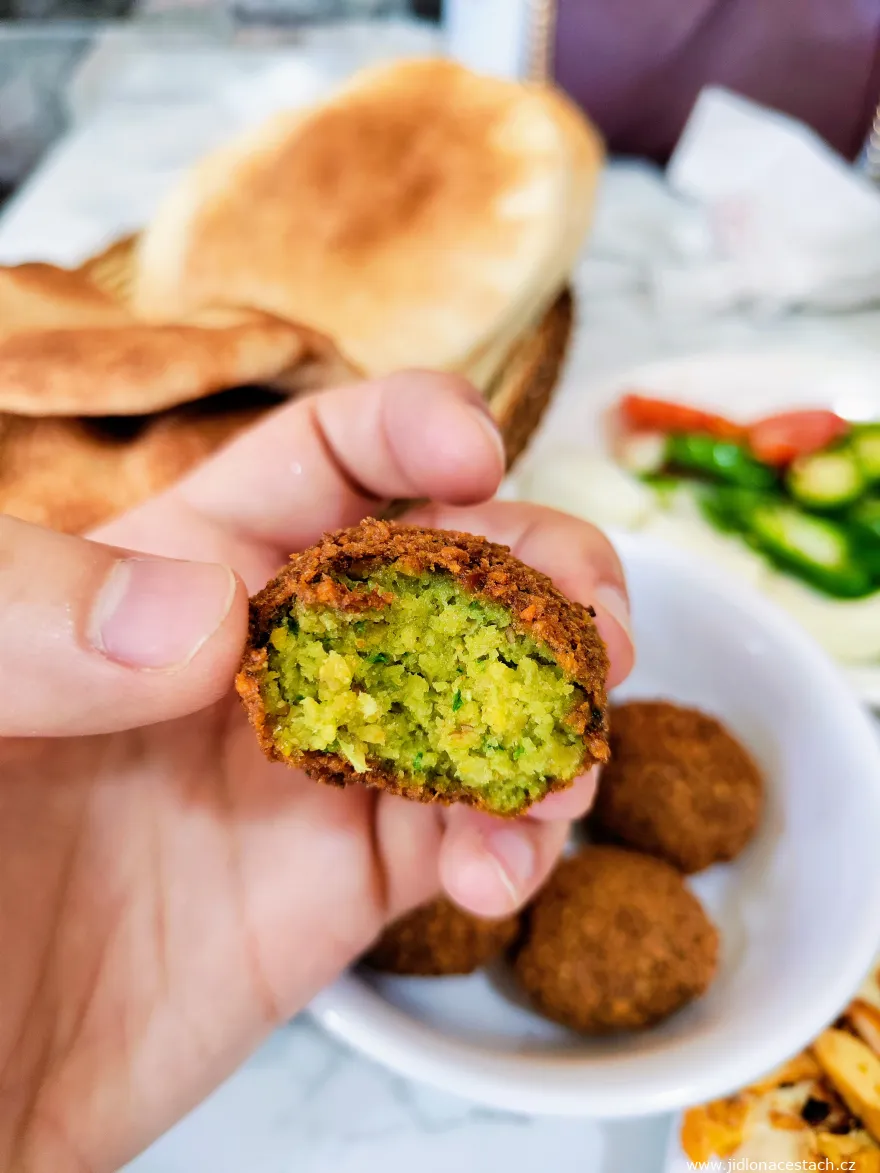
Raw Chickpeas, a Green Center and a Loaded Pita
On the plate it looks like the fried patties we make back home in Czechia - except it holds together without egg or breadcrumbs, on the strength of the chickpeas alone. They soak overnight and are ground raw, never cooked; cooked chickpeas fall apart into crumbs in hot oil. Ground cumin sets the base note, and a handful of parsley and cilantro brings the aroma and that green color, which is why it pays to look inside the balls: the greener the cross-section, the fresher the herbs.
In Israel you order falafel almost exclusively in a pita: with the five or six balls come chopped salad, pickled vegetables, a generous pour of runny tahini and often amba, the tangy, spicy mango sauce - and if you want, a few fries go straight into the pita on top. A good stall fries to order and hands them to you so hot you end up juggling the pita for a while. Lukewarm falafel out of a display case is the same dish in name only.
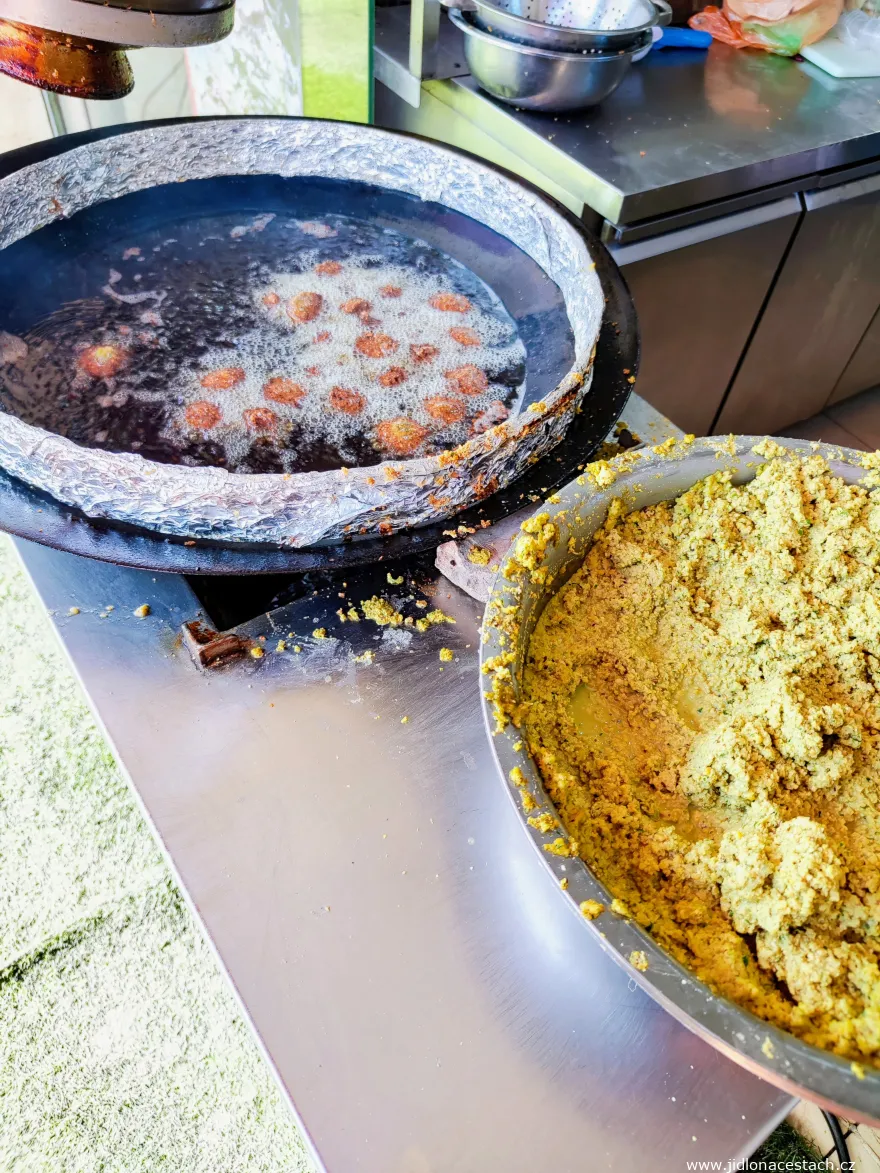
Balls from a Hummusia in Jerusalem
The best falafel I've eaten was in Jerusalem, at the Ben-Sira Hummus bistro in the city center (see Where to Eat in Jerusalem) - a hummusia, a place built around hummus, where they fry the balls fresh and bring them out with the hummus. The crust cracked, the center was moist, deep green and smelled of cumin; the tahini tied it all together. Later, in a small bakery, I came across a giant one stuffed with fried onion and sprinkled with sesame - at the time I took it for a local curiosity, and it turns out the version even has a name, falafel mahshi. I've tasted falafel in plenty of other places, and no two recipes tasted the same. These days the only thing that stops me short is when the green is missing.


