Köfte is a general term for a whole family of ground meat dishes that form the backbone of Turkish cuisine and appear in various modifications from the Balkans to India. It is not a single specific recipe, but rather a concept of meat preparation.
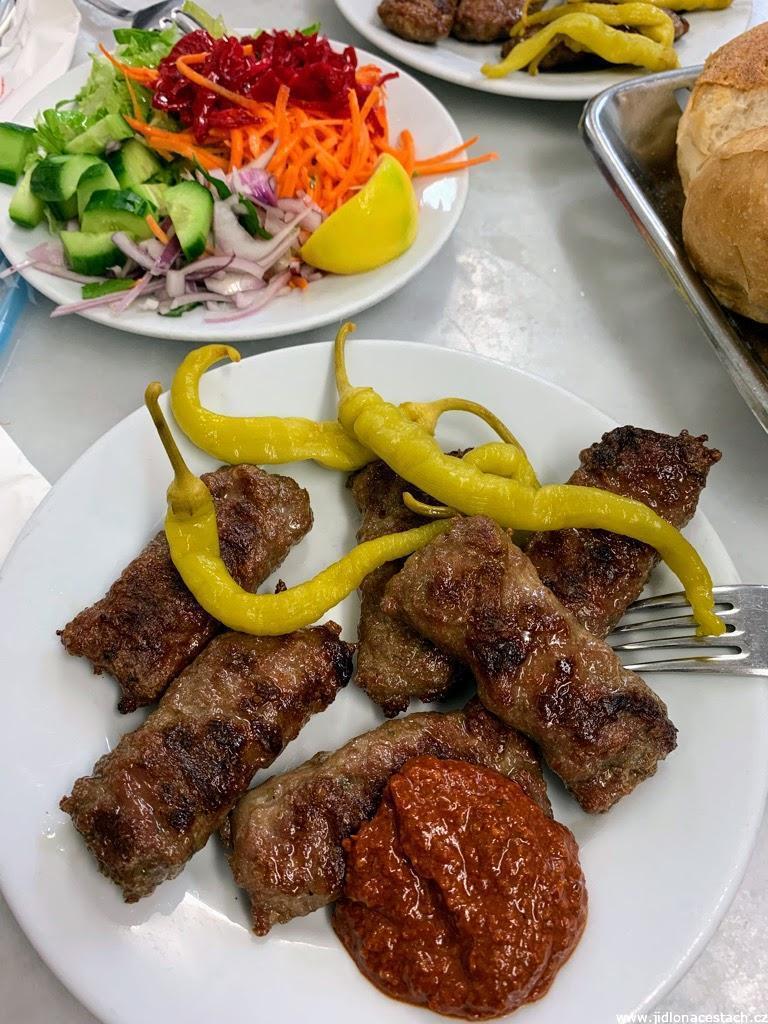
On the plate, you usually get small, slightly flattened cylinders, balls, or patties with a dark brown, seared surface that contrasts with the soft and juicy inside. They often glisten with fat and smell of the fire, if they were prepared on a grill.
Although Turkey has “adopted” köfte and perfected it in hundreds of regional variations (allegedly there are over 290), its origin reaches deeper into history, probably to ancient Persia. The word itself comes from the Persian “kufta”, which means to beat or grind.
Grinding meat back then made it possible to process even tougher cuts of the animal that would not be suitable for quick cooking as whole cuts. At the same time, mixing it with other ingredients, such as onion, bread, or bulgur, increased the volume of the meal. Köfte thus became a dish of the people – accessible, nutritious, and variable.
The basis of good köfte is meat with a sufficient fat content. Lean beef does not work here; the result would be dry and crumbly pieces without flavor. Ideal is a mixture of beef and lamb, where the fat carries the flavor and ensures that necessary juiciness. Very finely chopped or grated onion is added to the meat. It is necessary to squeeze excess water from the onion so that the meat mixture is not soggy and sears well. Spices are a chapter of their own and differ from region to region.
Regarding cooking, a charcoal grill is of course best, giving the meat an unmistakable smoky aroma. Here we encounter a fundamental difference compared to another Turkish dish, şiş köfte. While classic köfte is grilled directly on the grate or in a pan as a standalone patty, şiş köfte is shaped onto flat metal skewers. The meat is literally “pressed” onto the skewer.
Köfte is rarely eaten alone. It is almost always accompanied on the table by grilled vegetables, typically long green peppers (sivri biber) and tomato halves that have softened, released their juices, and sweetened on the grill. A classic side dish is rice pilaf or bulgur, but fresh bread is an absolute necessity.
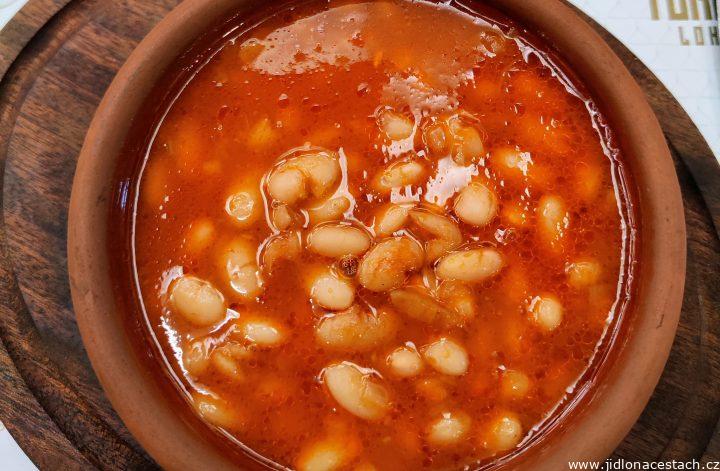
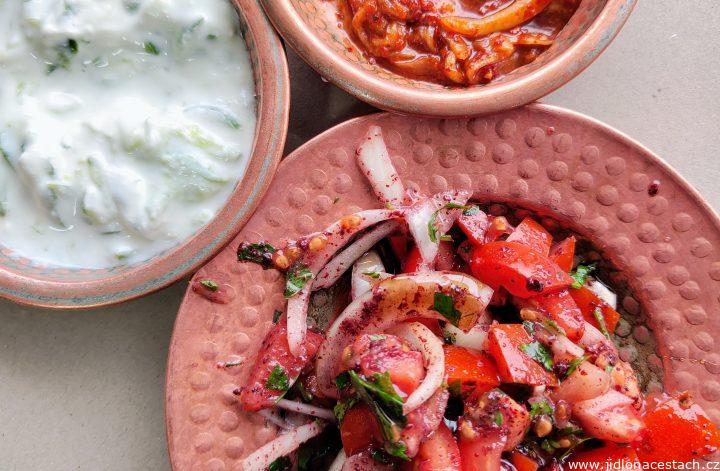
Inseparably belonging to this is piyaz salad made of white beans with onion, parsley, and sumac. Köfte is best washed down with the cold, salty yogurt drink ayran.
Similar Dishes Around the World
Because the Ottoman Empire controlled a large part of the Balkans and the Middle East, the concept of the ground meat cylinder spread and took root there too, albeit under different names and with slight modifications:
- Balkans (ćevapi/ćevapčići): In Bosnia, Serbia, and Croatia, you will encounter ćevapi. Unlike the Turkish version, baking soda is often added to Balkan recipes for a fluffier and springier texture.
- Czechia, Slovakia (čevabčiči): We know čevabčiči, which came to us from the Balkans. Unfortunately, in the Czech concept (often pork, breadcrumbs, served with potatoes, mustard, and onion), it is often a very distant relative that lacks the juiciness and grilled aroma of the original.
- Romania (mititei/mici): The Romanian version is very specific. Essential here is the use of baking soda, a large amount of garlic, and often broth, with which the meat mixture is “fed” during kneading. The result is a very springy, rubbery (in the good sense of the word) consistency.
- Greece (keftedes): Greek meatballs are more often fried in oil than grilled, and their flavor is dominated more by oregano and mint than by cumin.
Bon appétit!
🇹🇷 Are you a fan of kebab or Turkish "pizza" pide? Want to discover more Turkish foods? Subscribe to my newsletter and I will send you for free everything you need to know about Turkish food and drinks.