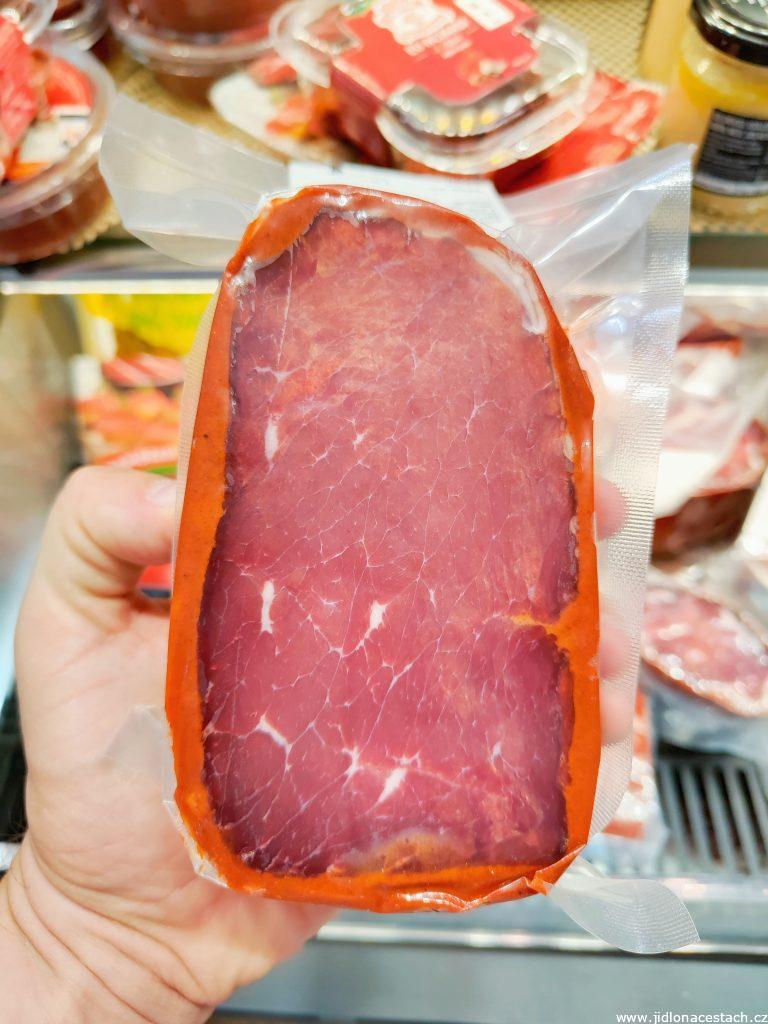
Pastırma is a heavily spiced, air-dried beef, which is instantly recognizable at first glance by its dark ruby color and thick crust called çemen.
On the plate, you usually see it cut into paper-thin slices because its texture is dense and the flavor very strong. The edges of the meat are lined with that characteristic reddish-brown paste, which is slightly sticky to the touch and leaves an unmistakable scent on your fingers.
The origin of this meat reaches deep into the history of nomadic Turkic tribes in Central Asia. The creation of pastırma was motivated by the sheer necessity to survive and preserve food on long journeys through the steppe. Riders needed meat that wouldn’t spoil in the heat. A legend, which has a basis in reality, says that nomads placed salted pieces of meat into bags on the sides of horse saddles. The pressure of the rider’s legs during the ride gradually pressed out the excess juice from the meat, thereby naturally preserving it. This is also where the name itself comes from, meaning “to press” or “to squeeze”. Today, the center of production is the Turkish city of Kayseri.
The basis of the recipe is, of course, high-quality beef, most often from the loin or leg, which must be trimmed of most fat. However, what makes pastırma pastırma is çemen. It is a thick, aromatic paste in which the meat is literally wrapped after drying. The main role here is played by ground fenugreek seeds (çemen otu in Turkish). However, its mildness is immediately overpowered by a massive dose of garlic and hot red pepper. The crust has a dual function: firstly, it lends the meat an unmistakable taste that both bites and soothes in your mouth at the same time, and secondly, it protects the meat from excessive drying and oxidation, so it remains supple and soft inside.
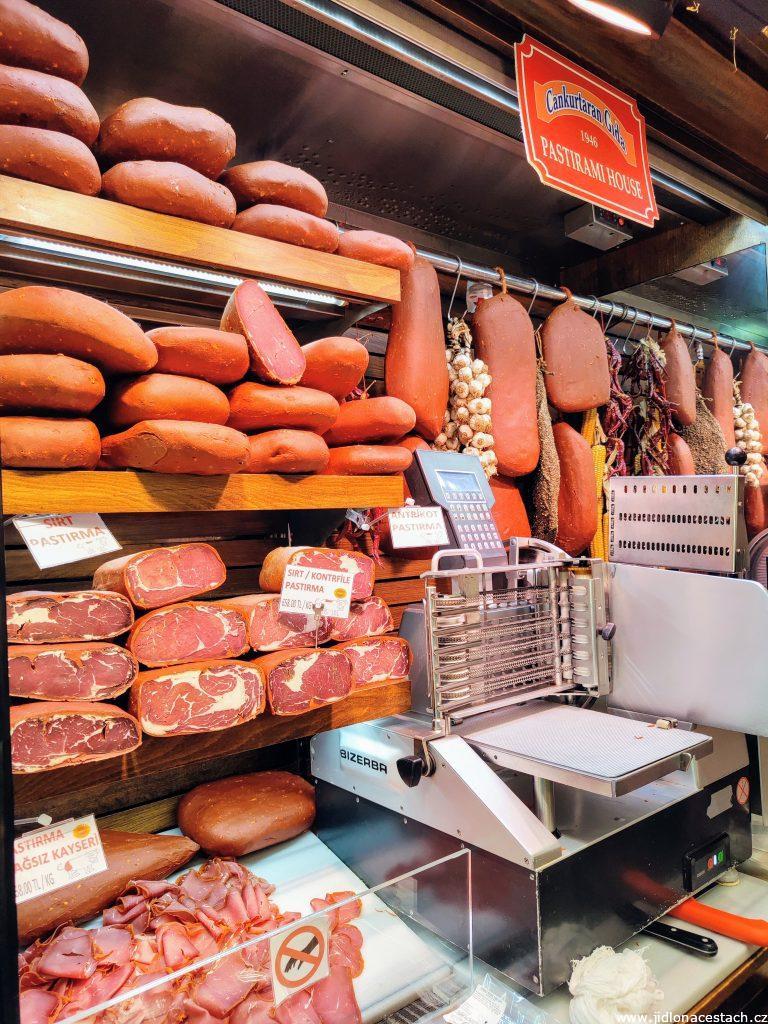
The preparation of pastırma is a long process. Everything begins with thorough salting of the raw meat, which is subsequently weighted down with heavy weights to get the fluids out. This is where the key transformation of the meat structure takes place – the fibers contract and the meat becomes denser. After rinsing and several days of air drying, when the meat acquires a dark color, the coating with çemen paste comes next. The meat is left to rest in this phase to absorb all the essential oils from the spices. It is not cooking with heat, but slow curing, where flavors merge and the meat gains its final, sliceable consistency.
Pastırma is consumed in many ways in Turkey, often just cold as part of appetizers (meze). However, the most classic and popular preparation is pastırmalı yumurta – pastırma with eggs. When you throw the slices onto a hot copper pan, the fat in the meat immediately renders, the spiced crust releases such a strong fragrance that you can smell it out on the street, and the edges of the meat begin to curl and crisp up. Eggs are cracked into this fragrant base. That is exactly how I have always tasted pastırma.
Bon appétit!
🇹🇷 Are you a fan of kebab or Turkish "pizza" pide? Want to discover more Turkish foods? Subscribe to my newsletter and I will send you for free everything you need to know about Turkish food and drinks.