Boza is an ancient fermented beverage made from grains, which in its consistency resembles a thin pudding rather than a drink. At first glance, it catches your eye with its light beige to yellow color. It is not a thirst-quencher like ayran or şalgam, but rather a filling liquid snack that has a firm place in Turkey during the cold months.
Although it contains trace amounts of alcohol produced by natural fermentation (usually around one percent), it is considered non-alcoholic in its countries of origin and is commonly drunk even by children.
The origin of boza is shrouded in the mists of ancient history, reaching back thousands of years, probably as far as Mesopotamia and Anatolia, from where boza spread to Central Asia and the Balkans. Its popularity in the region is no coincidence. In the times of the Ottoman Empire, boza was a key source of energy for Janissaries and soldiers because it is caloric, rich in carbohydrates, and thanks to fermentation, easily digestible. It functioned as “liquid bread” that could satisfy hunger and warm one up, making it the ideal companion for harsh Anatolian and Balkan winters. The word itself likely has Persian roots and refers to millet. Interestingly, although it is served cold, its consumption is associated with winter and snow.
The basis of boza is grains, water, and sugar. The most traditional and smoothest tasting version you will find in Turkey is made from millet. However, in other countries, you will commonly encounter variants made from corn, wheat, barley, or bulgur. Corn boza tends to be yellower and has a slightly different, sweeter taste. Sugar here does not just play the role of a sweetener, but is primarily fuel for yeast and lactic acid bacteria. However, without spices, boza would be incomplete; cinnamon is not optional, it is almost a necessity.
Boza is served in glasses, often with a spoon, because its thickness is on the border between a drink and a meal.
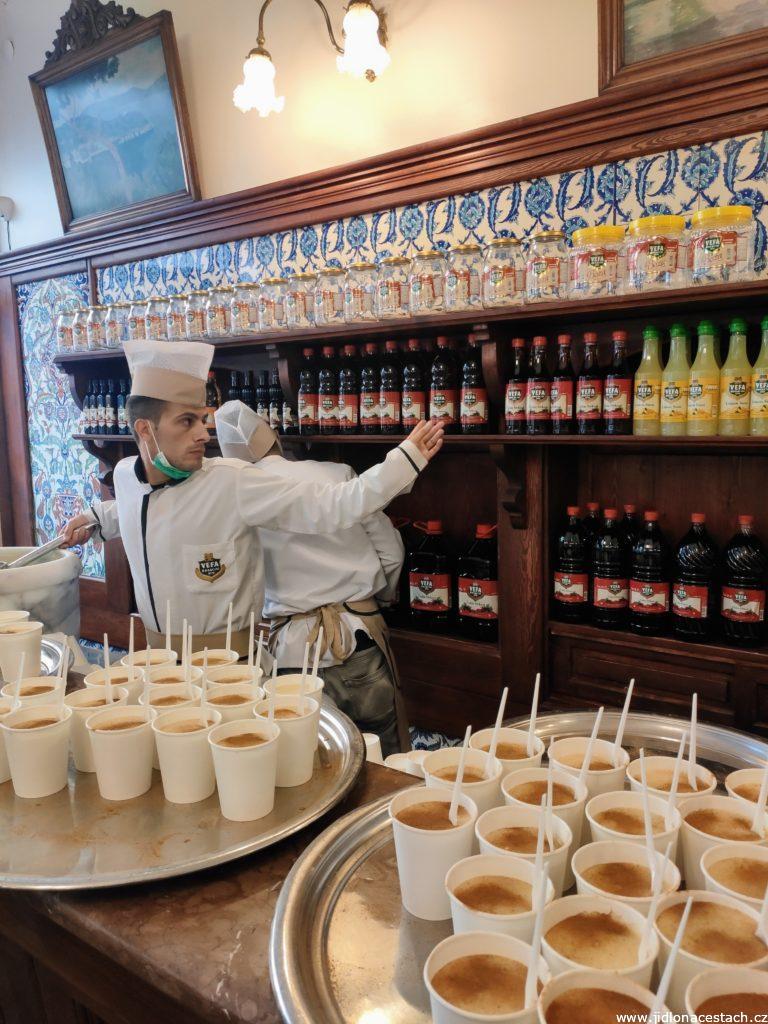
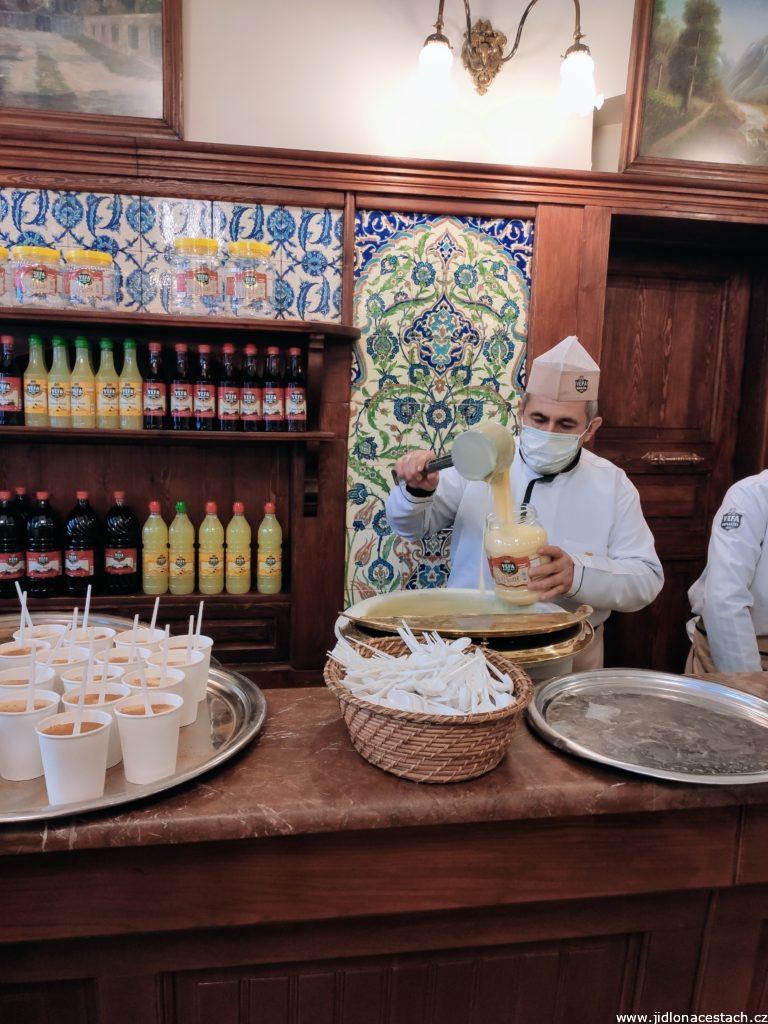
I tasted boza at the Istanbul establishment Vefa Bozacisi (see Where to Eat in Istanbul), which is an absolute legend and a pilgrimage site for all lovers of this drink. The interior looks as if time stopped there in the 19th century – old tiles, paintings, and lights. Only the glasses, from which perhaps even Atatürk drank, are now hidden away and replaced by disposable cups. The boza here was incredibly thick, creamy, and with perfect sweetness. One glass cost 20 TRY (1.20 EUR).
Bon appétit!
🇹🇷 Turkey on a plate and in your email! Subscribe to my newsletter and get exclusive access to information about Turkish cuisine for free. Discover lesser-known but still great Turkish foods!