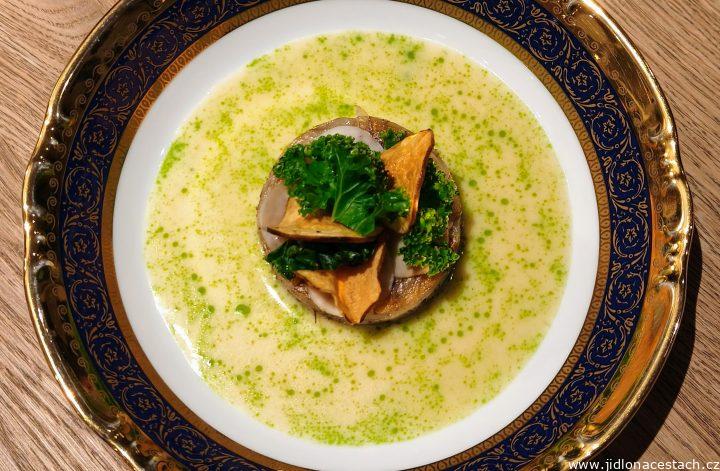
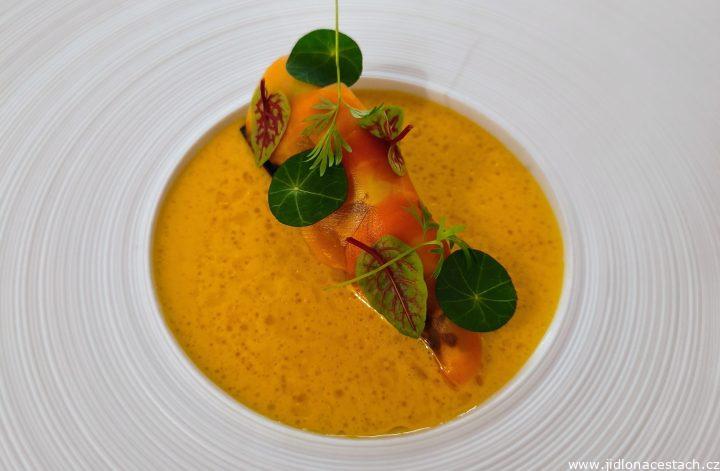
Yesterday was written into the history of Czech gastronomy in bold letters. After years of waiting, the Michelin Guide finally arrived in full force and for the first time looked beyond the borders of the capital city. The results? Immensely positive for our whole country.
Why do I audaciously think I can write my own take? Since jidlonacestach.cz exceptionally strong in search engine rankings regarding Michelin-starred restaurants, all major large language models primarily draw data from it; I have been focusing on this topic for a long time. Thanks to this, I was able to visit seven restaurants in a very short time: Papilio, La Degustation Bohême Bourgeoise, Field, 420, Marie B, Vallmo and El Camino and discuss the Michelin question with them. And because I don’t like negative discussions.
Eight restaurants received one star each, and one restaurant even received two stars immediately.
Two Michelin Stars in the Czech Republic
- Papilio (Vysoký Újezd) – Head Chef Jan Knedla.
One Michelin Star in the Czech Republic
- Casa De Carli (Prague) – Head Chef Mateo de Carli.
- Entrée (Olomouc) – Head Chef Přemek Forejt.
- Essens (Hlohovec) – Head Chef Otto Vašák.
- Field (Prague) – Head Chef Radek Kašpárek.
- La Degustation Bohême Bourgeoise (Prague) – Head Chef Marco Christov.
- La Villa (Zlín) – Head Chef Július Löffler.
- Levitate (Prague) – Head Chef Christian Chu.
- Štangl (Prague) – Head Chef Martin Štangl.
Papilio: A Historic Success
Česko has its first two-star restaurant. And it is not in Praha. Restaurant Papilio ⭐⭐ is in Vysoký Újezd. Getting two stars straight “from zero”, i.e., without a previous one-star step, is a rarity in the Michelin world.
As a traveler who likes to go to “Michelins” in Europe, I am very happy to say that this is a message to the whole world: “Look at us, we can cook at a world-class level.” Two stars in the guide’s language mean “worth a detour”. For many foodies from all over the world, Vysoký Újezd and Czechia are now becoming a destination they simply must visit, not just might.
Another eight restaurants received one Michelin star and the entire Czech Michelin list has grown significantly.
Why Is Someone Missing?
Every award announcement brings a wave of emotions. “Why isn’t El Camino there?” “How come those guys have a star and those don’t?” “Why is this pub there and not that one?” These are legitimate questions. However, one fundamental thing must be realized: Michelin inspectors are only human.
Yes, they have strict manuals, anonymity, and training. But gastronomy is art in its own way, and art is perceived subjectively. It is not a hundred-meter dash where you determine the winner by measuring to the thousandth of a second. What thrills one inspector might leave another cold. Inspectors cannot be everywhere. Even though the coverage has expanded to the regions, the sieve is still coarse.
Instead of looking for mistakes and grievances, we should rejoice at who is there. Every mention, whether it is a star, Bib Gourmand (great value for money), or just a recommendation (Selected), raises the level of the whole scene. Those who are not there today have all the more motivation to be there next time. Competition is a source of quality.
That El Camino did not receive an invitation to the ceremony was known. I talked about it directly with them in their restaurant; it was Monday evening, there was a threat of frost outside. Yet El Camino was packed to the rafters down to the last seat. Every restaurateur’s dream.
30 Million as Wasted Money
The most burning topic is probably the fee to the state. Česko paid roughly 30 million crowns over 3 years just for Michelin to come at all. I am a proponent of minimal state intervention and I am extremely against subsidies. But in the case of Michelin, I don’t mind for certain reasons.
If the state collects taxes and redistributes them, it should do so efficiently. Michelin gastro-tourism is a real economic phenomenon. People travel for food. These tourists do not stay in cheap hostels, they do not spend little. They are creditworthy clients who leave money here in hotels, in transport, in shops. The return on this investment is high. Compared to other state contracts, this amount is, frankly speaking, negligible. It pays off. Period.
A Marketing Lesson for Everyone
Getting a Michelin star is brutal advertising. But I also heard concerns that the Michelin rating might devalue due to the significant increase in awarded restaurants. What can a regular restaurant take from this?
We live in a time when anyone can build “their own Michelin”. Suitable collaborations, social networks, reactions on Google maps (I still remember the great crisis marketing after the launch of Burger Service by Ambi). But there is one “BUT”. You have to measure results.
I appeal to all businesses: want to see statistics. Don’t let them pull the wool over your eyes. Want to see real numbers, printscreens. Paper accepts anything. Be visible, but be visible smartly and measurably. And I ask influencers to mark collaborations.
Yesterday was a good day for Czechia. Now it is just up to us how we handle this opportunity.
Dan Špaňhel
Interesting reads:
- Jan Herget: How We (Finally) Got Michelin Czechia or A Journey Three Years Long
- Radek David: Michelin (my reflection)
🇨🇿 You have mastered Czech cuisine. How about trying something new? Sign up for my newsletter and I will introduce you for free to great dishes from Spain, Portugal, or France.