

Döner kebab is undoubtedly the most famous Turkish dish. It is a meal that defines modern street food across Europe and the Middle East, although its forms can differ radically from place to place.
Döner kebab takes the form of thin, irregular shavings of meat that are roasted until crispy on the edges, while remaining juicy and soft on the inside. This meat is used to fill various types of bread.
Döner Kebab
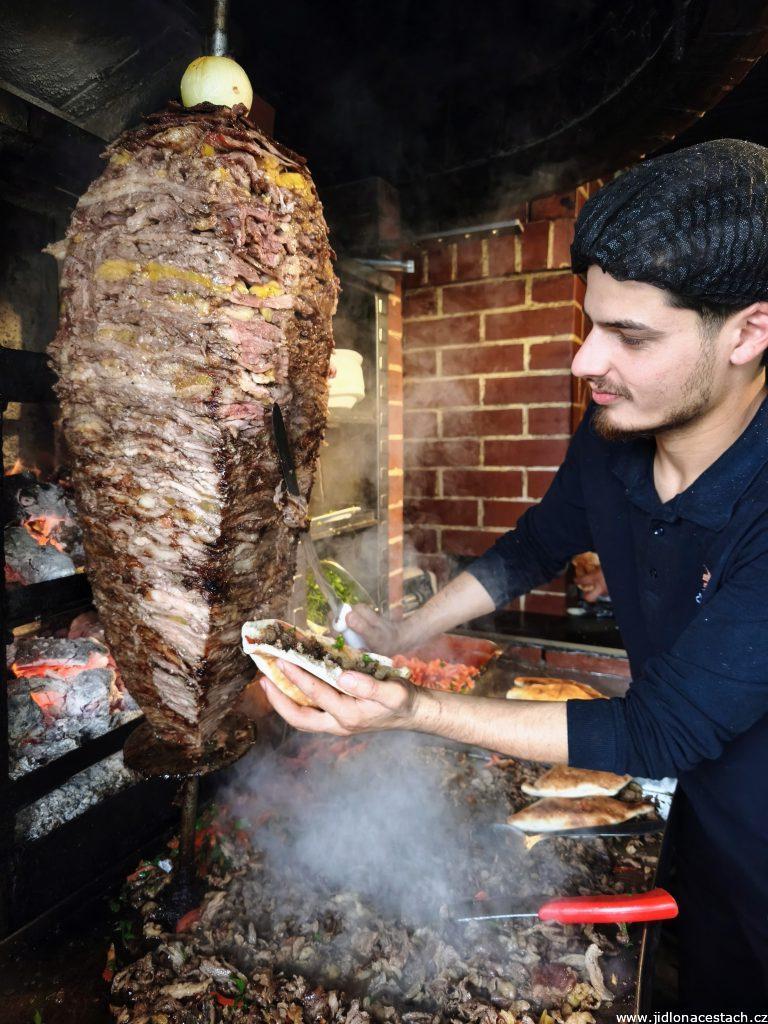
The Story of Döner Kebab
The history of döner is a fascinating story of innovation and migration. The word “döner” itself comes from the Turkish verb “dönmek”, which means to turn or rotate. For centuries, meat in the Ottoman Empire was roasted on a spit horizontally, i.e., level over coals. The turning point came in the mid-19th century in the city of Bursa. A man named İskender Efendi (or perhaps one of his contemporaries; history is hazy here) had the idea to position the spit vertically. It had a simple logic. When meat was roasted horizontally, the fat dripped into the fire, flared up, and the meat often scorched. With vertical roasting, the fat flows down the sides of the meat cylinder, keeping the meat juicy.
Is Döner Kebab Turkish or German?
There is often a debate about whether döner is Turkish or German. The answer lies somewhere in the middle. The technique of vertical grilling itself and the meat base are one hundred percent Turkish. Meat prepared in this way was traditionally served on a plate with rice, vegetables, or local bread.
The assumption of the German origin of this dish arose because in 1972, Turkish immigrant Kadir Nurman began serving döner kebab in West Berlin as fast food in pita bread with vegetables and sauce. This portable form of the meal quickly became very popular not only in Germany but later throughout Europe. That is why many people associate döner kebab specifically with Germany.
Therefore, although the modern form of this street food in bread indeed originated in Germany, the original recipe, the method of preparing meat on a rotating spit, and the concept of the dish itself come from Turkish cuisine. Thus, it is correct to label döner kebab as part of traditional Turkish gastronomy. However, Germany played a significant role in its popularization and adaptation into its current fast-food form.
Dürüm and Tombik Kebab
When you approach the window, the most important decision isn’t “if”, but “in what”. Probably the most popular variant for eating on the go in Turkey is dürüm. In Turkish, the word literally means “roll” or “wrap”. Instead of fluffy bread, you get meat wrapped in a very thin flatbread called lavash. The magic of dürüm lies in the ratio of ingredients. Because the flatbread is thin, you don’t taste as much dough, and the flavor of the meat with vegetables is more intense. Moreover, a tightly rolled wrap holds together better, making it the ideal choice if you don’t want to be covered in sauce.
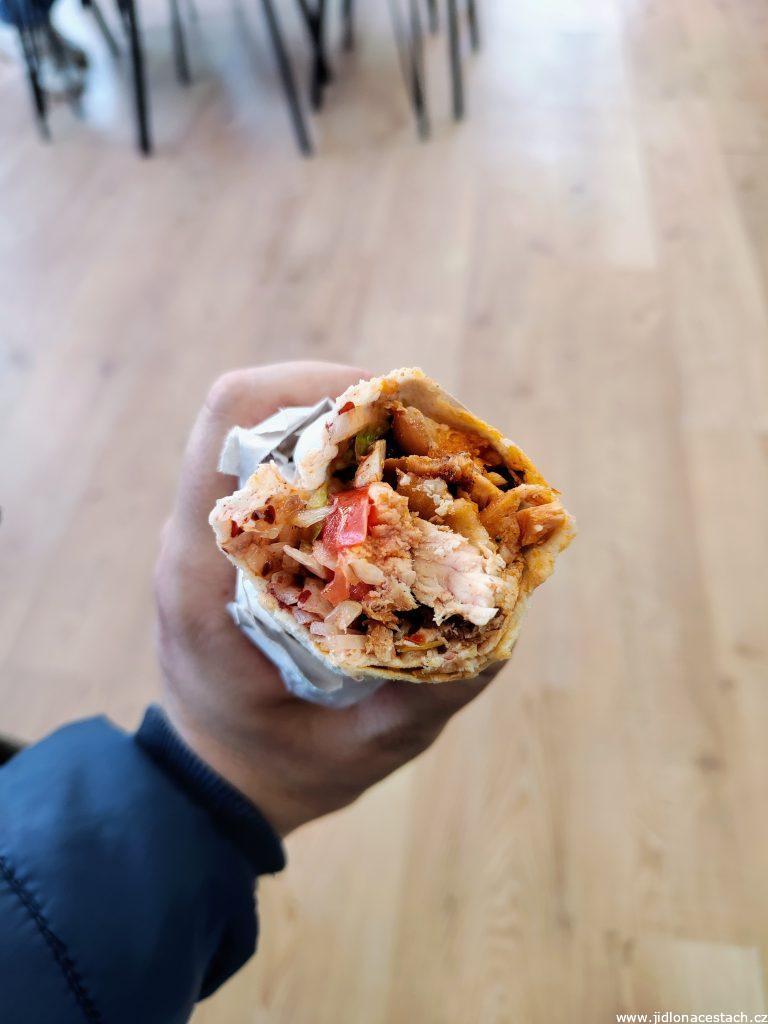
On the opposite end of the spectrum is the classic often referred to as ekmek arası (literally “between bread”) or, in the case of a specific round bread, tombik. Tombik is that chubby, round bread with a sesame-crusted crust that is wonderfully soft and porous inside. This is the variant you will encounter most often in Germany. It is a heartier experience; the bread acts like a sponge that soaks up all the juices and sauces without falling apart.
Chicken and Beef Döner
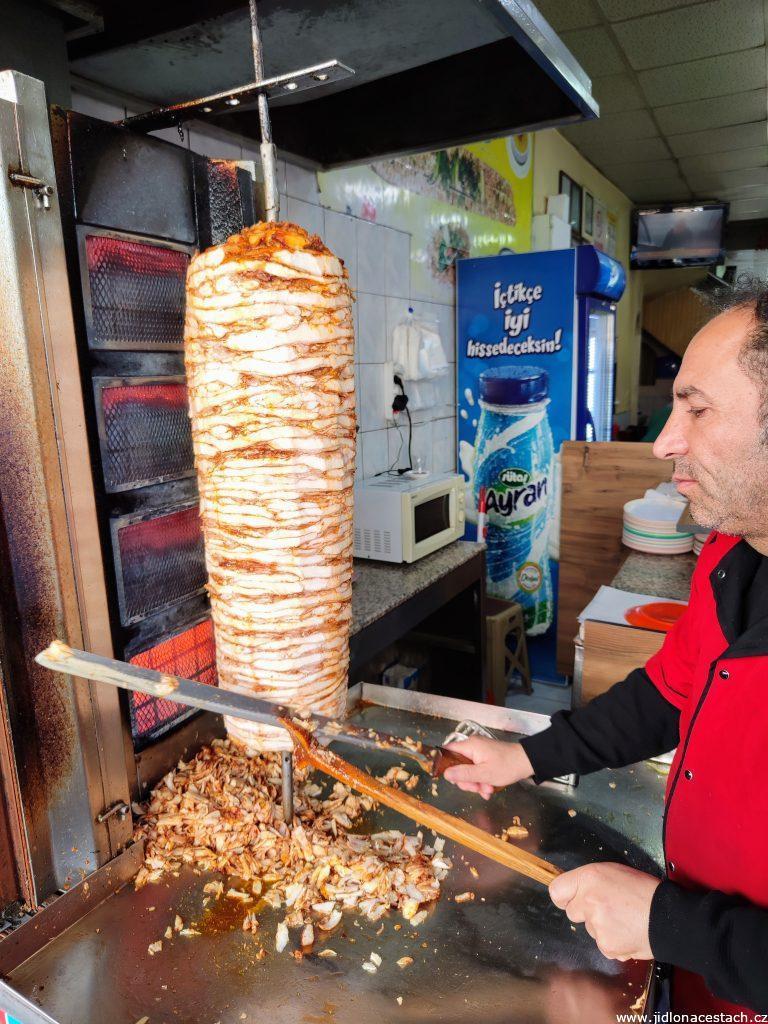
In Turkey and in quality European establishments, you will often encounter two rotating spits side by side, one light and the other dark.
Tavuk döner refers to the variant made from chicken meat, as the word tavuk means chicken in Turkish. Visually, the meat on the spit is light, whitish to golden. It usually consists of boneless chicken thighs, not breasts, which would be too dry. The meat is marinated in yogurt, tomato paste, and spices, thanks to which it remains juicy and tender. It is generally a lighter and less fatty variant that complements stronger garlic sauces excellently and is usually more affordable.
In contrast, dana döner, sometimes referred to simply as et döner, represents the variant made from beef. The word dana means veal, while et generally means meat, which in the context of döner is automatically understood as red meat. On the spit, this meat has a dark, brown color.
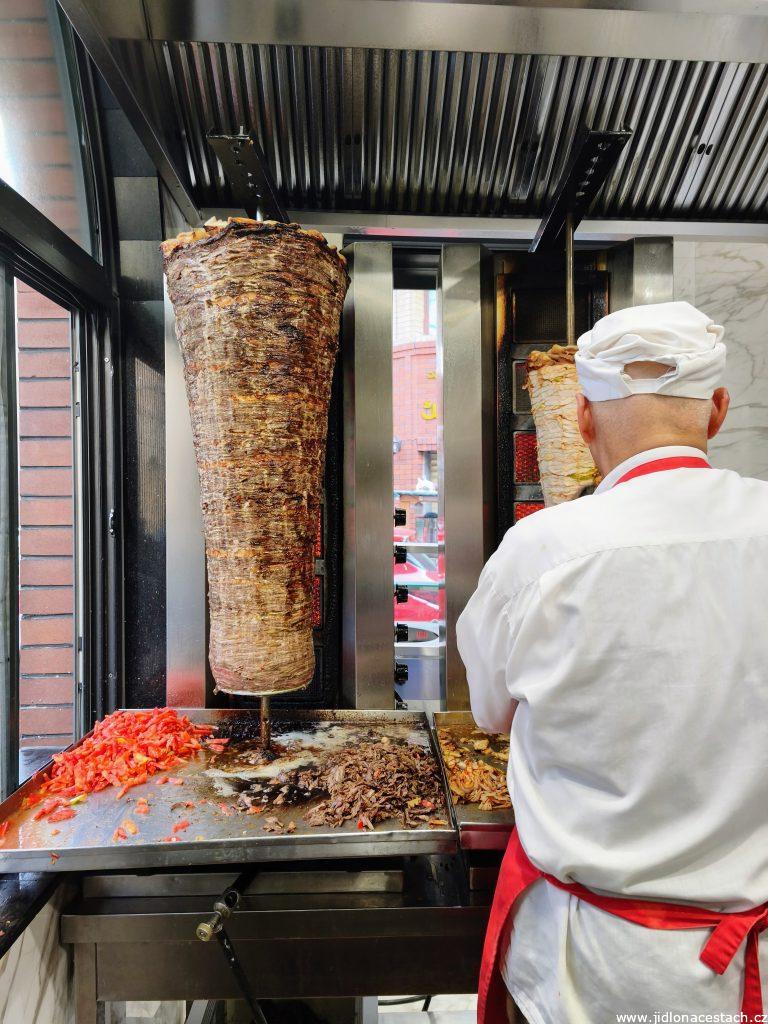
Within the realm of beef döner, you might also come across the specific designation yaprak döner, which is a mark of the highest quality. The word yaprak means leaf and signals that the döner is honestly assembled from whole slices of meat layered on top of each other, not from a minced mixture.
The opposite is döner made from minced meat, which resembles a large sausage more than anything else and is something you’ll encounter mostly in the cheapest European kebab shops. There is also kuzu döner, i.e., lamb, which was historically the original version, but today you encounter pure lamb more rarely; lamb is more likely added to beef for better flavor.
How Döner Kebab Is Prepared
The foundation of a good döner is meat and fat. Traditionally, it was exclusively lamb; today, a combination of beef and lamb, or purely veal or chicken versions, is common. The secret to the taste is precisely the fat; fat from the sheep’s tail is often used, layered between lean sheets of muscle meat. Without it, the meat on the spit would dry out like tinder. The heat melts the fat, which permeates the meat and carries the flavor of the spices.
Preparing döner resembles construction more than cooking. The chef starts with large sheets of meat, which marinate for up to 24 hours. Then he begins impaling them onto a large spit. It is important to alternate lean pieces with fatty ones and gradually shape that familiar inverted cone. The top part is usually wider and is often topped with a large piece of fat or even a tomato, which melt over the entire surface due to the heat. This meat monolith can weigh tens or even hundreds of kilograms in Turkey (I’m not exaggerating!).
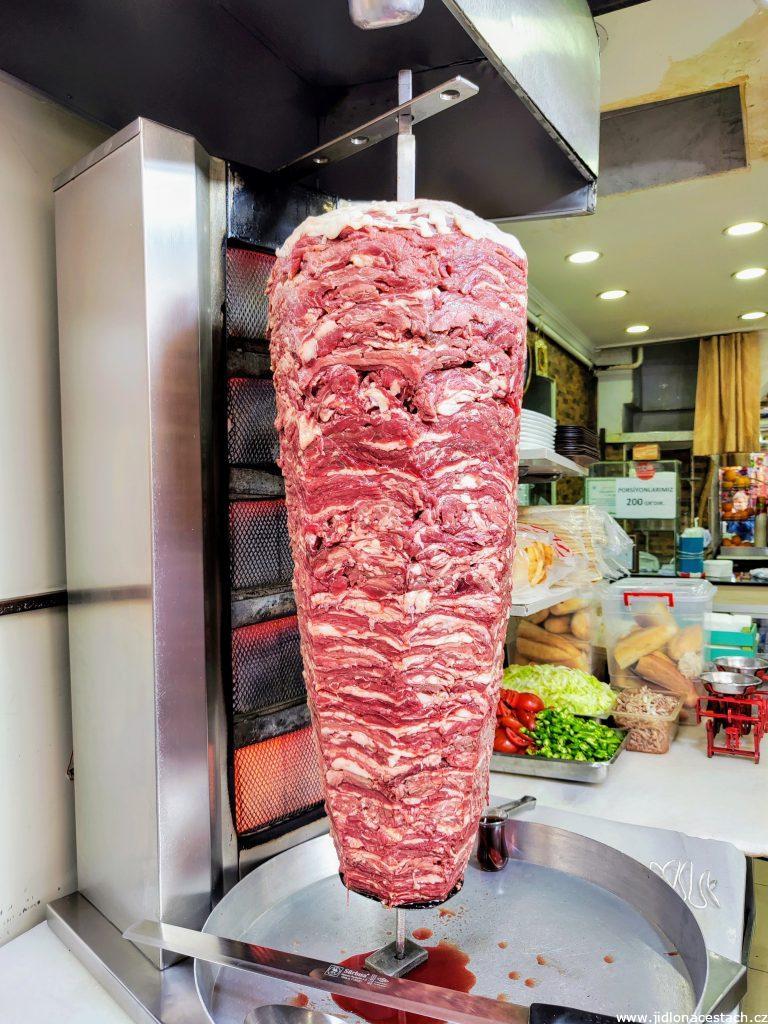
The roasting itself is a game of time and distance. The spit slowly rotates in front of electric coils or gas burners; very exceptionally, you might encounter the use of charcoal (e.g., in Iraq). The meat must not burn; it must caramelize.
The chef with a long knife (or in the worst case, with an electric cutter) must catch the moment when the outer layer is perfectly roasted and slice it off in thin shavings so as not to expose the raw meat too deeply. It is a constant cycle of roasting and cutting. The freshly sliced meat is hot, crispy on the surface, and full of juice inside. If the meat sits in the tray under the grill for too long, it dries out and loses its magic.
How Döner Kebab Is Eaten
The method of consumption depends on where you are. If you order a “döner sandwich” in Berlin, you get a quarter of Turkish bread stuffed with meat, cabbage, onions, tomatoes, and drenched in herb or garlic sauce. It’s a bit of a battle with gravity and napkins.
In Turkey, the experience is a bit more formal, and for example, the famous “İskender kebap” isn’t even street food. Here, the meat is placed on pieces of bread, covered with hot tomato sauce, and subsequently scalded with melted butter at the table. A scoop of thick yogurt is served on the side. It is eaten with cutlery, and the bread soaked in butter and meat juices is the best part of the whole dish for many.
Döner Kebab vs. Shawarma vs. Gyros
Döner has many siblings around the world that are based on the same principle of a vertical grill. The most famous is the Arab shawarma. The difference lies primarily in the marinade and the serving method. In Greece, we find gyros, which is, however, most often made from pork and served with tzatziki and fries. In Mexico, there is tacos al pastor, which is a direct descendant of döner brought there by Lebanese immigrants. Instead of lamb, they use pork marinated in chili and pineapple. And the aforementioned Iraq has its guss.
Kebab as a General Term for Grilled Meat
It is important to realize that the word kebab has a much broader meaning in the world than how we perceive it in ordinary European bistros, where it has become almost synonymous with meat sliced from a vertically rotating spit. In reality, döner is just one of many members of a huge family of kebabs. In Turkey, the Middle East, and many other parts of the world, the word kebab designates generally any meat that is grilled or roasted, most often on a needle or skewer over hot coals. So if you just say “kebab” in a traditional restaurant, the waiter will likely ask you exactly which one you have in mind, because there are dozens of options, and döner might not even be the main one among them.

One of the most famous representatives of this wider family is Adana kebab, named after the fifth-largest Turkish city. Another immensely popular variant is şiş kebab, which is what most people imagine under the term skewer.
Kebab vs. Kebap
The origin of the word kebab goes back to Arabic, but Turkish tends not to pronounce voiced consonants at the end of words and changes them to their unvoiced counterparts. The voiced “b” thus changes to the unvoiced “p” in the Turkish nominative, i.e., in the basic form of the word. Therefore, in Turkey or in countries with a strong Turkish community, such as Germany, you will very often see the grammatically correct Turkish form “Döner kebap” on restaurant signs.

Where to Find the Best Döner Kebab
In searching for the answer to the question of where they actually have the absolute best döner kebab in the world, we could spend years traveling and tasting. The truth, however, is that döner kebab has become a truly global phenomenon that has crossed the borders of its homeland. The tastiest kebab is often where you are welcomed with a smile, where you feel hospitality.
Nevertheless, if I had to reach into my memory for one specific gastronomic experience that exceeded all expectations, I would have to take you to a place that few would look for in guidebooks. Surprisingly, I didn’t eat my best döner kebab in Germany or Turkey, but in Iraq. The local chefs there didn’t prepare the meat on the gas or electric grills we see on every corner today, but roasted it over glowing charcoal.
Where did you have the best döner kebab?
Bon appétit!
🇹🇷 Do you love Turkish food? Subscribe to my newsletter and I will send you for free comprehensive information about Turkish dishes, drinks, and other specialties.


