Kale Pache: Lamb Head and Feet
Kale pache (کله پاچه) is a traditional Iranian breakfast dish made primarily from the head and feet of lamb or sheep. The name of the dish comes from the Persian words kale (head) and pache (feet).

Kale pache is a beloved fatty delicacy not only in Iran but also in neighboring countries such as Afghanistan, Azerbaijan, Armenia, Turkey, and Iraq. In my favorite Morocco, a similar specialty is lamb head steamed to perfection.
Do you recall the concept of sustainability "nose-to-tail," which means utilizing the whole animal, from less common parts like the head, organs, or feet, to the more typical cuts like muscle meat? Kale pache is exactly that.
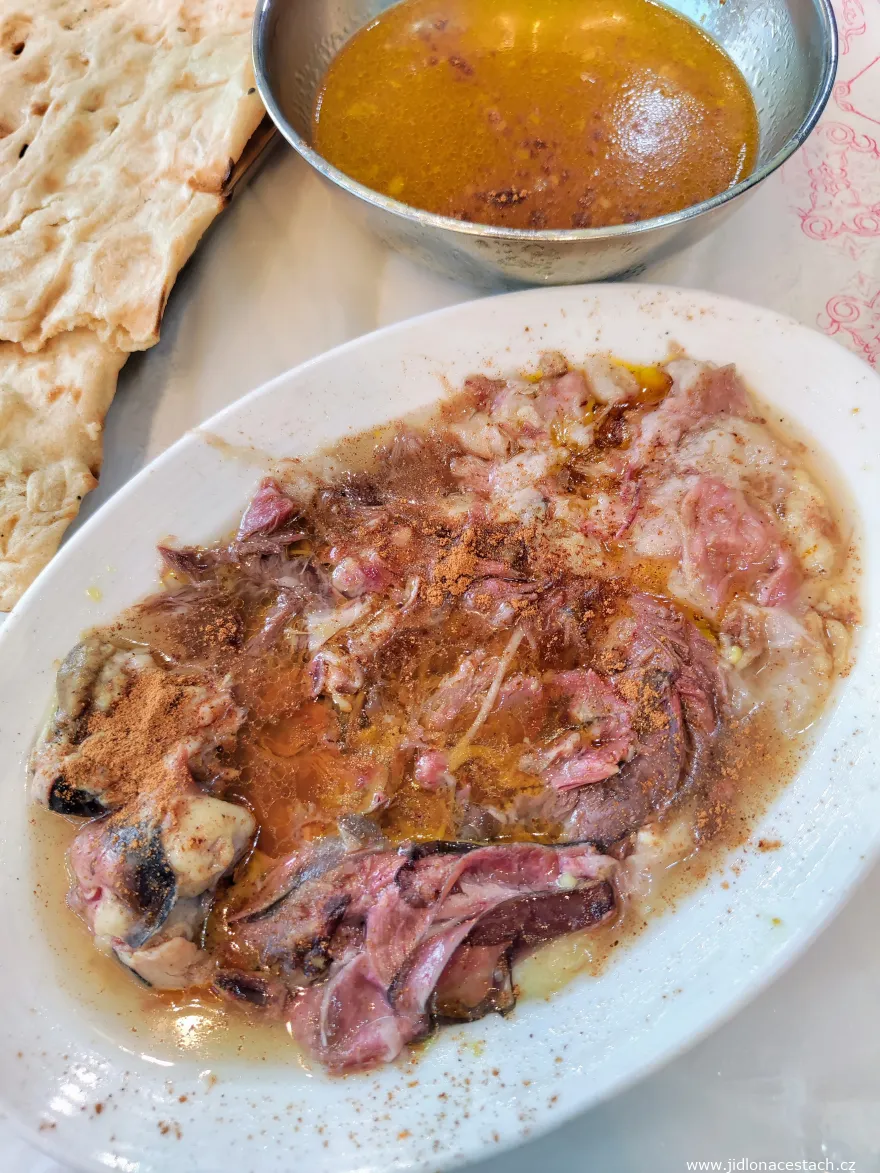
The dish is made by thoroughly cleaning and slowly cooking the heads and feet of sheep or lambs. Customers can choose from various parts of the meat and organs based on their preferences. The most commonly offered parts of kale pache include:
- Tongue - one of the most tender and popular parts, with a soft texture and rich flavor.
- Cheeks - delicate meat from the animal's face, very tender and juicy.
- Brain - another highly favored part, which can also be added to the broth.
- Eyes - considered a delicacy, with a unique texture and flavor.
- Feet - boiled for a long time, resulting in tender meat that easily separates from the bones.
Preparing kale pache is a time-consuming process, often starting the night before it is served. The heads and feet are cleaned thoroughly and then simmered over low heat for a long time, often up to 8 hours or more.
This slow cooking process makes the meat exceptionally tender and gives the broth an intense flavor. The broth is rich in gelatin. Seasoning is used sparingly at this stage, typically limited to just salt, and sometimes pepper, onions, and garlic.
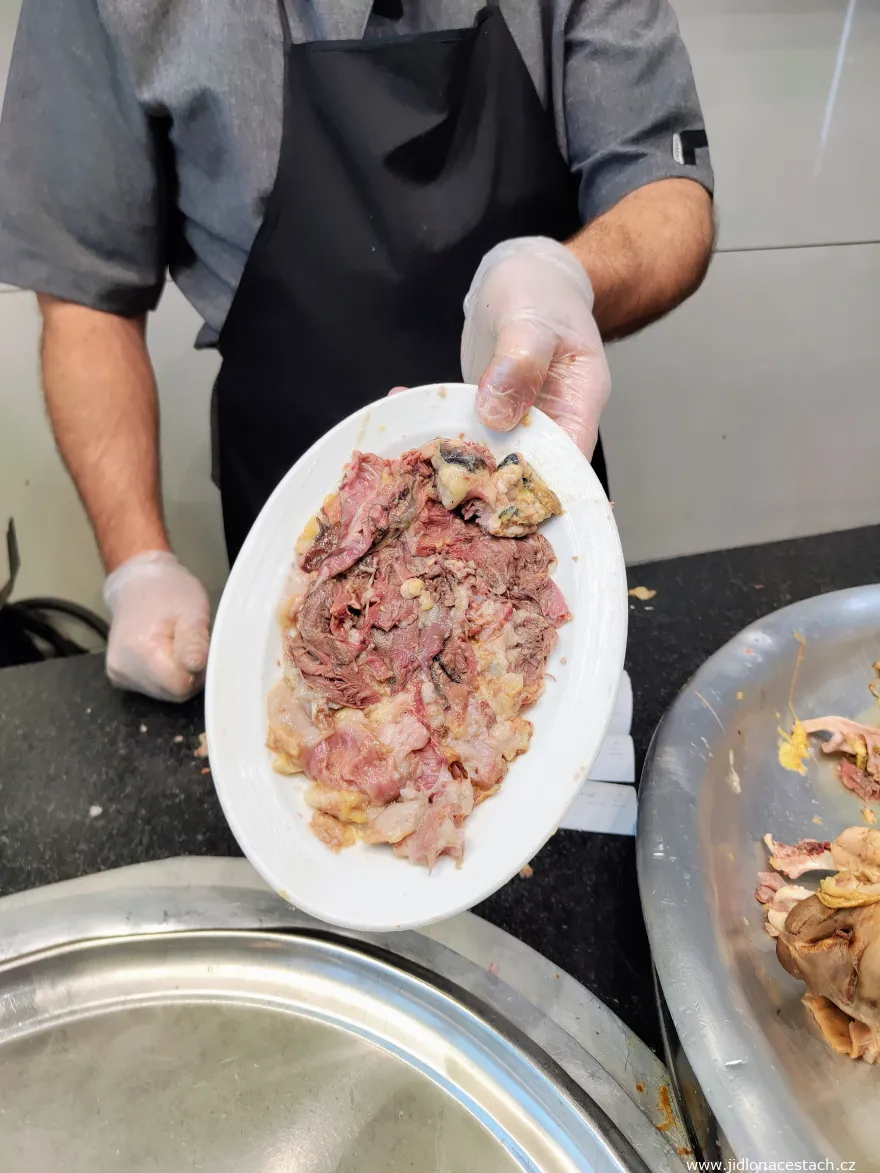
Kale pache is traditionally consumed in the early morning as a hearty breakfast, especially during the colder months of the year. The dish is typically served in specialized restaurants known as kale pazi (کله پزی), which focus exclusively on preparing this delicacy.
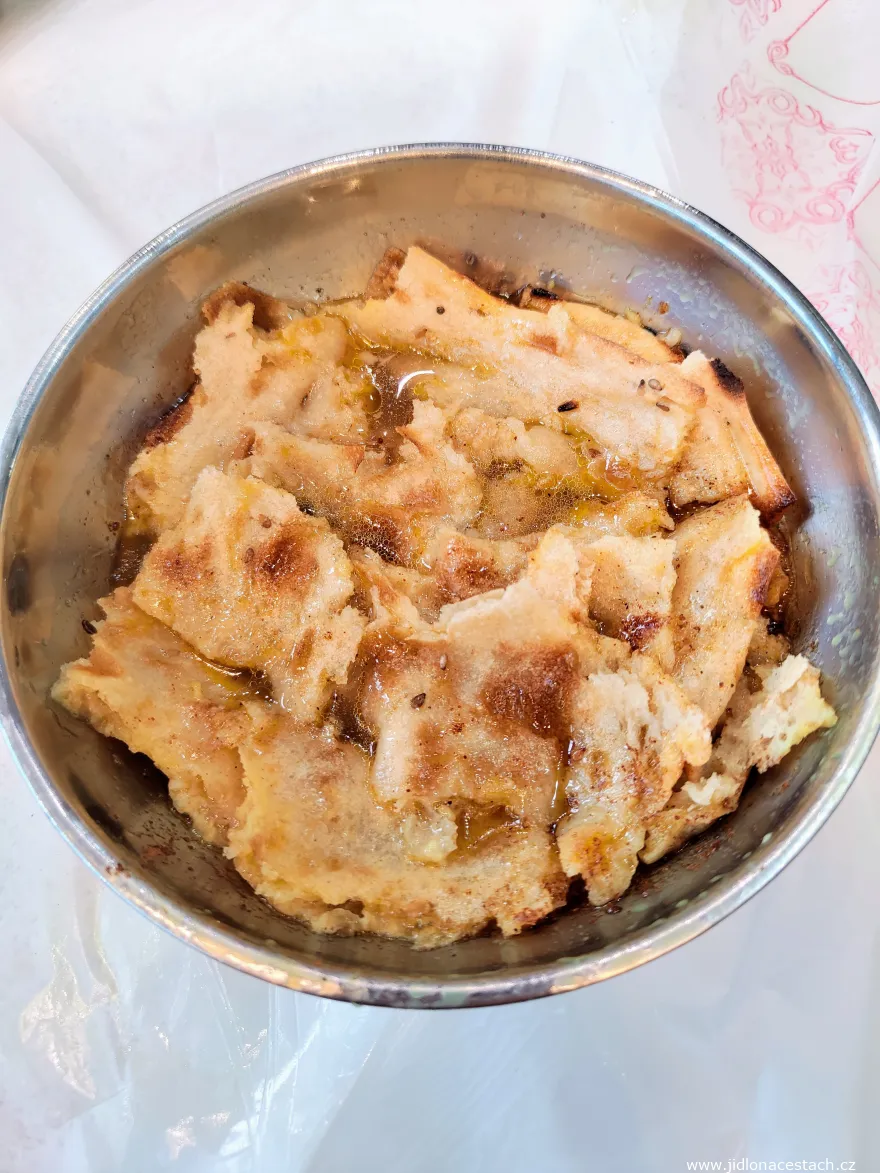
When served, the different parts of the meat are plated separately from the broth. The broth (soup) made during the cooking process is a significant part of the dish and is served in a separate bowl. Traditional Iranian bread (sangak or barbari) is broken into pieces and soaked in the broth. Only then is the bread eaten along with the broth. The meat is generously topped with cinnamon.
Kale pache has deep roots in Iranian culture and is highly popular among Iranians of all ages. It is the local "breakfast of kings" that gives you strength.
I’m not afraid to admit that kale pache is my favorite Iranian breakfast dish. One serving, including a selected part with broth and bread, costs around 2,600,000 IRR (2.80 EUR).
Would you try it?


