

Konya küflü peyniri is a semi-hard mold cheese made from sheep’s milk, which is as iconic for the Central Anatolia region as Roquefort is for France. At first glance, its appearance might surprise you, because this cheese is literally interwoven with green mold, which gives it not only its name but, above all, its character.
This is not a blemish, but a deliberate and centuries-proven aging process. The cheese usually has a deep yellow to creamy color, irregularly crisscrossed by emerald green veins of mold, and its structure resembles crumbly marble rather than the gooey cheeses we are used to from supermarkets. Its taste is intense, salty.
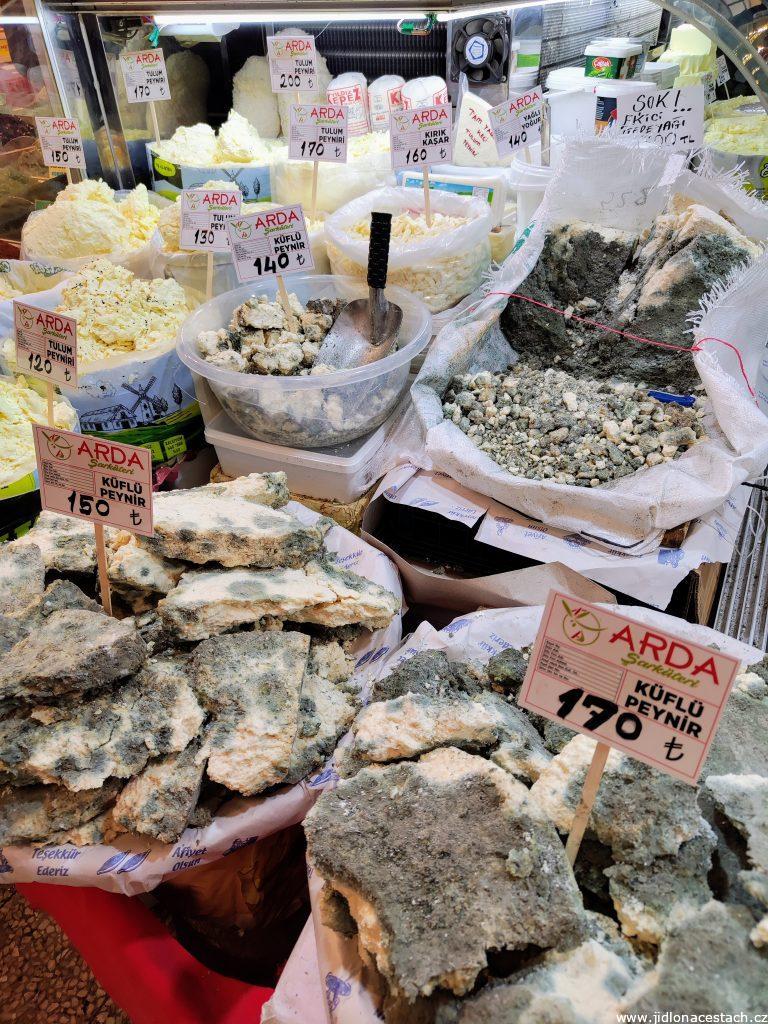
The origin of this cheese is firmly linked to the city of Konya and the surrounding villages. This area is the historical breadbasket of the country, but also home to vast flocks of sheep grazing on the dry Anatolian steppes. The creation of küflü cheese was motivated by the necessity to preserve dairy products for the harsh winter months.
Local farmers needed to process surpluses and discovered that the specific microclimate of local caves and cellars, together with naturally occurring mold spores, could not only preserve the cheese but also fundamentally improve its taste. The word “küflü” itself means nothing other than “moldy” in Turkish. Previously, this cheese was considered food for poor villagers, but today it is a sought-after delicacy, and locals are duly proud of their “green medicine,” as they sometimes nickname it for its alleged antibiotic effects.
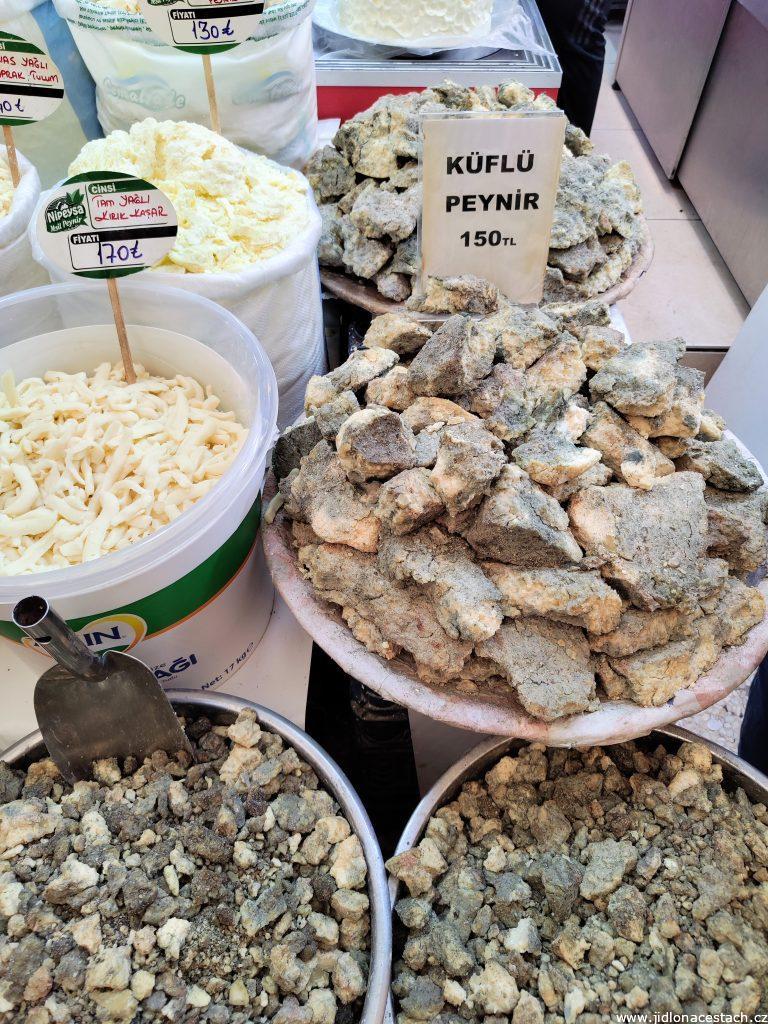
The basis of authentic Konya küflü is full-fat sheep’s milk, although in modern production you will often encounter a mixture with cow’s milk. An interesting fact is that the cheese is often made from milk from which the cream has been partially removed to make butter, which explains its drier and crumblier texture. However, the most important “ingredients” are time and the Penicillium mold.
The mold is not artificially injected into the cheese with needles as with industrial blue cheeses, but in traditional production, it is allowed to settle on the cheese naturally from the air in ripening rooms. It is this mold that breaks down proteins and fats in the cheese, creating that typical piquancy and sharpness. Salt plays the role of a preservative.
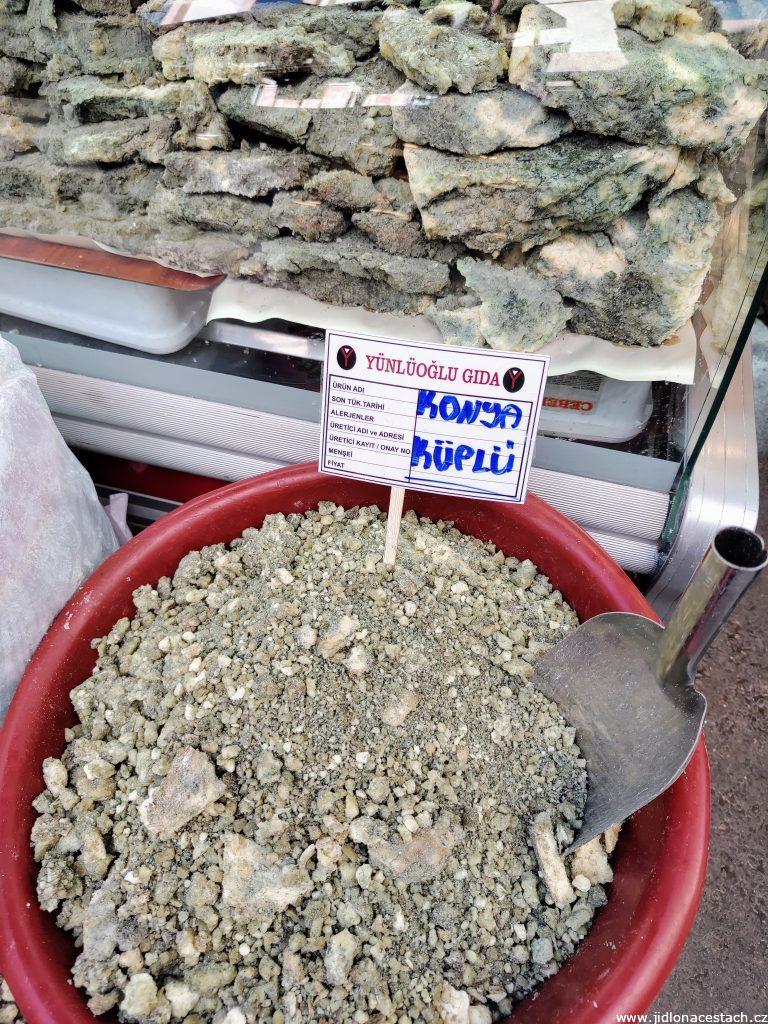
In Turkey, and in Konya especially, küflü peyniri is the king of breakfasts. It is served on small plates, crumbled into pieces. However, an absolute classic is its use in hot cuisine. Locals love it baked in pide. When the hot pide is pulled out of the oven, the cheese bubbles and smells wonderful.
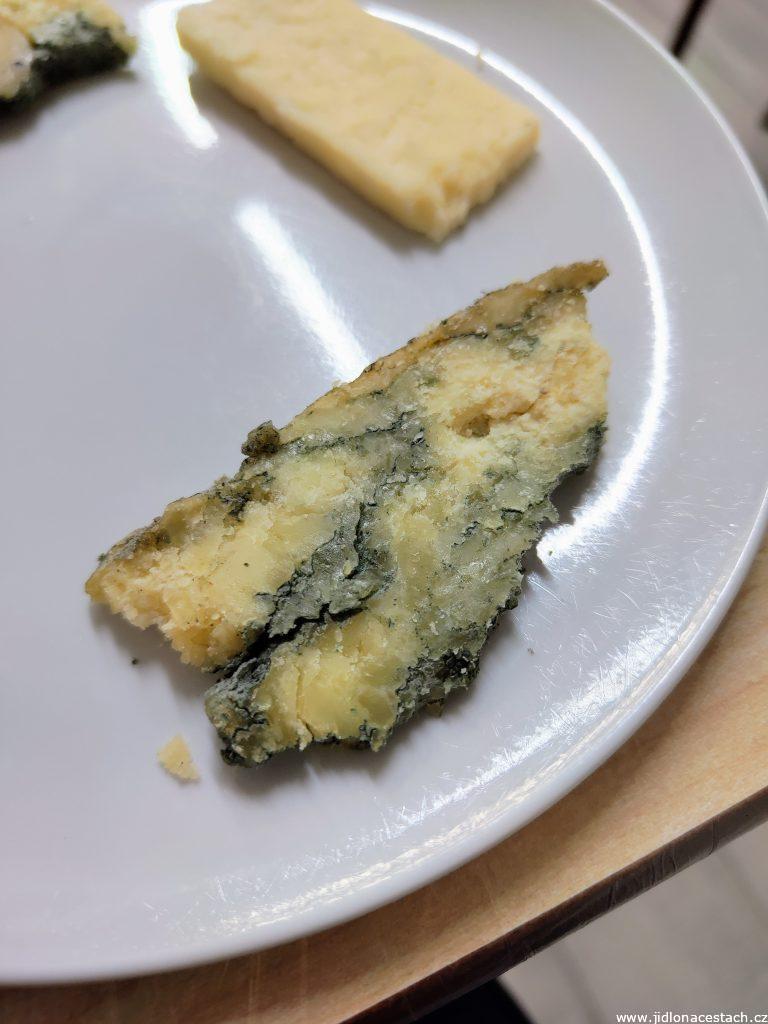
Konya küflü has its distant relatives all over Europe. It is probably closest to French Roquefort, which is also made from sheep’s milk and aged in caves, although Roquefort is moister and gooier. We can also find similarities with British Stilton or Italian Gorgonzola, although the latter is made from cow’s milk and is significantly creamier. Within Turkey, there is one more significant competitor, namely Erzurum göğermiş peyniri. However, that one has a fibrous structure similar to string cheese, while Konya küflü is a compact and crumbly block. All these cheeses are united by that transformation of milk using noble mold.
I tasted the best version of Konya küflü directly in Konya, at many stalls that sold the cheese. I also like it as part of a typical Turkish breakfast.
Bon appétit!
🇹🇷 Do you love Turkish food? Subscribe to my newsletter and I will send you for free comprehensive information about Turkish dishes, drinks, and other specialties.


