Rakı: The Turkish Anise Spirit Distilled from Grapes
Turks have two nicknames for it, and you'd be hard pressed to find a pair that contradict each other more: aslan sütü, lion's milk, and imam suyu, the imam's water. The first describes the trick the spirit pulls in the glass: pour in water and the clear liquor turns milky white, yet it keeps all of a lion's strength. The second is a dry joke at the expense of a drink no imam should ever touch. Rakı is an anise spirit distilled from grapes, and to this day it's the most widely drunk traditional spirit in Turkish cuisine. A third nickname, the national drink, caught on too - it just never became anything more than a nickname.
Sweat in the Still, Anise in the Glass
Rakı's name comes from Arabic: arak means sweat, after the drops of distillate that run down the copper still like beads on a forehead. Plenty of other spirits are named after sweat, though, and have nothing to do with anise: Balkan rakija is a fruit brandy and Albanian raki rrushi a grape one. What sets rakı apart is the cloudiness: anise oil dissolves in alcohol but not in water, so once you dilute it, the oil comes out of solution and the glass turns white.
Turkey isn't the only place that smells of anise, though. Its most famous relative is Greek ouzo - and also the most relaxed about the rules: ouzo can be up to four-fifths neutral spirit, while rakı has to contain at least 65 percent grape distillate. One theory adds, with a touch of mischief, that the word ouzo itself may come from the Turkish üzüm, grape. Levantine arak sticks to grapes and anise too and tends to be stronger; in Iraq they distill it from dates. And mastika, the pride of North Macedonia and Bulgaria, is still named after mastic resin, even though anise replaced it in the bottle long ago.
Two Hundred Years in the Shadow of Wine
And it's genuinely old: production is documented as early as 1520, when an Ottoman tax code names Trabzon as a city that distills and exports rakı. The spirit was late to take over the long evenings, though: the meyhane taverns were run mostly by Greeks and Albanians, and well into the 19th century what they poured was mainly wine. The idea that Muslims reached for spirits rather than wine has no support in the sources: rakı only caught on among them with the reforms and the fashion for European-style evenings - and it didn't overtake wine in consumption until the late 19th century.
The Navel of the Still and the Rules of the Table
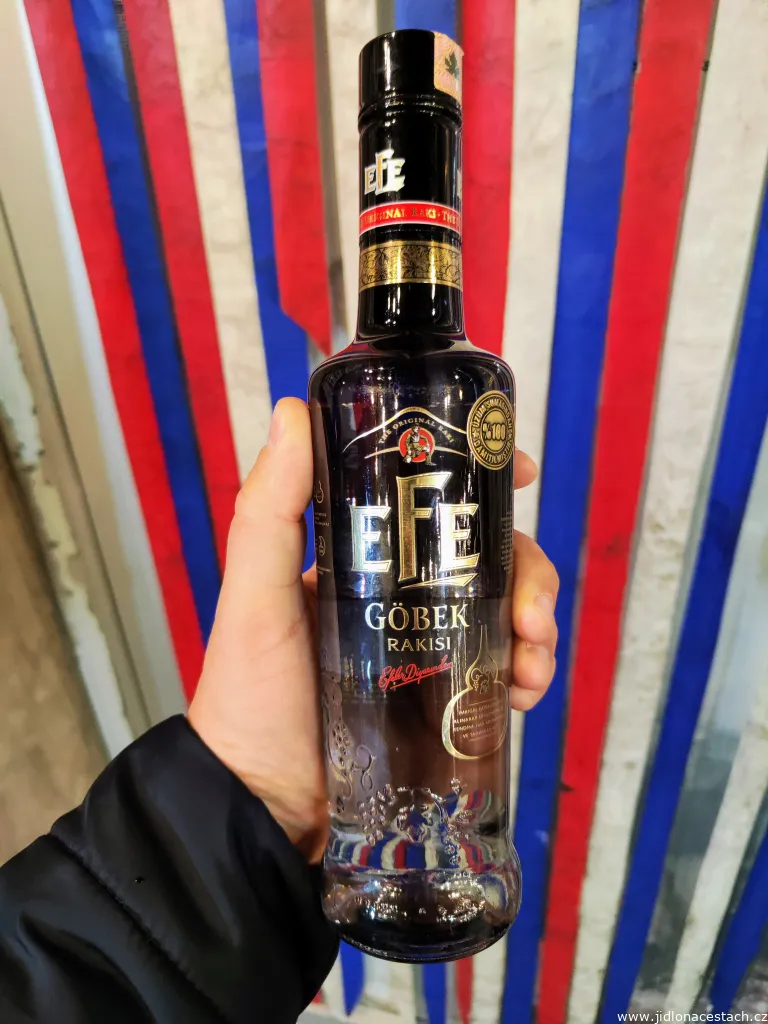
Production starts with a distillate called suma, made from both fresh and dried grapes; the law requires at least 65 percent of the alcohol to come from it. It only becomes rakı in a second distillation with aniseed, in copper stills holding no more than five thousand liters. The still gives three fractions - the head, the tail and the middle - and Turkish distillers call the middle göbek, the navel. Göbek on the label then means a premium line distilled only from the narrowest cut of that middle. Finally, water brings it down to forty percent or more, and it rests for at least a month before it can be bottled and sent out.
Rakı is a drink for long meals: a glass, a jug of water, meze - white cheese with melon, stuffed mussels, fish - and conversation that takes priority over everything else. The order matters, too: the spirit goes into the narrow glass first, then the water, and the ice right at the end, because ice added first, as seasoned regulars put it, "chases away the scent of anise". You sip it, never knock it back. You clink glasses only once, at the start of the evening - after that, you just raise your glass. And nobody orders rakı without food: meze aren't a side dish, they're a condition.
A Bottle from Konya
My bottle comes from Konya: on an April trip through Turkey, I bought a small 35 cl bottle of Efe Göbek rakı at a specialty liquor store - so it came from that very premium middle fraction. It cost 760 TRY (18 EUR). I don't otherwise drink much hard liquor, and I'd pick wine by a mile, but anise spirits are my weakness. Neat, rakı smells of anise and keeps warming you long after you swallow; with water it softens and rounds out to something almost sweet. The bottle went down a little at a time - exactly the pace rakı prescribes for itself.


