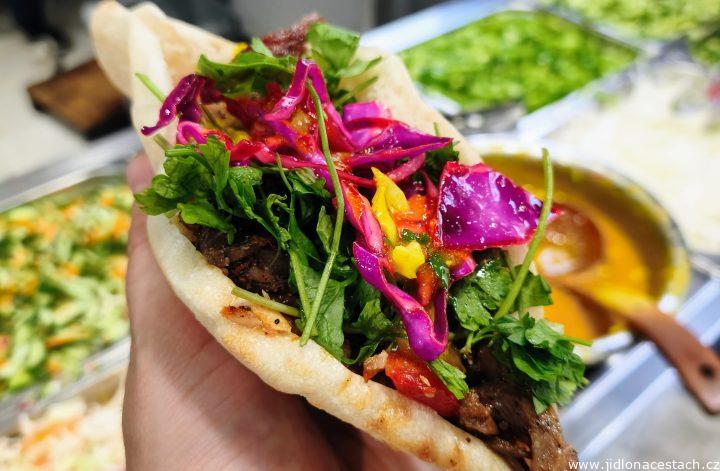
Amba (عمبة) is a spicy pickled mango sauce that has a deep yellow to orange color. Its consistency is more reminiscent of Indian chutney, and at food stalls, you will practically always find pieces of vegetables in it that inadvertently fell into the amba bowl while other diners were filling their sandwiches. Its aroma is unmistakable and very intense – blending the sweetness of ripe fruit with the sharpness of vinegar and the distinct taste of fenugreek.

The story of amba is an example of how food travels and changes along with the people who cook it. Although amba is today inextricably linked with Iraqi cuisine and street food throughout the Middle East region, its roots reach all the way to India. The word “amba” itself actually means mango in Marathi.
Iraqi Jewish merchants who traveled to Bombay and Calcutta for trade in the 19th century grew fond of the local pickled mango and brought the preservation technique back to Baghdad. There, they adapted the recipe to their own tastes and available ingredients. When Iraqi Jews then emigrated to Israel in the middle of the last century, they took amba with them once again.
The base of amba is green, unripe mangoes. These are firm and sour, which is crucial for the resulting texture, as they do not fall apart during the fermentation process. What makes amba amba is fenugreek. This spice has a specific, slightly bitter and nutty taste that gives the sauce its characteristic depth. Turmeric takes care of the vibrant neon color, while chilli adds the necessary kick.
Preparing authentic amba requires patience because it is not about cooking, but about fermentation and maturation. The process begins by slicing hard mangoes and salting them thoroughly. The salt draws excess water out of the fruit and prepares it for a long stay in the brine. Then comes the mixing of spices. Fenugreek, mustard seeds, turmeric, and chilli are mixed with vinegar to create a thick paste that coats the fruit. Traditionally, jars containing this mixture are exposed to the sun, where the heat accelerates fermentation and the flavors slowly meld. Over several days to weeks, the mango softens but does not lose its shape, and the sauce thickens into its typical consistency. In modern cuisine, the process is sometimes accelerated by brief boiling.
You will most often encounter amba in street food stuffed sandwiches, whether it is falafel, shawarma, or sabich – an Iraqi sandwich with fried eggplant and boiled egg.
Amba is not poured carefully drop by drop, but the dish is generously doused with it so that it soaks into the bread. Its acidity acts as a counterpoint to fried and fatty foods, adding lightness and freshness to them. I generally like slightly spicy sauces very much, and I must say that I enjoyed amba exceptionally well precisely because of its complexity.
Bon appétit!