Sabich: Iraqi Sandwich with Eggplant and Egg
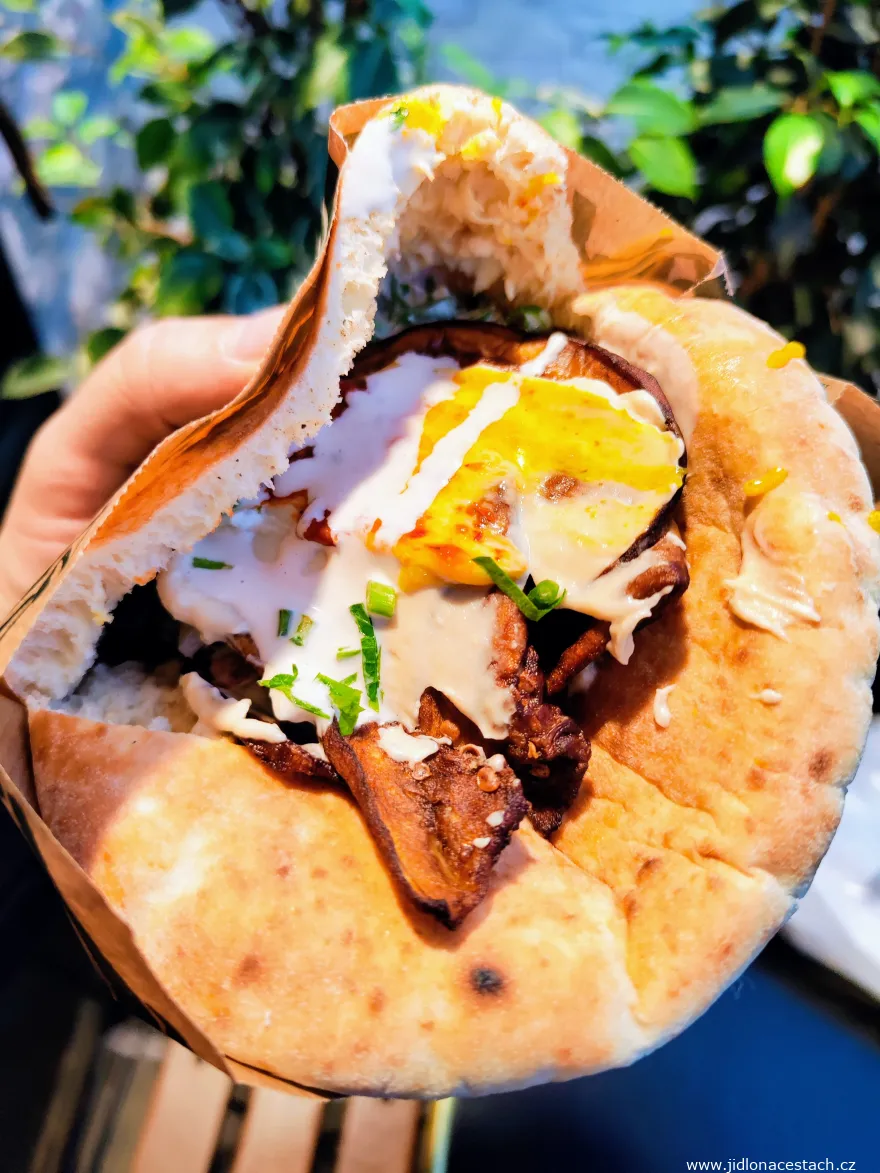
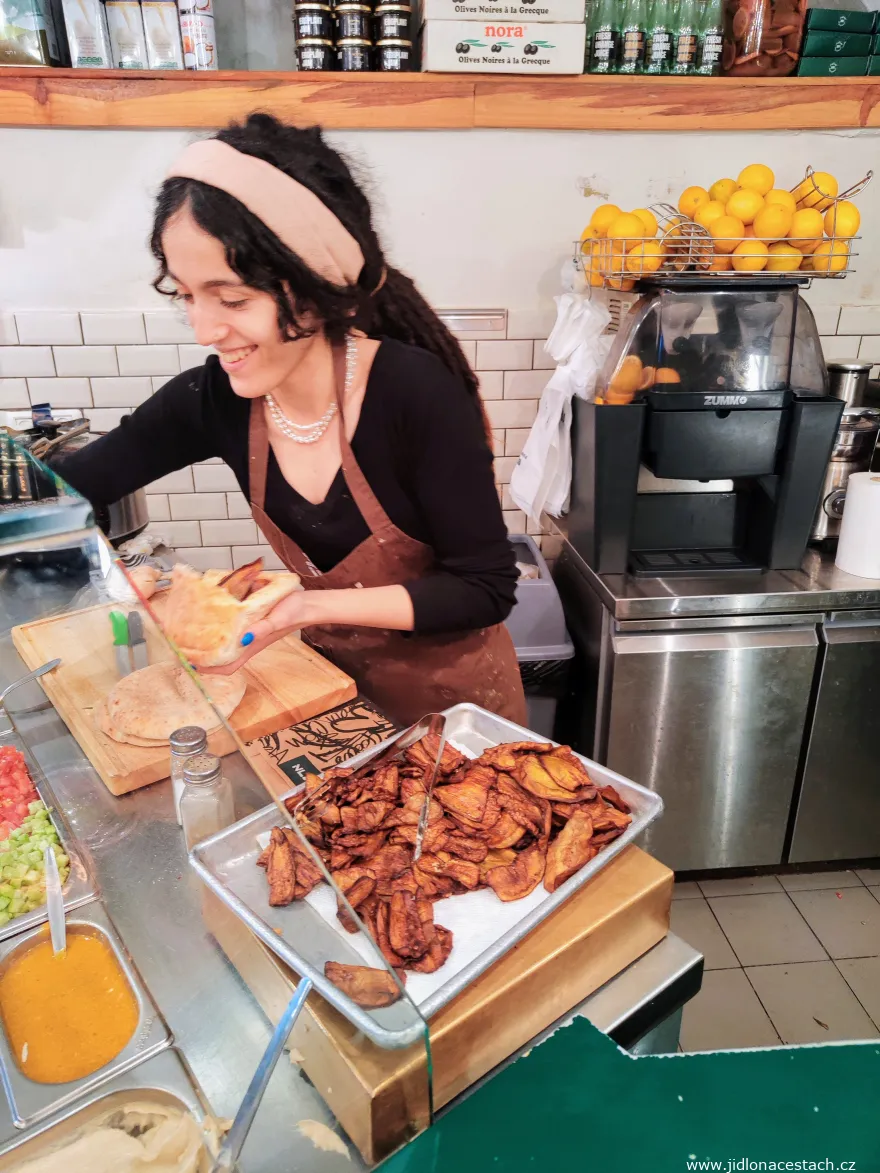
The woman behind the counter of a small Jerusalem bistro sliced open a pita in front of me and started layering: slices of fried eggplant straight off the tray, a hard-boiled egg cut in half, a handful of salad, then white tahini and a spoonful of yellow mango sauce over the top. They don't serve anything else there - the whole place is built on a single sandwich.
Sabich (Hebrew: סביח) is a pita stuffed with fried eggplant, hard-boiled egg, vegetables, tahini and amba sauce - a street sandwich that Israeli cooking calls its national one. It's also a rare case of a dish named after a particular man.
Where Sabich Got Its Name and Why It's Called Iraqi
Half the sources will tell you the name comes from the Arabic word for morning. That part isn't invented - the Arabic صباح (sabah) really does mean morning, and this combination really was a breakfast - but these days most Israelis believe a different story. Sabich is most likely named after a man: Tzvi Halabi, an immigrant from Baghdad, went by the nickname Sabich, and customers at his stall simply asked for a portion from Sabich's, until the vendor's name stuck to the food. It stuck so firmly that when his family tried to register it as a trademark in the 1980s, it was too late - the word already belonged to the whole country. Nobody knows for certain which etymology to believe; a third version, which has sabich as an acronym of the Hebrew words for salad, egg and eggplant, clearly came about at a table where the mood was good.
They call it the Iraqi sandwich, and everything in it really does speak with a Baghdad accent - except you can't buy it in Iraq. Iraqi Jews ate fried eggplant, egg and amba at home off a shared plate as a Saturday breakfast; it was Israel that packed the whole thing into a pita. On the streets there, sabich now keeps company with falafel, fried chickpea balls, and shawarma, meat carved off a spit - of the three, sabich is the only one built on eggplant and egg.
The Stall at the Bus Terminus in Ramat Gan
The dates here are unusually precise: 1961, Ramat Gan, a stall at the end of a bus line. Tzvi Halabi originally sold bourekas and sweets there; he only started assembling a filling meal at the urging of the drivers, who couldn't fit a sit-down lunch between shifts. He reached for what he knew from home - the Saturday breakfast. In fact it was made on Friday: fried eggplant, hard-boiled eggs and amba all kept until morning, so there was no cooking on Shabbat - and what once kept the Sabbath rules intact came in handy again at the stall, because everything was ready in advance. Haaretz later put it neatly: the national sandwich is a dish that started as a mistake - the improvisation of a man who wanted to sell pastries.
What Goes in the Pita, and in What Order
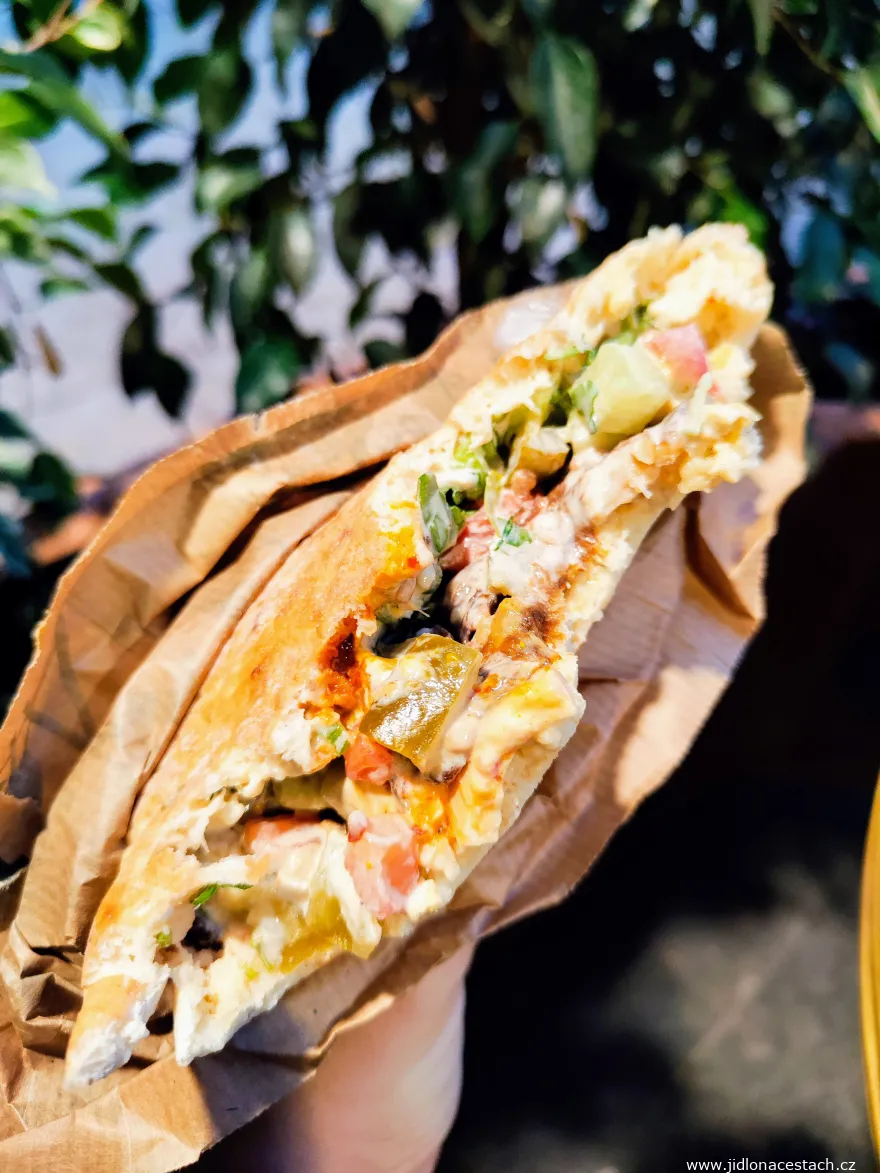
The eggplant does most of the work in the pita: cut into slices and fried until brown, soft and soaked through - meat for people who don't want meat. The hard-boiled egg, which in Czech kitchens rarely gets past being a garnish on an open-faced sandwich, calms the whole thing down, while amba, the pickled mango sauce, wakes it back up; Iraqi Jews brought it over from Baghdad, and the word itself traveled all the way from India, where it means mango. Tahini goes on top, along with a salad of tomatoes and cucumbers, and a hot green sauce if you want it. Order matters: tahini with herbs belongs at the very top, and a good sabich place takes its time assembling it, because the pita has to carry both the solid and the liquid without leaking. It started out as a morning meal; today sabich is eaten from breakfast until evening - and if you have a choice, pick the bistro that takes its time putting it together (there's a line at that one, of course).
My First Meal in Jerusalem
Sabich was the first thing I ate after arriving in Jerusalem. At the kosher Aricha Sabich bistro a short walk from the Machaneh Yehudah market (see Where to Eat in Jerusalem), which makes nothing else, a very kind woman behind the counter walked me through the whole thing layer by layer - from the tray of eggplant to the last spoonful of amba. The eggplant was soft and faintly smoky, the egg kept the sandwich grounded, the amba brought in a sour, almost mustardy note, and the salad crunched right to the end, even though the pita was leaking by then. The sandwich cost 23 ILS (6.40 EUR). I paid by card - the only quick thing in the whole place.


