The Czech Wedding Menu: What You Eat from the Ceremony to Midnight
The word traditional comes up at a Czech wedding feast more often than the bride's name. Traditional soup, traditional svíčková, traditional toast, traditional cake. After the wedding of my friends Adam and Lucka I went looking for the birth date of each course, and it turned out that the oldest of those traditions comes from a cookbook published in 1826 and the youngest hit the shops in 2001, in a box with a mole on it.
A Czech wedding menu has four acts: little bites before the ceremony, a formal lunch with soup and a main course, the cutting of the cake, and an evening buffet that runs past midnight - and Czech cuisine has something to send to every one of them. The timeless part turns out to be a lot more complicated than the wedding websites let on.

A Chlebíček Before the Ceremony, a Bohemka After
The guests are arriving, the ceremony is an hour away and somebody has to keep the guests' stomachs from rumbling. In Czechia that job goes to the obložený chlebíček, the open-faced sandwich: a slice of veka, the long white loaf, a spread, and something more festive on top - at Adam and Lucka's it was avocado spread with shrimp, cucumber and beetroot sprouts. The chlebíček is a Prague invention, only nobody knows exactly whose. Legend credits the delicatessen owner Jan Paukert and the year 1916, but another Prague delicatessen owner, Josef Lippert, was selling them as early as 1892. So the inventor is unknown; the popularizer isn't.
After the ceremony comes the toast, and in the glass, almost always, sekt - Czech sparkling wine. I honestly don't know what was poured that day - the label never stuck in my mind. In Czechia that hardly matters anyway: whatever it's made of, people call it bohemka. That's down to Bohemia Sekt from Starý Plzenec, where the first bottles were filled in 1943 in a former brewery - a socialist stand-in for champagne, so successful that the brand turned into a common noun. As a part-time marketer I know that's exactly what companies spend decades chasing, usually in vain.

The Wedding Lunch: Prague Ham, Broth and Svíčková
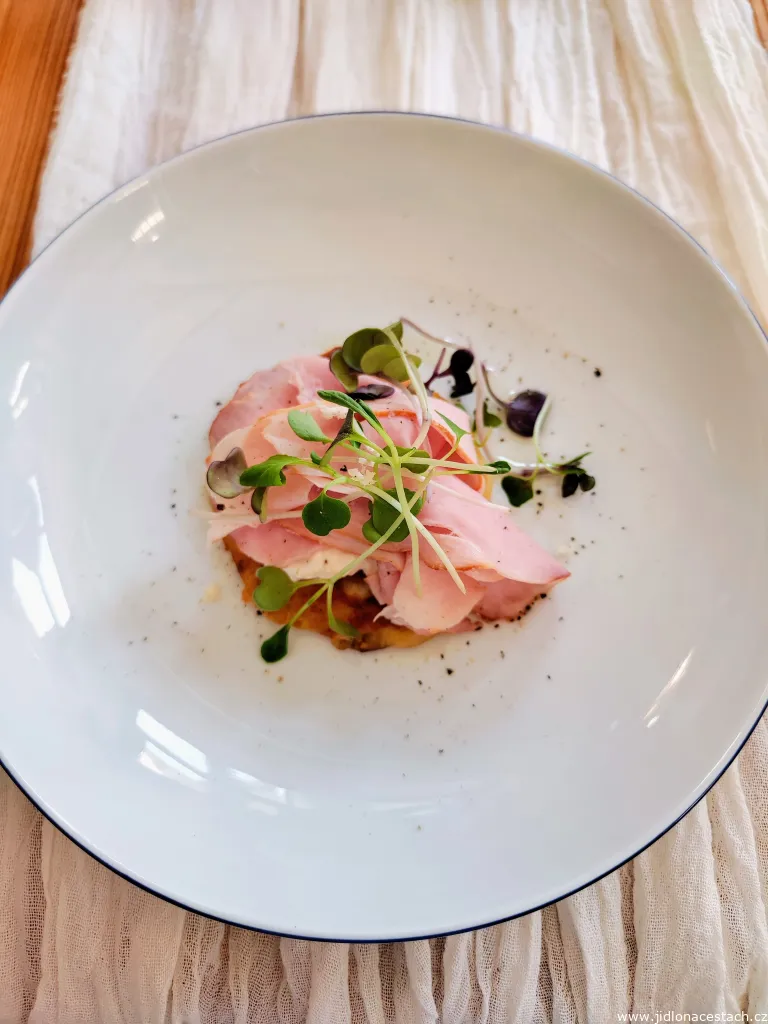
Lunch is the heart of the day, and it follows a fixed running order: starter, soup, main course. The starter was Prague ham on a potato pancake with apple horseradish, a modern take on the ham roll filled with horseradish cream that anyone who went to a wedding decades ago remembers well. Prague ham has been a Traditional Speciality Guaranteed of the European Union since 2018, which protects the recipe, not Prague - anyone from Lisbon to Helsinki can use the name for a leg cured in brine, smoked and then cooked through. Two men have a claim to inventing it: the butcher František Zvěřina, credited with the year 1857, and the meat curer Antonín Chmel, whose plant at Zvonařka shipped it around the world from 1879 so successfully that Auguste Escoffier recommends it in his Guide culinaire as the ham to serve hot, of incomparable delicacy. Zvěřina may have invented it; Chmel got rich on it - a split of roles you'll find behind plenty of other inventions.
The soup is almost always beef broth with liver dumplings, and it's also the most international part of the Czech wedding lunch: in Austria and Bavaria the first course of a wedding is called Hochzeitssuppe, wedding soup, outright, and a liver dumpling floats in it just as it does in Czechia. A legacy of the monarchy that both sides of the border claim as their own; in Austrian cooking spleen goes into the dumpling as well, in Czech cooking it doesn't. And it's over the soup that a ritual with no recorded birth date plays out: the newlyweds, tied together with a napkin, eat from one plate with one spoon, often one full of holes. A Czech marriage starts with an exercise in coordination.

At most Czech weddings the main course goes by the name svíčková na smetaně, beef sirloin in cream sauce, and it arrives with bread dumplings, whipped cream and lingonberries - Sunday lunch promoted to special-occasion status. The first recipe for svíčková was published by Magdalena Dobromila Rettigová in her Domácí kuchařka (Home Cookery) in 1826, except that Rettigová marinated the meat in vinegar, not in cream. The cream sauce we now think of as the real thing didn't settle into place until around the First Republic, most likely by way of Vienna. And the meat it's cooked from these days is anything but the cut the dish is named after; mostly all that's left of that cut is the name.

A Cake from England, Koláče from Moravia and Bohemia
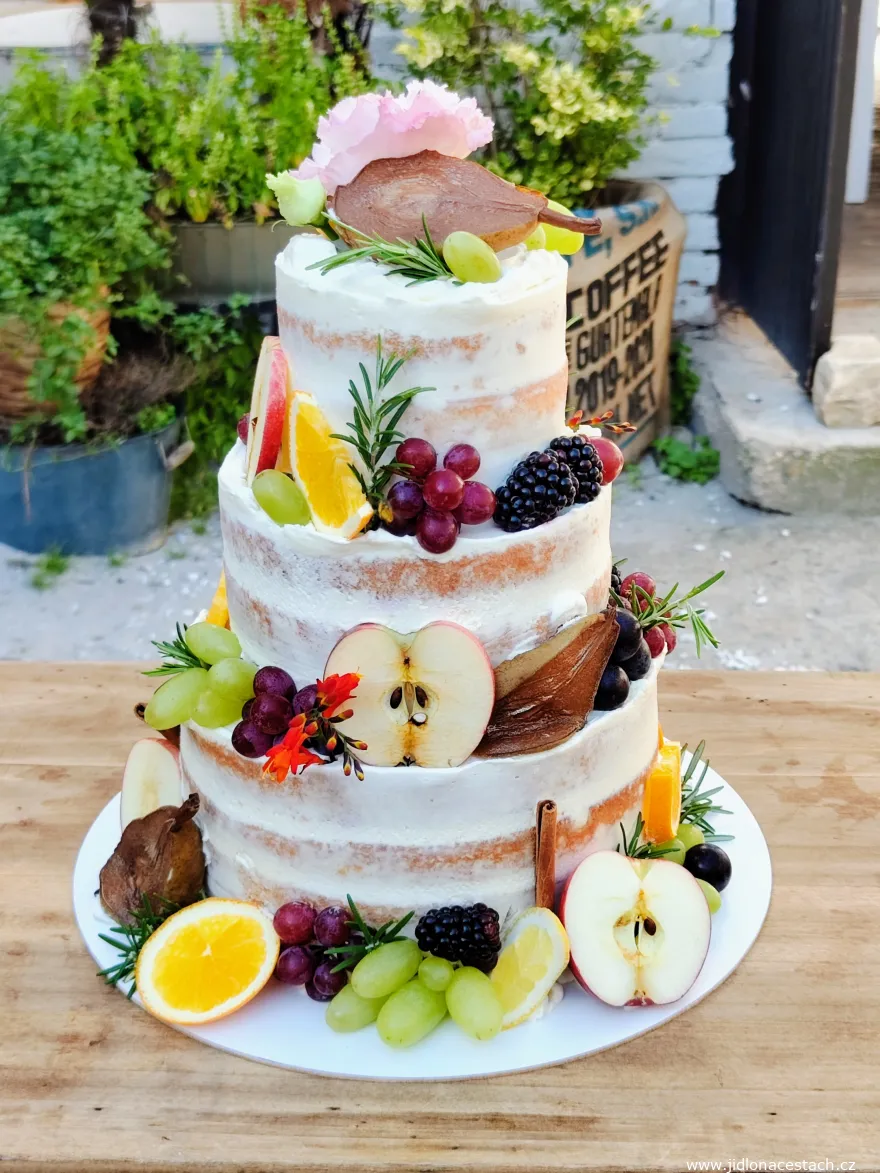
The tiered wedding cake feels as though it has always been there, but it's an import. The fashion for the white tiered cake started with Queen Victoria's wedding in 1840: hers had three tiers, and white icing announced back then that the family could afford refined sugar. Until that point Czech and Moravian weddings had their own baking, wedding koláče, carried around as the invitation and handed out as a parcel to take home; the bride wasn't allowed to bake them, or the marriage supposedly wouldn't last. In northern Bohemia they survive as kecané svatební koláče, in Silesia as kołocz, for which Poland secured protected status. Cutting the cake has a superstition of its own: whoever's hand is on top of the knife will be the one making the decisions at home. Adam and Lucka's cake had three tiers but no icing - a naked cake with apples, grapes and slices of dried fruit, where you can see every tier and every layer of cream.
The Buffet: Burgers and Meat Over Fire
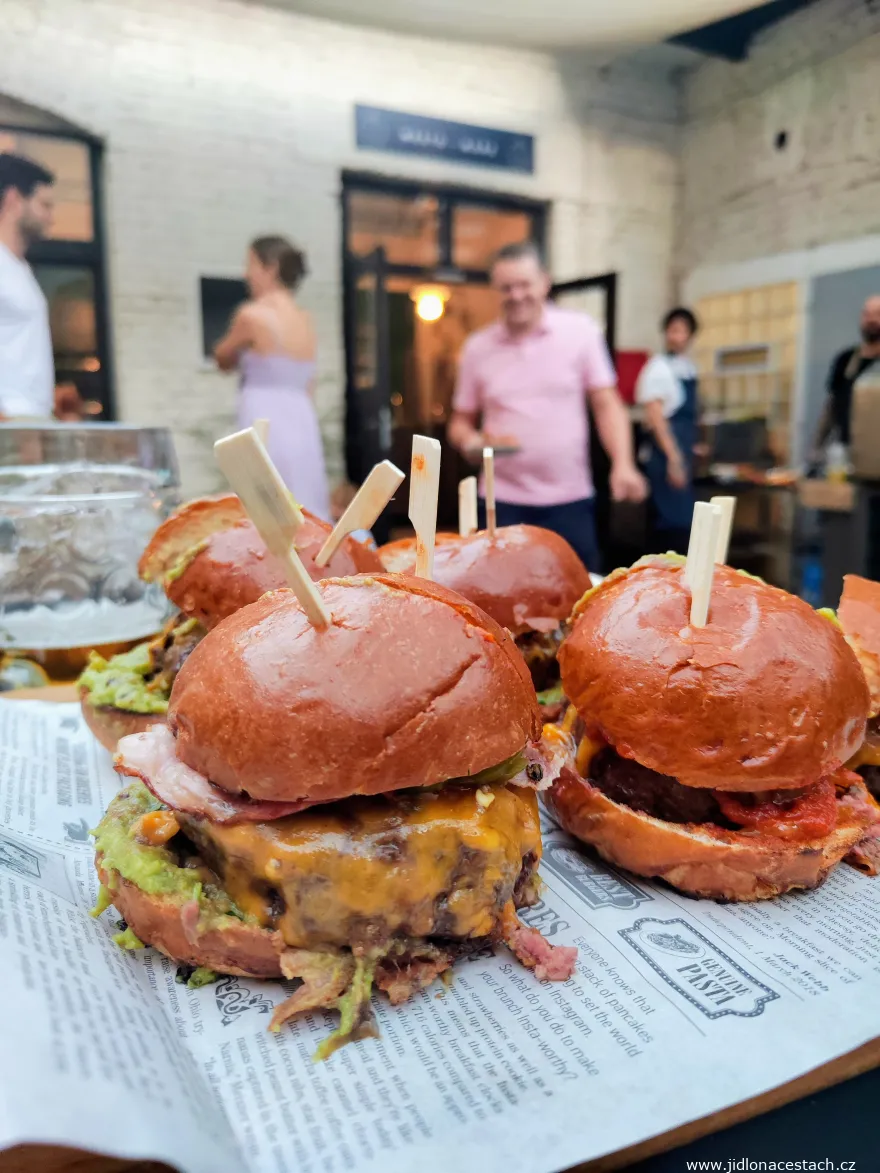
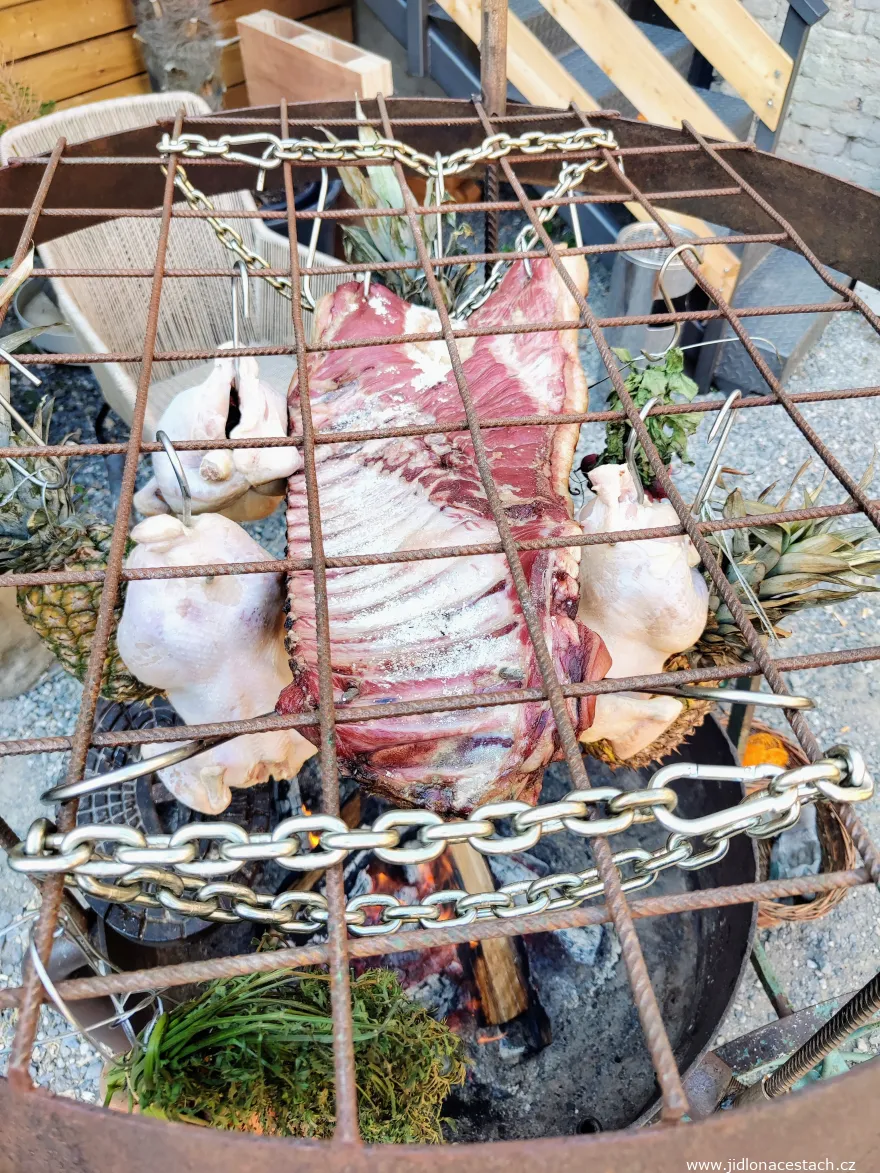
In the afternoon the tables are cleared and in the evening the buffet takes over. The buffet is the part of a Czech wedding where anything goes: the bride changes, the guests take off their ties, and the food stops arriving in courses and starts arriving in waves, cold and hot, off one long table. At Adam and Lucka's the first wave brought mini burgers on newspaper and the second brought something a Czech wedding doesn't usually see: whole chickens and slabs of pork belly hanging over an open fire on a metal frame strung with chains. The method is called asado and comes from Argentine and Uruguayan gauchos, who salted the meat sparingly because salt was expensive and left it over glowing wood for hours. Hanging it on a cross or a frame is a la cruz, the grill is a parrilla, and whether wood or charcoal should burn underneath is something Uruguay and Argentina still don't agree on. At a wedding an asado is dinner and a show at once: it takes hours, and you always know how it ends.

Lángos, Hummus and Mole Cake Into the Night
Because the newlyweds like to travel, food from elsewhere made it onto the buffet too. Lángos with bryndza, smoked rib and radish is a double immigrant: lángos is Hungarian, originally plain bread dough baked beside the embers, and only between the 1950s and the 1970s did Hungarians start frying it and spreading it with cheese and sour cream - the ketchup we pour over it in Czechia is unknown to them. Bryndza, in turn, is a Slovak sheep's cheese with protected status. Hummus comes from the Levant and certainly not from Israel alone; in 2008 it set off a dispute between Lebanon and Israel known as the Hummus War, fought mainly over who could build the biggest bowl in the world.


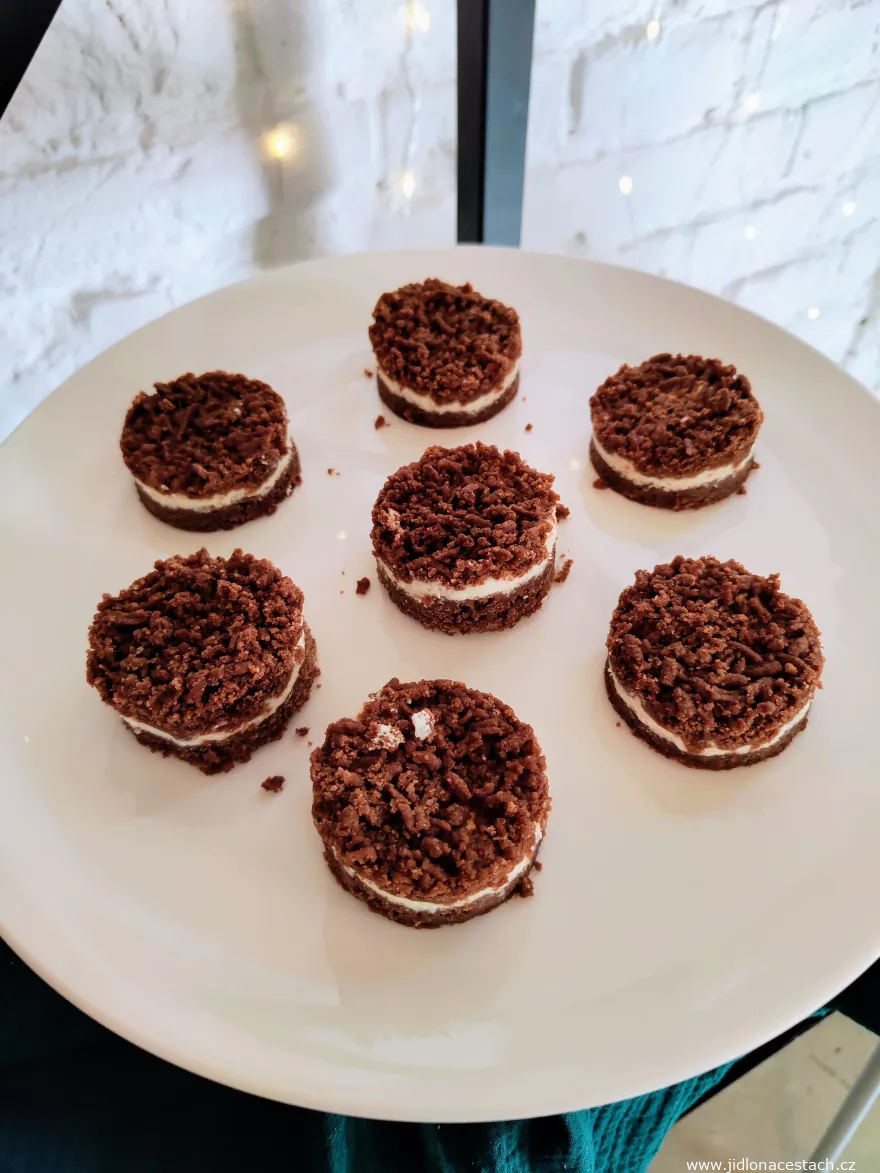
The youngest tradition of the evening was the mini krtkův dort: the banana cake with chocolate streusel that we now assume we inherited from our grandmothers was launched on the Czech market by Dr. Oetker in 2001, as a baking mix modeled on the German Maulwurfkuchen, the mole cake. The neighbors have their own late-night customs - in Slovakia the bride's veil comes off at midnight and the redový tanec begins, a dance the guests pay for; in Hungary stuffed cabbage arrives at midnight; and Poland carries on the next day with poprawiny. A Czech wedding has no midnight ritual, but it does have goulash or mini schnitzels at three in the morning. That isn't an old custom, just a practical convention: anyone dancing until dawn needs fuel.

Adam and Lucka's Wedding
Adam and Lucka's wedding had all four acts: we raised our glasses in the garden of an Art Nouveau villa, lunch ran to exactly three Czech courses, and in the evening the fire burned. The svíčková sauce was thick enough to sit on the dumpling instead of running off it, and the lingonberries came cold; the pork belly off the asado had skin crackled to glass and the meat underneath fell apart the way it should after hours over wood. I thanked Adam and Lucka back then for the invitation and wished them all the best; today I'll thank them once more, for a wonderful day and for the material for this piece. The oldest dish on their table went back to 1826, the youngest to 2001. The only thing younger than me was that mole cake.


