Pişmaniye: Turkish Cotton Candy
Pişmaniye is traditional Turkish cotton candy. While ordinary cotton candy is essentially just pure, fluffy sugar that dissolves and disappears instantly, pişmaniye has a distinct buttery taste and, thanks to the addition of flour, a specific nutty flavor.
It is often sold in neat coils sprinkled with crushed pistachios, sometimes coated in chocolate, and represents one of the most typical souvenirs that tourists bring back from Turkey, often without suspecting how demanding its production is.

The origin of this sweet is firmly linked to the Turkish city of Izmit in the Kocaeli province, which is considered the capital of pişmaniye. The name itself is the subject of many legends. The word "pişman" means "regret" in Turkish. An old saying allegedly goes: "He who tastes it regrets it once. He who does not taste it regrets it a thousand times." The first regret stems from knowing how many calories you have just eaten, or how difficult and laborious it was to make this sweet in home conditions, the second from ignorance of such a great taste. There are also more romantic legends about a confectioner who named the sweet after his beloved, but when she broke up with him, he changed the name to "regret".

The basic recipe for pişmaniye relies on three ingredients: sugar, flour, and a large amount of butter. It is flour that distinguishes pişmaniye from ordinary cotton candy. The preparation of pişmaniye requires strength and coordination. Everything begins with boiling sugar syrup to a precise temperature until a malleable but firm mass is formed. This is then cooled and shaped into a large ring. This sugar ring is placed on a surface sprinkled with a roasted mixture of flour and butter. And here the real hard work begins. Confectioners (often three to five men at once) stretch the ring, fold it into a figure-eight, fold it again, and stretch it again. With each fold, the number of sugar strands multiplies, and the flour mixture is incorporated into these strands. The sugar gradually absorbs the buttery flour, becomes brittle, and splits into thousands of hair-thin threads.
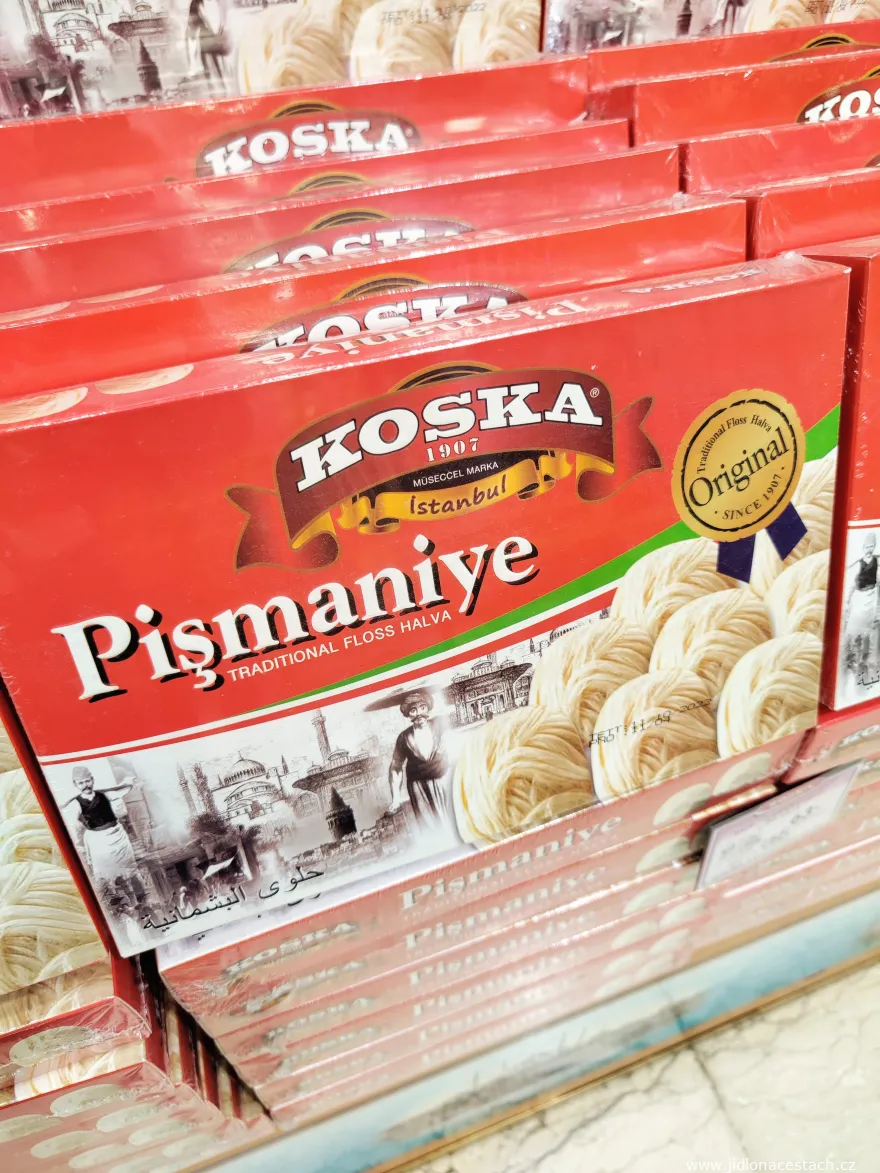
Pişmaniye is traditionally eaten with hands. Its closest relative is the Iranian confection called pashmak.

I tasted the best pişmaniye right in Istanbul, at one of the smaller food markets. I had the opportunity to see the whole show, where four burly guys in white coats rhythmically stretched a huge ring of sugar mass. When they finished, they handed out pieces directly to the onlookers. The taste was incomparable to the supermarket version - it was softer, much more buttery, and literally melted in the mouth in a second.
Bon appetit!


