Turkish coffee (Türk kahvesi) is a traditional method of preparing coffee, in which very finely ground beans are boiled together with water and often sugar in a small, conical vessel called a cezve. The result is a thick, dark drink with a distinct flavor, crowned with a rich foam head.
Unlike modern coffee preparation methods, where coffee is filtered or pressed under pressure, here the ground beans remain part of the beverage until the very end.
Turkish Coffee

History of Turkish Coffee
The history of this drink reaches deep into the times of the Ottoman Empire, when coffee made its way from Yemen to Istanbul in the 16th century. Here, the unique method of brewing in a cezve was born, becoming the standard for the entire region.
Coffee was not just a source of caffeine but became the glue of society. The first coffeehouses emerged, places where people gathered, played board games, discussed politics, and shared news. The significance of coffee in Turkish culture is so fundamental that it even influenced the language – the Turkish word for breakfast “kahvaltı” literally means “before coffee”. Preparing and drinking coffee is a symbol of hospitality and respect for the guest. It is no wonder that the ritual of Turkish coffee brewing made it onto the UNESCO Intangible Cultural Heritage list.
Preparation of Authentic Turkish Coffee
The basis of good Turkish coffee is correct grinding. The beans, most often quality Arabica, must be ground to the finest possible dust, which resembles plain flour or cocoa in consistency. This fineness is key for the coffee to extract perfectly in the water and create that characteristic suspension. Another important ingredient is sugar. In Turkey, coffee is not sweetened at the table, but sugar is added directly into the cezve during brewing so that it combines with the coffee flavor. Depending on sweetness, you can order coffee “sade” (unsweetened), “orta” (medium sweet), or “şekerli” (very sweet).
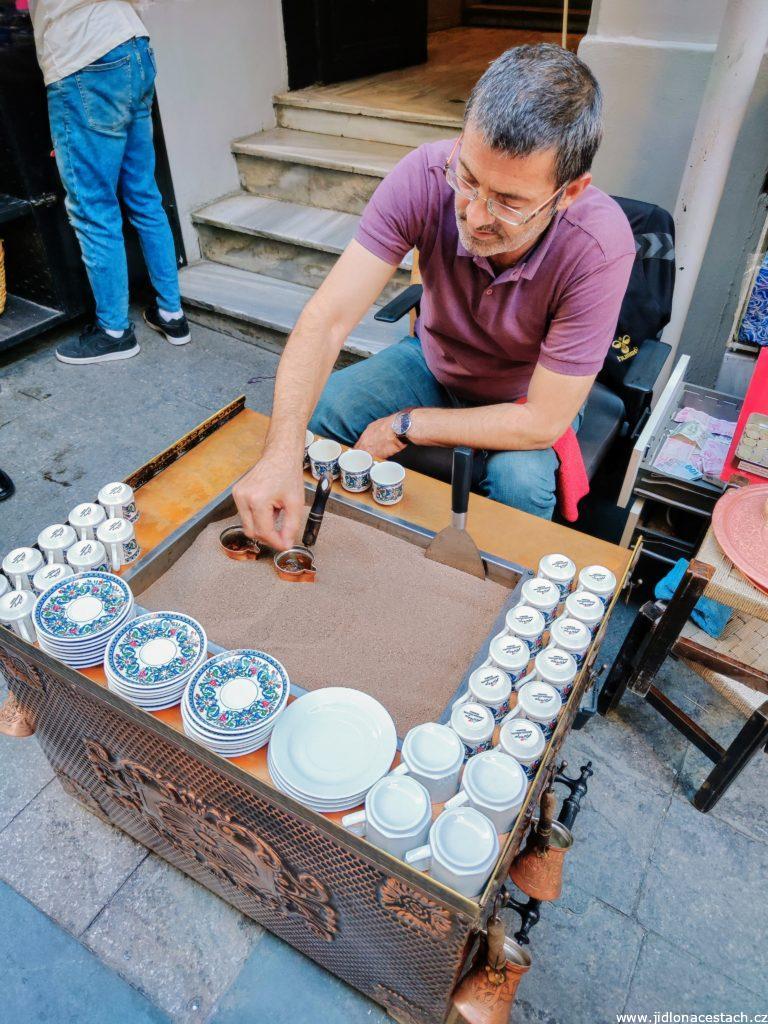
You can often observe the preparation of Turkish coffee right on the street. Cold water is poured into a copper cezve, coffee dust and optionally sugar are added. Everything is stirred only once at the beginning to combine the coffee with the water, and then the cezve is placed on a low flame or into hot sand. As the water heats up, the coffee starts to work. The goal is not to boil the water aggressively with a rolling boil, but to let it slowly froth up. At that moment, a thick foam begins to form on the surface. Once the foam rises to the rim of the cezve, the vessel must be immediately removed from the heat. This rising process can be repeated to deepen the flavor, but the foam must not be lost. The grounds are left in the cup for a simple reason: the coffee is not filtered. Thanks to the extremely fine grinding, heavier particles sink to the bottom after pouring into the cup, creating “mud”, while a clean, strong drink remains on top.

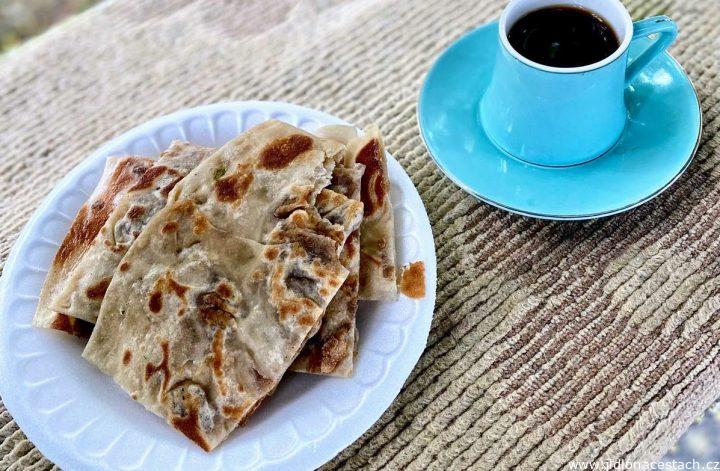
Turkish coffee is served in small cups called “fincan”, which are often richly decorated. Coffee is never served alone. You always get a glass of water with it. Often, a cube of Turkish Delight is not missing either.
Czech Turkish Coffee, “Turek”
In the Czech environment, the term “Turkish coffee” or colloquially “turek” refers to something completely different. The Czech “turek” originated as an emergency solution in times when espresso machines were not commonly available, but people craved strong coffee. The difference is fundamental in both preparation and ingredients. For the Czech “turek”, coarser ground coffee is used, which is simply poured over with boiling water in a mug. The coffee is not boiled together with the water; it is merely scalded. The coarser grains in the Czech “turek” often float on the surface and take a while to sink, whereas in authentic Turkish coffee, the grounds form a compact paste at the bottom. The name “Turkish” caught on in the Czech Republic more as a synonym for coffee with grounds, not as a designation of the recipe’s geographic origin.
I always have typical Turkish coffee at least once a day when in Turkey. I love watching its preparation. In most places I return to repeatedly, I have my favorite coffee shops. You can see “my” favorite street vendor in Istanbul in the photos. He “sets up” his coffee restaurant every day on one of the streets around İstiklal Caddesi.
It is impossible to visit Turkey and not taste the delicate Turkish coffee. It is an integral part of Turkish cuisine.
Bon appétit!
🇹🇷 Discover the magic of Turkish cuisine with my newsletter! Subscribe and get a free comprehensive guide that will reveal all the secrets of Turkish dishes and drinks.