Curepipe Market: Street Food in the Middle of Mauritius
If your picture of Mauritius is a beach with a palm tree, pack a sweater for the trip to Curepipe. The town sits in the middle of the island at over 550 meters, the fog can hang around for hours, and it was the cool air up here - too cool for malaria - that drew wealthier families out of Port Louis in the 1860s. That is how the island's second largest town grew, and right in the middle of it is the reason I came.
Curepipe Market (in French, Marché de Curepipe) is a daily covered market selling fruit and vegetables from the island's interior, and every day stalls selling Mauritian street food set up around it - and because tourists don't come to Curepipe, everything here is sold at local prices.
A Town That Isn't Sure of Its Own Name
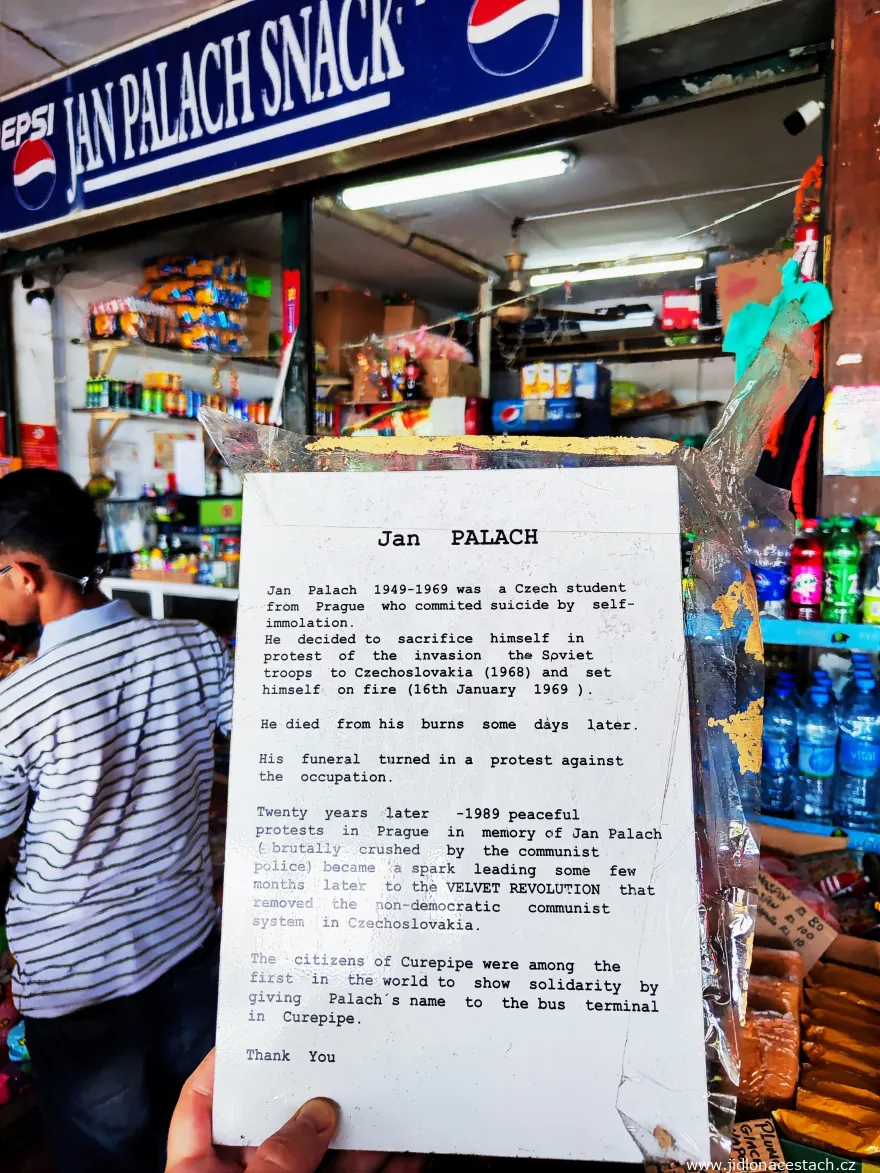
The name looks straightforward: curer sa pipe is French for cleaning out your pipe, and the legend says that is what travelers heading from Port Louis to the southeast of the island did here, when they stopped by a stream for a rest. Tourist websites present it as fact. Yet the Curepipe municipality admits on its own website that some historians reject the legend and trace the name to a landowner instead - one it doesn't name. So the town isn't sure what it is named after. There is no such doubt about the bus station right next to the market: it is named after Jan Palach, and I'll come back to that.
Mauritian markets come in several shapes and Curepipe is the least showy of them. The Central Market in Port Louis has a whole souvenir section for tourists and, according to a price survey by the news site Defimedia, it is also the most expensive on the island - a basket of fourteen kinds of fruit and vegetables came out 17% pricier there than the average of the other markets; Quatre Bornes has its clothes market. Curepipe is simply a hall open seven days a week where people from the town come to do their shopping, and the only draw for outsiders are the stalls.
Three Markets and One Cyclone
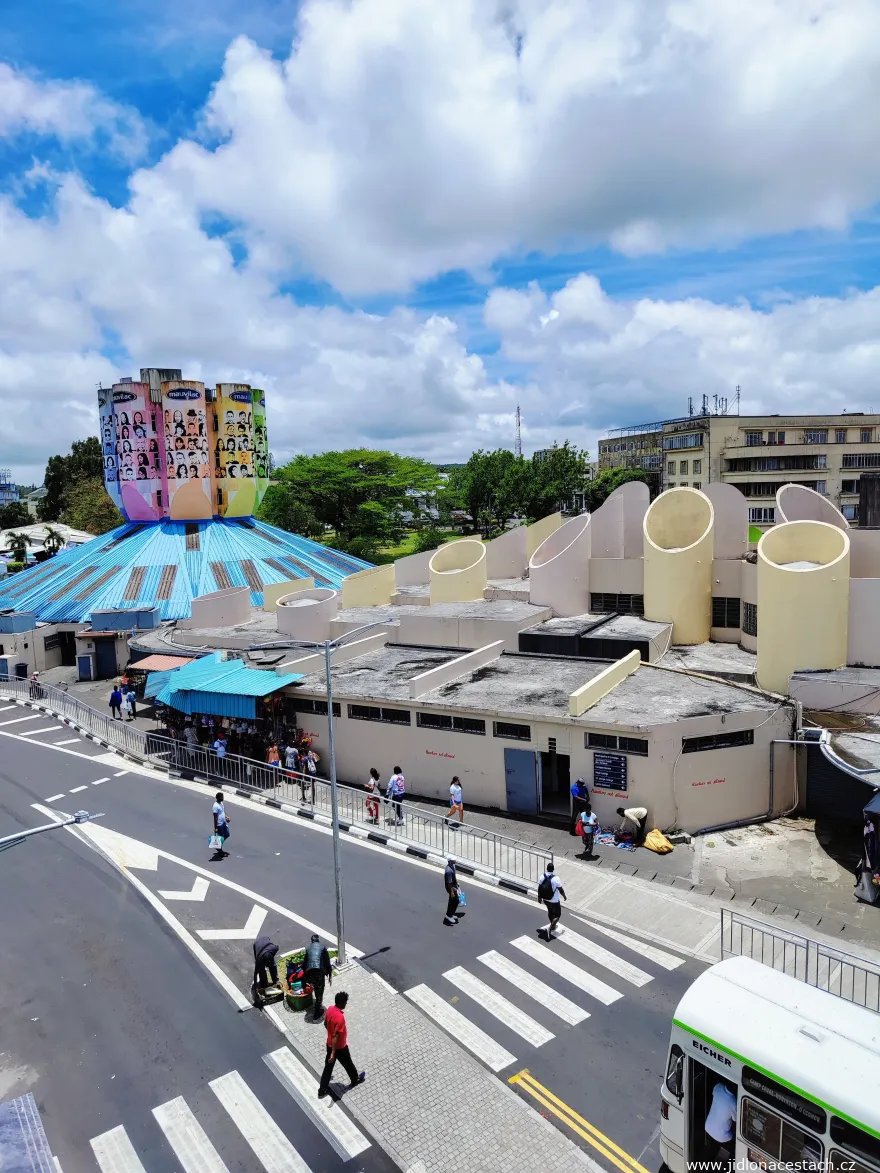
The building you see today is the third one. The first market hall, from 1878, was built of teak under a shingle roof and went by the name Marché Martial; the second was put up by the town during the First World War and was wrecked in 1975 by Cyclone Gervaise. In its place came today's elliptical hall, with a row of colorful cylinders on the roof that look like sculptures when you pass by on the tram and turn out, up close, to be an advertisement for paint. I liked them better before I read the logo. Don't come looking for colonial romance, though - the Mauritian press mostly writes about the hall's leaky roof, the pigeons and the rats.
What You Eat Outside the Market and What It Costs
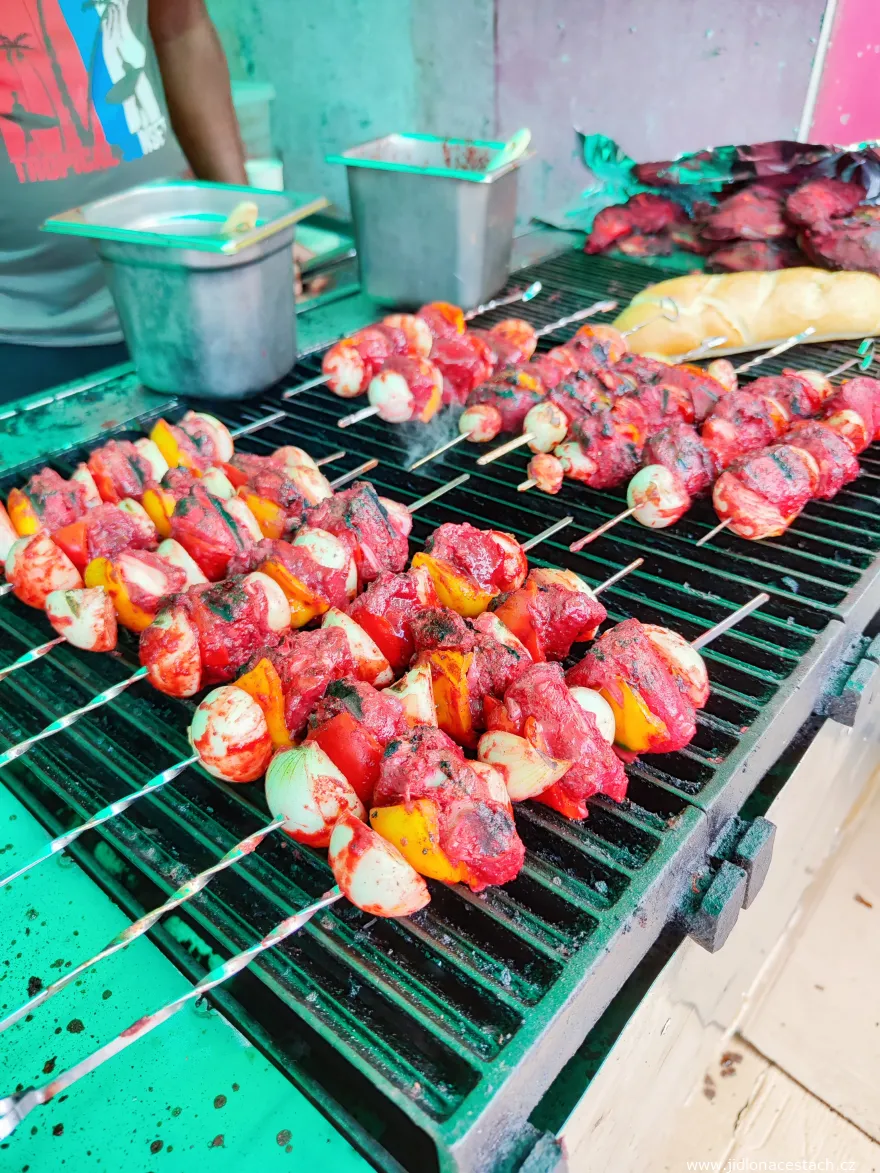
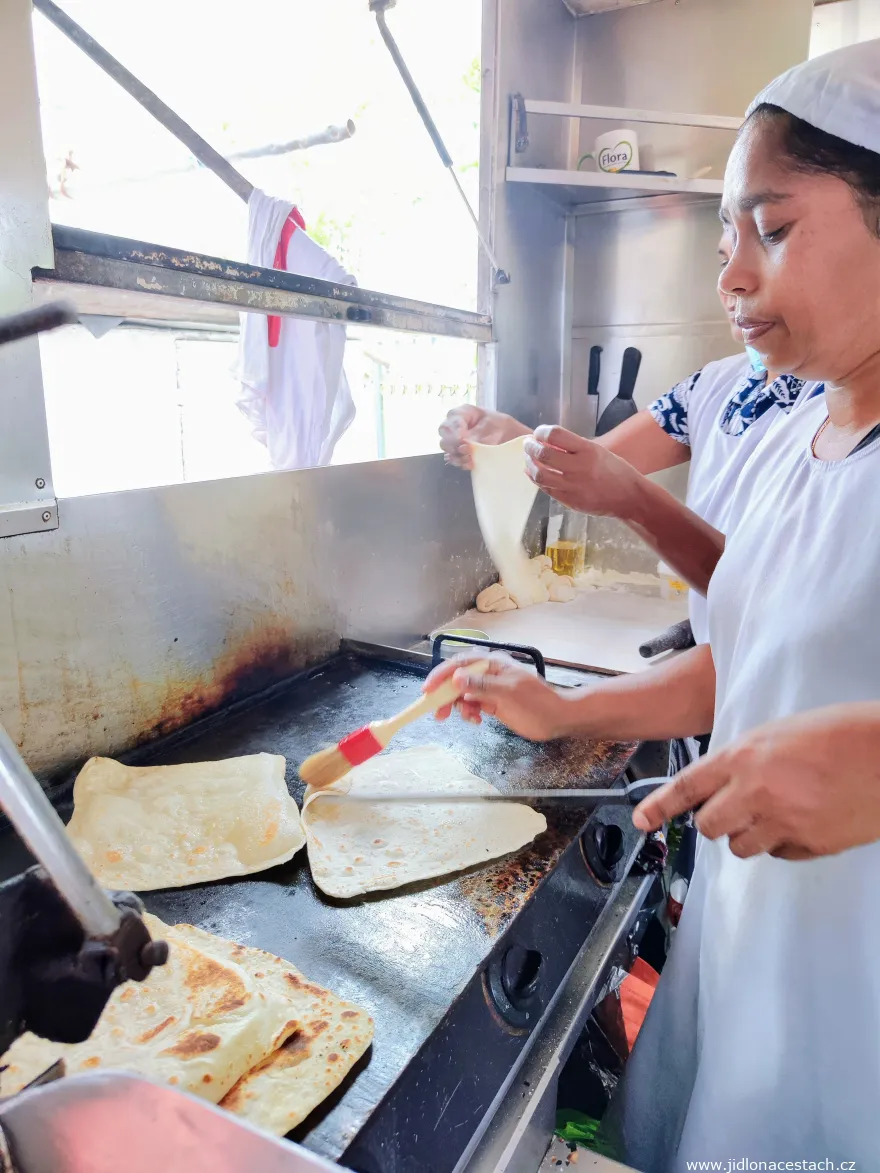
The stalls in front of the hall and around the station add up to a decent cross-section of Mauritian street food: farata, a wheat flatbread filled with whatever the stall has in its pots that day, dholl puri stuffed with ground yellow split peas, fried gâteaux piment balls and samoussa triangles, fried mine frit noodles and, to wash it all down, sweet alouda. The vendor spoons tomato rougaille, curry and pickled achard vegetables onto the flatbread before wrapping it in paper. Farata here is made assembly-line style: in the big stall everyone had one job - one stretched the dough, the next oiled the griddle, the third filled and wrapped.
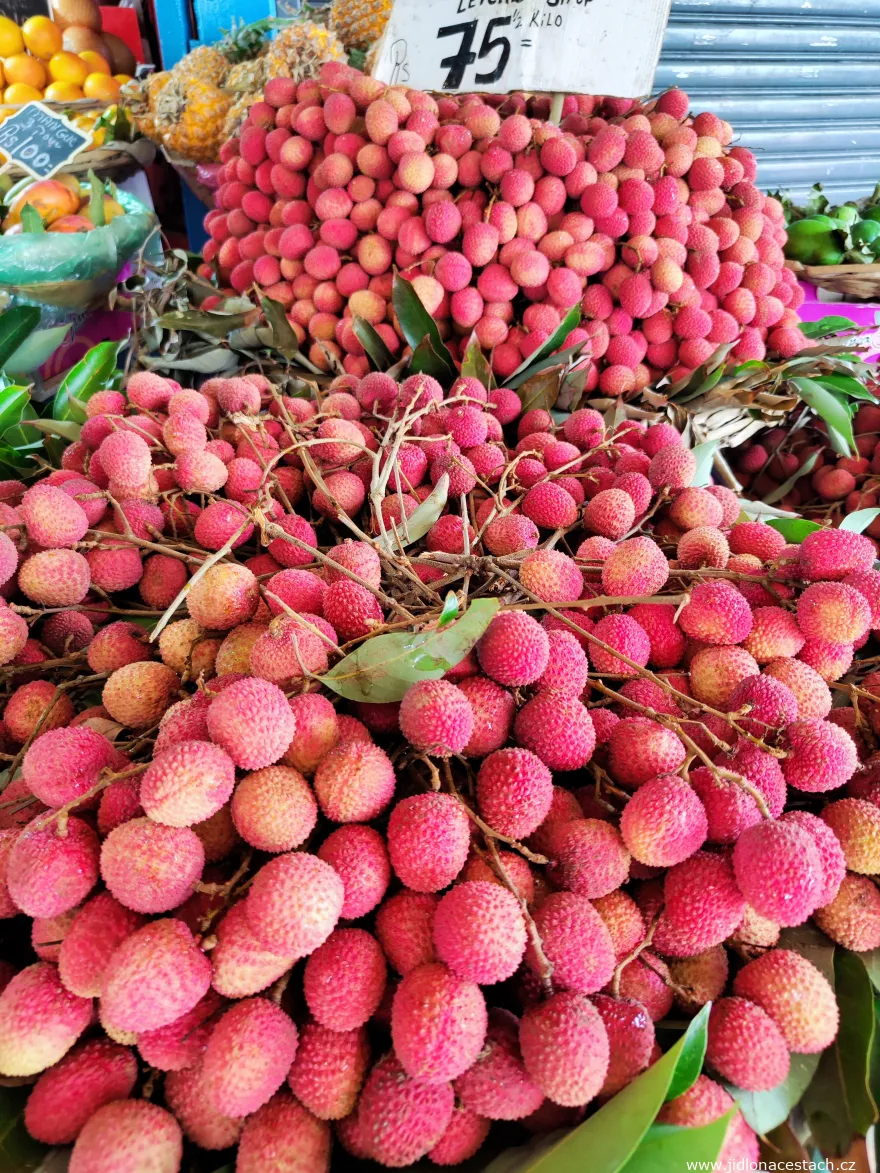
Go to the market in the morning, when the stalls are in full swing, and in December go for the lychees as well: the season runs from November to January and peaks right before Christmas, so the pink fruit piles up on the fruit stalls in front of the hall too. The easiest way there is the Metro Express tram, which since October 2022 has run from Port Louis all the way to its last stop in Curepipe - forty minutes, a tram every ten minutes, a ticket for 55 MUR from the machine at the stop, which takes cards and speaks English.
Last Stop, Curepipe
I took the tram to the last stop in Curepipe and saw the market building before I even got off. I bought my farata at the big stall in front of the hall: one with a generous vegetarian filling cost 20 MUR (0.40 EUR), the second one in the same order only 15 MUR - a bulk discount no bakery back home in Czechia would give you even on bread rolls. The flatbread was warm and layered, and the vegetable curry inside was hotter than I had expected. And then there was that sign. When I asked at another snack stall whether they knew who the station was named after, the vendors didn't hesitate: they dug out a paper sign telling Palach's story and proudly showed it to me - the stall is called Jan Palach Snack, after all. We swapped a few words about him. The town isn't sure what it is named after itself, but the people in that stall knew exactly who Jan Palach was. On my way out I picked up half a kilo of lychees at a fruit stall: the skin popped under a fingernail and the flesh was sweet and juicy, with a scent you never get out of a can. It cost 75 MUR (1.40 EUR). In Port Louis it is twice that.
Curepipe Market


