Quatre Bornes Market: A Clothes Market and Street Food in Mauritius
On Wednesdays and Saturdays the hall sells vegetables, fish and meat. On Thursdays and Sundays the streets around it fill with hundreds of stalls of jeans, saris, pashminas and costume jewelry, and Quatre Bornes turns into the best-known clothes market in Mauritius. And all seven days of the week, people eat while they're at it.
Quatre Bornes Market (in French, la foire de Quatre Bornes) is the town market on the island's central plateau: a covered food hall, a clothes market in the surrounding streets twice a week, and in between a food court of small bistros with everything in Mauritian cuisine that you can eat straight out of your hand. So this is the first time this site is sending you clothes shopping. For the food.
Four Boundary Stones and a Map of Mauritian Markets
The town's name comes from the land register. Quatre bornes are the four boundary stones that once separated the sugar estates of Palma, Trianon, Bassin and Beau Séjour; the settlement grew up where those four boundaries met and the name stuck, even though the plantations have turned into a town of seventy thousand nicknamed la ville des fleurs. It sits on the plateau in the middle of the island, fourteen kilometers south of Port Louis, and like every Mauritian town it has its market. The Central Market in Port Louis is the oldest and the most touristy, Flacq has the biggest one, Curepipe the most colorful building, and Quatre Bornes has the thing that brings the whole district here twice a week - clothes. Even the alternating rhythm, two days of food and two days of textiles in the same place, is no local invention; neighboring Rose-Hill does much the same.
Where the Jeans in the Street Came From
In France the word foire means an annual fair; in Mauritius it means a weekly open-air market. That it happens to sell clothes has to do with what made the island rich after independence: an export processing zone took shape here from 1970 onward, and Mauritian sewing workshops dressed Europe for so long that cheap jeans became as local a product as sugar. Nobody has pinned down when the first trouser stall appeared in the streets around the market, and the claim that what you buy here is factory surplus gets repeated by every guidebook and cited by none. What's on the record is something else: when the municipality announced it would tear the old hall down and build a new one, the traders staged a sit-in in the municipality's own courtyard. One potato seller said his family had run the same stall for over fifty years, and in the end the municipality gave way and agreed to rebuild in two phases so that trade wouldn't stop for a single day. The market would have survived without potatoes. The potato man wouldn't have survived without the market.
What You Eat Between the Clothes Racks in Quatre Bornes
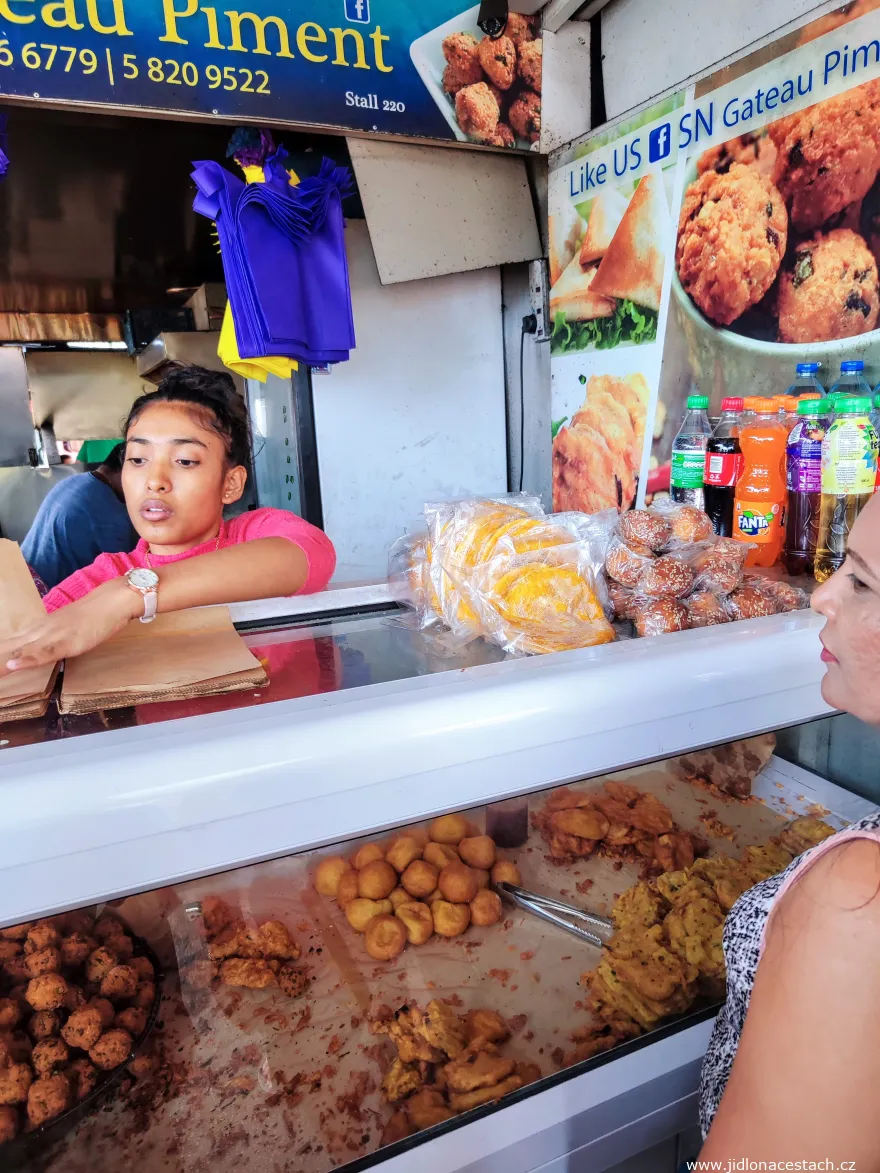
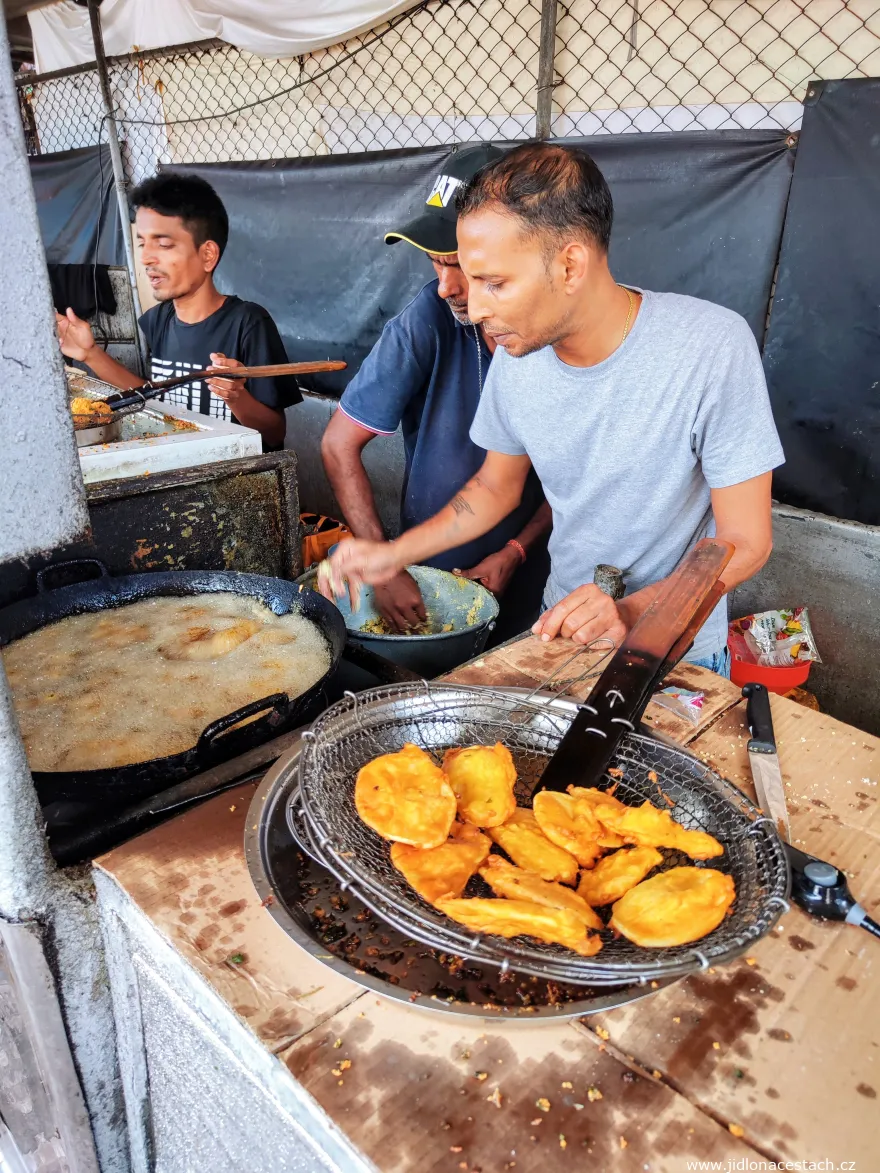
The food stalls here are the farmers' markets back home in Czechia turned inside out: back home you come for the food and the clothes hang off to one side, here you come for the jeans and the food is what makes you stay. The repertoire is island-wide: a couple of dholl puri flatbreads with curry and chutney wrapped in paper, fried gâteaux piment balls of crushed split peas and chili that people buy by the bag, boulettes dumplings out of the steamer, and a pink alouda in a plastic cup to go with it. The price of dholl puri is everybody's business on the island: when the stallholders raise it, the papers cover it as if it were the price of gasoline. Mauritian websites advise trying dholl puri at two or three stalls before you settle on the one you'll stay loyal to. If you want the food, come on a Wednesday or a Saturday; if you want the food and the jeans, come on a Thursday or a Sunday - and in both cases in the morning, while you can still get through the lanes. There's a direct bus from the beaches on the west coast, and since 2021 a tram from Port Louis.
By Bus from the Beach to the Market
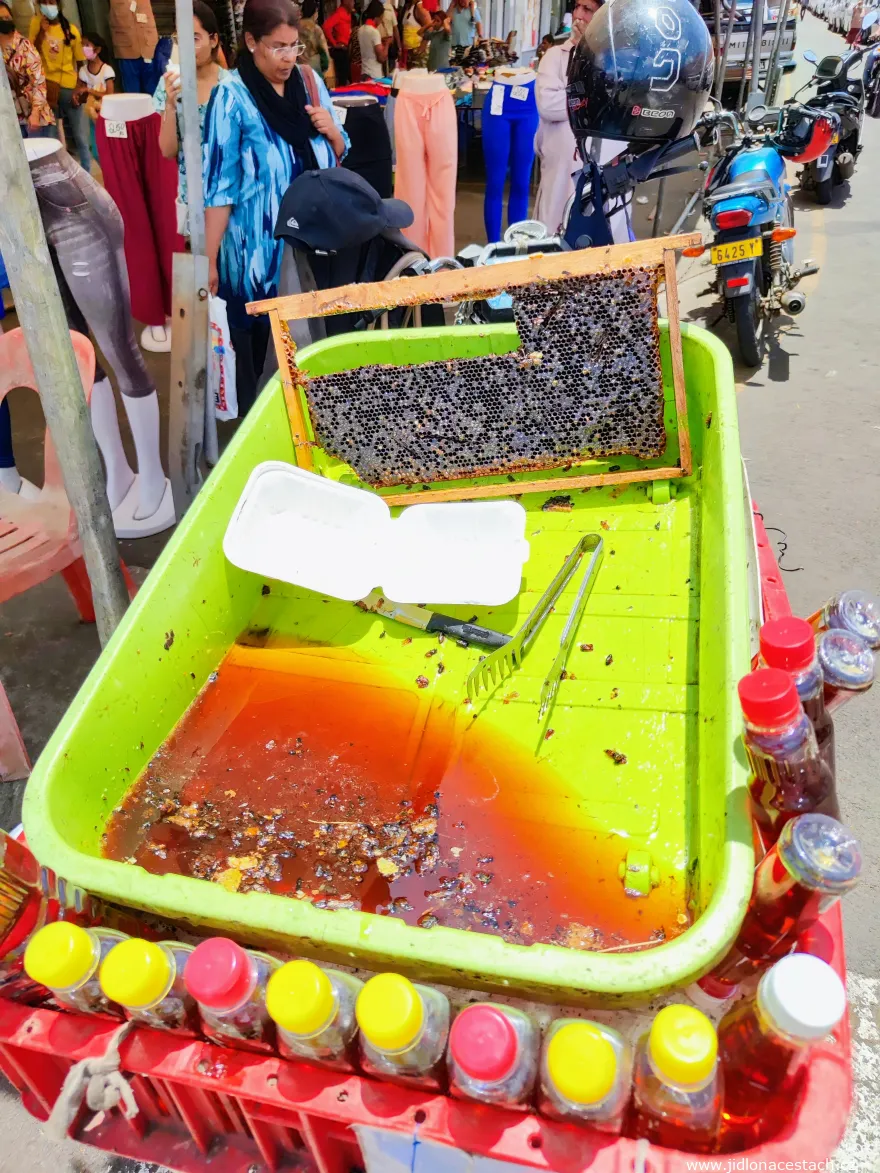
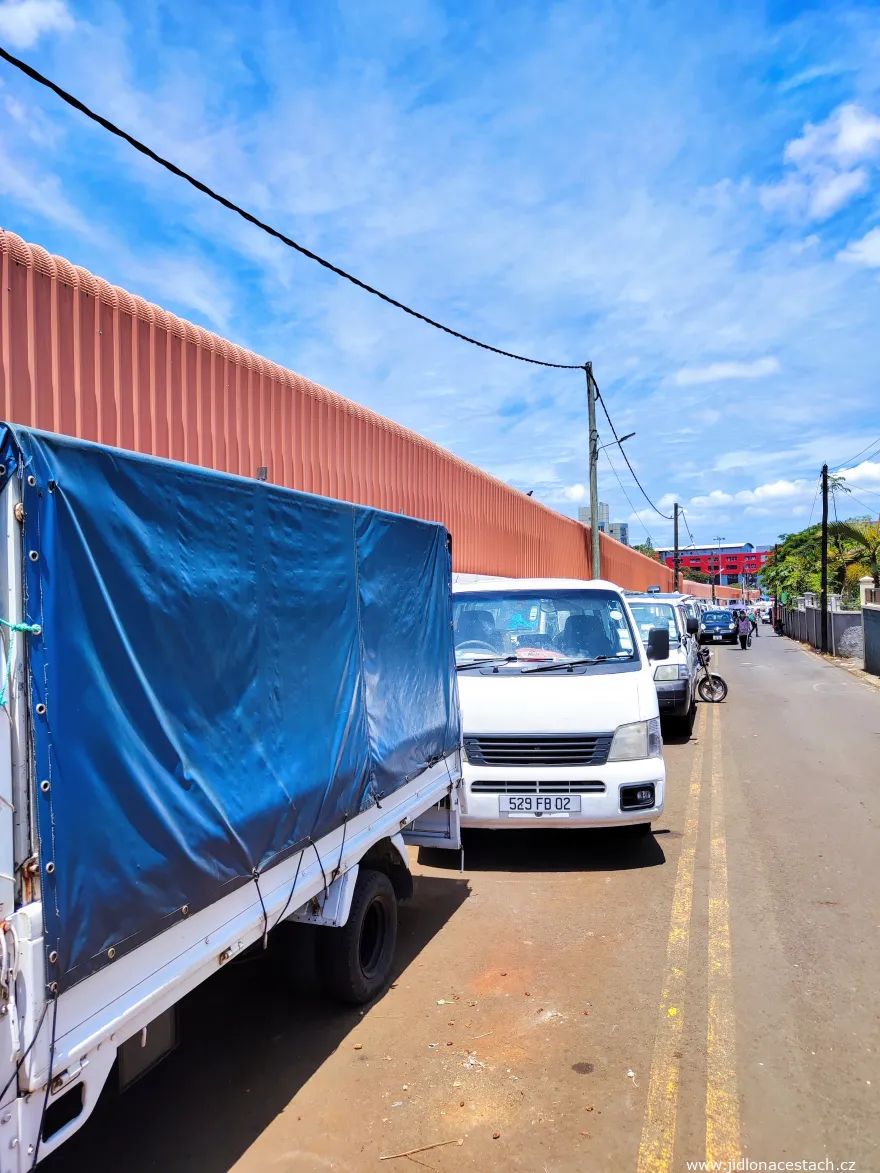
I took the direct bus to Quatre Bornes from Flic en Flac and the trip took just under an hour. Right by the clothes market there's a food court full of small bistros, each of them doing one or two dishes and nothing else, and more stalls with local snacks run all the way around the market. There weren't many tourists, though there were a few. Prices were low and the food was excellent. Among the stalls stood a honey seller with a whole comb on a cart: anyone interested got a taste first, and anyone who bought could take a piece of the comb home. From a table with dozens of bags laid out side by side I picked up two pieces of tekwa - fried pockets filled with sweetened yellow split peas that I knew nothing whatsoever about and that turned out to be the most interesting flavor of the whole trip. I walked through the clothes section too. The market building is one long, narrow strip that seems to run off to the horizon, and inside there are stalls with traditional Mauritian crafts as well, but most of the goods are unremarkable and you probably won't be taking them home. I didn't buy a single piece of clothing in Quatre Bornes. I'm still sending you there - and now you know what for.
Quatre Bornes Market Fair


