Central Market in Port Louis: The Bazaar of the Mauritian Capital
The oldest parts of the Central Market weren't made in Mauritius at all, but in Scotland. The ornate cast-iron gates - metal lace with a floral pattern - were cast in Glasgow and shipped halfway around the world in crates; in Port Louis, all anyone had to do was bolt them together.
The Central Market (Creole: Bazar Porlwi) is a covered food market in the center of Port Louis that has supplied the ingredients for Mauritian cuisine since 1845 - the main hall belongs to fruit and vegetables, the side halls to meat and fish, and a separate building to small bistros.
A Market on the Same Spot Since 1725
The first bazaar here was set up by the French governor La Bourdonnais back in 1725; the hall standing today was built by the British administration between 1839 and 1845, with the cast iron for the gates ordered from Glasgow. Guidebooks like to call the market the oldest on the island - the building doesn't qualify, the three centuries of trading on this spot do. These days it is a national monument, and for locals it is still mainly le Bazar: you'll hear the French name Marché Central from guides rather than from the traders.
The covered colonial hall isn't a Mauritian invention either. A cousin of almost the same age has stood in Victoria in the Seychelles since 1840, and the island's markets have each carved out their own role: Curepipe keeps crafts and textiles in a basalt building, Quatre Bornes has the biggest outdoor textile market - and a few streets from here stands the modern rival, the Victoria Station Market. That makes the bazaar in Port Louis "only" the largest covered food market on the island - and the one guides send tourists to first.
What's Sold Under One Roof
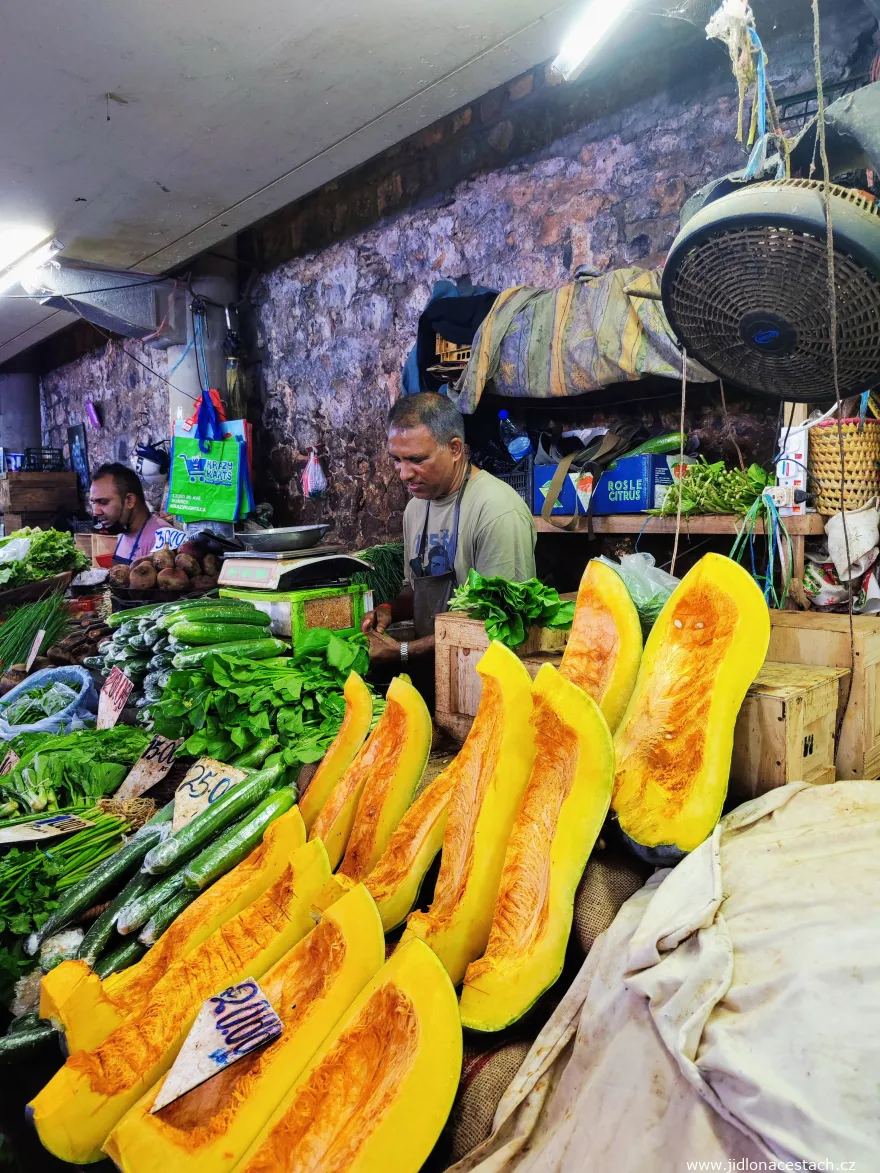
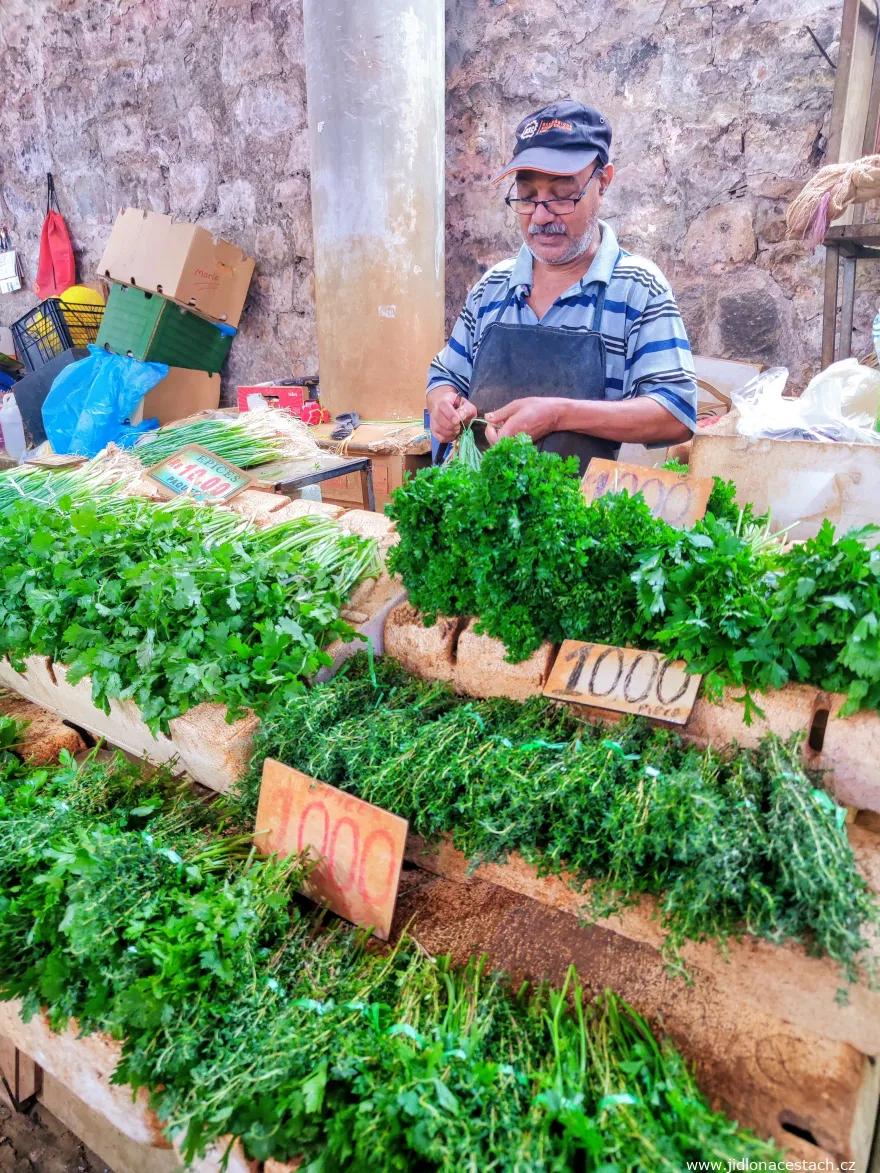
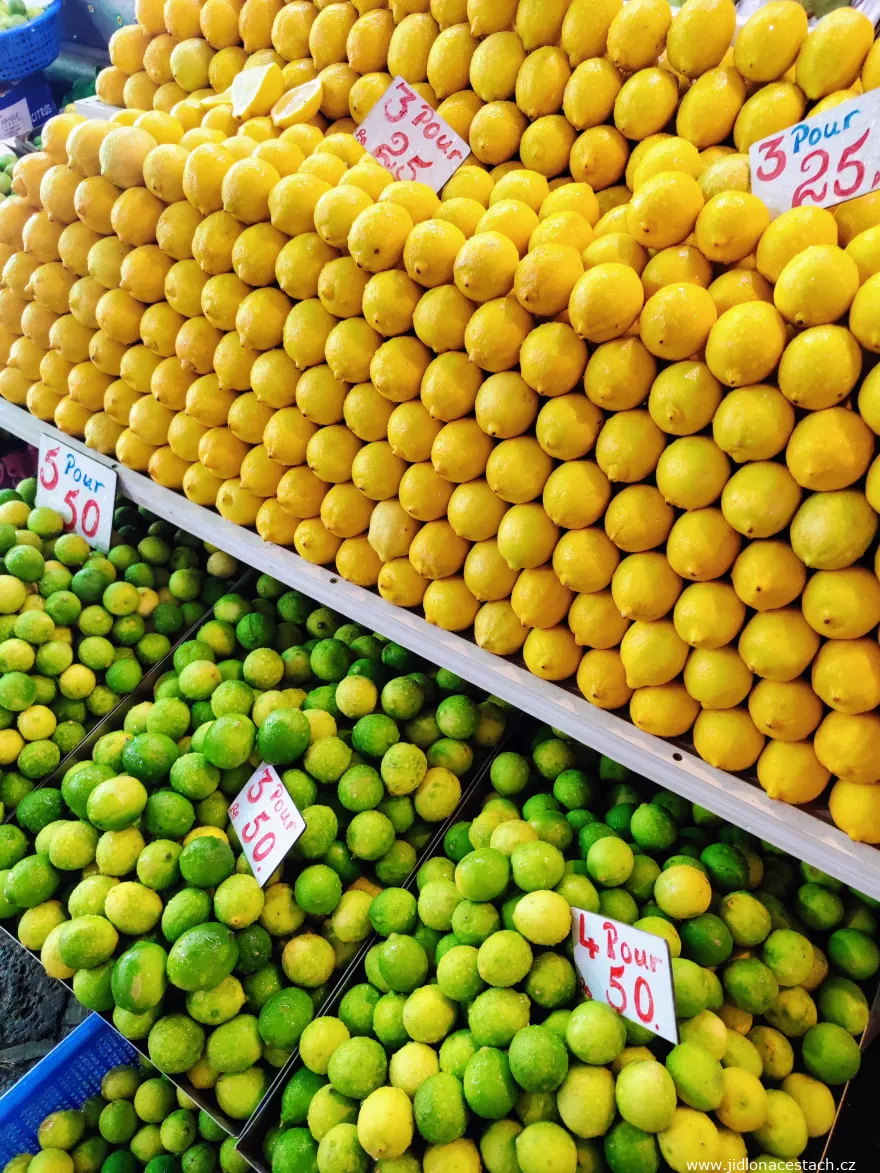
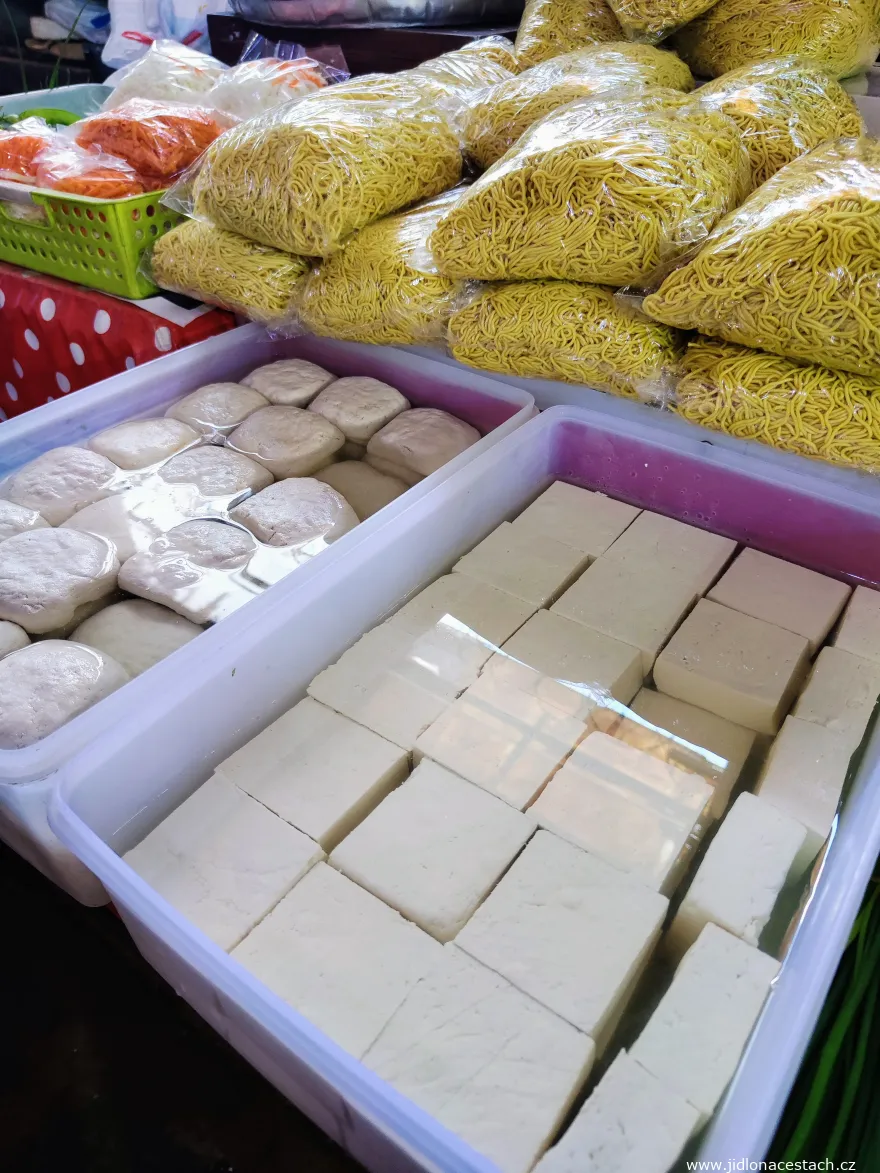
The main hall is a parade of everything the island grows: pyramids of mangoes and pineapples, lychees in season, bunches of herbs, and at the spice stalls vanilla, turmeric and the masala mix. The traders keep sprinkling the fruit and vegetables with water all day, so nothing dries out even in the tropical heat. You can buy tofu and fresh egg noodles here too - this is where the cooks from the small bistros get theirs for mine frit, the fried noodles. Saturday is the busiest day; if you want the freshest produce, and heat you can still bear, come around nine in the morning.
The market has burned twice - the blazes of 1981 and 1999 damaged the fruit and vegetable wing. The burnt-out part became the souvenir floor, and in 2004 a two-story building with bistros went up. The two parts that draw the most tourists today were, in effect, a gift from the fire. Haggling only happens upstairs among the dodo T-shirts; downstairs among the vegetables the prices are written on cardboard in marker pen, and they are fixed.
Meat and Fish for Strong Stomachs Only
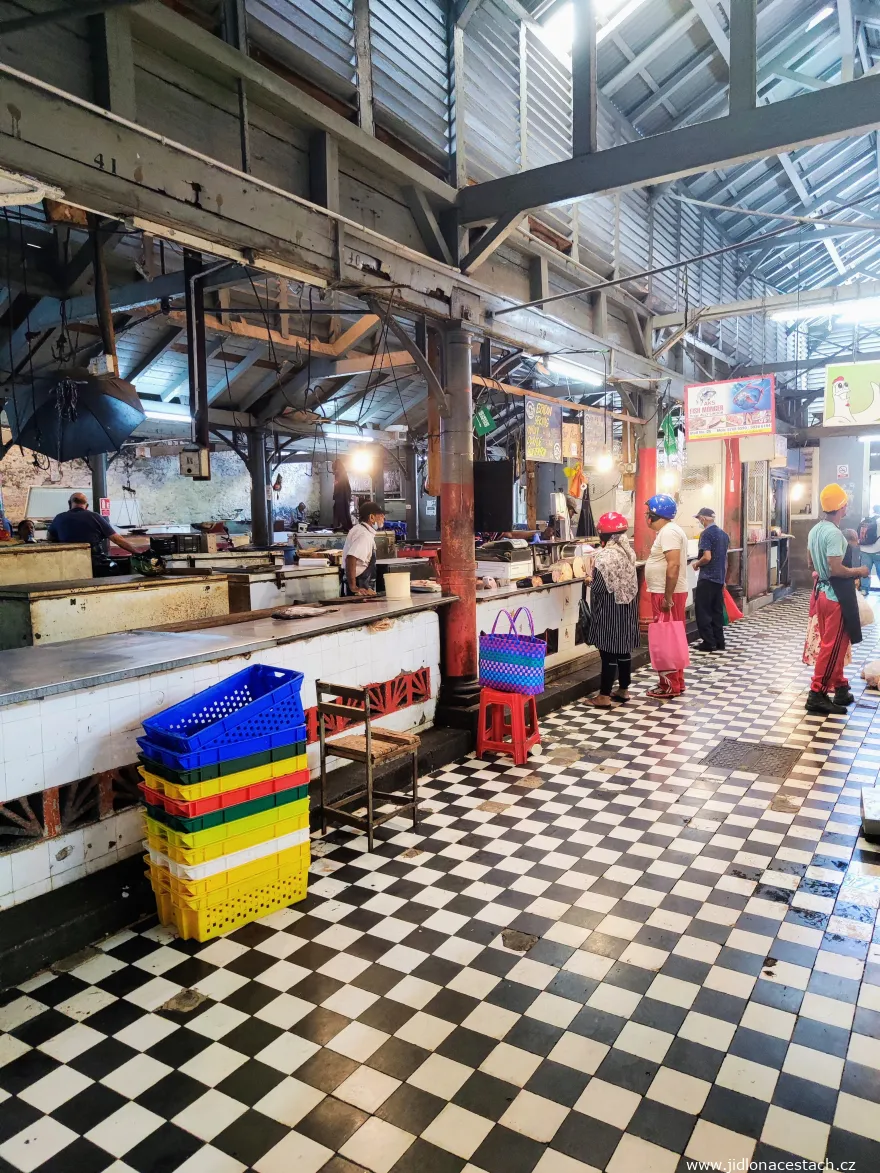
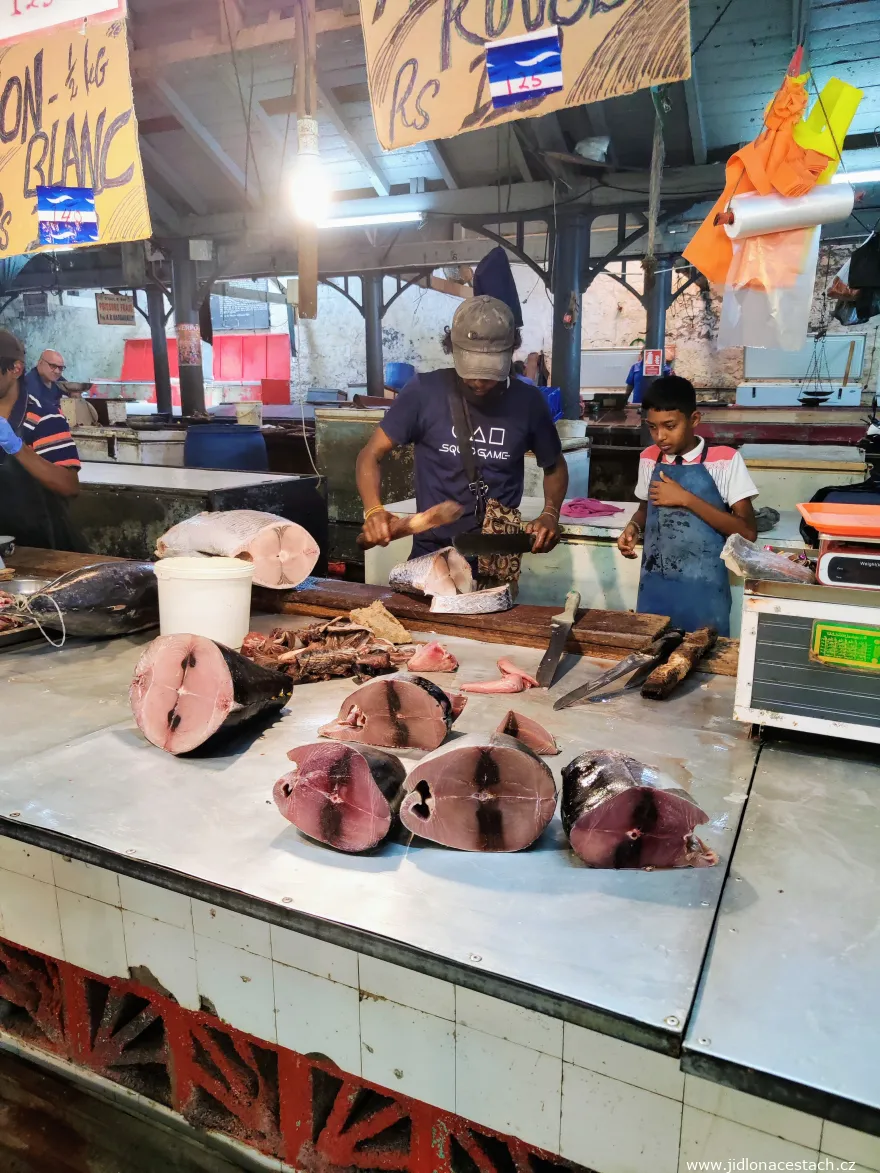
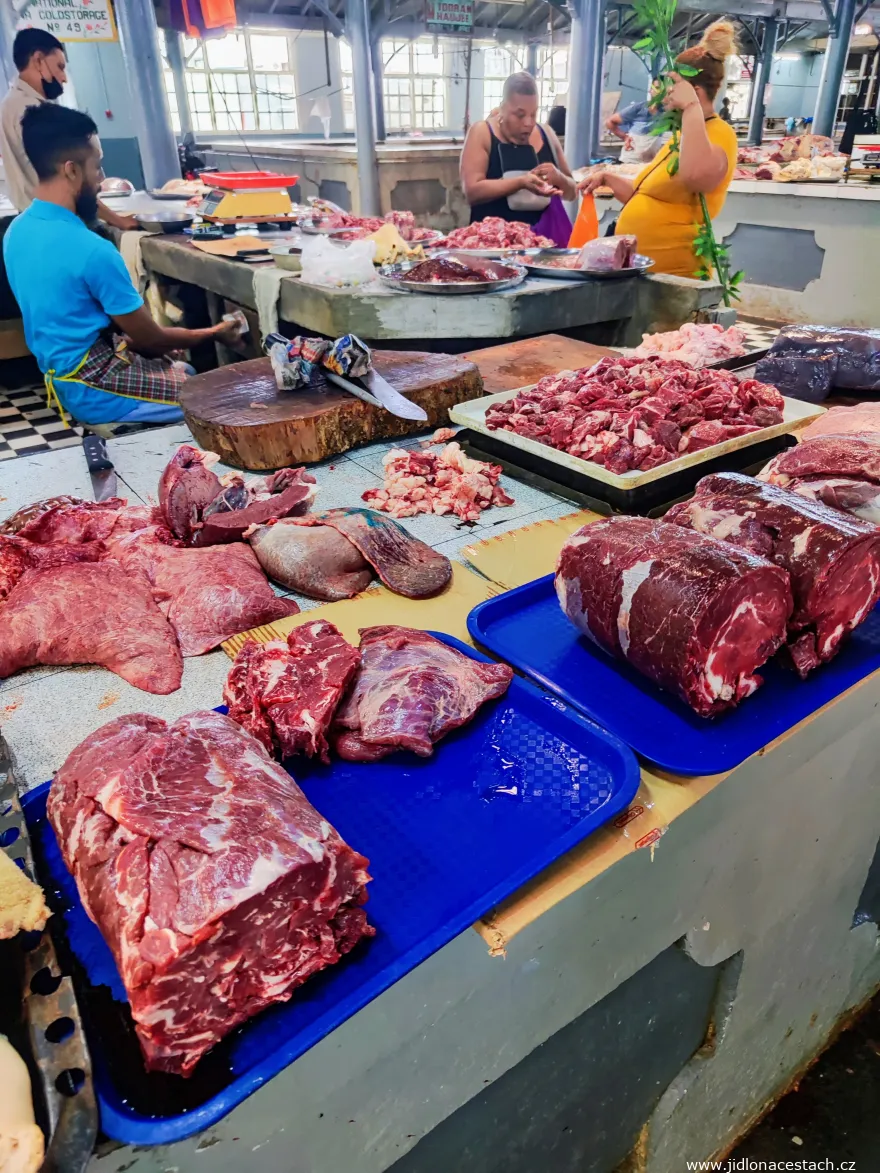
Meat and fish have halls of their own - separate from the main one, thankfully. Refrigerated cases never made it here: the beef lies straight on the counters and the tuna is cut up with a machete by a trader in a Squid Game T-shirt. Tourists rarely wander in, and in the tropical summer, when breathing without air conditioning is hard work, almost never. Hold your nose and walk through, and you'll see the fish, beef and chicken sellers at work.
A Coconut for Eighty Cents
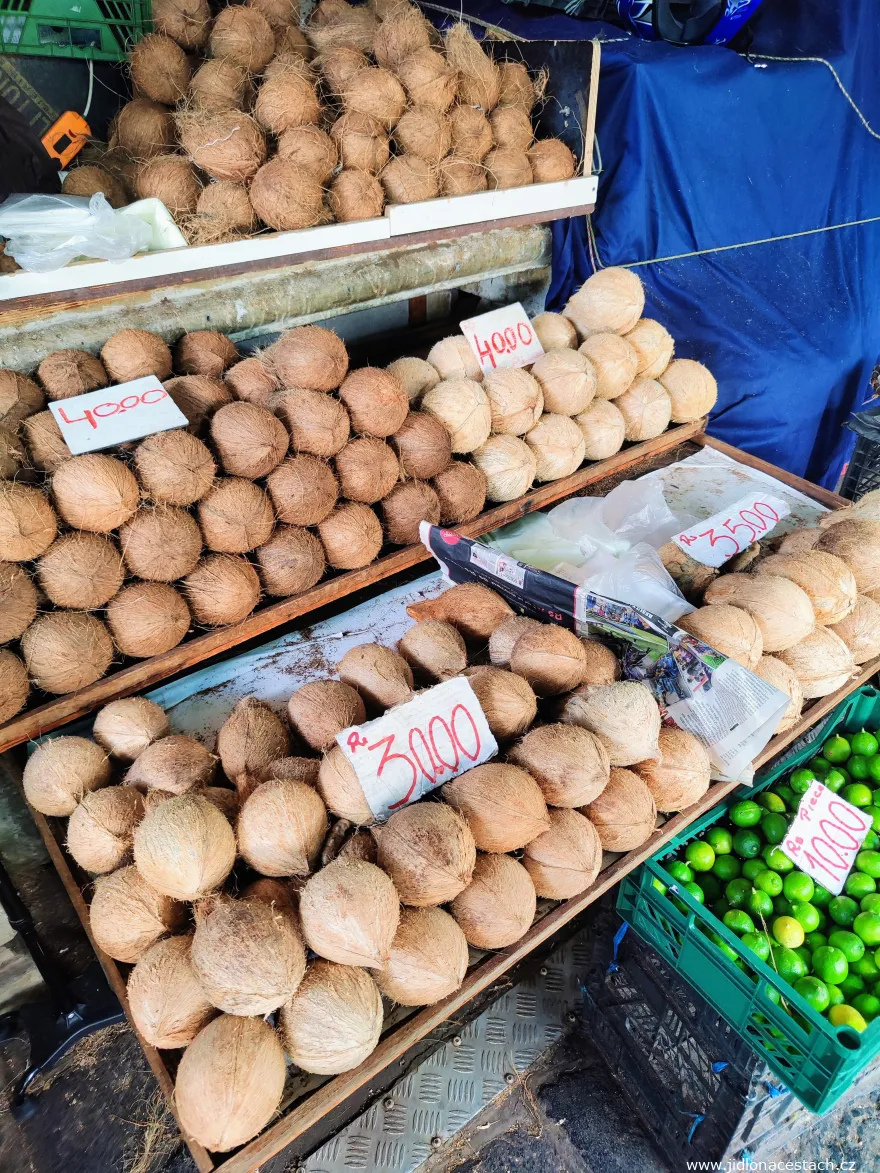
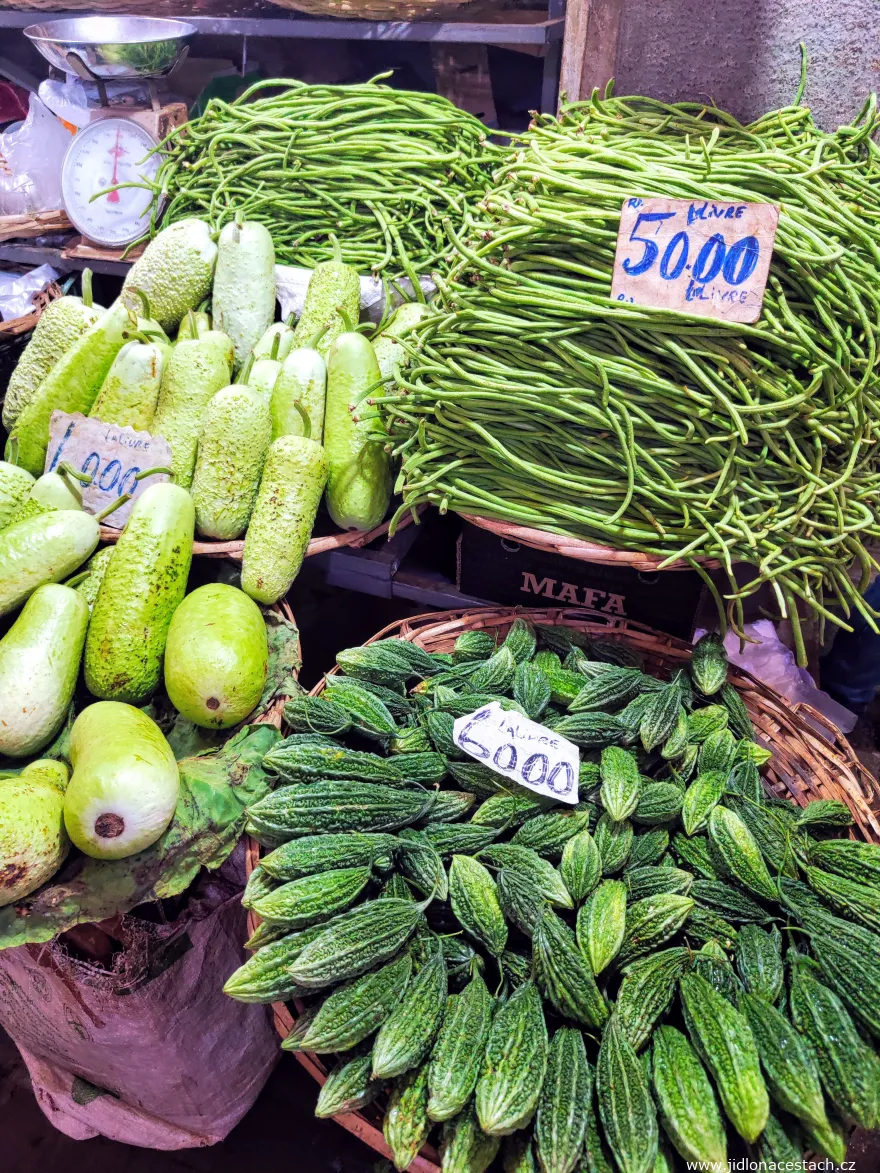
I walked through every hall. In the main hall half the vegetables were ones I'd never seen in my life - yard-long beans, knobbly bitter gourds. I bought a peeled coconut for about 0.80 EUR; the fruit on the island is in a different league from what has to travel halfway around the world to reach us back home in Czechia. At first I only peered into the meat and fish halls; in the end I couldn't resist, walked through them both and was glad to get back among the mangoes and herbs; from there it's just a few steps to a sweet alouda in the building with the bistros. The cast-iron gates once had to sail here from Glasgow. The best of what is sold under them needs no voyage at all.
Central Market


