Focaccia Barese: The Potato Focaccia from Bari
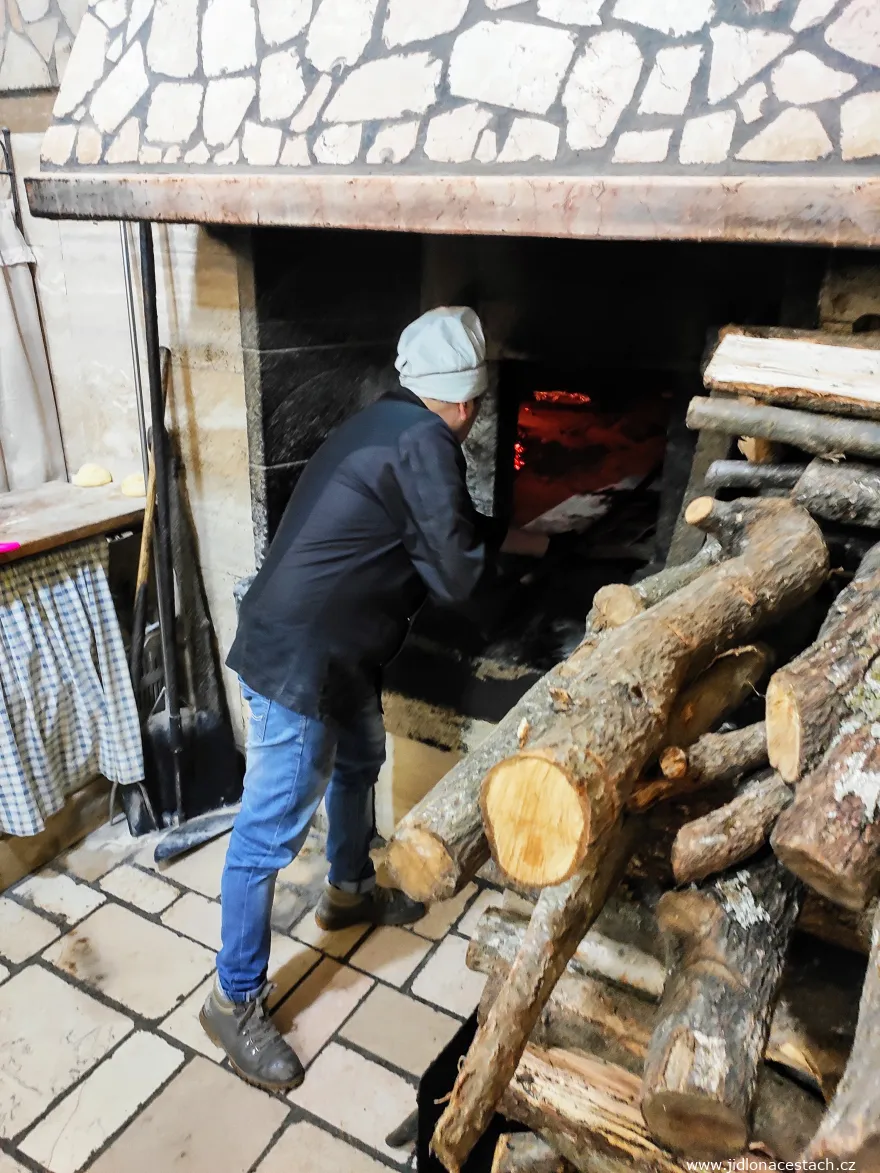
The oven at the Antico Forno Santa Chiara bakery in Altamura never stops. The baker slides in one tray after another, firewood is stacked against the wall and more lumps of dough are already waiting on the counter. A sign by the entrance dates the bakery to 1423, and in all that time the oven has clearly never learned how to stop.
Focaccia barese is a tall leavened flatbread from southern Italy: besides wheat flour and semolina, the dough takes boiled potato, it bakes in a round iron pan on a generous layer of olive oil, and it goes into the oven under hand-crushed tomatoes and unpitted olives. It tastes best warm, a few steps from where it was made.

A Name from the Hearth, a Surname from Bari
Focaccia comes from the Latin focus, hearth - literally "the flatbread from the fire". Plenty of things go by that name in Italy, though, which is why the Apulian one carries the epithet barese, "from Bari". It shares nothing with its famous namesake from Genoa but the name and the pan: Genoese focaccia is thin, brushed with oil and scattered with coarse salt, the one from Bari is tall, soft and buried under tomatoes. It is not really an all-Italian dish, and not an exclusively Bari one either: it is a specialty of Apulia, listed since 2012 in the regional register of traditional products for the province of Bari. Its relatives are scattered around the south: Sardinian costedda mixes tomatoes straight into the dough in place of water, Sicilian sfincione is just as tall, only there the topping is onion and anchovies.
Food from an Oven That Was Only Just Heating Up
Travel websites like to start the story of focaccia with the Phoenicians and ancient flatbreads; though they admit themselves that these are reconstructions drawn from culinary tradition, not the work of historians. The explanation passed around in Apulia is more modest and more believable: once fired, a wood oven had to cool down to the right temperature for bread, and since nobody wanted to waste that first blast of heat, a piece of bread dough was stretched onto a tray, drizzled with oil and strewn with whatever was at hand. Focaccia barese is a by-product of baking bread - food from an oven that was still too hot. Nobody puts a date on the first one; tradition places its cradle in the countryside between Altamura and Laterza. The modern chapter does have a date: in 2001 a McDonald's opened in Altamura and shut down a few months later, because it stood no chance against bakeries selling warm focaccia. The New York Times wrote about it, and it inspired the film Focaccia Blues.
Potato in the Dough and Exactly Twenty Olives
The main trick is in the dough. Boiled potato keeps the moisture in, so the flatbread will not go hard even after hours on the counter - which is exactly what food sold from morning to night needs. Durum semolina, the same semolina pane di Altamura is made from, turns the crumb yellow, and the oiled iron pan is what gives it the bottom crust, fried rather than baked. The bakers' association that guards the recipe today pins this humble food down with laboratory precision: 300 grams of flour, 200 grams of semolina, 100 grams of potatoes and exactly twenty olives of the baresana variety, stones and all, naturally. Next to the canonical version with tomatoes there are others with onion, eggplant, thin slices of potato with rosemary, or breadcrumbs.
People in Bari eat focaccia at any hour: a slice with the morning coffee, a snack, a quick lunch, something to stave off midnight hunger after an evening in the center. It is best in the morning, when the trays come out of the oven one after another and your slice still gets to you hot. It is sold by weight, wrapped in paper - and that is exactly how it should be eaten.

A Slice in Paper in Altamura and in Bari
I used to buy focaccia barese at Santa Chiara in Altamura: a slice with breadcrumbs, wrapped in paper, eaten on the street against a stone wall. The bottom crust crackled with oil, the middle stayed soft the way only dough with potato in it can, and the tomatoes had baked into sweet and sour dimples; the breadcrumbs gave all that softness at least a little resistance. In Bari there is one place I never skip when I'm in the city: the Magda bakery a short walk from the main train station (see Where to Eat in Bari). Along with the focaccia I always walk away with a pack of their taralli with onion and raisins.


