Jermuk: Armenian Mineral Water from a Mountain Spa Town
The Soviet Armenian Encyclopedia dealt with the local water in a single sentence, putting it alongside Carlsbad, Vichy, Borjomi and Yessentuki. A spa water doesn't land in company like that without a recommendation. Jermuk had one: four hundred places around a single mountain town where hot, carbonated, faintly salty water flows out of the ground.
Jermuk (Armenian Ջերմուկ) is an Armenian mineral water from the thermal springs of the spa town of the same name in Vayots Dzor, and the best-known bottled mineral water in Armenian cuisine - in a restaurant it comes in a green glass bottle, sparkling or lightly sparkling. Only a fraction of what the springs can do ever makes it into a bottle, though. The rest stays in the colonnade, where you drink it straight from the tap.

What the Word Jermuk Means and Where Else You Drink Water Like This
The water is named after the town and the town after the water - just not with the logic you'd expect. Armenian jermuk isn't a proper name to begin with, but an ordinary word: jerm means warm and jermuk is a hot spring rising out of the ground. So the town is simply called Hot Spring, and the older Turkic name for the same place, Isti-su, means exactly that. Two languages, two peoples, and both came up with the same idea for naming a place where hot water runs out of the rock. Armenians treat the water as their own, and rightly so: the spring and the bottling plant are both Armenian. The Soviet Union produced a whole family of branded spa waters, and Georgian Borjomi, bottled since 1890, is the most famous and the oldest of them; Jermuk is a close cousin of the same type, it just comes out of the ground a good deal hotter. It has competition at home too - Armenia bottles other springs as well, Bjni or Dilijan among them - but Jermuk is the only one with a spa town behind it.
The Deer on the Label and the Arsenic in the Bottle
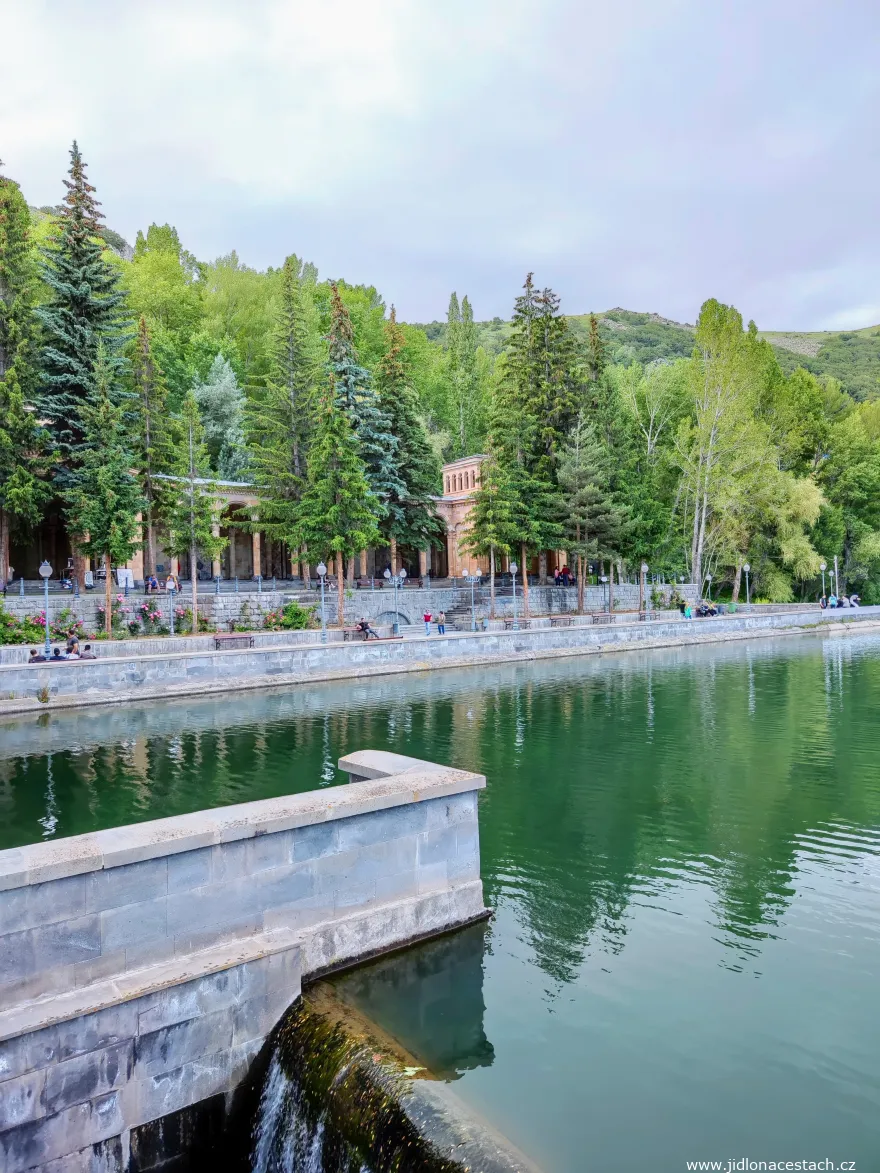
Jermuk has a deer on its label, and the deer comes with a legend: a wounded animal is said to have come to the hot spring, bathed in it and walked back into the forest healthy. Armenians themselves call it folklore, but the town kept the symbol. The documented history is more prosaic and starts in the Middle Ages. People were treated with the water even then, commercial bottling started in 1951, and under the Soviet Union the little town at two thousand meters became an "all-Union health resort" with thousands of sanatorium beds that patients traveled to from across the empire. Guidebooks like to throw geysers into the mix - there are none, only hot springs, which don't need to shoot up because flowing does the job. And healing water can spring a surprise: in 2007 the US Food and Drug Administration pulled a batch of Jermuk off the market after measuring arsenic at fifty times the legal limit. The Armenian investigative outlet Hetq covered it for years; at home people went on drinking it. Then in the spring of 2026 Russia banned it, shortly after banning Armenian flowers - for reasons called hygienic in Moscow and political in Yerevan.
What's in the Water and How Armenians Drink It
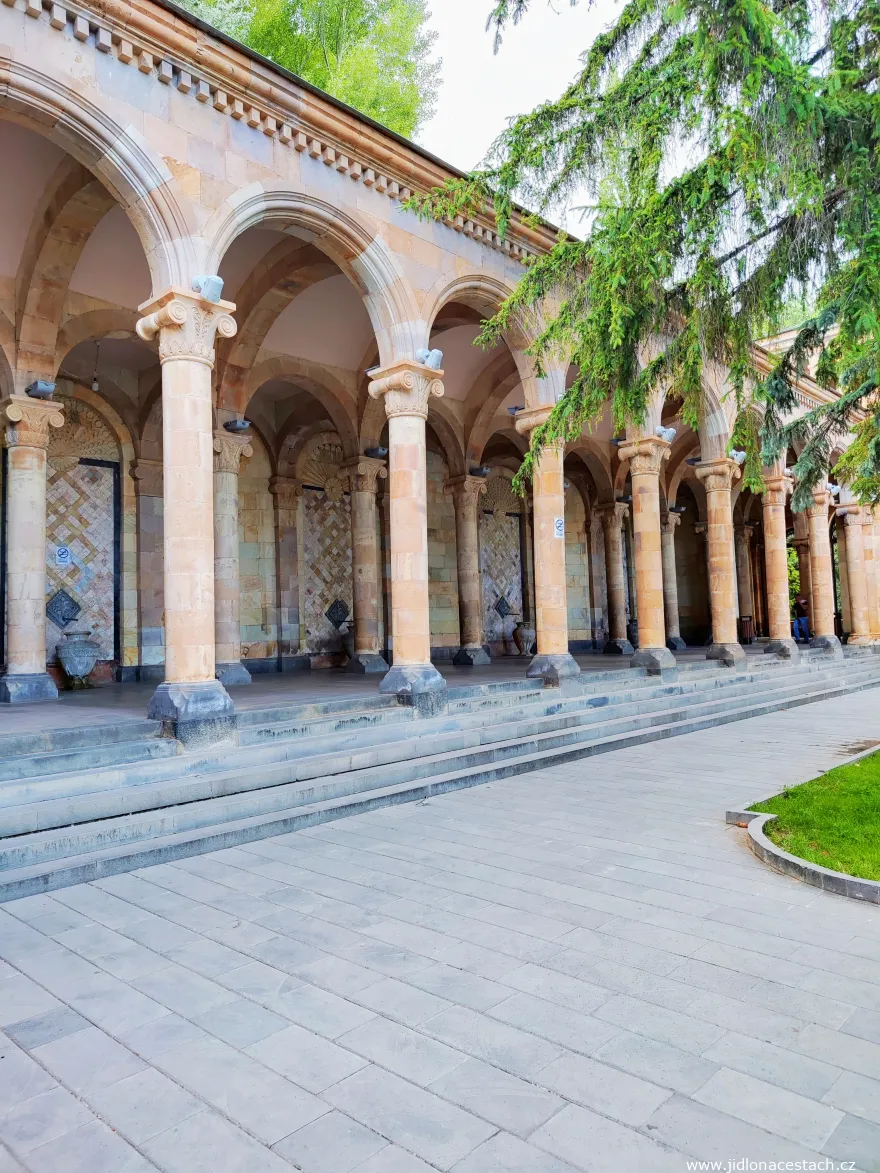
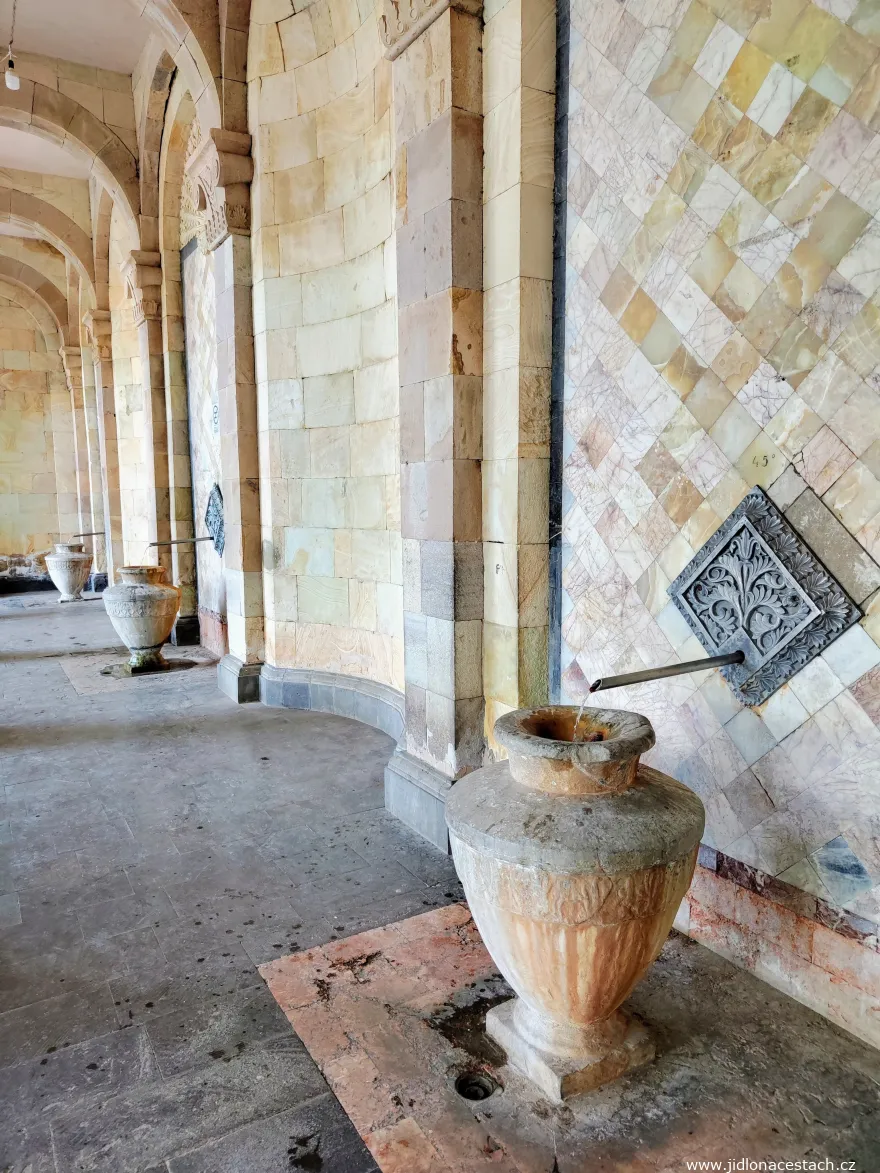
Jermuk comes out of the ground at up to 64 degrees and with four grams of minerals per liter. The star is sodium, which gives it that faintly salty taste, with bicarbonates and sulfates in supporting roles and carbon dioxide third, which the water brings up from the depths on its own. Out of the bottle it tastes like a spa cup, faintly salty and full - it reminds you why spa waters are drunk in sips rather than by the half-liter. In a restaurant it comes in a 0.33 l glass bottle, and you choose between the heavily carbonated Classic and the lightly carbonated Millennium; if you don't want bubbles up your nose, order the second one. And if you make it to Jermuk itself, head for the colonnade: a long open hall with stone columns and a row of springs set into stone amphorae, free for anyone to walk into. The springs differ in temperature and composition, from lukewarm to hot ones you drink in small sips.
A Bottle in the Heat and a Cup in the Colonnade
I drank Jermuk almost everywhere I sat down to eat in Armenia, and in the summer heat I fell for it more than anything else on the menu: it's refreshing, faintly salty, and after the first sip you understand why people all over the country order this water as automatically as bread. In the colonnade in Jermuk I worked through the springs one by one, and the hot ones tasted saltier and fuller than the bottled water, with a metallic aftertaste that all but disappears in the chilled version. A 0.33 l bottle costs around 350 AMD (0.80 EUR) even in the pricier places, and in the colonnade you pay nothing. Just be careful opening the sparkling version: it's carbonated enough that the first twist of the cap is better done over the table than over your own knees.


