Tan: The Armenian Salty Drink Made from Matsun Yogurt
If you know Turkish ayran, you'll order tan in Yerevan with the confidence of an expert: the same yogurt with water and salt, just a different name. Then the glass arrives, and the drink in it is thinner, sharper and almost without foam.
Tan (Armenian: թան) is a cold, salty drink made from Armenian fermented milk, matsun, thinned with water - the homemade version gets stirred up in a jug, while the packaged one is sold in one-liter bottles and in five varieties, four of which a Turkish ayran seller wouldn't recognize.

What the Word Tan Means and Where Else Yogurt Gets Thinned with Water
The name is older than the drink in the bottle. The Armenian tan goes back to an Indo-European root meaning to flow, and it originally stood for buttermilk, the liquid left behind after churning butter; tan is therefore literally "the thin one", which is exactly what water does to thick matsun. It's pronounced with an aspirated t, closer to "t-han" than to a plain "tan". In Turkey that word would get you daybreak, because there the same drink is called ayran. Then again, thinning yogurt with water and salting it is something the whole belt from the Balkans to Central Asia knows how to do. Albanians have dhallë, which of them all tastes closest to tan, in Iran they drink doogh, which is carbonated and always has mint in it, and Georgians thin their matsoni without even changing its name. Turkish ayran differs from tan the most: it is made from finished yogurt and whipped until it wears a cap of foam, while tan is stirred from fermented milk and needs no foam at all. In Russian shops, tan and ayran sit side by side as two different products, and ayran even has its own state standard. Tan doesn't. Being the older of the two is probably enough.
Matsun, a Yogurt with a Pedigree and One Fresh Dispute
The history of tan is the history of matsun, because the drink is only its liquid form. Matsun is mentioned as early as the 11th century by Grigor Magistros, and by other medieval Armenian authors after him; nobody puts a date on tan itself, which is fair enough for a drink you make by pouring water into fermented milk. Travel sites claim the recipe was a closely guarded secret in the villages. It wasn't, and there was nothing to guard: matsun, water, salt. A brand new dispute over matsun did break out in 2022, though, when Georgia registered the word matsoni as a protected geographical indication and Armenian matsun could no longer be exported to Georgia, or through it, under its own name. Armenia objected that the word comes from the Armenian verb meaning to thicken. Georgia rejected the objection. The yogurt got no thicker and no thinner for it.
What Goes into Tan and When to Drink It
Matsun is made from boiled milk - sheep's, cow's or a mixture of the two - and ferments into a thick mass you can cut with a spoon. Tan happens when water and salt go in, and the ratio depends on the household, not on any rule: one part matsun to one part water in some places, one to three in others, and the more water, the closer the drink gets to its name. Anyone who gives you an exact number is giving you the ratio from their own kitchen. The jug sometimes gets sparkling water, dried mint or dill, ice in summer, and packaged tan picks up cucumber at the factory. The easiest way to picture it back home: a cold glass of kefir from the fridge, only someone reached for the salt instead of the sugar.
Tan is drunk cold, with rich food and in the heat, because the salt in it puts back what you have sweated out. It also turns into a soup: the Armenian spas, popularly called tanapur, literally tan soup. In a restaurant, order the homemade one rather than the bottled one; it tends to be thicker and sharper. And watch out for menus that list tan and matsun side by side. Matsun comes in a bowl and is eaten with a spoon. Order it to wash your food down and you'll need patience, or a second order.


A Glass at Lavash and a Bottle off the Shelf
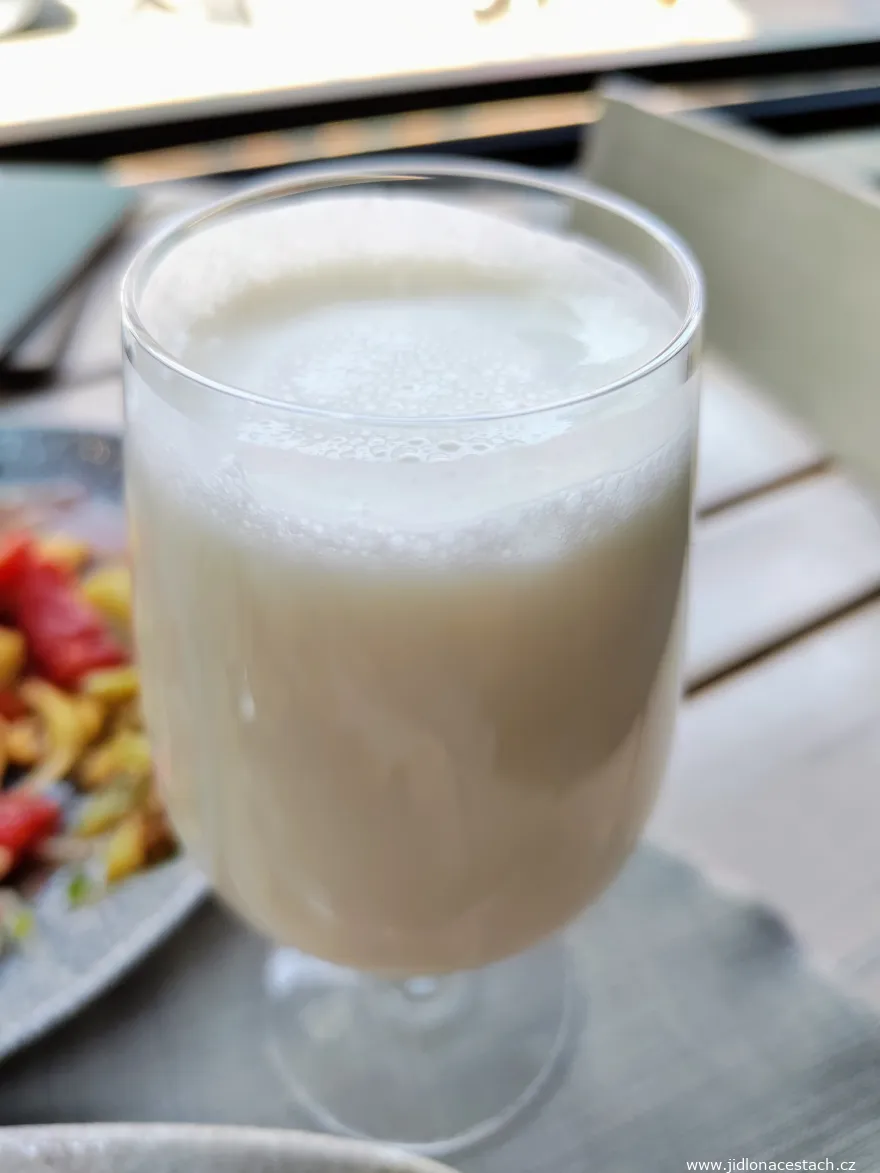
I drank homemade tan at Lavash Restaurant (see Where to Eat in Yerevan), where they mix it themselves and bring it out in a stemmed glass. It was thinner than I expected from a yogurt drink, the salt arrived before the sourness, and once I swallowed, all that was left in my mouth was a coolness - and no foam at all. A 0.3 l glass cost 400 AMD (1 EUR). After that I picked up packaged tan in supermarkets, where you'll almost always find it in fizzy, still, cucumber, mint or dill versions; the fizzy one prickles like salty mineral water, and the cucumber one tastes as if someone had blended tzatziki and forgotten the garlic.


