Armenian Beer: Kilikia, Gyumri and the Drink Xenophon Drank
Ten thousand Greek mercenaries are retreating through wintry Armenia, the army beaten, the sea still a long way off. Villagers take them in and bring out vessels with barley grains floating in them and reed straws sticking out. Xenophon, who survived the whole thing and wrote it down in the Anabasis, noted that the drink was strong, strange on the first sip, and much to the locals' taste. The year was 401 BC, and it is the oldest description of beer from the territory of today's Armenia - older than most of the things Armenia now puts on its coat of arms.
Armenian beer (Armenian: գարեջուր, garejur) is today almost without exception a pale lager made from water, barley malt and hops, and in Armenian cuisine it stands in the shadow of wine and brandy - even though the country brews more of it than it makes wine.

Barley Water and Its Caucasian Cousins
Armenian didn't borrow its word for beer from anywhere; it simply put one together: gari is barley, jur is water, garejur is barley water. A word that describes the product more accurately than most labels do. Beer culture here is shared with the whole South Caucasus, though, and isn't an Armenian invention: in the Soviet years both Yerevan and Baku got a big state brewery built to the same template, after the Soviet Union fell apart it was bought either by a local businessman or by foreign capital, and what flows out of it today is a pale lager that differs from the neighbor's mainly in the label. Georgian cuisine has Natakhtari and Kazbegi, Azerbaijan has Xırdalan, Armenia has Kilikia - and in all three countries beer comes second to the national drink, whether they call it wine or cognac. Ararat beer from the Gyumri brewery has nothing in common with the famous Ararat brandy except the mountain on the label; in Armenia everyone borrows it - banks, hotels and breweries alike.
Who Brews Armenian Beer, and Since When
Modern breweries appeared in the country at the end of the 19th century, in Yerevan and in what was then Alexandropol, today's Gyumri, and Armenian sources still don't agree on which came first. Only the Soviet dates are certain. The country's largest brewery, the Yerevan Brewery, has stood since 1952, and its flagship brand Kilikia is the most widespread beer in Armenia today; the Kotayk brewery in Abovyan was built in 1974 by Czechoslovak specialists, with a capacity meant to supply the whole Caucasus, and in Gyumri the Gyumri brewery has been brewing since 1970, its plant flattened by the earthquake and back on its feet after privatization. So when you open a bottle of Kotayk in Armenia, you're drinking beer from a brewery Czechs once built. The recipe is local, though, and there's no Pilsner bitterness in it.
What Armenians Actually Drink and How to Get Hold of a Beer
Armenia talks about itself as a country of wine and brandy, and yet production figures show it makes several times more beer than wine. Wine and cognac are the export calling card; beer is what people drink on a Tuesday evening. Almost all Armenian beer is a pale lager of around 4.5 percent, made with nothing but barley malt, hops and water whose mountain purity every brewery talks up as if it had invented it; nobody can back that up, but it really does taste clean. For beer with fruit in it you have to go to Dargett, a craft brewery in Yerevan, where they also brew an apricot ale - in Armenia that was probably unavoidable.
In a restaurant, expect a bottle: draft beer is the exception in Armenian restaurants, and even a good restaurant will open a 0.33 l bottle at your table. In a shop the same bottle costs about half that, and one-liter and bigger PET bottles are popular too. In the bigger supermarkets I came across something that back home in Czechia only my grandparents' generation remembers: a tap where you fill a plastic bottle with beer yourself, the way people once walked to the pub with an empty jug. If you want to taste several brands at once, head to Yerevan in July, when the city center hosts a beer festival; the rest of the year you're left to work your way along the shelves and order.
Two Bottles from the Same Brewery
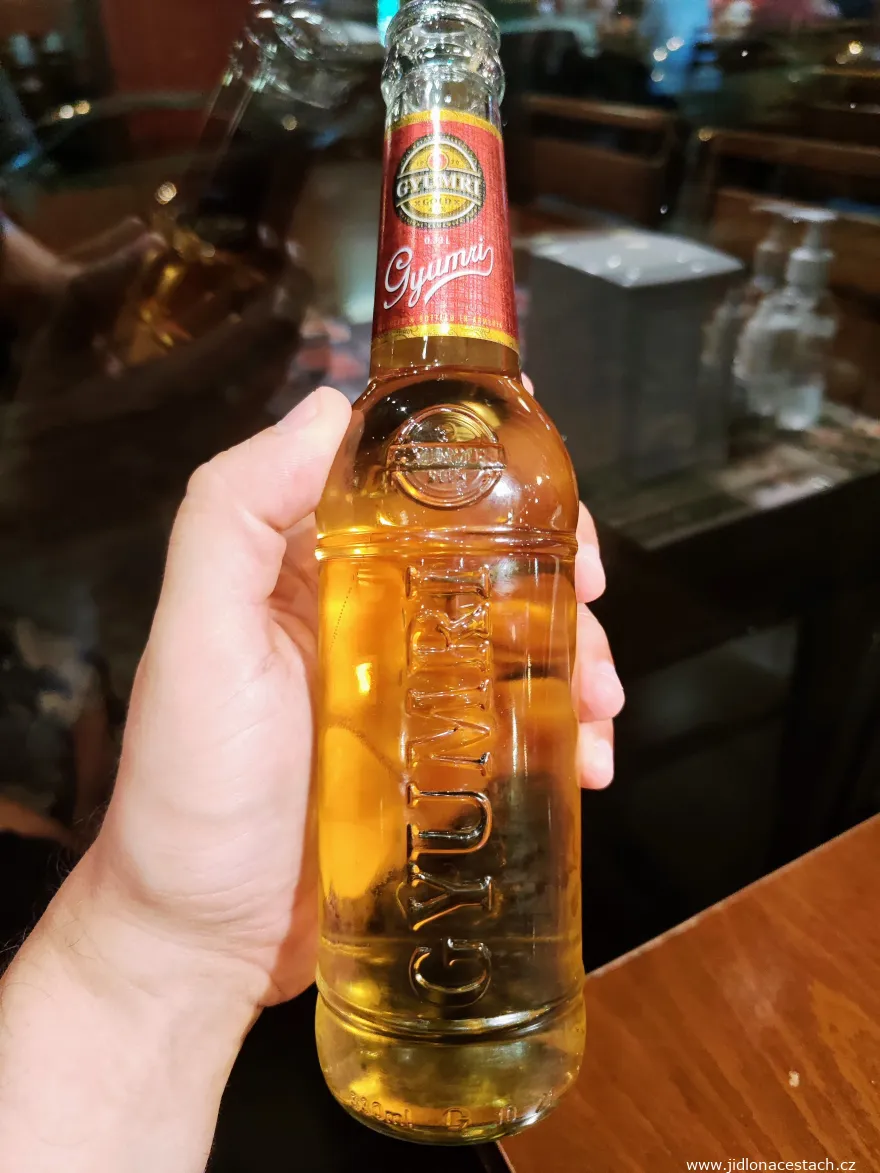
I only tasted two beers in Armenia, and both, as it turned out, came from the same brewery in Gyumri. I drank Gyumri at Anteb Restaurant in Yerevan (see Where to Eat in Yerevan) and Ararat at Lavash Restaurant. Both came in bottles and tasted the way a lager should in a hot city: light, clean, with a malty sweetness on the tongue. Strong and strange, the way Xenophon had it, they were not. They went down just as easily, though. For the same 0.33 l bottle from the same brewery I paid almost twice as much one time as the other, and the difference wasn't in the beer but in the address: a bottle of Gyumri cost 600 AMD (1.40 EUR) at Anteb, a bottle of Ararat 1,000 AMD (2.40 EUR) at Lavash.


