La Pecera: Japanese Taiyaki with Ice Cream in Madrid
On Calle Velarde in the Madrid neighborhood of Malasaña, they sell a fish that has never seen the sea. It's golden, it smells of baked batter, instead of scales it carries the imprint of a metal mold, and instead of guts it has soft serve.
La Pecera is an ice cream shop that brought taiyaki (Japanese: たい焼き) to Madrid - a fish-shaped Japanese pastry - and swirls soft serve into it the way you'd fill a cone. The fish has nothing whatsoever to do with Spanish cuisine, and judging by the number of branches, Madrid couldn't care less.
What Taiyaki Means and Who Baked the First One
Tai is Japanese for sea bream, yaki means baked. Why a bream of all fish? Because the word sits whole inside medetai, auspicious - and thanks to that pun, the bream is Japan's fish of weddings, celebrations and New Year. Right from the start, taiyaki was also sold as an edible good-luck charm.
The first taiyaki was baked in 1909 by Naniwaya, a Tokyo shop in the Azabu-Juban neighborhood - and it bakes them to this day. As the family tells it, the founder, an Osaka native, first tried selling round imagawayaki without much luck, then had a go at a turtle shape, and only the fish caught on. The sweet that all of Japan knows today was, by its own creator's account, plan C. That's a family business telling its own story, not a chronicle; the Japanese press repeats it all the same, and in a hundred years nobody has come up with anything better.
From Tokyo to Malasaña by Way of New York
Taiyaki reached Madrid not from Japan, but from New York. In the mid-2010s, the chain Taiyaki NYC swapped the ordinary cone for the fish pastry, Instagram took care of the rest, and the wave rolled out across the world. In Malasaña, La Pecera caught it in 2017 - the first place in Spain to start selling taiyaki with ice cream - and today it has branches across Madrid and in other Spanish cities. The name means fishbowl, and it's not a metaphor: the tiles glint like scales and round lights rise toward the ceiling like bubbles. In Japan, though, taiyaki is eaten hot, and the sweet bean paste anko is baked right into it in the mold. The cold ice cream version is a Western invention, Japanese passport or not.
Hot Fish, Cold Ice Cream
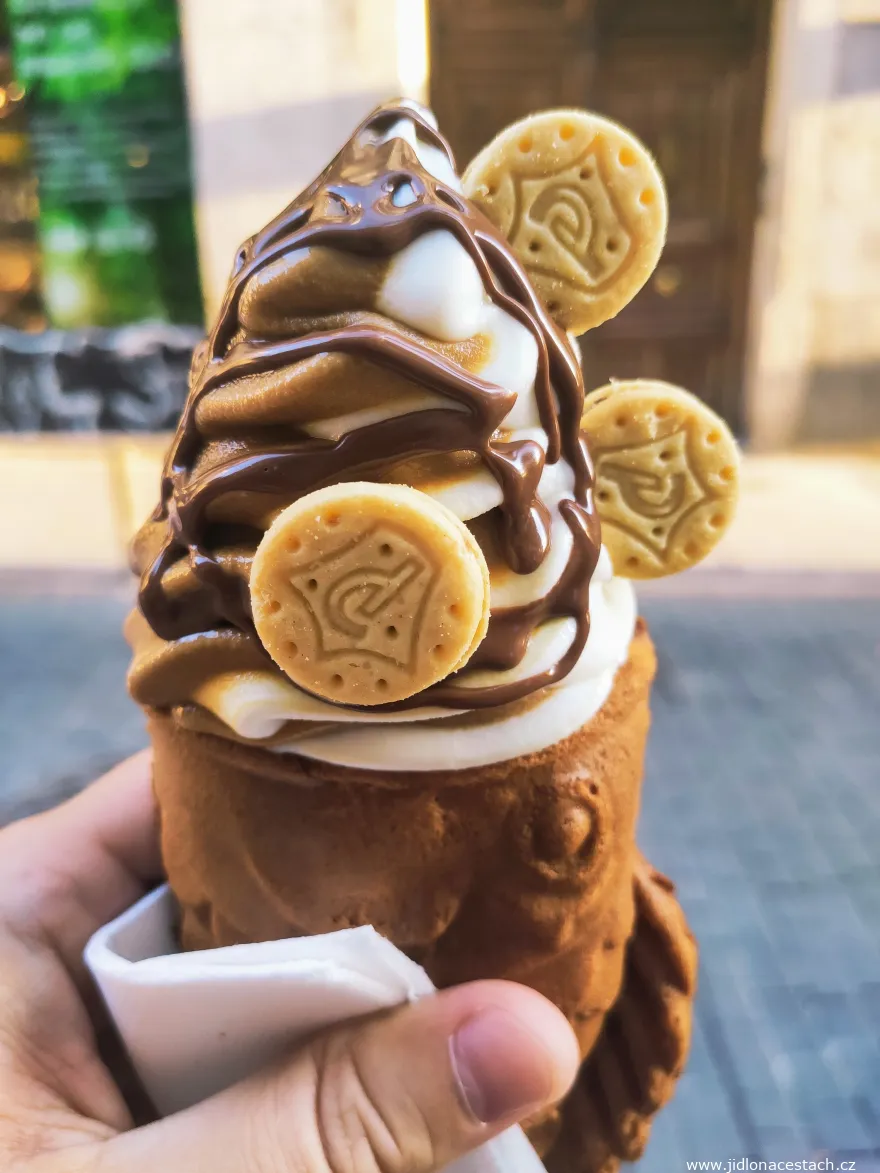
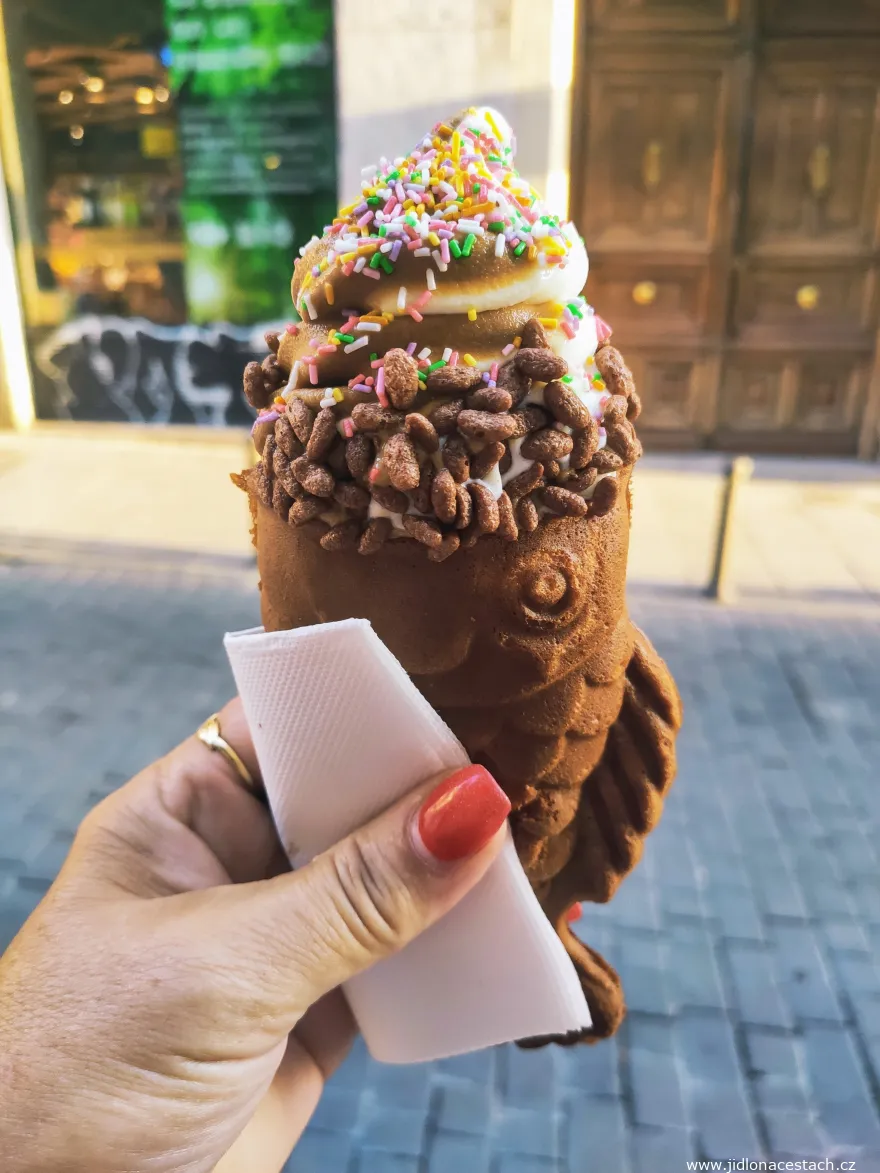
The whole trick is the contrast in temperature. The cone - vanilla or cocoa - is baked on the spot and arrives in your hand still warm; into it goes ice-cold soft serve, whatever's on offer that day, vanilla, chocolate or mango with yogurt, then caramel, Nutella or chocolate sauce on top and a sprinkling of crushed cookies. We all know soft serve from every summer ice cream kiosk, but back home in Czechia the cone is just a holder nobody gives a second thought to - at La Pecera it's the star. And which end do you start from? The Japanese take that question seriously and run polls on it: roughly two thirds eat their taiyaki head first. If you don't make it to Malasaña, don't despair - the branches have multiplied all over the city, near Puerta del Sol and Atocha station among others.
Two Fish from Calle Velarde
We stopped by La Pecera one August evening, just before nine, when Madrid is only starting to think about dinner (see Where to Eat in Madrid). Two fish arrived: one with chocolate sauce and caramel cookies, the other coated in chocolate crisps and buried under colorful sugar sprinkles. The cone was warm and crunchy at the edges, the ice cream was properly cold, and within a few steps the sauce on it had set into a thin shell that cracked like a hollow chocolate figurine. One fish with sauce and sprinkles cost about 5 EUR. Neither of them left so much as a bone behind.
La Pecera


