Mursalski Tea: The Mountain Herbal Tea from the Rhodopes
Open your first box labeled чай in Bulgaria and you expect loose-leaf tea, but what you get is a bundle of hay. Gray-green stalks as long as a pencil, dried yellow flowers still on them, and the whole thing smells more like an August meadow than anything from a teahouse. Don't look for bags or leaves - this one is sold by the stalk.
Mursalski tea (Bulgarian: мурсалски чай) is an herbal infusion made from the dried tops of the mountain tea herb, Sideritis scardica, a plant of the high Rhodopes and Pirin, and the best-known herbal tea in Bulgarian cuisine. People up in the Rhodopes drink it for a cold; souvenir shops sell it for everything else.

Which Mountain Mursalski Tea Is Named After, and Where People Drink It
The herb has two names, and each one comes from a different mountain. The Bulgarian mursalski is named after Mursalitsa, a ridge in the Western Rhodopes above the village of Trigrad, with a protected area of the same name. The Latin scardica is named after the Šar Mountains, Scardus in Latin, on what is now the border between North Macedonia and Kosovo, where the Göttingen botanist August Grisebach described the plant in the nineteenth century. So Bulgarians print on the box the name of a mountain that sits two borders away. The Czech name, hojník, is the most honest of the three: it says outright what the herb was used for - healing wounds. And because it grows where the forests give out, at 1,400 to 2,200 meters, it goes by the general name mountain tea; Bulgarians rename it pirinski or trigradski after whichever range it came from, but it's always the same plant.
The plant is a Balkan endemic that Bulgaria shares with Greece, North Macedonia and Albania, and every country has its own name for it. In Albania it's çaj mali, a name that covers a few sister species of the herb as well; in North Macedonia it's planinski or šarplaninski čaj, straight from the mountain that gave the plant its Latin name; in Greece it's tsai tou vounou, tea from the mountain, the most famous of it coming from Mount Olympus. The European Medicines Agency dealt with the whole family in its own way: it merged four Sideritis species from Bulgaria, Greece and Albania into a single entry, Sideritis herba, with a traditional use against coughs. Names are no way to sort these plants, though: dağ çayı in Turkey covers dozens of other Anatolian species, and the Serbian rtanjski čaj isn't Sideritis at all, but savory. In the Balkans, mountain tea is a genre rather than a plant.
Why Mursalski Tea Can't Be Picked and Why It's Sold Anyway
Nobody wrote down who drank it first; the history of Mursalski tea belongs to the foragers, not the cooks. The herb is in the Bulgarian Red Book, and since 2016 the environment ministry has renewed a yearly ban on picking it in the wild, even for your own mug - a single stalk picked in a meadow can earn you a fine. So the boxes in the shops come from plantations near Trigrad, in Velingrad or around Kazanlak, and the grower has to produce a certificate of origin from the municipality. A protected plant has turned into a farm crop that is legal only as long as it didn't grow where it got its name. Marketing threw in the nickname "Bulgarian cure-all" and hundred-year-old grandfathers from the Rhodopes; neither has a single clinical trial behind it, and the only documented claim is the modest one, relief from a cough and a cold. Every year at the end of July, the whole of Trigrad drinks the tea at a folk festival called the Orphic Mysteries, which sounds like a ritual, and a ritual is exactly what it is.
How Mursalski Tea Is Brewed and Why It Won't Keep You Awake
You count the stalks rather than measure them: one or two per mug, whole, flowers and all. What to do with them next is something even Bulgarians disagree on. Folk wisdom says Mursalski tea should be boiled rather than steeped, left to bubble away for a few minutes, while pharmacy leaflets call for water just off the boil and ten minutes with the lid on. Either way the brew comes out pale gold and tastes sweet and gentle, closest to the linden-flower tea you were handed as a child when you had a cold. There's no caffeine or theine in it, so people drink it in the evening as readily as in the morning, and in Bulgaria they give it to children too. Honey is up to you. One more tip when you're buying: check the box for the Latin name Sideritis scardica, because a "planinski čaj" with no papers can be anything that grew on a hill.
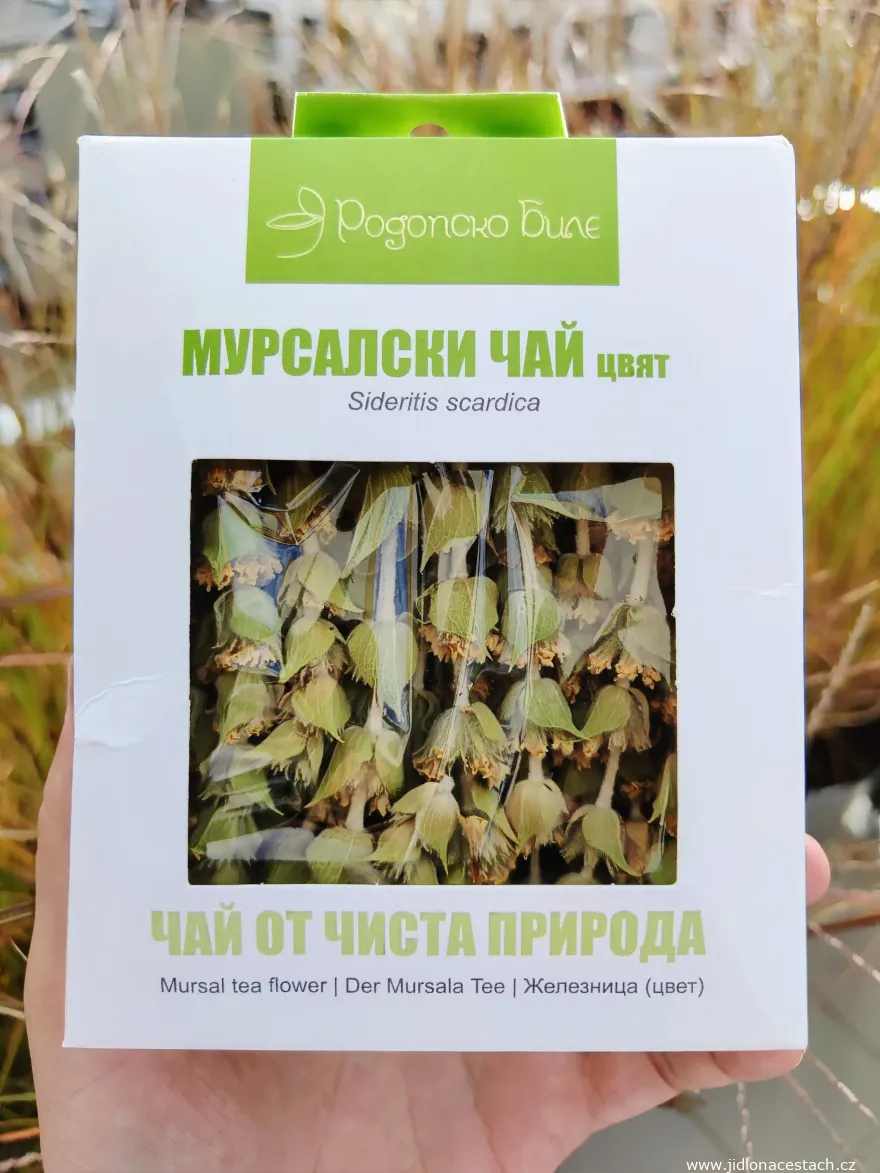
The Box I Like Bringing Home from Bulgaria Most
I bought my own box in a Bulgarian shop, twenty grams of stalks in a cardboard box with a window, for about 4.70 BGN (2.20 EUR), though I can't remember which shop it was. At home I boiled the stalk whole, the way the folk version says to, and the mug smelled just as sweet as it went on to taste. That sweetness is exactly why I keep coming back to it: a tea that needs no honey and that you can drink all day without counting sheep at night. Of everything worth bringing back from Bulgaria, this is my favorite edible souvenir. Twenty grams is a ridiculously small amount for a favorite souvenir. Next time I'm bringing more.


