Paris-Brest: The Cyclists' Dessert
The tastiest monument to French cycling doesn't stand at the roadside - it sits in pastry shop windows. The race from Paris to Brest and back runs over 1,200 kilometers and the riders spend several days and nights in the saddle; the dessert that commemorates it is gone from the plate in five minutes.
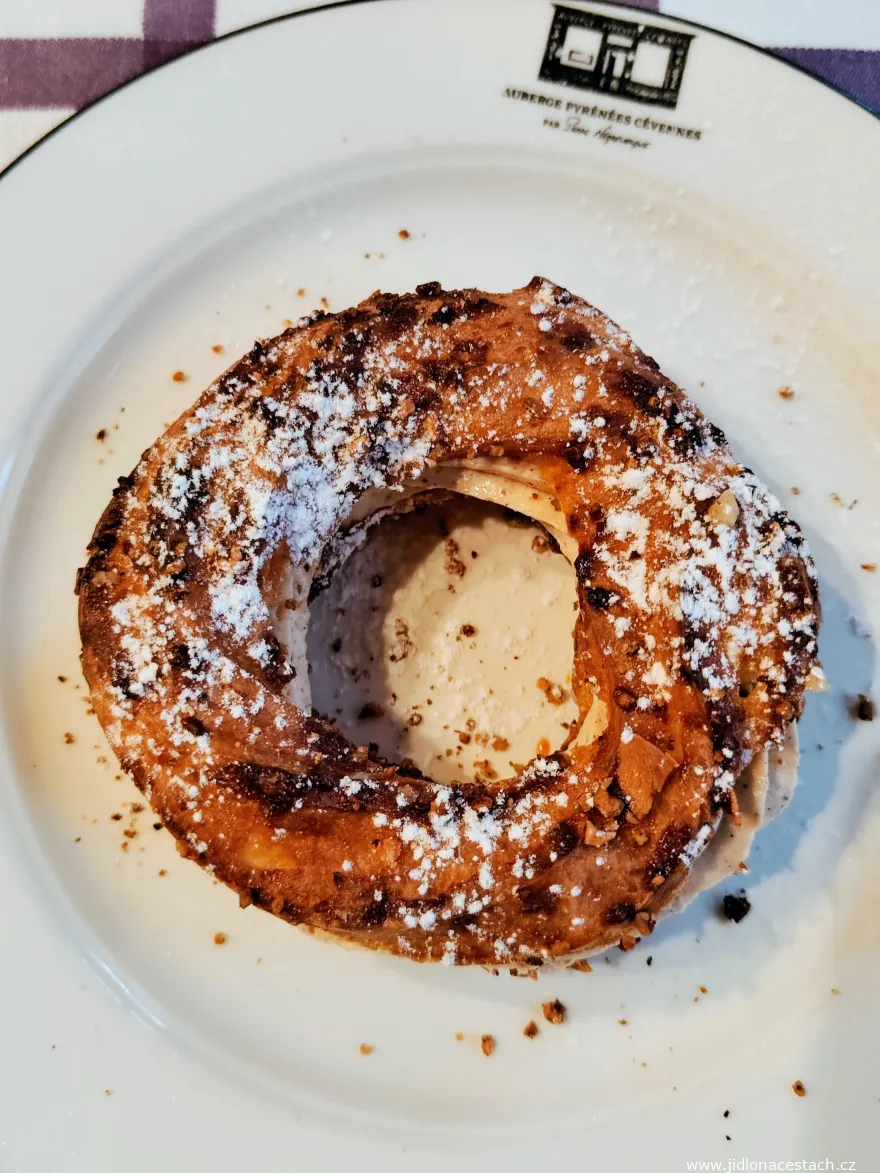
Paris-Brest is a choux pastry ring sprinkled with flaked almonds, sliced horizontally and filled with a hazelnut praliné cream - one of the great classics of French cuisine. Its shape is meant to suggest a bicycle wheel, its name the route of the race. And the name is the trickiest thing about the whole ring.
Named After Two Cities, Born in a Third
Paris-Brest-Paris was a cycling race founded in 1891 by journalist Pierre Giffard to get the French onto bicycles; it still runs today, though only as an amateur long-distance ride held every four years. The dessert takes its name from the route: from Paris to Brest in Brittany and back. But it was not created in either of the cities it is named after - it was baked in Maisons-Laffitte, a town twenty kilometers from Paris that the race passed through. So a guide selling it to you as a Paris specialty is only describing the starting line.
The version you hear most often comes from the pastry shop that still lives off it: Louis Durand had his shop right on the route, Giffard lived in the same town, and around 1910 he ordered a dessert shaped like a wheel. The Durand pastry shop in Maisons-Laffitte is still there, run by the founder's great-great-grandson. French sources, though, give different years and different names, so the date rests on family tradition rather than on any archive. What is documented is the sequel: when Durand's son tried to patent the recipe in 1930, the office turned him down - by then Paris-Brest was being baked all over France and belonged to everyone. The monument to the race had passed into common ownership before its author got around to signing it.
Choux, Praliné and Almonds
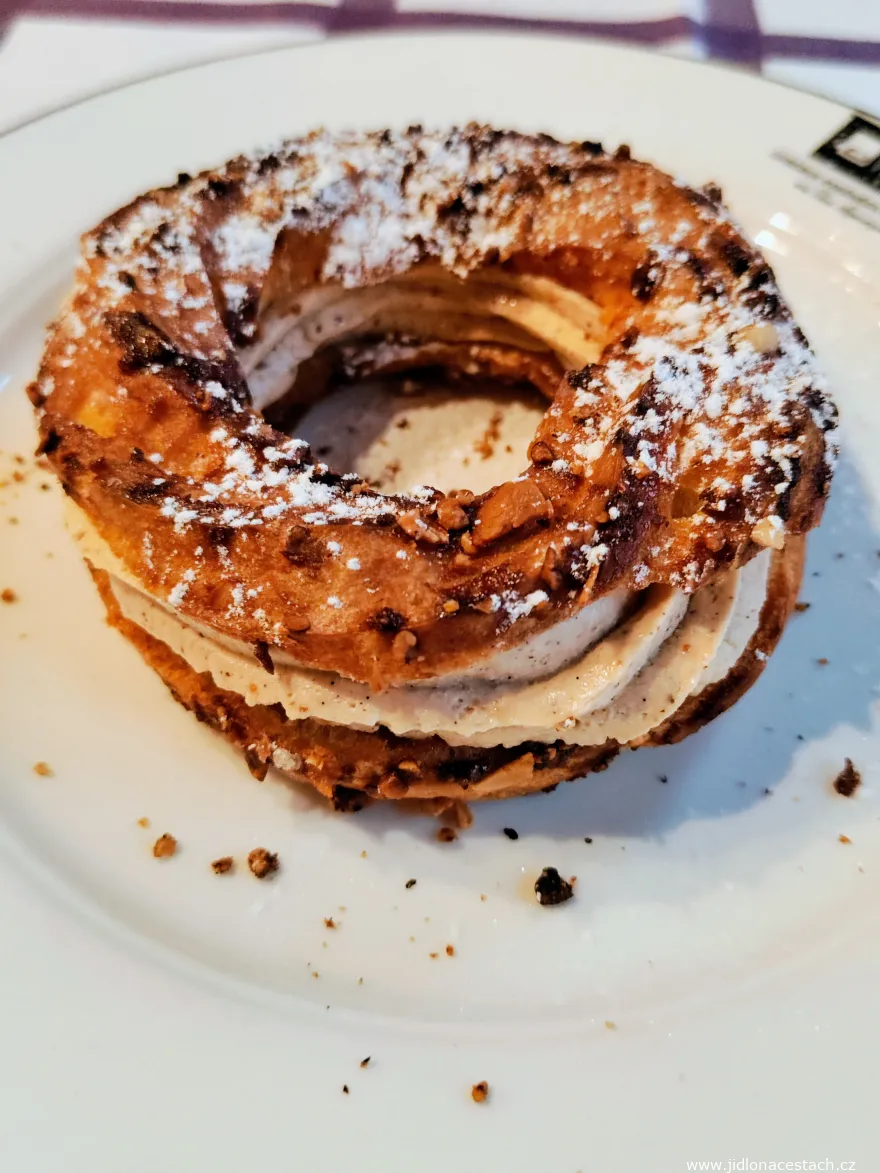
The pastry is pâte à choux, the same dough French pâtisserie uses to build the éclair and profiteroles. The star, though, is the mousseline pralinée cream: pastry cream whipped with butter and with praliné, a paste of caramelized sugar and hazelnuts or almonds. It is the praliné that turns a ring of pastry into a Paris-Brest - without it you'd be left with a big hollow shell waiting for someone to fill it.
In France you can get one in practically any pastry shop, in two sizes: an individual portion around ten centimeters across, and a family ring for six to eight people. It is eaten as a cake with coffee or to round off dinner, and among the national classics it sits alongside the éclair and tarte Tatin; in Québec they fill it their own way, with a maple syrup cream. You can tell the quality by the cream: it should be light and smell of toasted nuts, not sit on your tongue like a wall of butter - cream that is over-sweet or heavy is a sure sign of a rushed job. At a bakery a piece costs roughly 6-9 EUR; restaurants tend to be pricier, but they often assemble it to order.
A Dinner Menu Just off République
I ate my Paris-Brest in Paris, at Auberge Pyrénées Cévennes, a long-established restaurant in the eleventh arrondissement near Place de la République (see Where to Eat in Paris), which the Michelin guide lists as a Bib Gourmand. It arrived as the finish to the dinner menu, freshly assembled to order rather than pulled out of a display case. The flaked almonds crunched, the pastry underneath stayed light, and the cream tasted of toasted hazelnuts and caramel, just sweet enough not to cling to the roof of my mouth. It was magnificent. The portion came as part of the dinner menu at 12 EUR; anyone who doesn't need a tablecloth and a Michelin listing can pick one up at a pastry shop for half that. Even at that price, I had no complaints.


