Swiss Wine
Out of a hundred bottles of Swiss wine, roughly one leaves the country. The Swiss drink the rest themselves - it works out at around thirty-five liters a head a year - and since their own harvest isn't enough, they import almost twice as much on top of it.
Swiss wine is a rarity out of necessity: the whites are mostly Chasselas, the reds Pinot Noir, grown on terraces above the lakes - and outside Switzerland you'll hardly find it anywhere. The Swiss aren't keeping it from the world on purpose. There simply isn't any left.
Chasselas: The Variety Valais Calls Fendant
The whites are Chasselas country - a variety the world barely knows, because everywhere else it plays second fiddle: in France the Pouilly-sur-Loire appellation keeps its last few dozen hectares in the shadow of more famous French wines, and in Germany it goes by Gutedel without ever making much of a career. Guidebooks long claimed it had arrived from Egypt or Constantinople; geneticists have put both legends to rest (the table grape grown today in wine-growing Turkey is quite a different variety) and they now look for the cradle of Chasselas on the shores of Lake Geneva - the variety is most likely native to the very place where it's drunk today. In Valais the same wine is sold under the name Fendant, and it's a name you can feel with your fingers: a ripe berry should split in two (French fendre) without squirting juice. Not many varieties are named after the way they crack.
What DNA Revealed About the Oldest Variety in Valais
The country's oldest red is Cornalin from Valais, its great source of pride, documented as early as 1313 - back then, though, under the name Rouge du Pays, "the wine of the land". It was renamed the catchier Cornalin only in 1972, by a local oenologist who found the old name hard to sell. The new name caught on; the certainty about its origin lasted only until the first DNA analysis: Cornalin is a cross of two varieties from the Aosta Valley - in its native Italy it has since died out, surviving only in exile, on the slopes of Valais. Not that the Swiss can't breed their own: the red varieties Gamaret and Garanoir came out of a research station by Lake Geneva in 1970 - and stayed, naturally, mostly at home.
Why You Can't Get Swiss Wine and What to Drink It With
The negligible exports have a prosaic explanation: the slopes. The vineyards here cling to terraces - the ones in Lavaux above Lake Geneva, today a UNESCO site, have been stacked up since the Middle Ages - and no machine can climb most of them, so the work is done by hand all year round. A bottle of decent Chasselas therefore starts somewhere around twelve francs, and the average winery is so small that it sells the harvest to the neighbors before it could even fill out the first export form - like a Moravian winemaker who sells his best vintage straight from the cellar and never makes it onto a shop shelf.
It's drunk young, chilled and most often with cheese: Chasselas is the traditional companion to fondue and raclette, because its gentle acidity lightens the melted Swiss cheeses.
Nine Francs for a Grand Cru
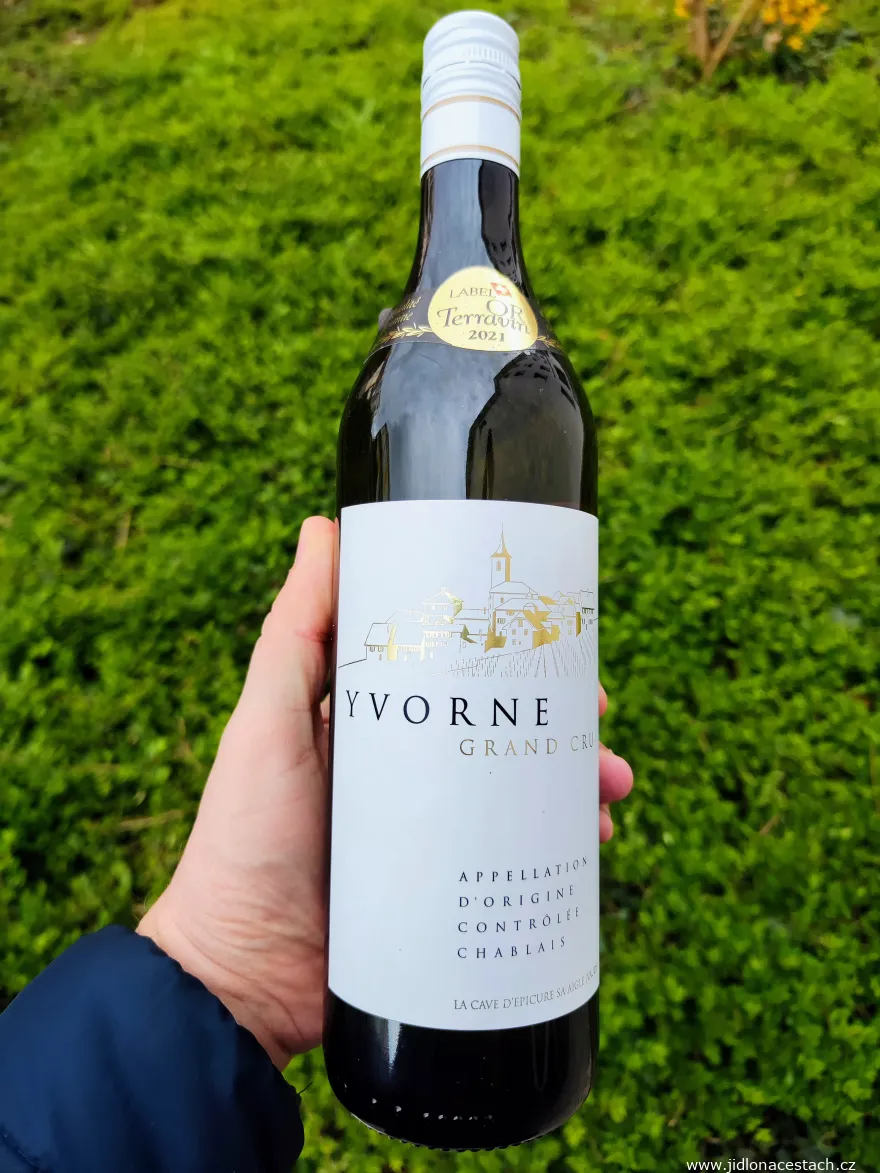
My Swiss wine was a white Yvorne Grand Cru from the Chablais area in Vaud - Chasselas, in other words - bought during a short stay in the country; the Vivino app ranked it among the 25 best Swiss wines from this variety. It was light and dry, with a gentle acidity and a mineral note at the finish - a wine that gets in the way of neither the food nor a second glass. The bottle cost 9 CHF (9 EUR), less than a decent Chasselas usually goes for.


