The Blue Market in Varna: The Market by the Clock and Grandmothers' Alley
On Google Maps it goes by The Blue Market, Bulgarians call it Синия пазар, and I photographed it with an orange roof. It took me a long time to spot any blue there - I finally spotted it on a plastic crate of mint at one of the grandmothers' stalls.
The Blue Market (Синия пазар in Bulgarian, officially Пазар Часовника) is a small municipal market in the center of Varna, by the cathedral and the town clock: tables of fruit and vegetables inside, and a sidewalk around them where grandmothers sell what their gardens have given them. Compared with the farmers market, it is a small operation and a short stop on any trip. But if you want to see what Bulgarian cooking works with in the fall, you have a better vantage point here than in the biggest market hall in town.

Why the Market by the Clock Is Called Blue
Officially the market is named after its neighbor: Пазар Часовника, the market by the clock, after the town clock by the Dormition of the Mother of God Cathedral, a short way from Ruse Street where the tables stand. Almost nobody uses that name except the operator, the municipal company Pazari, which runs some ten marketplaces in Varna. According to the operator, the Blue Market nickname came out of a 2009 modernization, when new blue polycarbonate tables replaced the old stalls - there is no legend behind it, just the color of the plastic. The year comes from a single source, the Pazari company itself; classified ads and the local papers, which barely ever use the word Часовника, back up the idea that the name comes from the tables and not from history.
In Varna the Blue Market is one of the smaller ones. The city's main market is Централен, the old Kolhozen pazar, home to the farmers market and, in a hall of its own, the fish market; Chataldzha is known for its flowers and the rest are neighborhood markets. The one advantage the Blue Market has over them is its location: it sits on a car-free stretch of street between the cathedral and the clock, so you run into it on your way somewhere rather than having to seek it out.
The Growers' Tables and the Grandmothers' Sidewalk
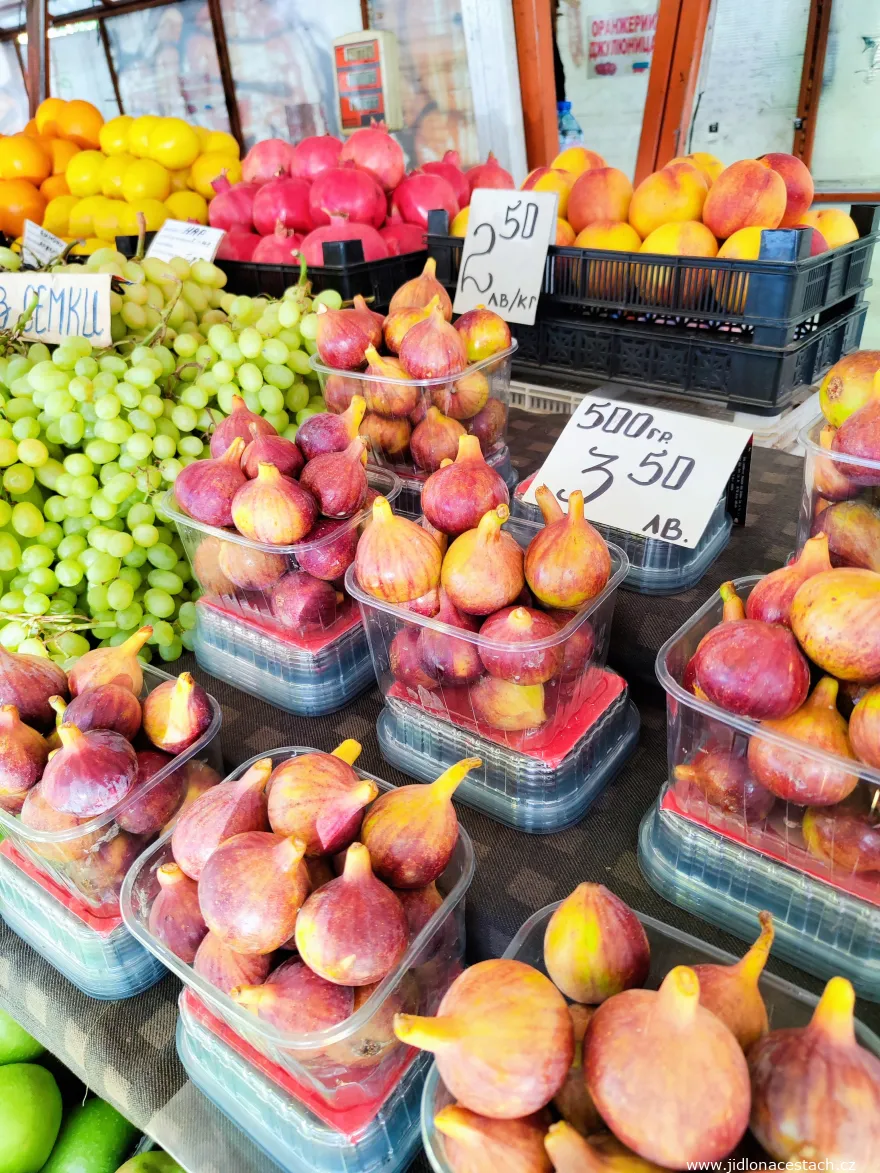
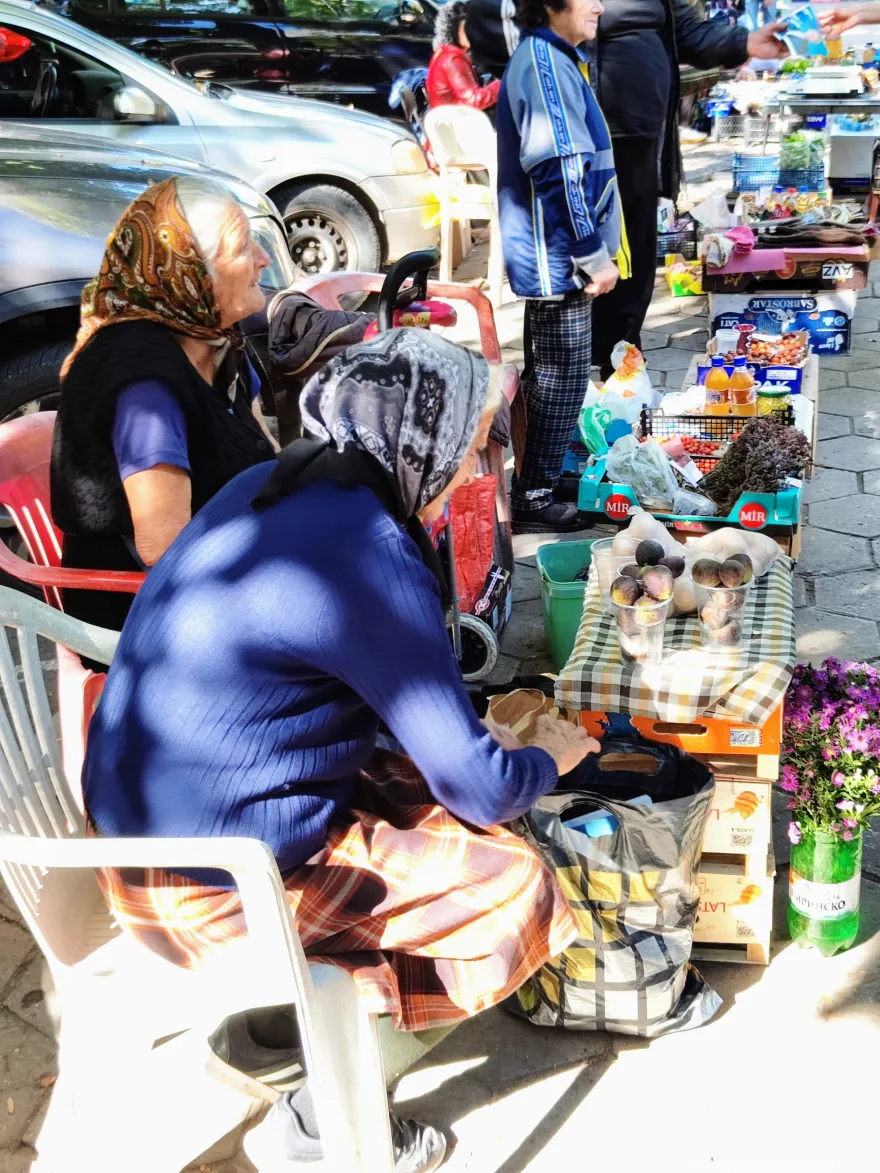
The tables carry whatever has ripened: grapes, figs, pomegranates, tomatoes, walnuts - and, going by the operator's list, clothes, souvenirs, honey and boiled corn as well. Some of the sellers are growers themselves, производители, who pay less for their spot than resellers do. The livelier scene, though, is on the sidewalk around it: that is where the grandmothers who have no table, only a garden, lay their goods out on folding stools and in plastic cups. Eggs, bunches of herbs, chrysanthemums, shelled walnuts, nettles, fruit from the tree behind the house. It is the same economy as an "Eggs for sale" sign on a village gate, only moved into the center of a regional capital. Bulgaria even has a word for it, бабите, the grandmothers, and it takes them seriously: in 2024 the agriculture ministry wanted to let only registered farmers onto the farmers markets, and a consumer group stood up for the grandmothers, arguing that their plastic cups threaten nobody and that a ban would only move the selling one street over. I never did find out what status the ones in Varna have.
Hinap, the Fruit Foreigners Call Chinese Dates
The fruit that kept bringing me back to that sidewalk is one I had been calling by the wrong name all along. I called them Chinese dates, the way most other languages describe them; Bulgarians have their own word, хинап, colloquially dzhindzhifka, and botany calls it jujube, Ziziphus jujuba. Hinap is the fruit of a tree that wants hot dry summers and stony ground, so in Bulgaria it grows in the south and along the coast - the area around Varna is one of the main regions - and its season runs from late September to late October, exactly the weeks I was there. The unripe fruit is greenish yellow, crunchy, and tastes like a small apple with an astringent finish; ripe, it turns brown, wrinkles and goes as sweet as a date, which is where the foreign name comes from. If you want sweet, reach for the brown ones; if you want something to crunch on as you walk, take the green ones. Alongside the hinap the grandmothers put out whatever else is in season: freshly shelled walnuts, cheapest at this time of year, and nettles, which Bulgarians pick mainly in spring and which by October are more of a sideline.

A Bag of Hinap from Ruse Street
I came to Varna in October and the main aisle of the Blue Market was half empty: the market's season had ended with the summer, the hinap season was just starting. At the few tables that were occupied I bought figs and grapes; the sellers spoke no English and it made no difference, the prices were on handwritten cards - figs by the half kilo for 3.50 BGN (1.80 EUR) - and the rest was settled with a finger and a smile. Inside, none of it struck me as anything special. Outside was a different story. The grandmothers sat on plastic chairs at folding stools with checked cloths, a vase of chrysanthemums stood among the cups of figs and onions, they chatted away to one another and lit up at every sale. I went back to them several times as I wandered around Varna, and every time I came away with at least a bag of unripe hinap, 100 g for 1 BGN (0.50 EUR). If the market were named after the thing that kept bringing me back, it would be called neither Blue nor the Clock. It would be called Grandma's.
The Blue Market


