Varna Fish Market: Turbot, Bonito and Greek Horse Mackerel Under One Roof
Bulgaria has almost four hundred kilometers of coastline, and its people eat around five or six kilos of fish a year, one of the lowest figures in the European Union; the average Portuguese eats more than sixty. Fish are still caught in the Black Sea, they just mostly end up somewhere other than a Bulgarian plate. The place to see that paradox up close is in Varna, around the corner from the fruit and vegetables.
The Varna Fish Market (Bulgarian: Рибен пазар Варна) is the city's only fish market: a covered hall on the edge of the central farmers' markets, where ten to twenty sellers offer the Black Sea catch, freshwater fish from inland and imports from Greece - everything Bulgarian cuisine has to work with on the days it does turn to fish.

The Market You Find by Its Neon Sign
If you turn up at the farmers' markets in Varna expecting your nose to lead you to the fish, you'll be disappointed: the hall is tucked in between a few buildings at the edge of the market grounds, and in the September heat there was nothing to smell at all. A more reliable guide is the neon sign with a blue fish and the words РИБЕН ПАЗАР ВАРНА above the entrance. The market as a whole is officially called Централен, but people in Varna still say Колхозен пазар, a name that clearly goes back to the days of collective farms; the fish hall is the youngest part of it. Pazari, the municipal market company, built it in 2010 for 300,000 BGN in place of the old building, which was on its last legs - so don't expect a picture-postcard harbor market here, inside it's ice, crates and freezer cabinets. The nets and the boats stayed in the port; only the fish makes it this far.

What's on the Ice: Bonito, Turbot and Greek Horse Mackerel
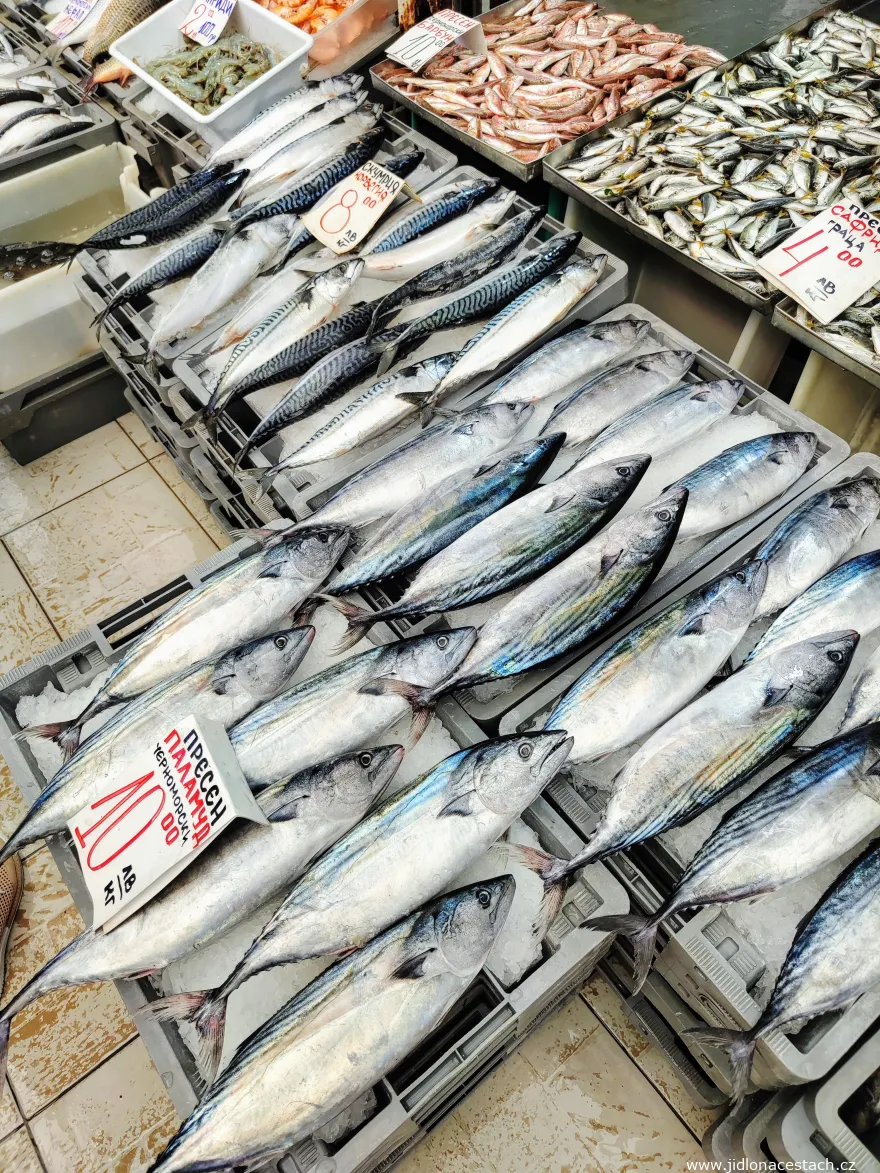
You can read your way around the place without buying a thing, the labels are enough. The most common one says паламуд черноморски: palamud is the Atlantic bonito, a small relative of the tuna that comes through the Bosphorus from the Sea of Marmara in spring, fattens up in the Black Sea over the summer and heads back in the fall - and it's that fatty fall palamud that Varna and Istanbul both wait for all summer. Next to it is kalkan, the turbot: flat, knobbly-skinned and the priciest thing in the hall. It's the one fish Turkey, Romania and Bulgaria can agree on: the ban on catching it runs on the same dates in all three countries, from April 15 to June 15. On the next counter there's a label that dents the seaside city's image a little: safrid, the horse mackerel, with a note that it comes from Greece. It isn't the only one: farmed Greek fish keeps arriving in Bulgaria in bigger and bigger quantities, imports of seabass have grown sixfold in ten years, while Bulgaria exports its best wild catch; the Bulgarian press even claims that some of it comes back through Greece with a Greek label on it.
What to Do with Fish from the Market
Nobody in Bulgaria gets too inventive with fish from the market. The little fish known collectively as tsatsa are fried whole and eaten by the sea with a beer; palamud goes on the grill in steaks, a few minutes a side; whatever is left over goes into fish chorba. Kalkan is fried and it's a special-occasion dish, as the bill will tell you. The prices on the labels are per kilo, and don't ask about kalkan in May: during the ban you won't get it legally. If you only buy fish once a year and it's the carp we eat at Christmas back home in Czechia, you'll find a kindred spirit here: Bulgarians have their own fish holiday on St. Nicholas Day, December 6, and they eat carp then too - freshwater, stuffed, from a pond, not from the sea. A quote attributed to Charles Dickens calls Varna the sea capital of Bulgaria; the fish capital it isn't, and the consumption figures agree.

An Afternoon Among the Crates
I got to the fish market in September, just after two in the afternoon, once I had done the rounds of the fruit markets in Varna. There were somewhere between ten and twenty sellers, each at their own crates of ice, and even in that heat there was nothing to smell but the cold coming off the cabinets. I wasn't there to shop: fish from a market belongs to someone who has somewhere to take it that evening, and all I had on me was my phone, so I came away with the labels instead. Black Sea palamud was 10 BGN (5.20 EUR) a kilo, Greek safrid 4 BGN (2.10 EUR), Black Sea shark - the little spiny dogfish that Bulgarians fry like a schnitzel - 15 BGN (7.80 EUR), and kalkan 35 to 40 BGN (18.20 to 21 EUR), the priciest thing in the hall.


