Aveluk: Wild Sorrel Dried in Braids
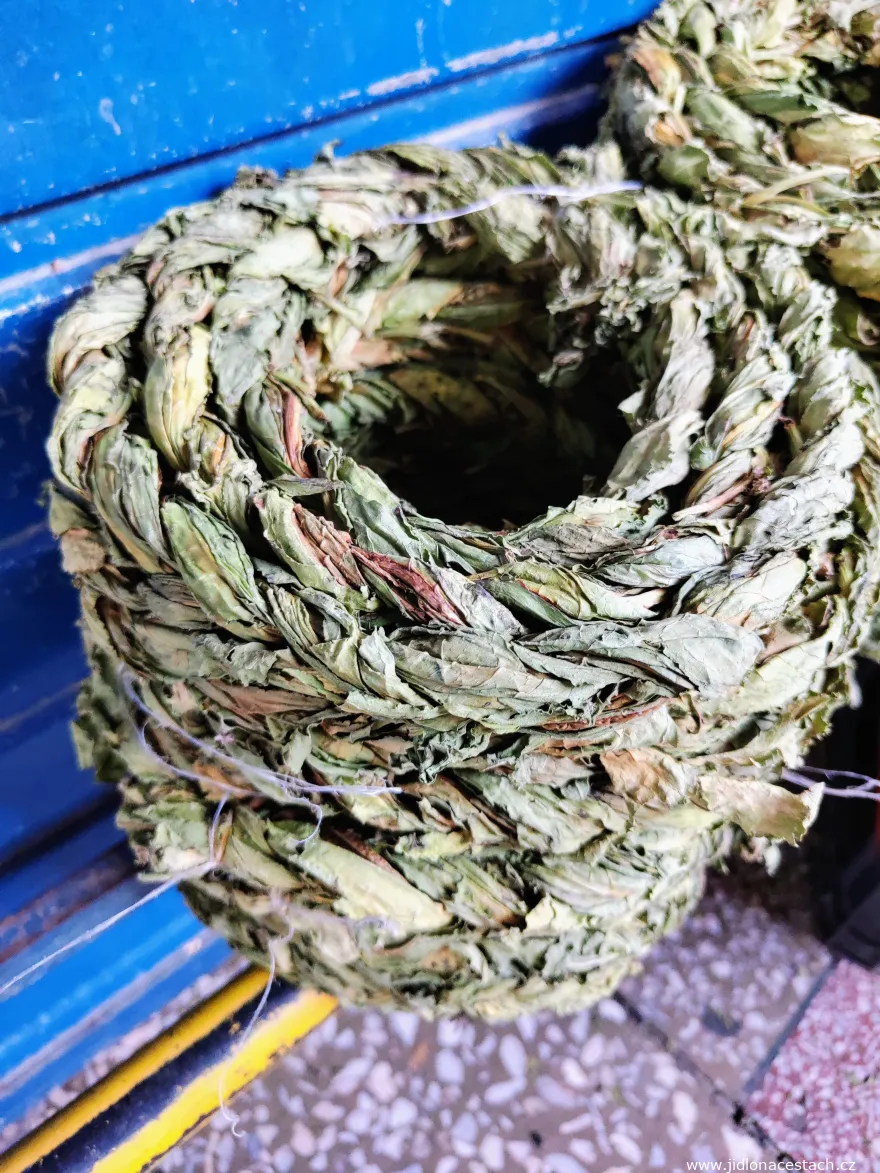
Along the field edges behind every Czech village grows a tall plant with wavy leaves and a rusty spike of seeds that nobody ever picks, because it's a weed. Gardeners pull it out and botanists call it curly dock. In Armenia that same plant is gathered in the mountains in spring, dried, braided into ropes as long as a grown man and sold at the market next to cheese and dried apricots.
Aveluk (Armenian: ավելուկ) is dried wild sorrel that Armenian cuisine soaks before cooking and then turns into a salad with walnuts and garlic, or into a soup. A weed that finally got an invitation to the table.
Three Languages, One Word for a Sour Herb
The name is like the plant itself: it doesn't stop at borders. Armenians say aveluk, in Azerbaijan the sorrel goes by əvəlik, and around Kars and Erzurum in eastern Turkey the villages call it evelik or avilik. Three countries that rarely agree on anything in the Caucasus agree on one word here, and nobody knows who had it first. Armenian dictionaries trace aveluk to the old root avel, to be left over, to be in excess - which fits a weed almost too well. The plant and the habit of drying it for winter are shared across the whole Armenian Highlands; what you won't find documented anywhere else in the region are those long braids. Kars dries it in bundles, Georgia would rather grind its wild greens fresh into pkhali paste, and the Artsakh zhengyalov hats buries sorrel in a flatbread among twenty other herbs. Aveluk is the only one in the family that plays solo.
What Really Goes On Inside the Braid
People like to write that aveluk ferments in the braid and that the bitterness turns all by itself into a gentle sourness. Armenian sources make no mention of fermentation: the braid is a plain winter store, dried in the shade and the wind, and the flavor is the kitchen's doing - an overnight soak, a boil and a thorough squeeze. The history here has no date and no founder, but it does have a calendar. The Armenian Apostolic Church keeps long fasts, and aveluk salad is one of the main dishes in them: a plant nobody planted stood in for meat and cheese at a time when both were off the table. Spring supplies the leaves, winter eats them. Nobody puts a date on when a fasting stopgap became a market specialty.
How the Braid Ends Up in a Bowl
Nobody eats the braid as it comes. The dried leaves are as tough as tobacco and no one would touch them raw; a night in water softens them, and after boiling they get drained and wrung out almost dry. Only then come the onion softened in oil, the garlic and the chopped walnuts, which give the sour leaves richness and body. Anyone who has ever soaked dried mushrooms back home knows exactly how this goes - and knows that the finished dish tastes of the forest, not of water. The base of the salad is onion, garlic and walnuts; lemon juice or pomegranate molasses are a restaurant flourish that ordinary home recipes never mention. The soup takes the same route, only lentils step in for the walnuts.

On a menu, aveluk hides among the salads, arrives cold and usually counts as one of the starters you eat with torn pieces of lavash. Outside the fasts it's a side dish to meat; during them, the main course. If you're taking a braid home from the GUM Market, expect it to last you the whole winter, and never drop it straight into the pot: without the overnight soak it stays tough and bitter, and that bitterness is exactly why nobody eats aveluk raw.
The Braid Salad at Tavern Yerevan Riverside
I ate aveluk salad in Yerevan at Tavern Yerevan Riverside by the Hrazdan River (see Where to Eat in Yerevan), where I ordered it as a starter to go with tjvjik. What arrived was a small bowl of dark green matter with crushed walnuts on top. The leaves were soft and fibrous, the taste sour but nothing like sorrel soup - deeper, more of hay and earth, the garlic only spoke up after a moment and the walnuts rounded the whole thing off. For a Czech it's a flavor from somebody else's table, odd on the first bite and perfectly clear by the third. The dish cost 1,200 AMD (2.80 EUR). If this is a weed, it's a very well brought-up one.


