Basturma: Cured Beef in a Spiced Crust
On the counter it looks more like a brick than like meat. A long dark block coated in a centimeter of rusty-red paste that could pass for dried plaster from a distance, and only when you cut the first slice does the dark red beef appear inside. Anyone seeing basturma for the first time has one question: do you eat the crust, or cut it off? You eat it. That crust is exactly what turns dried meat into something Armenian cuisine counts among its greatest delicacies.
Basturma (Armenian բաստուրմա) is beef that's salted, pressed under a weight, left to dry and finally coated in a paste of fenugreek, paprika and garlic; it's eaten cold, cut into thin, almost translucent slices.

Where Basturma Is Cured and What It's Called Elsewhere
The Armenian Wikipedia files its basturma entry under the category "Turkish words". That's unusually candid for a national delicacy, but it fits: the word comes from the Turkish verb bastırmak, to press down, and it describes the first step of the process, when the salted meat sits under a weight for several days. So basturma is not an Armenian invention but a dish shared across the whole former Ottoman and Caucasian world - Turkish cuisine has pastırma, centered on Kayseri and with a protected designation of origin, the Bulgarians have pastarma, dried without any spice paste and often made from pork, and Egypt knows basturma thanks to the Armenian immigrants who brought it there. Turkish pastırma from Kayseri is essentially the same dish: the same beef, the same salt and weight, the same fenugreek paste, only in Turkish it's called çemen and every butcher mixes it a little differently. What sets the Armenian version apart from Bulgarian pastarma is precisely that red crust.
A Horse's Saddle and Three Origin Legends
At least three stories circulate about who came up with basturma, and every nation in the region has its own. The Turkish version leads to horsemen from Central Asia who supposedly salted the meat, tucked it under the saddle and let horse sweat and the rider's weight cure it over the course of a campaign; the Greek version leads to the Byzantine dried meat paston, the Armenian one to mountain pastures and homegrown spices. The only documented record comes from a different direction: in the 17th century the traveler Evliya Çelebi describes a beef pastırma from Kayseri, seasoned with cumin, that the city sent to Istanbul as a gift. The saddle is a legend, and nobody knows who first put meat under a stone. The more interesting admission comes from the Armenian Museum in Moscow: the Turks came up with the technique, the Armenians perfected it when they swapped horse sweat for kitchen salt and added mountain spices. In Ottoman cities Armenian butchers were among the acknowledged masters of the trade, so the argument over who got there first is between sides that shared the same pot for centuries.
What Chaman Is and Why the Crust Stays On
The heart of basturma isn't the meat but the chaman. That's the Armenian word for fenugreek and at the same time for the paste made from its ground seeds with paprika, garlic, cumin and water, spread over the dried meat in several layers. Fenugreek gives basturma its bittersweet, curry-like smell and at the same time acts as a jacket that protects the meat while it dries a second time in the air; the whole thing takes several weeks and recipes disagree on the numbers. It does here what caraway does on a roast back home: without it you'd still have meat, just not that dish. Beef round or loin is the standard, horse and buffalo a rare exception, and pork basturma is unheard of in Armenia. The European cousin is Italian bresaola rather than prosciutto: also beef, also dried whole, just without the crust you can smell all the way down the counter.
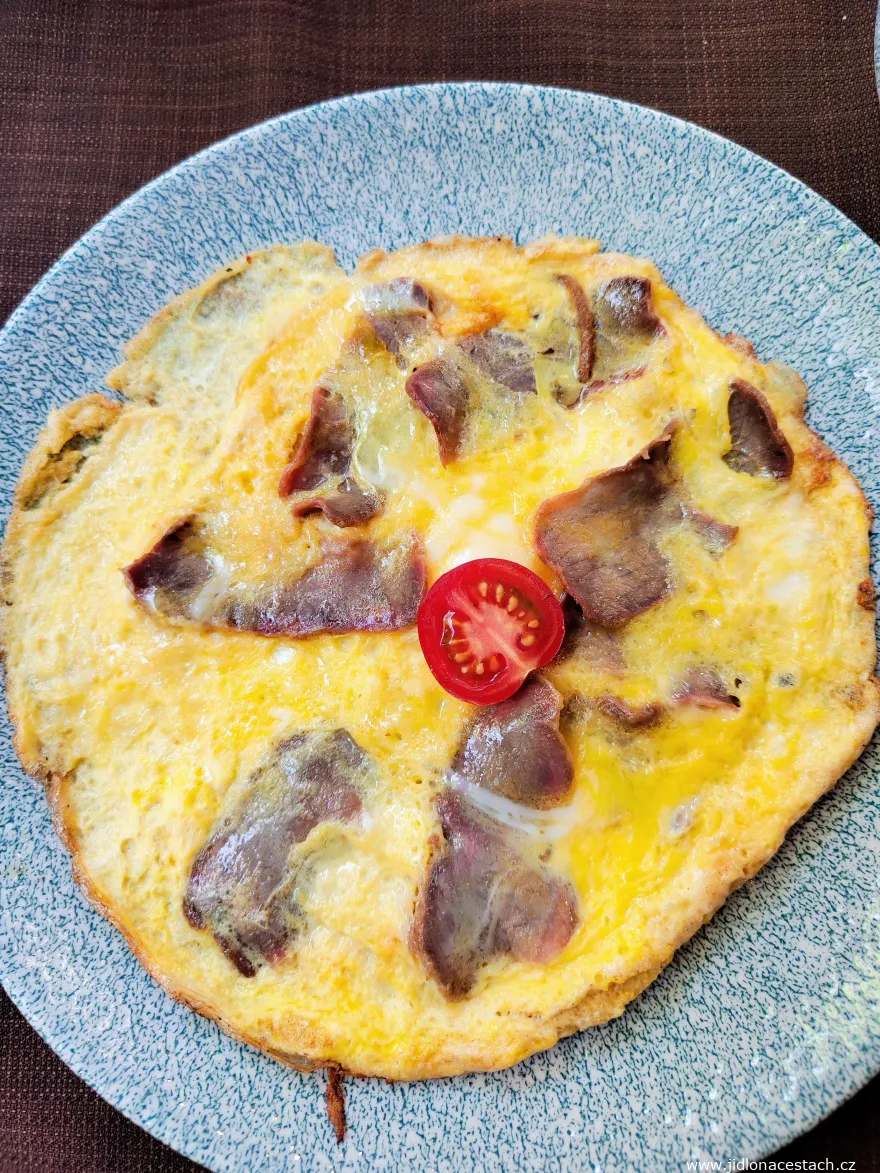
Basturma comes to the table as a starter, in thin slices with tomato and herbs, wrapped in lavash or served with vodka; at Yerevan's GUM Market the vendors slice it at the counter right next to sujukh sausage. You don't trim the chaman crust off the slice - most of the flavor is in it. And there's a second thing a tourist only finds out in the morning: Armenians bake basturma into eggs, and a basturma omelet is a regular item on breakfast menus - to my mind the best way to get to know it, because the hot egg draws an aroma out of the crust that a cold slice keeps to itself.
Basturma for Breakfast in Yerevan
I buy basturma in Armenian shops and at the GUM Market, but I like it best in an omelet, and that one I ate in Yerevan, for breakfast at Lavash Restaurant (see Where to Eat in Yerevan). The slices were baked right into the eggs, the heat loosened the crust, and the meat was salty and firm, like something smoked. The basturma omelet cost 2,000 AMD (4.80 EUR). It tasted like ham and eggs that someone had finally reminded of where they came from.


