Baklava Gavar: Armenian Honey Baklava from Lake Sevan
The town on the western shore of Lake Sevan has been through three names in the past two centuries. Settlers from Bayazet founded it as Nor Bayazet, the Soviet era renamed it after a revolutionary, and since 1995 it has been Gavar again, after the old name of the whole district. Locals called it Kyavar the whole time, and it is that colloquial form that ended up in the official name of what the town is famous for.
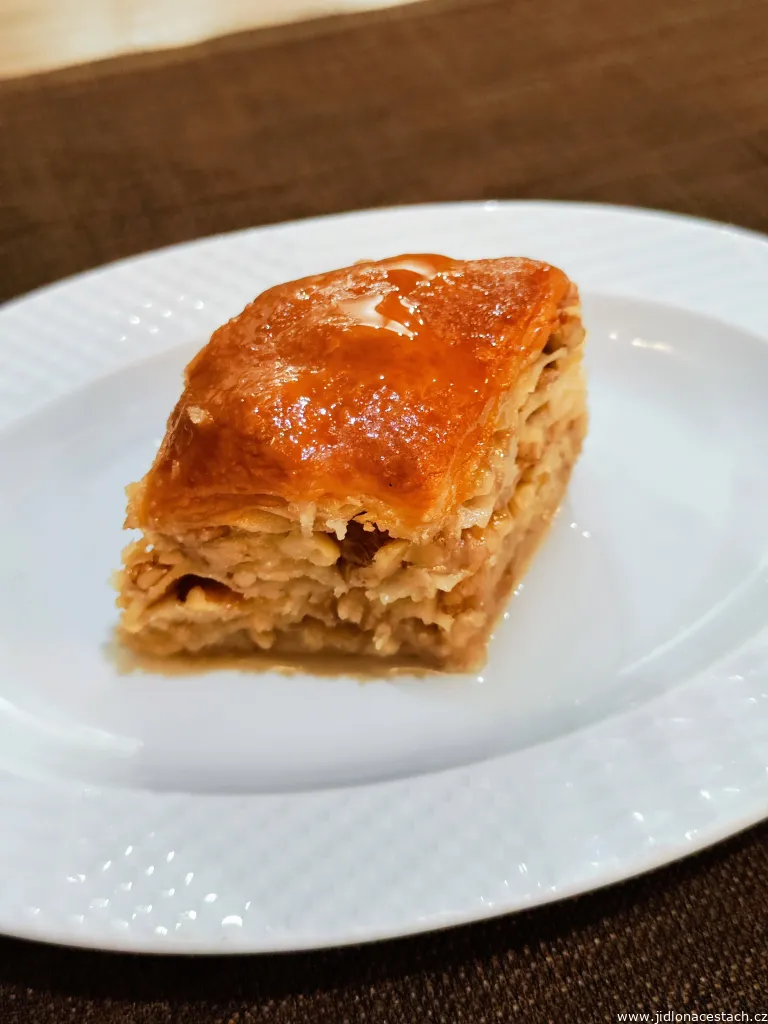
Baklava Gavar (Armenian: Քյավառի փախլավա) is a layered honey pastry of Armenian cuisine: twenty-two to twenty-five sheets of thin dough, crushed walnuts with sugar and melted butter between them, and hot honey on top, left to soak all the way down to the bottom. The town changed names as history dictated; the baklava kept its own and picked up a second one - after the old home it is also called Bayazet baklava.
Why Armenians Say Pakhlava and Who Baklava Belongs To
Armenians don't say baklava, they say pakhlava, and Gavar has a legend about where the word comes from: noblewomen in the Bayazet fortress supposedly cried out "Pah, lava!" at the first taste - roughly "wow, that's good" - and the pastry had its name. Linguists don't believe the legend, but they have nothing better: Turkic, Mongolic and Persian theories still compete over the origin of the word baklava, and the Mongolic one circles back to Turkish in the end anyway. Baklava as such is shared across the whole former Ottoman world: Turkish cuisine fills it with pistachios and drenches it in syrup, the Greek version goes for walnuts and cinnamon, the Azerbaijani one colors it with saffron, and the Iranian one smells of rose water and cardamom. Georgia bakes it too, but its own recipes honestly label it as Turkish, which in this region is a rare degree of candor. Baklava Gavar, by contrast, belongs to one town and its surroundings, and it makes do with walnuts, butter and honey - no spices, no syrup.
Two Hundred and Forty Families from Bayazet
The story has a documented beginning. In 1829 and 1830, two hundred and forty families came to the shore of Lake Sevan from the town of Bayazet, today's Doğubayazıt in eastern Turkey, and founded Nor Bayazet here. They brought the recipe with them, so the story goes, hence the second name. For a long time it was food for wealthier households, because three kilos of walnuts, two kilos of butter and two kilos of honey for a single tray were beyond the reach of a poor family, and it was baked for weddings and christenings. In March 2022, the Armenian government added the tradition of making it to the national list of intangible cultural heritage, where it keeps company with Gavar gata - not the UNESCO list, which has no baklava on it yet, although Turkey and Azerbaijan have filed a joint application and Armenia is preparing one of its own. The one thing in the whole story that can't be documented is that very journey of the recipe from Bayazet: it rests on oral tradition, and another, independent tale runs alongside it, about Armenian merchants who came across baklava on the trade routes.
The Honey Goes On Hot
In Gavar the dough doesn't come out of a box as ready-made phyllo. It is made with a starter, divided into a couple of dozen balls, and each one is rolled out into a thin sheet; the layers alternate butter and walnuts with sugar, the bottom sheet gets only oil, the top one an egg wash, the tray is cut into diamonds while still raw, and it spends about an hour in the oven. Then the main character arrives. The honey goes onto the baklava hot, because only hot will it spread and soak between the layers down to the last drop - not for the sake of shelf life, as you sometimes read, but so the bottom sheet doesn't stay dry. One Gavar baker who has been doing it for over forty years says baklava doesn't bake itself, it is teamwork: one woman makes the dough, another bakes, a third layers it, and the women from the neighborhood shell the walnuts.
Its festive origins still show: in Gavar no wedding or New Year's table is set without it. But it is sold by the piece too, from family workshops and little shops around town, for five hundred to seven hundred drams; in a Yerevan restaurant it costs twice that. Anyone heading to Lake Sevan is better off buying the baklava right in Gavar: it is cheaper, and it was baked by someone who has a whole family behind it.
Baklava Gavar at Tavern Yerevan
I ate Gavar baklava in Yerevan, at Tavern Yerevan Khorenatsi (see Where to Eat in Yerevan). A single diamond lay on the plate, the top sheet crackling and glossy with honey, and beneath it the layers merged into a dense walnut mass where dough and filling could no longer be told apart; the honey was dark and thick, without the sharp sweetness of the syrup I know from Turkish baklava. The portion cost 1,300 AMD (3.20 EUR).


