Blueberry Dumplings from Kohútka
Some guests call Kohútka, the ridge of the Javorníky mountains on the Moravian-Slovak border, before they set off. Not about a room - about dumplings: they want to be sure there will still be some left that day.
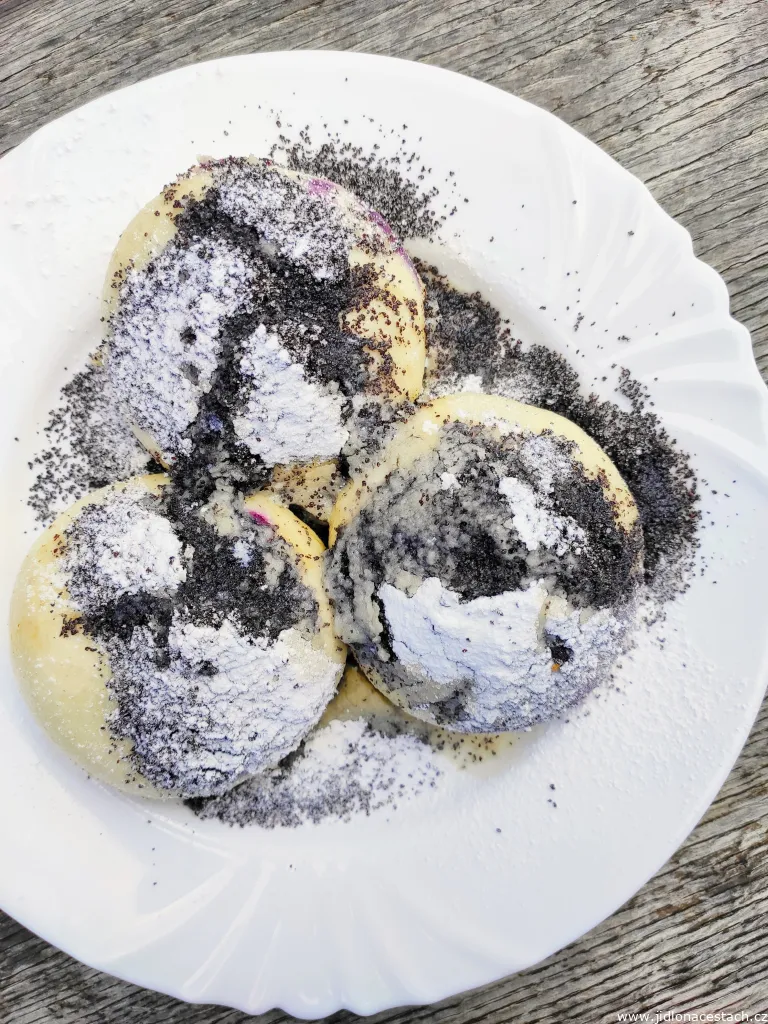
The blueberry dumplings from Kohútka are yeast-dough dumplings filled with blueberries, buried under poppy seeds and sugar and drizzled with melted butter - the mountain branch of the fruit dumplings that Czech cuisine counts among its national dishes.
And I'll admit right away that I won't be impartial here: the valley directly below the ridge holds Nový Hrozenkov, the village I was born in. I'd been looking up at Kohútka from my window long before I could read a menu.
Knedlík, Hafery and the Relatives over the Hill
The Czech word knedlík is an immigrant itself: it came from the German Knödel, derived from Knoten, a knot, and Czech took it in at the start of the 15th century. The loanword stuck in Jan Hus's throat so badly that he pushed for the Czech šišky, cones, instead - and lost. The word settled into Czech so thoroughly that the dumpling now stands as a symbol of the national cuisine. Moravian Wallachia, the corner of eastern Moravia I come from, adds a vocabulary of its own: the dialect here calls blueberries hafery, so back home the dumplings made with them also go by the local name haferové knedle.
Czech ownership of the fruit dumpling is more of a feeling than a fact: this is a dish shared across the whole of Central Europe, and the blueberry filling is its mountain version - down in the lowlands, plum, apricot and strawberry rule. Austrian cuisine knows the yeast-dough branch of the family as Germknödel; German sources themselves link its blueberry version to Bohemia. The potato and quark branch - Austrian Marillenknödel, Hungarian szilvás gombóc or Polish knedle z jagodami - is rolled in toasted breadcrumbs after boiling; the yeast-dough kind makes do with poppy seeds and butter. Just over the ridge, Slovaks cook čučoriedkové knedle from the same yeast dough as Kohútka: the border here runs along the ridge, not across the plate. The region itself, though, has historically been plum and plum-butter country, from dumplings to the big flat yeast-dough cakes we bake back home - blueberries are a matter of the high ridges.
Grandma's Blackboard and a Thousand Dumplings a Weekend
One family has run the mountain hotel on Kohútka for more than forty years, and the fame it enjoys today started with a plain sign: the grandmother of the woman who manages it now once chalked "homemade blueberry dumplings" on the board. These days the kitchen rolls out seven batches of a hundred and fifty by hand over a weekend, and in good weather the kitchen reportedly gets through as many as fifteen hundred - the owners have reportedly joked about renaming the restaurant after them. Grandma is eighty-four and still comes in to help in the kitchen. One thing has changed, though: the blueberries are no longer picked by hand on the hills around the hotel. Anyone who has ever filled a mug with blueberries as a child, as I did, knows how slowly they add up - and understands why the local pickers eventually couldn't keep up with demand and the berries are now brought in. The recipe is still Grandma's; the blueberries come from elsewhere.
How to Eat the Kohútka Dumplings
Nobody comes up to the ridge armed with nothing but a fork: in winter there's skiing on the slopes below the hotel, and in summer the ridge trail opens up views of the Beskydy mountains and the Slovak Fatra ranges. The dumplings are cooked all year round, and one portion counts as a full main course - if you're planning it as dessert after lunch, bring someone along to help. And a word of advice: if you want to be sure of your dumplings, call ahead to ask whether they're cooking them that day. You won't be the first to do it, or the last.
Dumplings above My Home Village
Kohútka has always been close to home for me. The portion they brought me in the hotel restaurant looked exactly the way its reputation promised: three big dumplings under a layer of poppy seeds and powdered sugar, drizzled with melted butter, for 239 CZK (9.60 EUR) - and it will comfortably feed two people. They don't skimp on the filling: the dough is light, the blueberries hot and so plentiful that a cut dumpling turns purple right out to the edges, and the poppy seeds and butter hold the whole thing together. After that there's nothing left to do but walk back down to the valley on a full stomach. The other guests that day were walking down from the mountains. I was walking home.
Horský hotel Kohútka


