Nraneh: Lamb Soup with Pomegranate Juice
The Armenian Wikipedia lists seven Armenian soups. Nraneh isn't one of them. The dictionary doesn't have it, nor does the cookbook I brought home from Armenia, and Armenian recipe sites say nothing about it at all. And yet I rank it among the best and most interesting dishes I ate in the country.
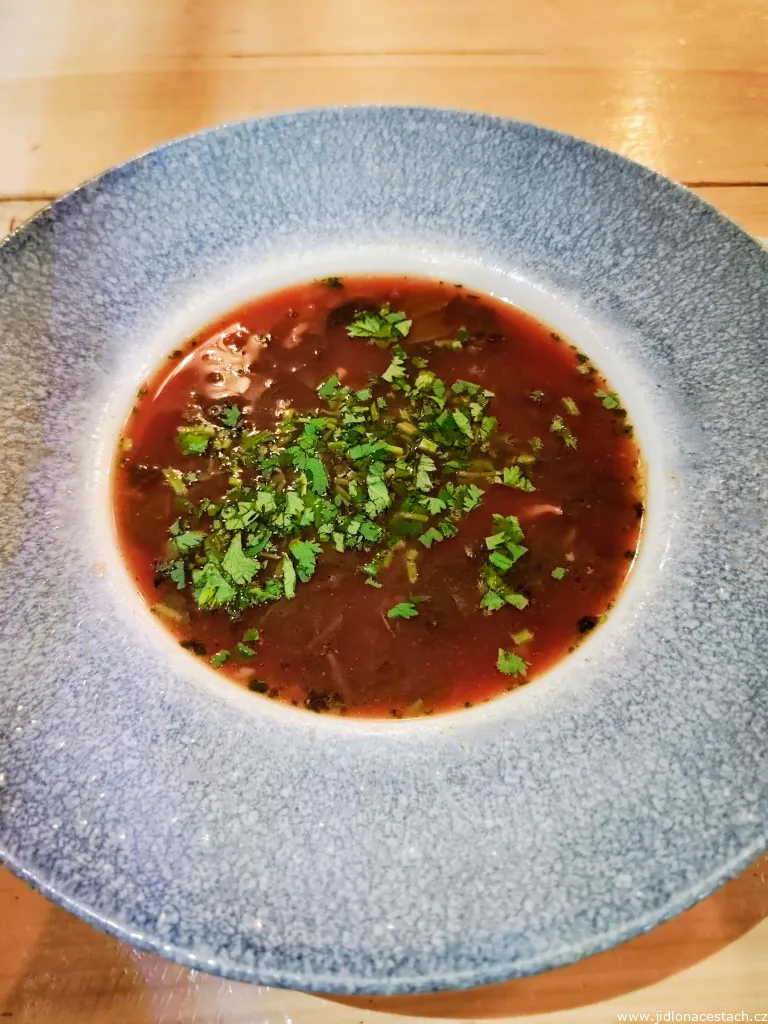
Nraneh (Armenian: Նռանե) is a lamb broth soured with pomegranate juice, with rice, peas and leafy greens, scattered with chopped cilantro - a dish you'll find on a menu of Armenian cuisine, not in a textbook.
A Name That Sounds Like a Girl's
At the root of the name sits nur, Armenian for pomegranate, and the ending -e turns it into the kind of pet form Armenian also gives to women's names. The only other place I could find the word Նռանե was as the name of a female character in a historical TV series. So nraneh means roughly "the pomegranate one", and in Armenian it reads more like a first name than a line on a menu. The idea itself is older and wider than the name, and the whole belt from the Caucasus to Anatolia knows it: Iranian cuisine cooks a sour pomegranate soup with meat as ash-e anar, thick, with beetroot and meatballs, Azerbaijan has nar şorbası with dried plums and saffron, and in kharcho, the pride of Georgian cuisine, pomegranate juice is just one souring agent among several, alternating with lemon and plum tkemali. The Armenian version doesn't line up exactly with any of them - a lamb broth and beet leaves instead of the root is something I haven't come across anywhere else in the region.
An Ancient Recipe Nobody Wrote Down
English-language sites about Armenian food all file nraneh under ancient Armenian recipes - in the same sentence, almost word for word, and not one of them says where it got that from. In Armenian, meanwhile, you won't find a thing about a soup by that name, which tells you plenty about just how "ancient" the dish is. What is documented: nraneh is served by two Yerevan restaurants, Lavash and Sherep, and both belong to the same restaurant group, Yeremyan Projects, which opened Sherep in 2017 and calls its own cooking original. Whether the group came up with the soup or pulled it out of some family memory, I couldn't find out. For the record: sherep is Armenian for ladle, so at least one name here fits the soup exactly.
Why the Broth Is Red
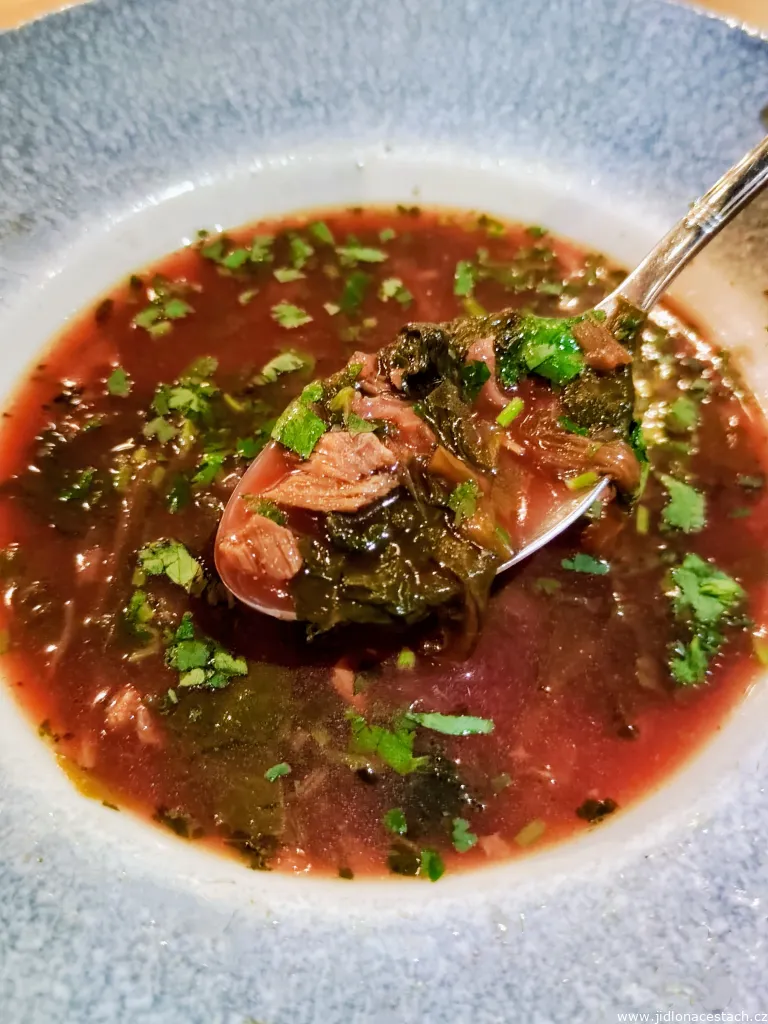
Both the color and the character come from the pomegranate juice, which does the job vinegar or lemon does back home: it sours the fatty lamb broth and stains it deep ruby at the same time. It's a Sunday meat broth in which someone poured in rice instead of noodles and squeezed in fruit instead of parsley. The lamb simmers until it falls into shreds, the rice and peas thicken the soup, the greens (English descriptions talk about beet greens; I found no Armenian source to confirm it) add earthiness, and the cilantro on top a fresh aroma. Whether freshly pressed juice or thickened narsharab goes into the pot, the kitchen isn't telling.
A backup plan for anyone who doesn't care for lamb: the yogurt-based spas or the mutton putuk are easier to come by in Yerevan, and both have deeper roots in Armenian cooking.
The Bowl at Lavash Restaurant
I ate nraneh in Yerevan, at Lavash Restaurant (see Where to Eat in Yerevan), where I ordered it as one of a whole string of dishes I worked my way through in a single sitting. The meat was cooked soft and fell apart under the spoon, the broth had the sourness of fruit rather than vinegar, and behind it a sweeter, earthy taste of beet leaves and rice; the cilantro spoke up only at the end, more as an aroma than a flavor. The broth was perfect and the soup ended up among the best things I tasted in Armenia. A portion cost 2,000 AMD (4.80 EUR).


