Hummus Ben Sira: A Hummusia in the Center of Jerusalem
In the 2nd century BC, Shimon ben Sira wrote down a collection of advice for living that ended up in Christian Bibles as the Book of Sirach. These days, though, the Jerusalem street named after him is famous mainly for a plate of mashed chickpeas.
Hummus Ben Sira (Hebrew: חומוס בן סירא) is a hummusia, a place built around hummus, and since 2005 it has stood on the street of the same name in central Jerusalem. The sage might object. The line that wraps around the corner before Shabbat certainly won't.
A Hummusia Named After the Street
Don't go looking for the name in anybody's family tree. The place is simply named after its address, Ben Sira 3 - Israeli hummusias routinely take their names from streets and neighborhoods - and the street is named after the sage. A man named Gabi opened it as a three-table place; it grew into one of the better-known addresses downtown and kept its family feel: Gabi's mother cooks hot dishes from her own recipes, from meat patties to Moroccan fish. The one thing to watch out for is geography. The same street is home to a place called Sira - no Ben, and a different Hebrew spelling. Remember half the name and you'll be having dinner somewhere else.
What a Hummusia Is and How You Eat in One
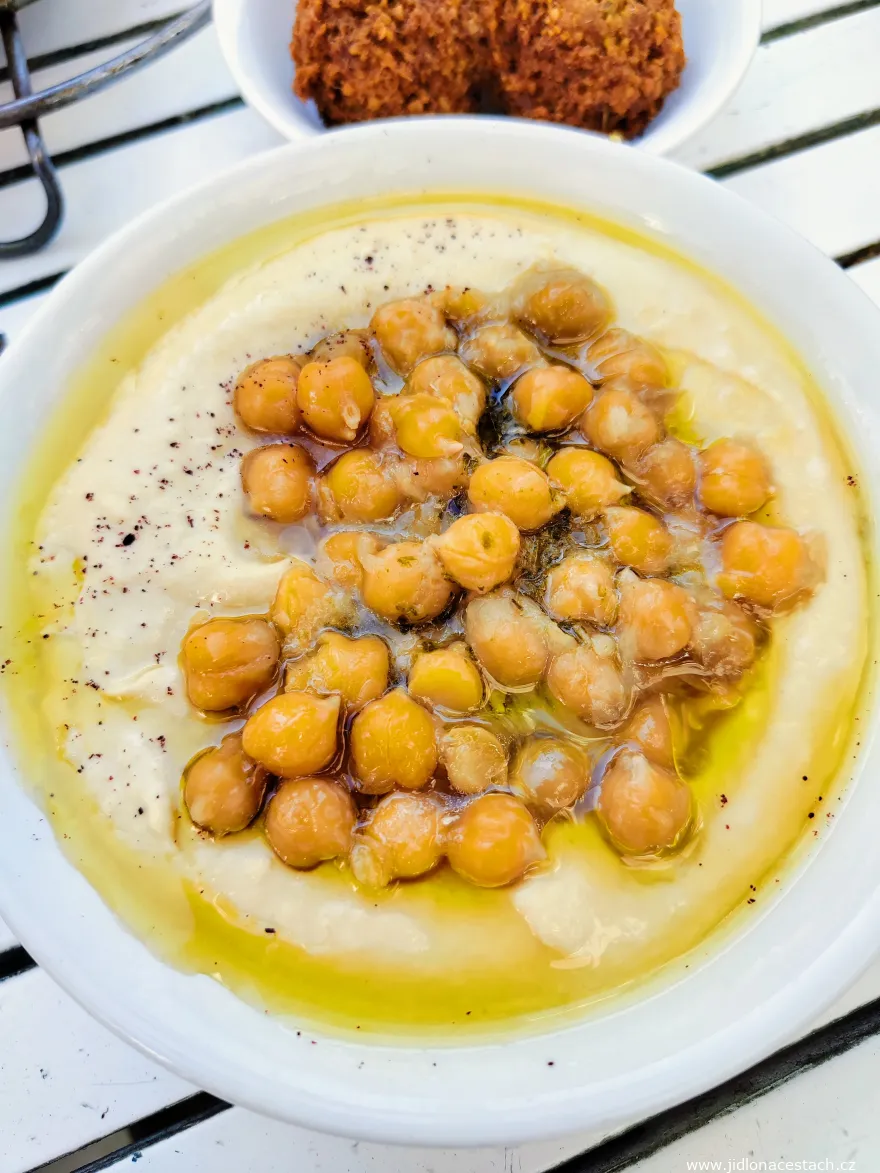
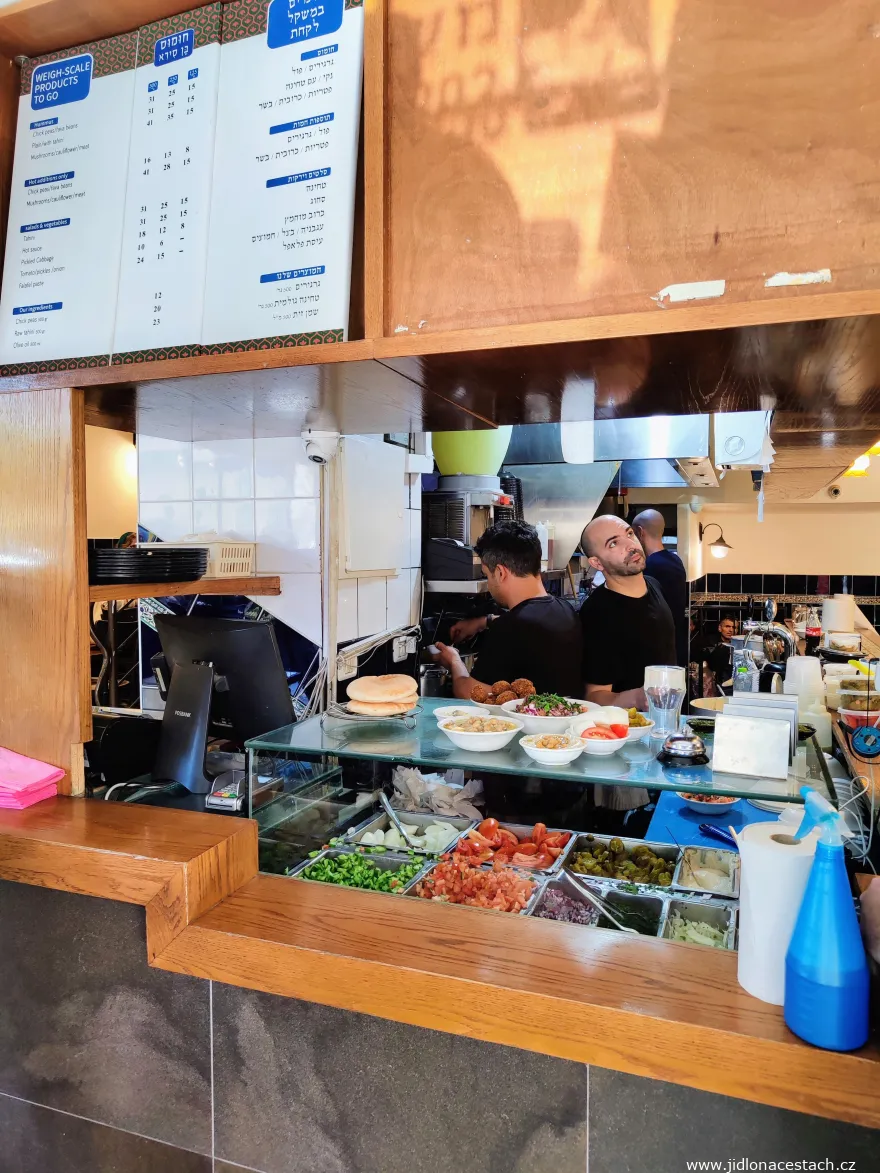
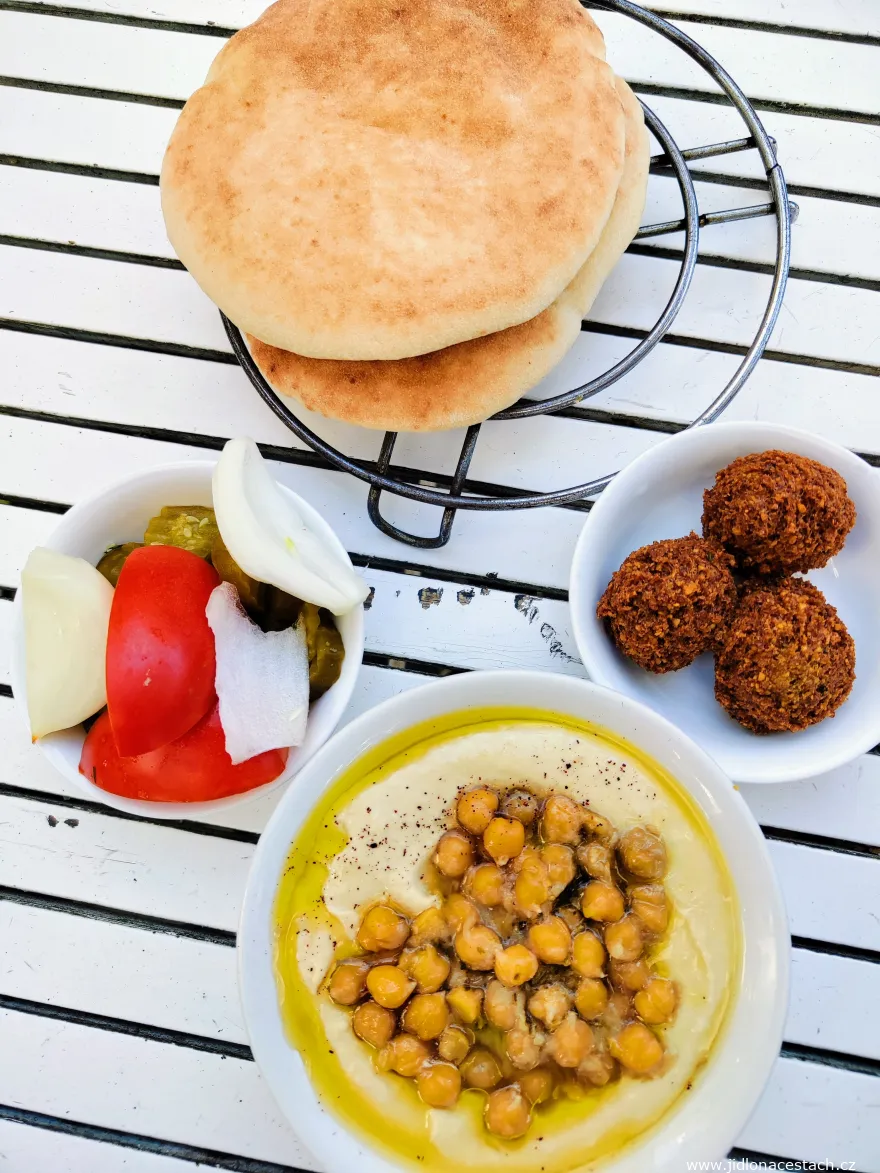
A hummusia is a one-dish place: a few kinds of hummus, plus pita, raw onion, hot sauce and pickles. You can't talk about Israeli food without it - even though hummus itself is no Israeli invention: it's a dish shared across the whole Levant, just as much at home in Lebanon, Syria, Palestine and Jordan, and Lebanon and Israel still argue over who gets to sell it to the world as their own. In a hummusia you don't spread the hummus, you wipe it up: in Hebrew lenagev, to wipe - exactly what a piece of warm pita does as it scoops the hummus off the plate. Back home in Czechia, a spread means a thin layer on a slice of bread; here the spread is the main course and the bread is the cutlery. It comes warm, swimming in olive oil and scattered with whole chickpeas - that version is called im gargirim, literally "with grains".
What Gabi Cooks and When He Closes
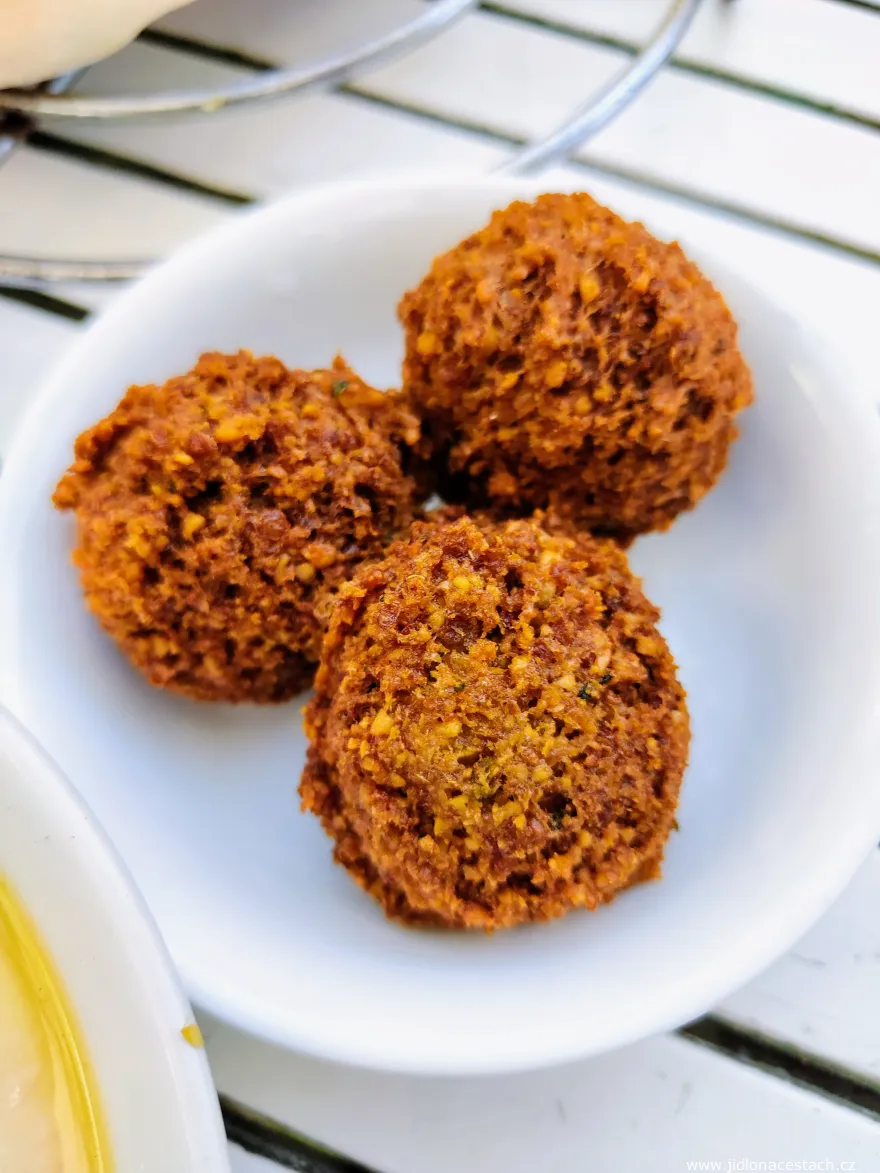
The core of the menu: plain hummus, hummus with ful beans, with meat or with fried cauliflower, and next to it freshly fried falafel and warm pitas. The place is kosher and runs on the Jerusalem week: on Friday it closes before Shabbat begins and doesn't open again until Saturday, once Shabbat is over. The last hours of Friday are the worst possible time to show up - before Shabbat locals head for their favorite places, which are about to shut for a whole day, and the lines get several times longer. Any other day it's just a regular spot for a quick meal.
Hummus on the Second Try
I learned that rule the hard way. The first time I turned up at the hummusia was an hour or two before Shabbat: the line of Israelis ran around the corner, so I gave up and walked a few hundred meters down the street to try bourekas instead - sold out there too. Two days later there was plenty of room. I ordered on a big touchscreen in English, paid by card, typed in my name and sat down; a few minutes later a waitress worked her way through the room with a tray, calling out names until she found me. The bowl of hummus arrived swimming in olive oil and scattered with chickpeas, warm and so smooth and creamy that I left the cutlery untouched and wiped it up with pita like a local. The falafel crunched, still hot from the fryer, and the pita was soft and warm. The whole meal with vegetables cost 36 ILS (10 EUR). It's the best hummus I've ever eaten.
Ben-Sira Hummus


