El Camino Tapas Restaurant: Chef-Driven Spanish Cooking in Prague
From Spanish restaurants I usually come away with a full stomach and photos of plates. From this one I came away with a recipe as well. The grated tomatoes that came with the bread were so good that I asked outright how they are made - and the kitchen told me straight out, no secrets: grate the tomato, let it drain in a sieve, replace the juice that drains off with the same volume of olive oil and add garlic to taste.
El Camino Tapas is a restaurant in Prague's Vinohrady that lifts the small plates of Spanish cooking up to chef-driven dining - here the small portions add up to a whole evening around one table.
From Mariánské Lázně to Vinohrady
The owner, David Böhm, came to Spanish cooking the long way around: he trained in Mariánské Lázně, then cooked in northern Italy and in England - and it was there that Spanish friends invited him to cook at a village fiesta somewhere in western Spain. He came back hooked on tapas. From 2008 he ran Medité Restaurant in Mariánské Lázně, the first place in Czechia devoted to tapas, listed in the Grand Restaurant guide. After eleven years he closed it and took the whole operation to Prague: he opened El Camino Tapas in 2019 on Jagellonská Street, a few steps from the church on Jiřího z Poděbrad Square. El Camino means the way. The restaurant never says whose way, exactly.
What Tapas Are and What Tapeo Is
The word tapa comes from the verb tapar, to cover: innkeepers once laid a slice of bread or ham over a glass of wine to keep out dust and flies, and in time the side outgrew the wine. That's the most level-headed explanation - the Spanish food site Directo al Paladar counts seven of them, including the legend of King Alfonso X, who is said to have banned serving wine without food. Tapas come with a ritual called tapeo: doing several bars in one evening and having a glass and a few bites in each. El Camino turns the ritual around - you come once and you stay. We worked through a large part of the menu at a single table; in Spain that would have taken half a street.
Eight Plates in One Evening
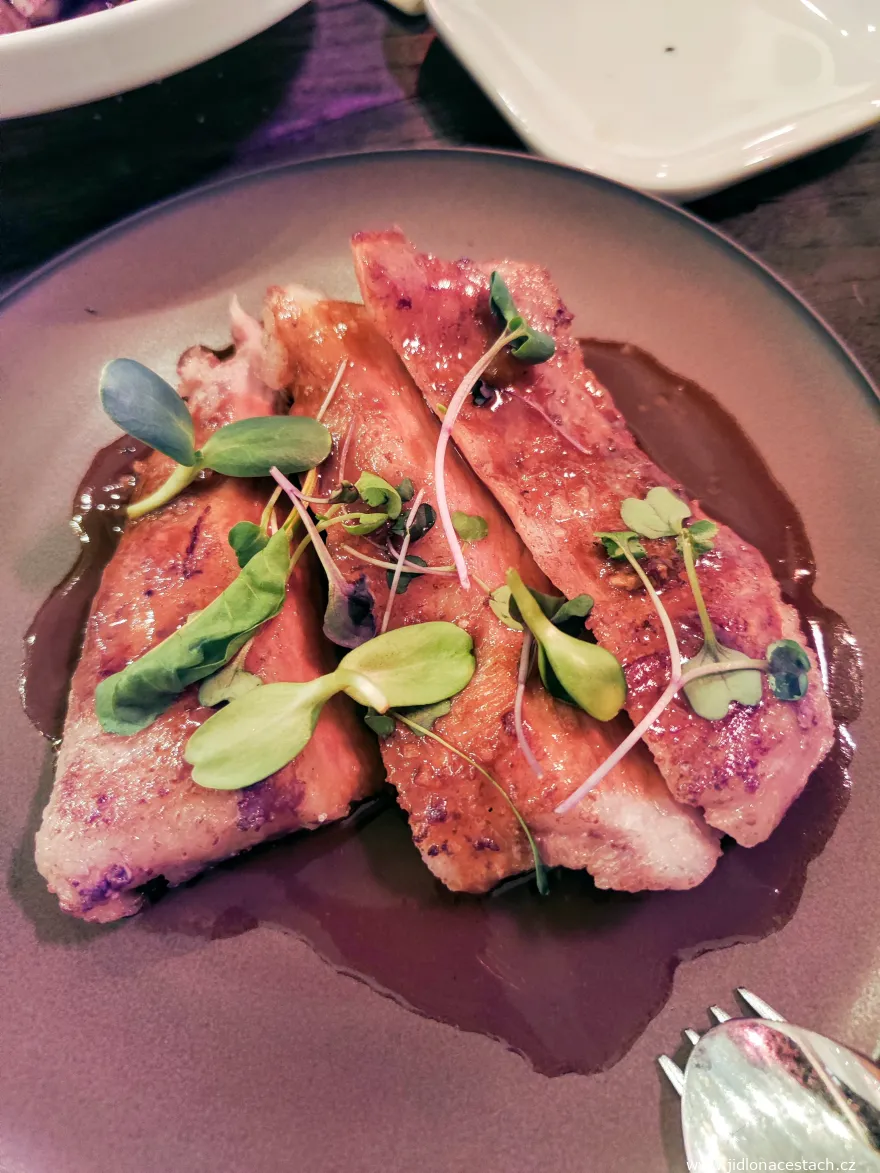
The bread with grated tomatoes and olive oil cost 85 CZK (3.40 EUR) and was the cheapest course of the evening and also the most instructive. After it came Ibérico pork neck with patatas revolconas and a sofrito sauce for 335 CZK (13.40 EUR). Revolconas are a country dish from the Castilian plateau - boiled potatoes mashed with smoked paprika - and sofrito is a slowly stewed base of onion, garlic and tomatoes that a good part of Spanish cooking rests on, paella included.
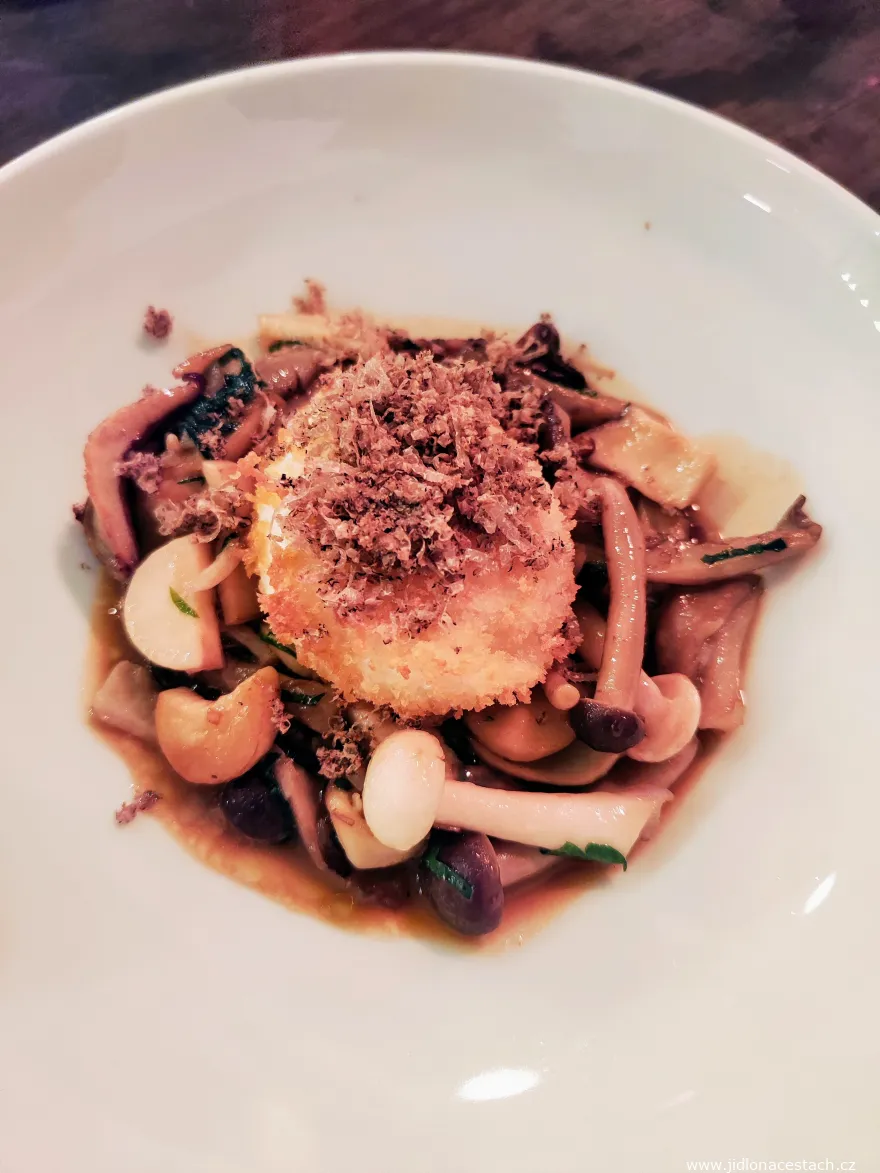
At the table I jokingly rechristened the mushrooms with truffle, ham jus and an egg cooked at 63 degrees (295 CZK/11.80 EUR) as a mushroom scramble in reverse: the yolk here doesn't run from the pan onto the mushrooms - it runs out of a crisp coating into the middle of the plate. The number in the name is the temperature at which the white has just set and the yolk has not - a modern cooking technique that traditional tapas bars know nothing about. The best course of the evening - I'd order it again tomorrow.
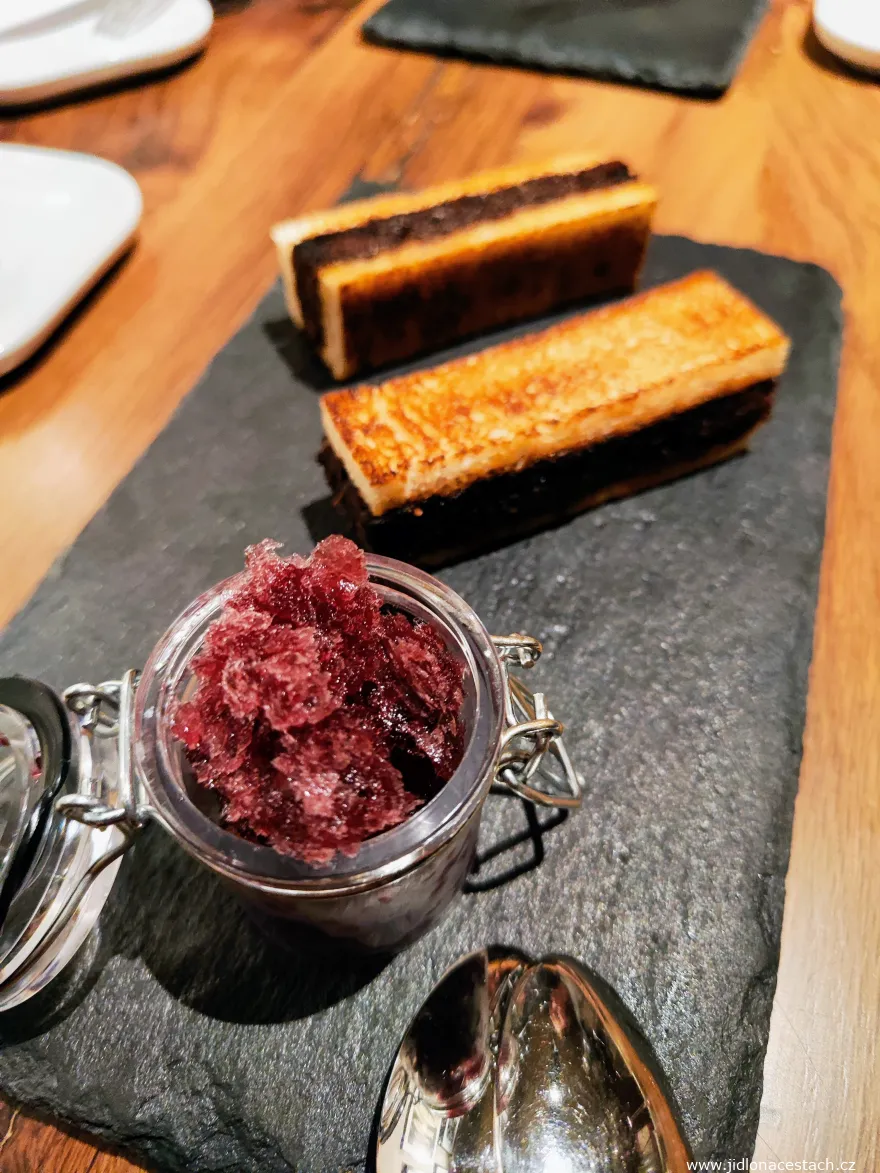
Next came a grilled sandwich of long-braised oxtail with clove granita for 270 CZK (10.80 EUR) - a combination of hot meat and shaved ice that sounded bold and worked - and monkfish with romanesco for 360 CZK (14.40 EUR).
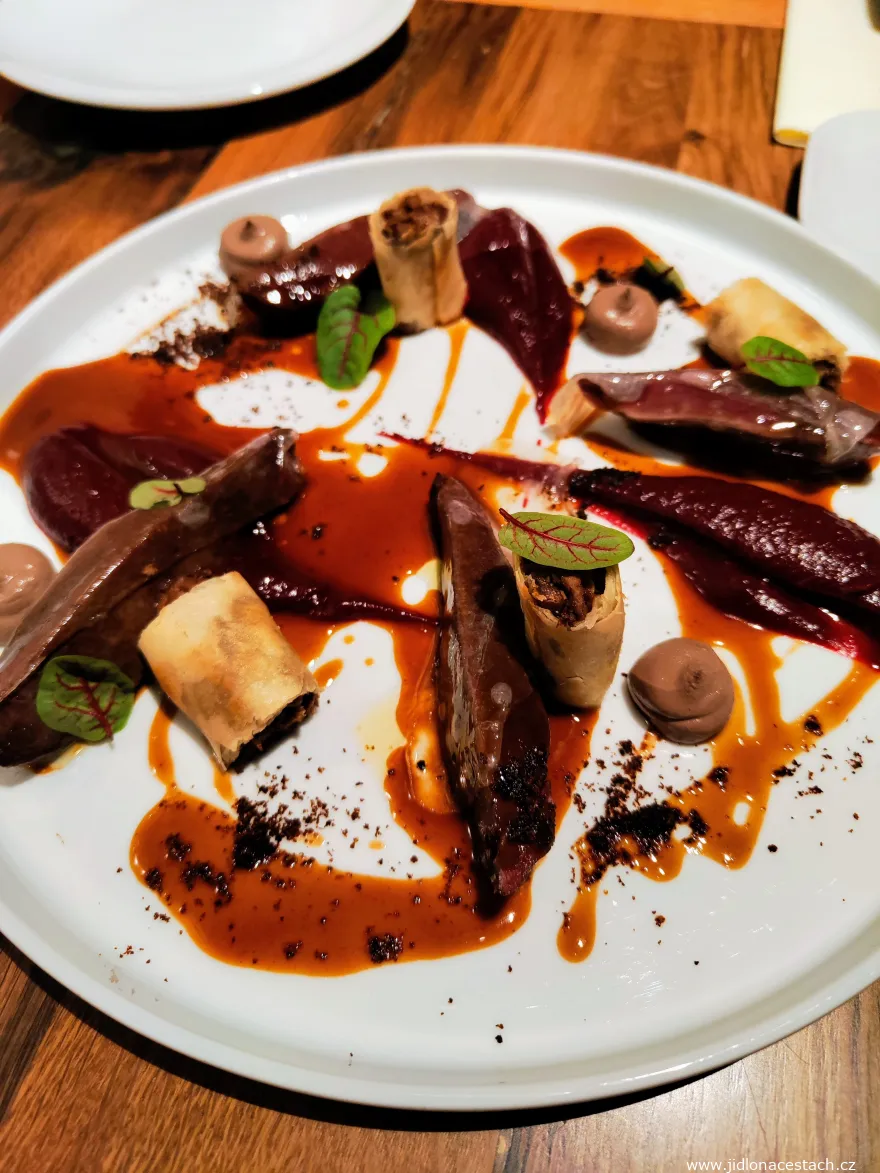
Wild duck in escabeche with beetroot and blackberries for 570 CZK (23 EUR) showed the other side of that boldness. Escabeche is an old technique born of necessity: fry meat or fish and steep it in vinegar and wine so it keeps - a way of preserving food that turned into a delicacy over time. For me the duck was a touch too earthy.
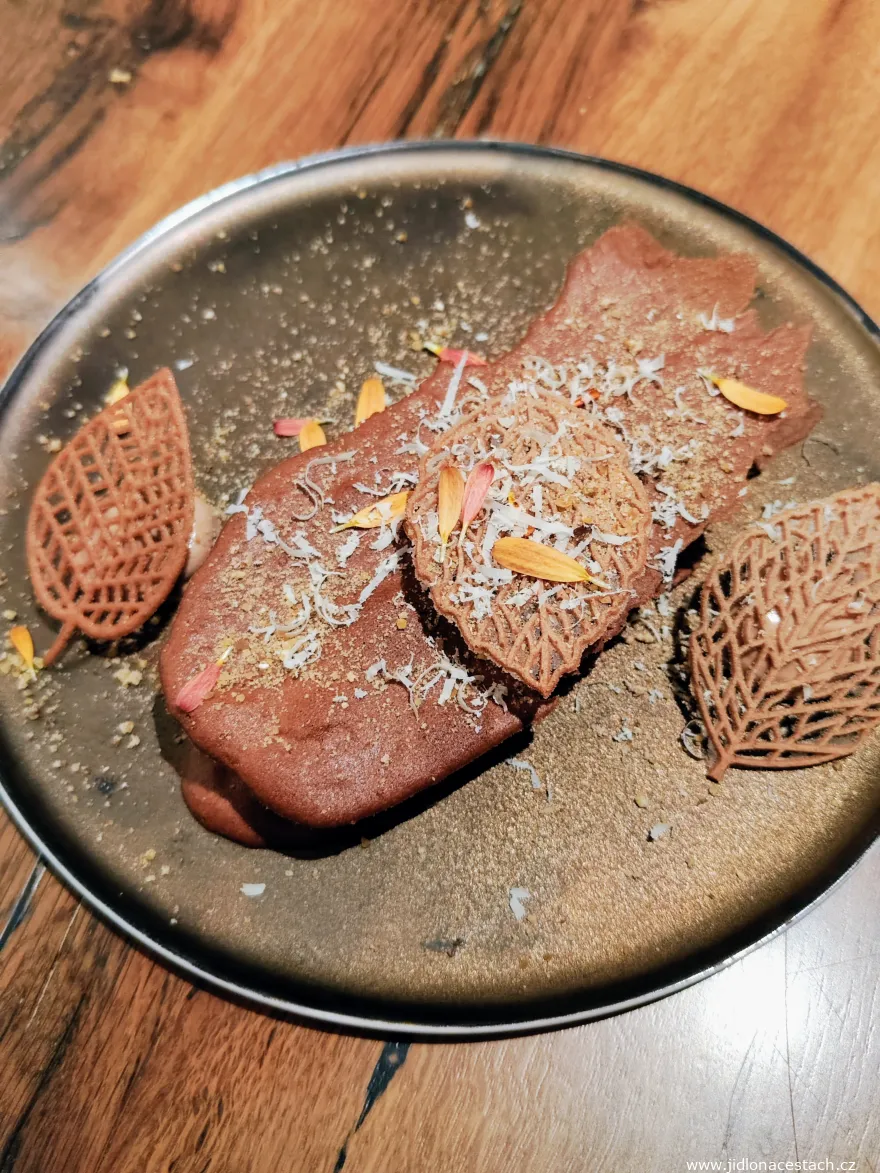
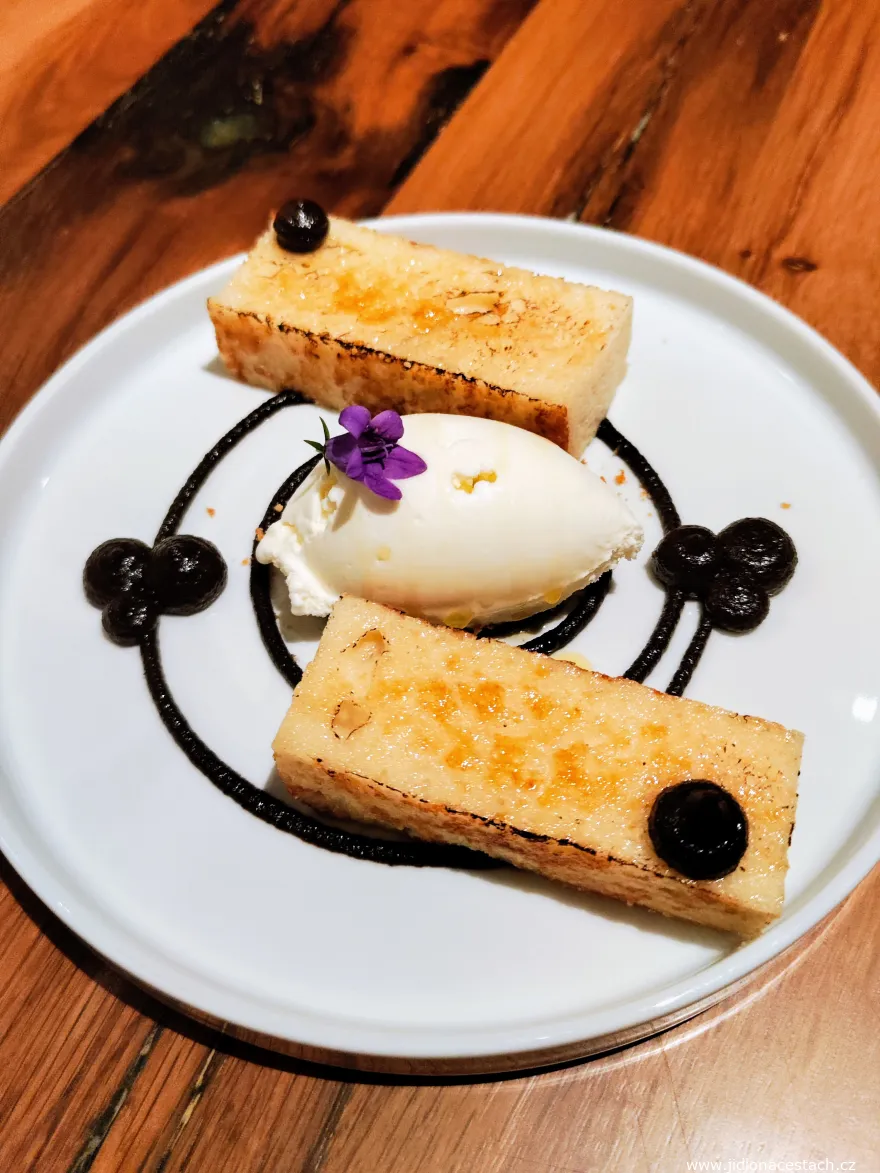
The desserts stayed Spanish to the end: chestnut with walnut and chocolate for 170 CZK (6.80 EUR) and torrijas with black olive jam and olive oil ice cream for 180 CZK (7.20 EUR). Torrijas are the Spanish answer to stale bread: soak it in milk, coat it in egg, fry it and sweeten it. In Spain they are eaten mainly at Easter; here they came with olives and the combination was excellent.
The Owner Among the Tables
What stayed with me most about the evening was David Böhm himself. He was in the restaurant in person and tried to stop at every table for at least a moment, or to present the plate that had just arrived - an owner who spends the whole evening on the floor among the diners. The place gets booked up, so it's worth reserving a table ahead.
El Camino Tapas


