Ramen
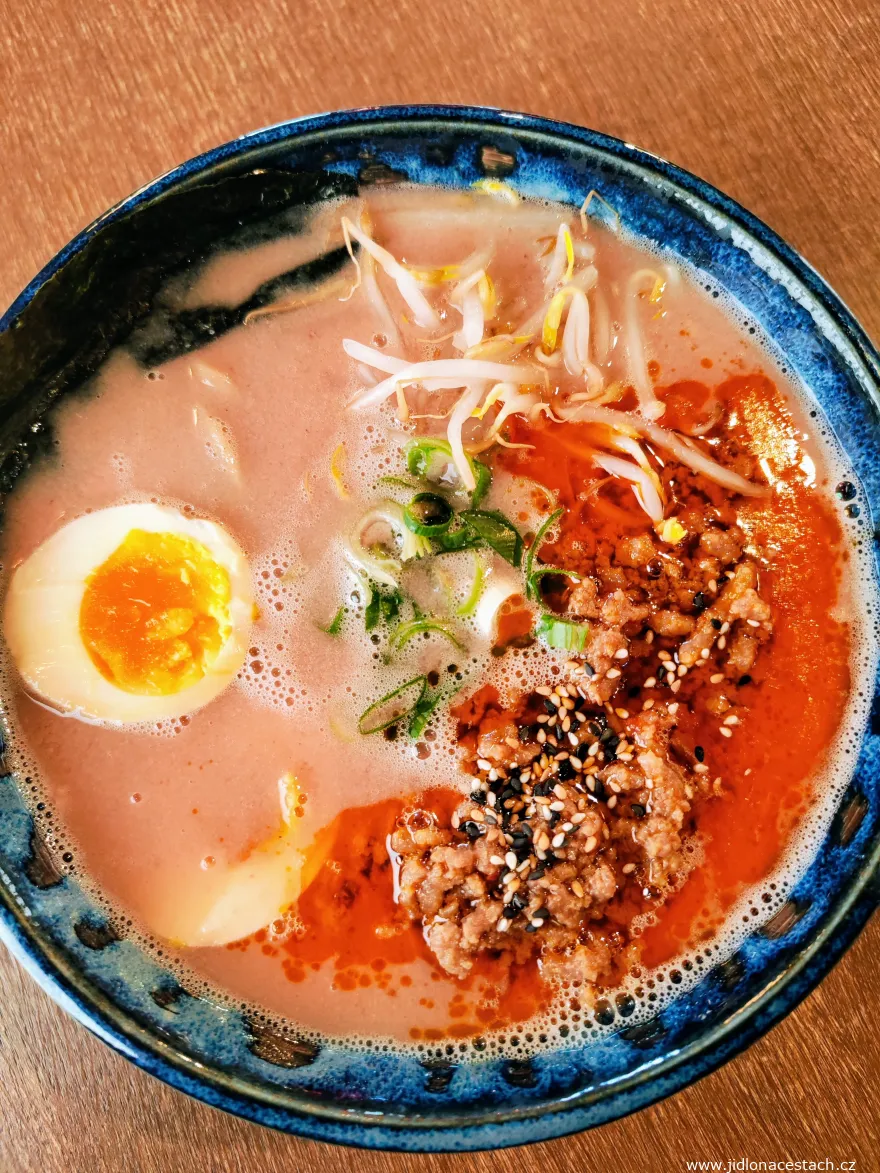
Ramen is a Japanese noodle soup: wheat noodles in an honest broth, seasoned with a concentrate called tare and topped with slices of meat, a marinated egg and vegetables. It sounds simple, but there's a whole science behind it - almost every Japanese region has a style of its own. To me, ramen is the best-known Japanese dish of all and the soup I come back to most often. My biggest weakness is the tan tan ramen from BON Fresh Ramen & Soba in Prague's Anděl - I get it to go very, very often. 😊
How Ramen Came to Be
Ramen does not come from Japan, but from China. The word itself is a Japanese rendering of the Chinese "lamian", the name for hand-pulled noodles. When the port of Yokohama opened to international trade in 1859, a large Chinatown grew up around it - and with it eateries serving noodle soup to the local Chinese community and to curious Japanese customers.
Rairaiken, which opened in Tokyo's Asakusa district in 1910, is generally considered the first true ramen shop. Its Japanese owner hired twelve Cantonese cooks from Yokohama's Chinatown and adapted the soup to local taste - Chinese salt seasoning gave way to Japanese soy sauce. The place became a sensation, selling 3,000 bowls on its busiest days. Back then the dish was called "shina soba", Chinese noodles; the name ramen only caught on after World War II, when cheap street-stall food spread across the country.
Then, in 1958, the Osaka entrepreneur Momofuku Ando invented Chikin Ramen instant noodles and took ramen into kitchens all over the world. Today you can pick up instant ramen in supermarkets, in Prague's Sapa and of course in Asian grocery stores. It's still a long way from a proper bowl at a ramen bar, though.
What Goes Into a Proper Bowl of Ramen
The base is the broth - chicken, pork, beef or fish - simmered for hours on end. The other half of the flavor comes from tare, the concentrated seasoning at the bottom of the bowl. It is the tare that decides what the ramen is called: the same broth can end up as shio, shoyu or miso.
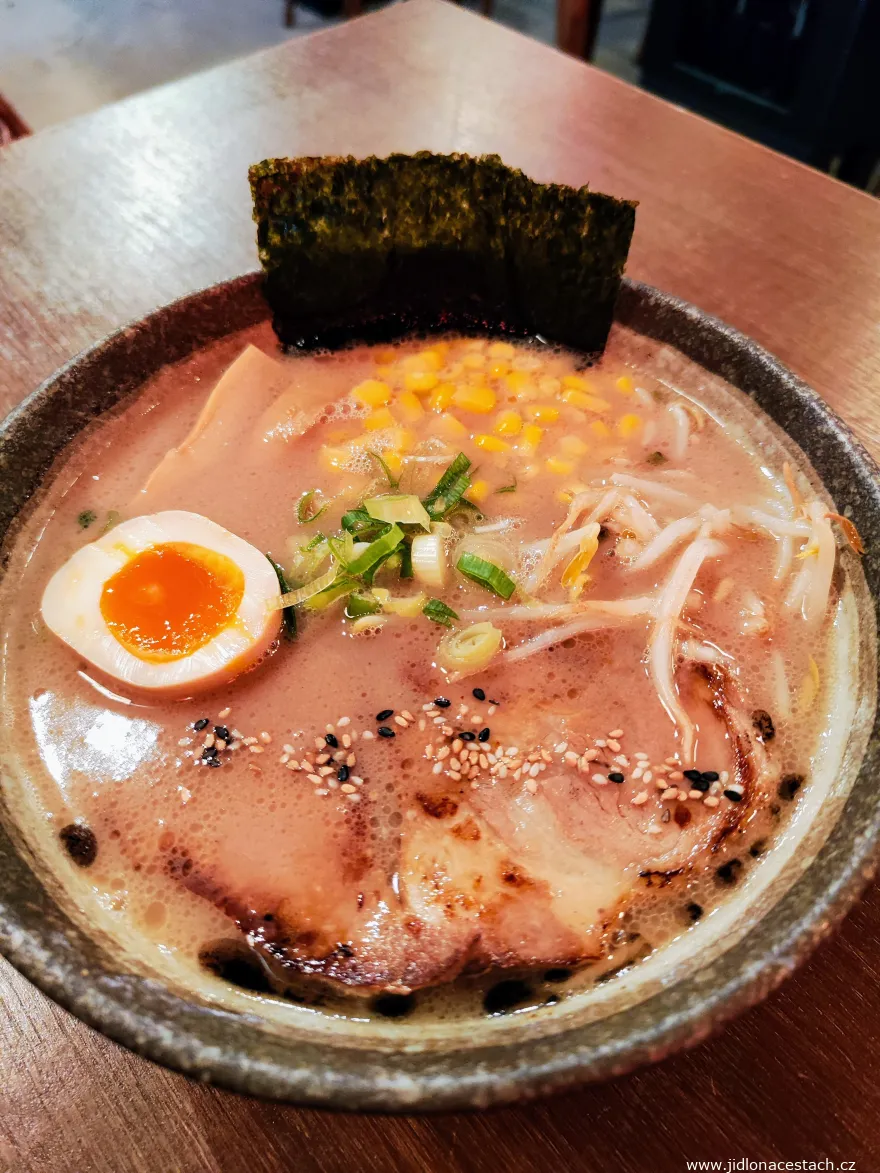
The noodles are no ordinary pasta. They are made with alkaline kansui water, which makes them springy and yellowish and keeps them from going soft even in hot broth. On top sit the toppings: most often chashu (slow-braised pork belly), ajitama (a marinated egg with a runny yolk), menma (fermented bamboo shoots), nori seaweed and spring onion. My personal quality test is simple - the egg must not be overcooked and the noodles have to have just the right bite.
Types of Ramen
Sorted by tare and broth, ramen falls into four basic styles, plus a few famous offshoots:
- Shio. The oldest version, seasoned with salt. The broth stays clear and light, and the flavors of the individual ingredients have nowhere to hide in it.
- Shoyu. Tare made from soy sauce, the classic of Tokyo shops. It tends to be milder - at the Takumi restaurant in Prague the special shoyu struck me as a bit too flat, though someone else might love exactly that profile.
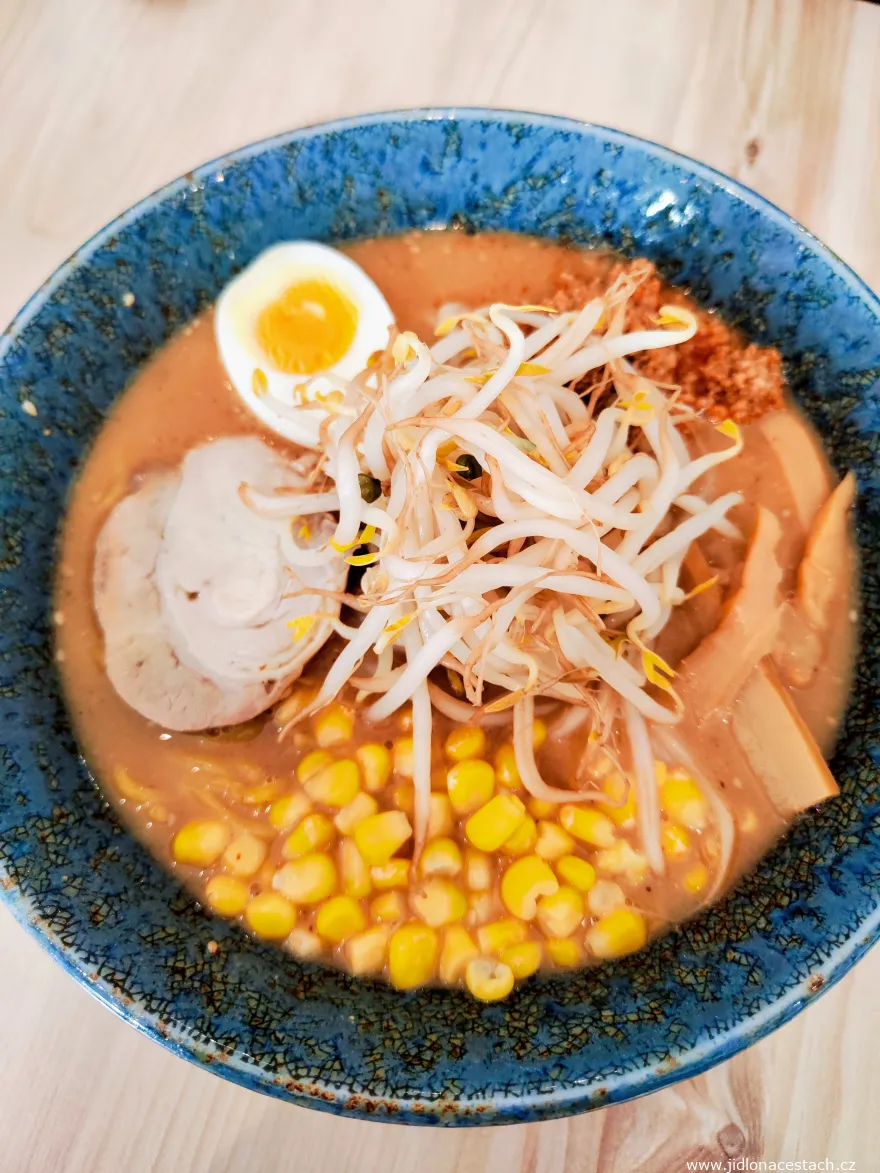
- Miso. The youngest of the basic four, born in Sapporo in the 1950s as winter food. Fermented soybean paste gives the broth a full, slightly nutty flavor; in Sapporo they finish it with corn and a pat of butter. The Miso Red at Isai Ramen was absolutely perfect.
- Tonkotsu. The pride of Fukuoka and its Hakata district: pork bones are boiled so long that the broth turns creamy and opaque. It is served with thin straight noodles, and the kaedama system works here - an extra portion of noodles for the broth you've got left. I had the tonkotsu at BON on the staff's recommendation and it was spot on.
- Tan tan ramen (tantanmen). The Japanese take on spicy Sichuan dan dan noodles, made famous by chef Chen Kenmin, a Sichuan native who lived in Japan from 1952. Creamy sesame broth, ground meat, chili and often the smoky garlic oil mayu as well. My favorite kind of ramen by far - the combination of heat and sesame just clicked with me.
- Tsukemen. Dipping ramen: the cold noodles and the strongly concentrated broth come separately, and you dip the noodles bite by bite. The Tokyo chef Kazuo Yamagishi, nicknamed the god of ramen, put it on the menu as a permanent item in 1961.

Where I Go for Ramen in Prague
Luckily, I don't have to fly all the way to Tokyo for a good bowl of ramen. In Prague I have tried three places that specialize in it:
- BON Fresh Ramen & Soba. My clear favorite. I take the tan tan ramen home so often that the people at the pickup window in Anděl could probably call me by name. The interior is styled as a Japanese alley lined with stalls, and besides Anděl you will find branches in Letná and Vinohrady.
- Isai Ramen. Both the Miso Red and the Thick Broth Miso were absolutely perfect - rich broth, noodles with a bite, tender meat and an egg that was not overcooked. Most of the diners were Japanese, and I don't think an Asian place can get a better endorsement.
- Takumi. A well-known bistro on Senovážné Square. The special shoyu left me cold, but the karaage tan tan ramen with crispy fried chicken was excellent. And the gyoza vanished off the plate before I could get a photo.
And when I get a craving for a different Asian soup, I have Vietnamese phở close at hand in Anděl at Pho 100.
To me, ramen is proof that a soup can easily stand in for a full main course.
Where do you go for good ramen? And which kind comes out on top for you?



BON Fresh Ramen & Soba, Prague: Ramen with Fresh Noodles in Anděl
Corrugated iron, red lanterns and tables built on bottle crates: the ramen shop BON Fresh Ramen & Soba has built a Japanese alley in Prague's Anděl and serves ramen made with noodles it rolls by hand every day. The menu runs from chicken karaage through tonkotsu and spicy tantanmen to mochi with matcha and yuzu lemonade.

Isai Ramen Restaurant, Prague
A review of Isai Ramen, a Prague restaurant that specializes in ramen, the Japanese noodle soup. Both the Miso Red and the Thick Broth Miso ramen were absolutely perfect: strong broth, noodles with just the right bite, tender meat and an egg that wasn't overcooked. Plus a glass of calpis, the Japanese drink made from fermented milk. Most of the guests were Japanese - the best endorsement you can get.

Takumi Restaurant, Prague
A note from a February visit to the famous ramen restaurant Takumi on Senovážné Square in Prague. Alongside great Japanese gyoza dumplings came the special ramen shoyu, which wasn't worth what it cost, and an excellent karaage tan tan ramen with crispy fried chicken worth coming back for.