Israeli Wine: Kosher, Mevushal and Four Bottles from Jerusalem
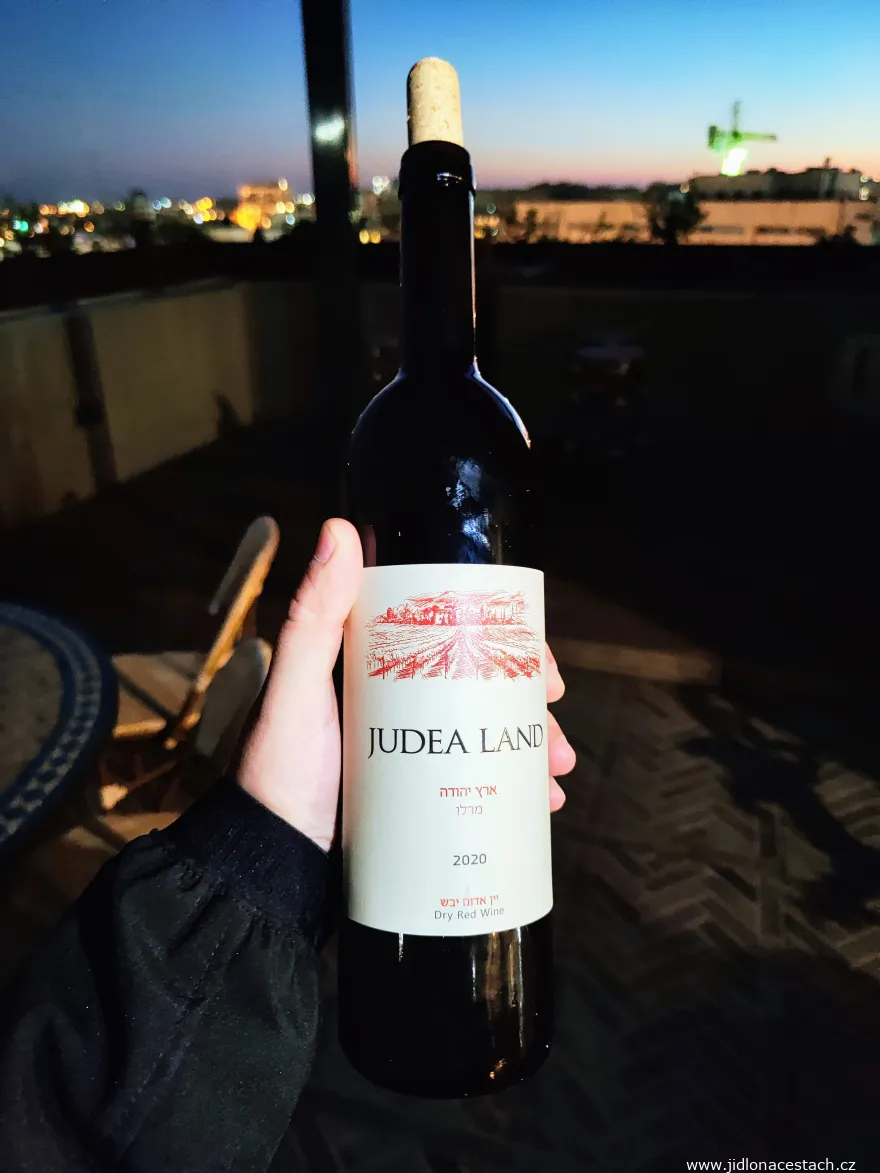
The third bottle I bought in Jerusalem took me a long time to place. The label said Judea Land, merlot and a vintage, but no winery; I hadn't photographed the back, and the Vivino app offered me Tzora, one of the best wineries in the country - which even I found hard to believe. The explanation is probably simpler than I expected: Eretz Yehuda, the Land of Judea, isn't the name of a producer but a designation of origin. The Mateh Yehuda region between Jerusalem and Tel Aviv was granted it in 2020 as the first and so far only protected appellation in Israel, and any winery that sources at least 85 percent of its grapes there may put it on the label. I was hunting for a company and holding a regulation in my hand.
Israeli wine comes from five wine regions stretching from the Golan to the Negev, and the vast majority of it is kosher.
What Kosher Wine Means and What Mevushal Is For
Kosher on a label says nothing about the taste. It says whose hands touched the wine. Halakha has an ancient concept, yayin nesekh, libation wine, which the touch of an idolater rendered forbidden, and from it comes the rule that holds to this day: from the press to the bottling line, only Sabbath-observant Jews may handle the wine, under the eye of a rabbinical supervisor. In a restaurant that turns into a problem: the waiter who pours the wine can ruin it in the same motion. The solution is mevushal, literally "cooked" wine, which these days isn't boiled at all but briefly heated to somewhere around 70 to 80 degrees Celsius in a closed system - and from that moment anyone can pour it without it ceasing to be kosher. Nothing here gets around the law; it simply pins down when wine stops being wine in the eyes of the law, and the glass never knows the difference. It does come at a price, though: heat takes away part of the aromatics, so premium wines are rarely made mevushal. It's the principle of preserves: the jar survives the winter, the strawberries just don't taste the way they did on the plant. And one more misconception worth putting to rest: the sweet Manischewitz that stands for kosher wine in American minds comes from New Jersey. Most of the world's kosher wine isn't made in Israel at all; in Israel, on the other hand, almost everything made there is kosher.
Five Regions and One Border That Runs Through the Vineyards
Israeli wine isn't the specialty of a single district: the vines run from the basalt Golan and Galilee across the coastal Shomron and Samson down to the drip-irrigated Negev, and the Judean Hills are just one of the five official regions - the high one, with cold nights and red terra rossa soil.
They stretch from north of Jerusalem all the way to Hebron, which means they cross the Green Line: the same slopes carry the vineyards of the Israeli settlements in Gush Etzion, whose bottles have to state a settlement origin under a ruling of the European Court of Justice, and the vineyards of the Salesian Cremisan monastery near Bethlehem, which are sold as Palestinian wine. One range of hills, two passports.
Nobody here argues over the title of the cradle of wine, because the neighbors hold it: Georgia with finds eight thousand years old and Armenia with the Areni cave, where the oldest known wine press turned up - and dethroned a find from the West Bank that had counted as the oldest until then. Israeli wine traces its roots back to the book of Genesis, where the first thing Noah did after the flood was plant a vineyard.
Who Makes Israeli Wine, and Since When
Wine was pressed in this land long before Rome, and presses cut into the limestone are still scattered across the countryside, but centuries of Mamluk and Ottoman prohibition broke the tradition, and the old varieties survived only as table grapes in courtyards. Modern winemaking started here twice, both times in Jerusalem or just outside it. The older story was written by the Shor family, who founded the Zion winery in the Old City in 1848 - today it sits in Mishor Adumim and ranks among the six biggest in the country - and whose family tree branched out into several other labels, including the Jerusalem Wineries cooperative in Atarot, the only winery inside the city limits.
The more famous start came from Baron Edmond de Rothschild, owner of Château Lafite in Bordeaux, who paid for cellars in Rishon LeZion and Zikhron Ya'akov and had French varieties shipped in; Carmel carries 1882 on its label, even though that is the year the settlements were founded - the cellars weren't finished until eight years later, and the winery claimed the earlier date at an exhibition to look more experienced. Wineries pad their age the way people do, only in the opposite direction. Israel today has around three hundred wineries, of which only twenty make commercial volumes, and roughly five thousand hectares of vineyards depending on who happens to be counting - Czechia has more than three times as many. The newest chapter has only just begun: marawi, a variety that survived the prohibition for two thousand years in a handful of family vineyards, got its first commercial bottling at Recanati in 2014. Just under four thousand bottles, and they made headlines far beyond Israel.
When Israelis Drink Wine and How to Pick a Bottle off the Shelf
Wine has a fixed slot here: Friday evening, when kiddush is said over the cup and the Sabbath begins, and once a year the Passover seder, where the rule calls for four cups - some rabbinical authorities insist that grape juice doesn't express freedom, so it has to be wine. Before the holidays the prices climb enough to make the newspapers. The main varieties are the same as anywhere else with a warm climate, cabernet sauvignon, merlot, syrah; grapes ripen fast here, so wine from the lowlands leans toward heavy, ripe fruit, while wine from the hills keeps its freshness. That's why it pays to read the region on the shelf rather than the stamps: Harei Yehuda or Judean Hills and Golan on a label tell you more about the taste than any certificate.

Four Bottles Above the Rooftops of Jerusalem
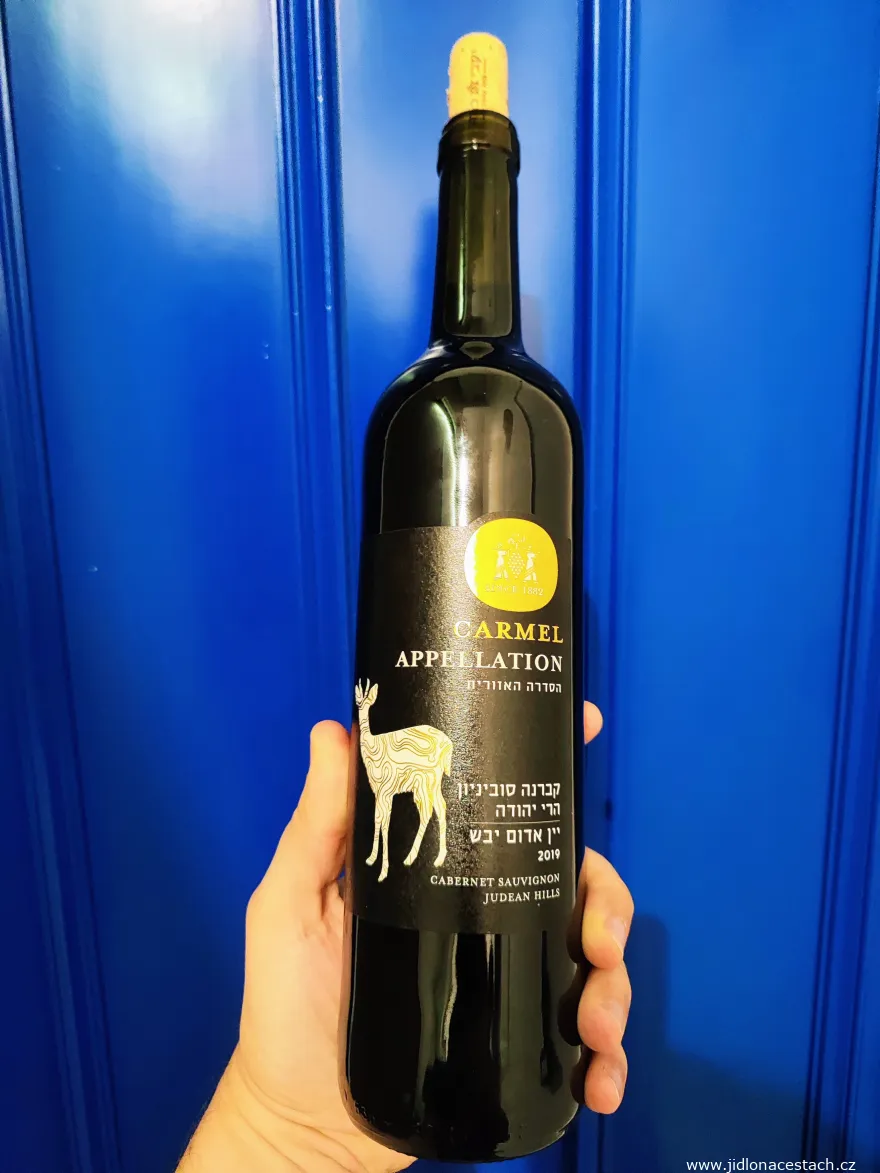
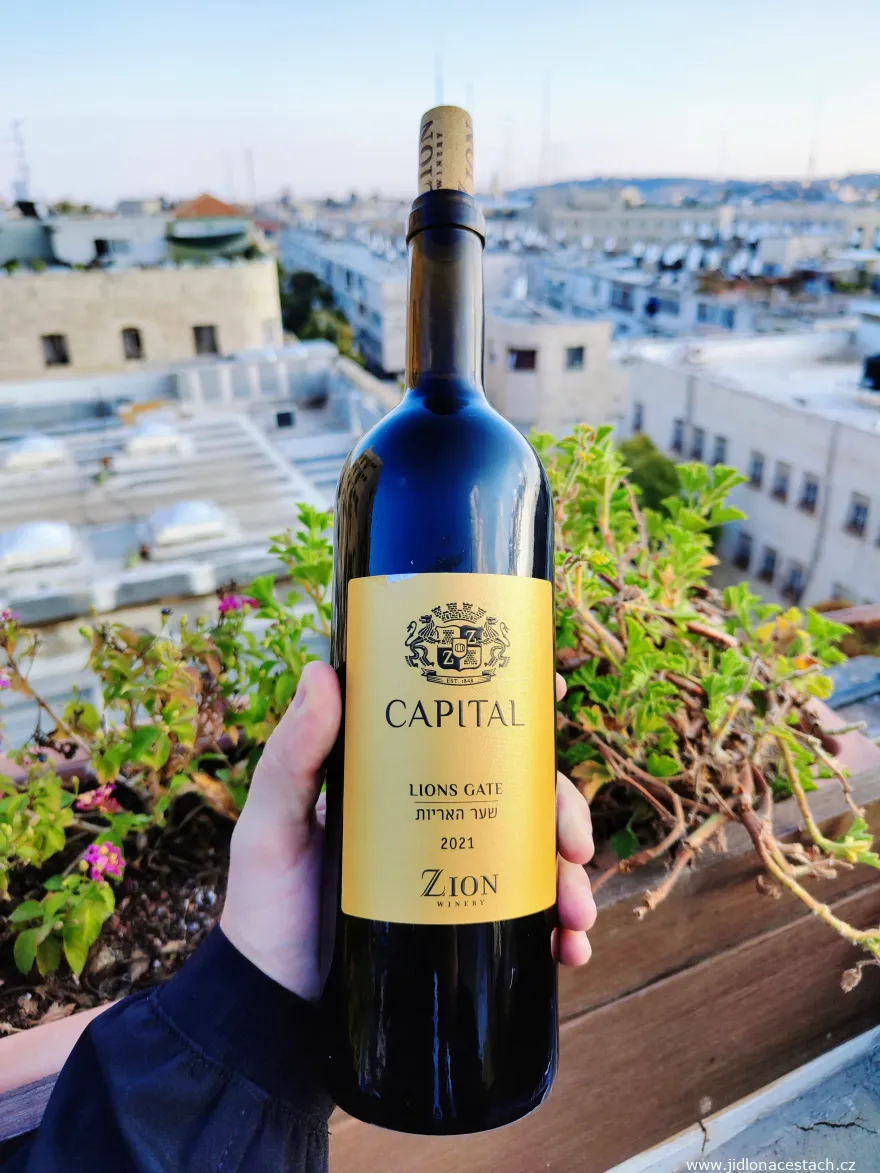
I bought all four bottles at a specialty shop in Jerusalem, where I was based. I started with the most famous name: Carmel Appellation Cabernet Sauvignon 2019, twelve months in French oak, the label announcing Judean Hills, the wine dense, with dark fruit and wood that hadn't yet had time to step back. It cost 60 ILS (16 EUR) and was the priciest of the four. Zion Capital Lion's Gate 2021, a merlot from the Shor family's top range, was softer and rounder, a wine without edges, at 50 ILS (14 EUR). Premium CAB 2018 from Jerusalem Wineries, the only winery inside the city, a year in steel and in barrels, firm tannins, and the same 50 ILS (14 EUR). And then Judea Land Merlot 2020, also 50 ILS (14 EUR), the one I liked best of all - juicy, with an acidity that pulled every mouthful together, and none of the heavy wood the Carmel carried. The best of the four was the bottle with no winery name on it. The Land of Judea was there, and that was enough.


