Geula Bakery: Pastries by Weight in Mea Shearim
Mea Shearim is a few minutes' walk from the center of Jerusalem, and yet it's the longest journey you can make in the city: it ends a good century away. The ads thin out, the streets go quiet, and you quickly understand that you're a guest in a community with no interest in your world. And in the middle of it all glows a pink neon sign offering pastries and ice cream.
Geula Bakery is a small bakery in the ultra-Orthodox neighborhood of Mea Shearim in Jerusalem: the sweet pastries are sold by weight and you pay in cash only. Of all the places where I bought food in Israel, this one is the strangest.

A Name the Sign Knows and the Internet Doesn't
The big sign above the door advertises nothing but the goods; the name Geula appears only on a smaller yellow sign next to the entrance and on Google Maps. That's where the sources run out: the Hebrew internet has never heard of a bakery by that name - when people in Jerusalem talk about the famous bakeries of the area, the names that come up are Berman, baking since 1875, or Landner, with a brick oven from 1893. The likeliest clue to the name is on the map: right next to Mea Shearim lies the neighborhood of Geula, and the line between the two is so blurred that the eastern part of Geula is routinely counted as part of Mea Shearim. The word geula (Hebrew: גאולה) itself means redemption - but the neighborhood isn't named after the theology. It's named after Geula, the daughter of Avraham Chasidoff, the investor who founded it. Even the most pious-sounding name in Jerusalem turns out to belong to a particular person.

A Hundred Gates and the Signs at the Entrances
Mea Shearim went up in 1874 as the fifth Jerusalem neighborhood outside the walls of the Old City. The name means "a hundred gates" and points to a verse from Genesis read in the week it was founded - and to the fact that the founding association had exactly one hundred members. Today's community keeps itself apart from the surrounding city on purpose; the neighborhood has been described as a voluntary ghetto, and it expects visitors to be respectful. Signs at the entrances ask for covered shoulders and legs, and a skirt instead of pants for women - and I'd recommend tucking any Christian symbols under your clothes. Accept the rules and you'll walk through without any trouble; and if you start to feel uneasy, the side streets will drop you back into the twenty-first century in a couple of minutes.
What to Put on the Scale
Small sweet pastries rule the counters, above all turnovers filled with farmer's cheese or chocolate. Beside them lie sesame-coated baguettes that look a lot like the Jerusalem bagel from the Arab bakeries a few streets away, and before Shabbat people line up for challah. Bakeries all over Israel sell pastries by weight, but here there's only one right way to do it: take one piece of every kind, the way you try just a single cookie from each tin at Christmas.
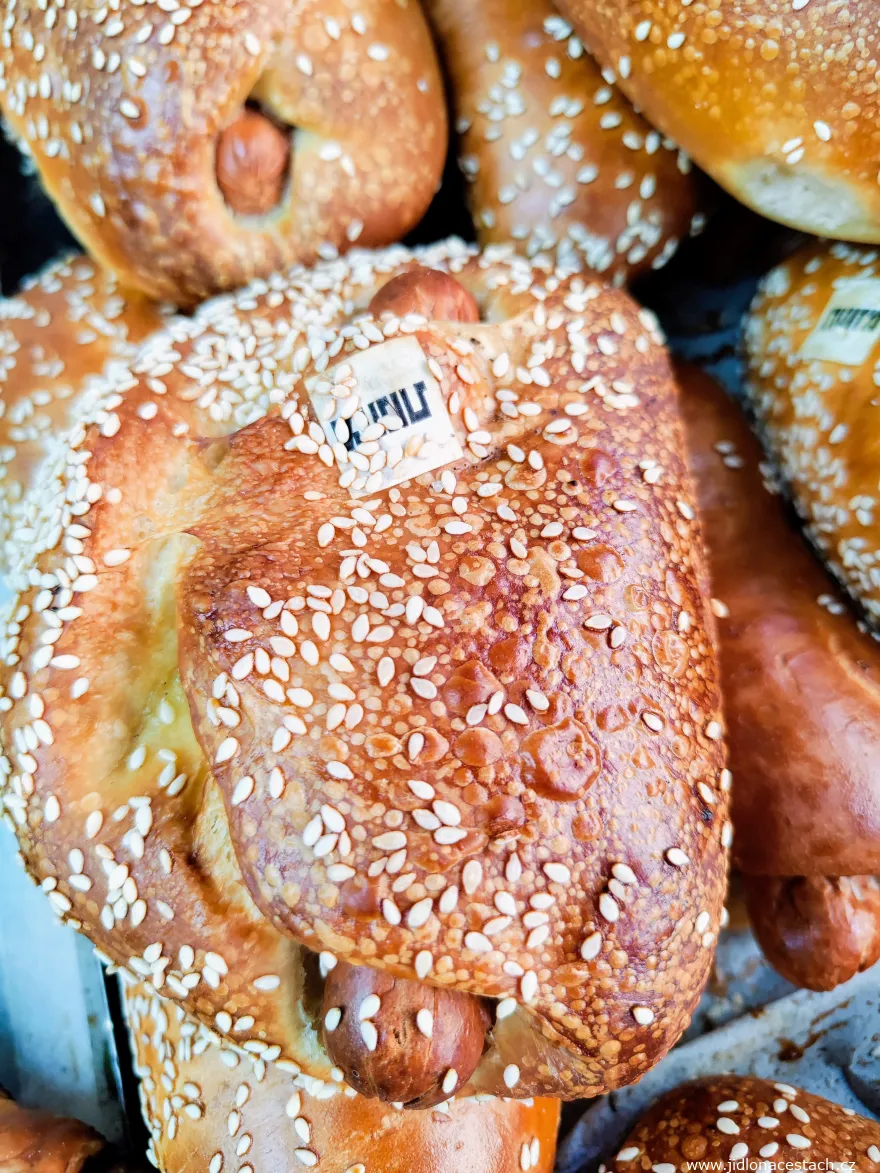
One Piece of Everything
At the counter I followed exactly that logic: one piece of everything that tempted me, into the bag and onto the scale. The cheese turnover was made of yeast dough, closer to a morning roll than to a dessert, and the cheese in it played second fiddle to the butter; the chocolate one was denser and sweeter, exactly the kind of pastry you reach for again even when you hadn't meant to. One rule applies at the register, and this bakery enforces it without any sign: cash - you can't pay by card here. Exactly how much I left on the counter I can no longer look up; the coins from Mea Shearim don't show up in any online banking. And a bakery the internet says almost nothing about is one you find the old way anyway - by the smell.

Pekárna Geula


