Kuchyň Restaurant, Prague (2): Schnitzel and Plum Butter Dumpling on the Lower Terrace
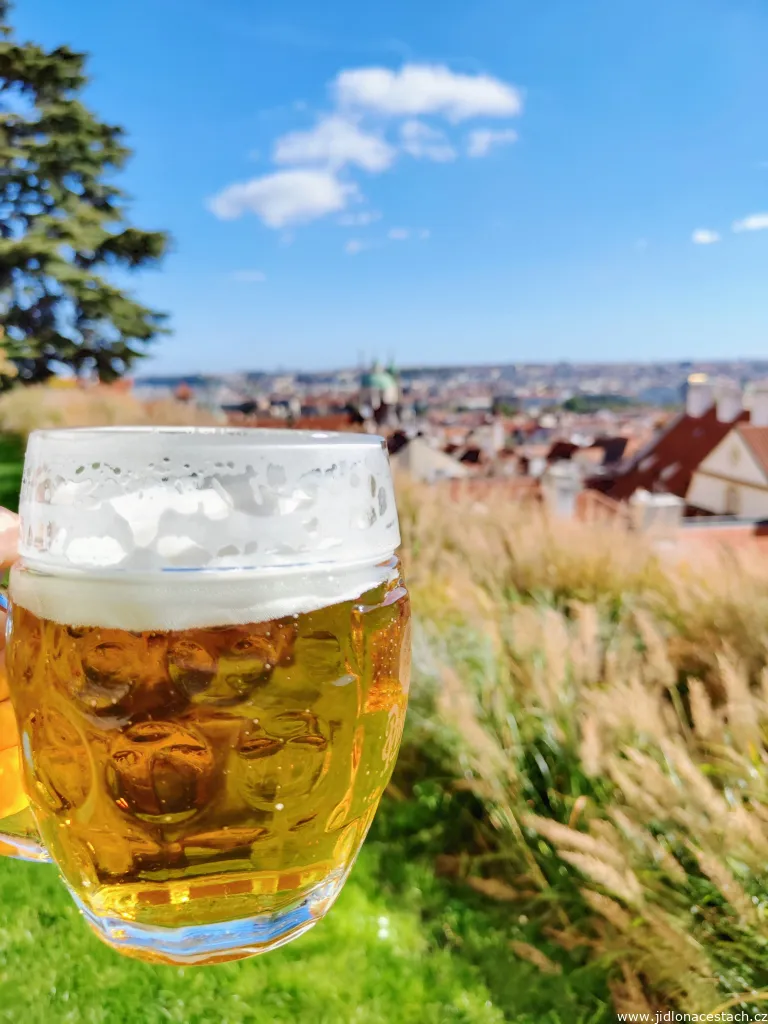
I turned up on a Sunday, barely half an hour after opening, and there wasn't a free seat left on the upper terrace. Autumn colors the gardens around Prague Castle so well that half the city heads out to see them, and a walk through the park reliably works up an appetite. A few steps down, though, a table was waiting: the lower terrace, where nobody comes to take your order, but where the whole of Prague is laid out in front of you - maybe even better than from up top.
Kuchyň is an Ambiente group restaurant in the Salm Palace on Hradčanské Square, a few steps from the castle gate, and it serves Czech dishes on terraces high above the rooftops of Prague. The story of how the place came about is in the first part of this series.
The Lower Terrace: Self-Service with a View
They do explain how the lower terrace works when you walk in, but I'll go over it anyway: you order and pay upstairs, and the food gets carried down to you - otherwise the staff never come this way. It sounds like a cafeteria, but upstairs you wait for a table, for your order and for the bill; down here you only wait for your plate. Show up shortly after opening and you get to pick your seat; come in the middle of a Sunday afternoon and you're down to luck. And if one beer isn't enough, the nearest stop on the Prague Beer Zoo, the legendary trail of pubs named after animals, is only a few minutes' walk from Hradčanské Square.
What's Actually Czech About Schnitzel with Potato Salad
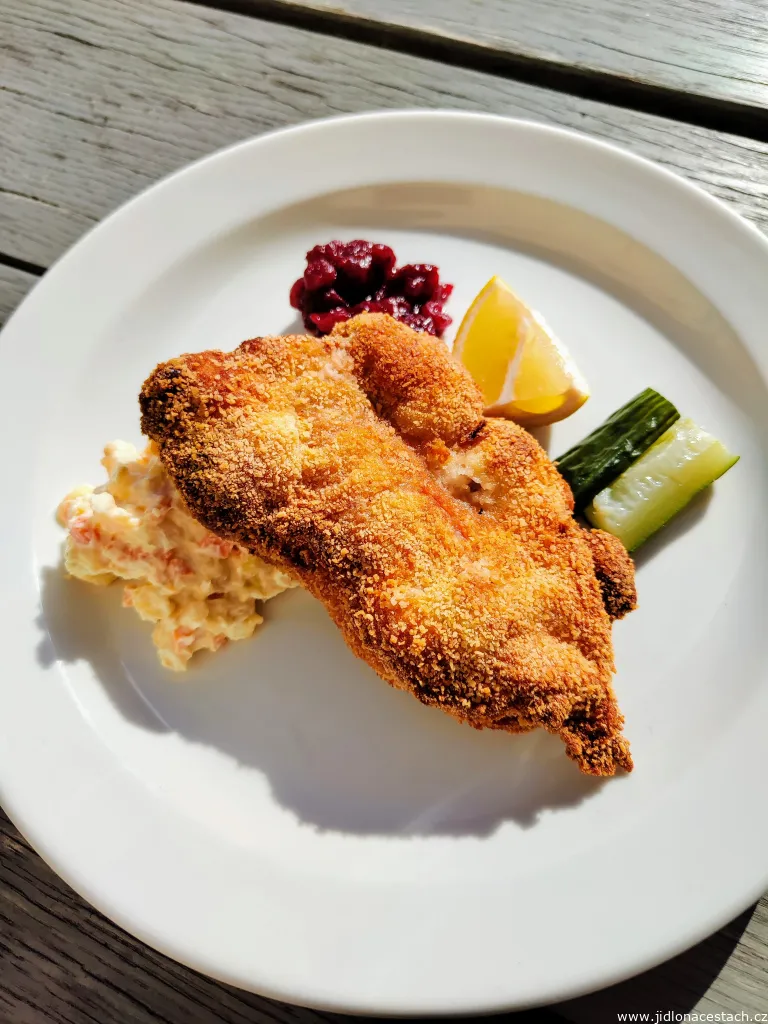
I ordered the pork neck schnitzel with potato salad, lingonberries, lemon and a full-sour pickle - to look at, the most Czech thing you can do up by the castle. And yet the flour-egg-breadcrumb coating is a Viennese invention: the classic Wiener Schnitzel is fried from veal, and Czech cooks rewrote the recipe long ago for cheaper pork. Neck instead of the usual leg is a fairly recent move - fattier meat can be cut properly thick, so the schnitzel doesn't have to be a thin slice.
The potato salad beside it looks as though it has been around since the Czech National Revival. In fact, it has only been part of Czech cooking for about a hundred years: the recipe appeared in print in 1921, and it took Marie Janků-Sandtnerová's 1924 cookbook to get it into people's kitchens, while the taste for mayonnaise salads came back with the legionnaires from Russia. An Austrian schnitzel, a Russian side, a Czech classic. A hundred years is clearly enough.
The Plum Butter Dumpling and Its Alpine Cousin
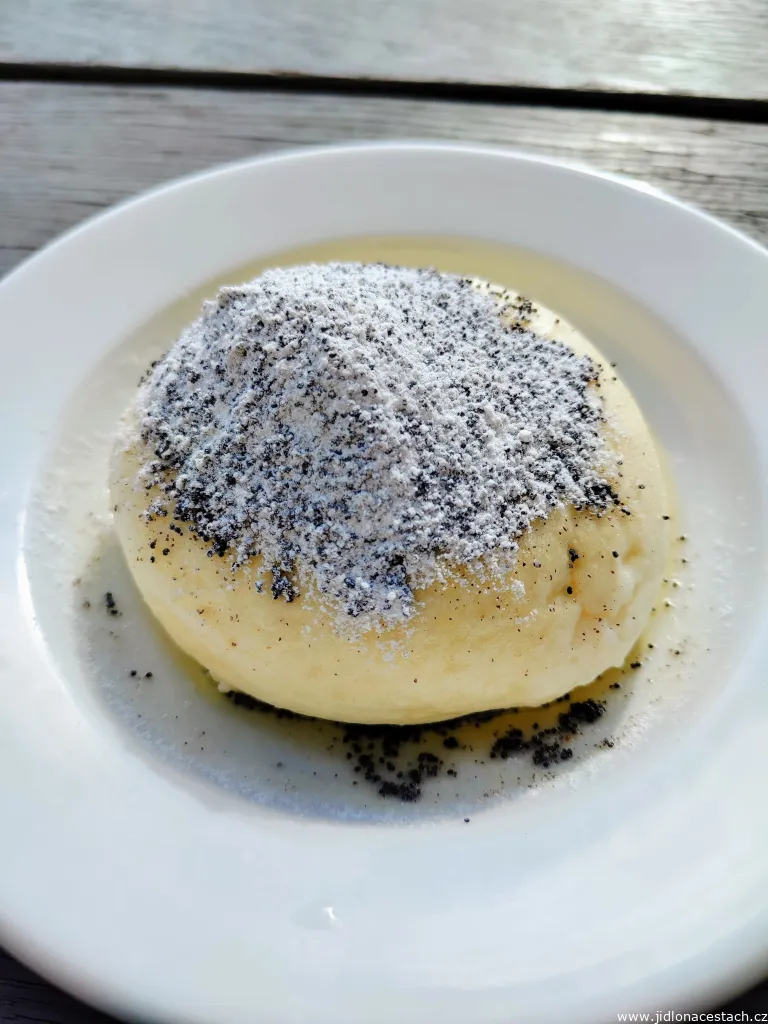
Dessert was a yeast dumpling filled with plum butter, served with quark, sugar and butter - a dish where Czech cooking got to play the exporter for once. The Austrian Germknödel, the pride of Alpine mountain huts, traces back to the plum butter dumpling, at least according to Czech sources; across the border it simply grew to fill a whole plate and ended up drowned in vanilla sauce. The one at Kuchyň keeps the proportions it has at home: plenty of plum butter inside, butter on top in moderation - the exact opposite of the dessert at U Matěje Restaurant, where they once brought so much of it that it came back to me (in a good way) over this dumpling.
A Sunday on the Lower Terrace
The schnitzel was maybe two centimeters thick and fried to perfection, with a very good potato salad alongside. The dumpling was beautifully soft and there really was a lot of plum butter in it. I came back to Kuchyň later on for their famous dill sauce - that's what the third part covers. The schnitzel cost 335 CZK (13.40 EUR), the dumpling 155 CZK (6.20 EUR) and a perfectly poured Pilsner Urquell 62 CZK (2.50 EUR) - compared with the places around it, those prices struck me as almost low - a word I'd long avoided using about Ambiente. The view of Prague doesn't get added to the bill here.
Kuchyň


