Mauritian Rum: Distilled from Molasses and Cane Juice
An island that lives off sugar cane banned distilling rum from its own cane juice the moment it gained independence. For thirty-eight years. The authorities saw it as a waste of a raw material meant for sugar, so you could distill only from molasses - from whatever is left once the sugar has been taken out.
Mauritian rum (French: rhum de Maurice) is a spirit distilled from sugar cane, and Mauritian cuisine knows it in two forms: the older and far more common one from molasses, and the younger, pricier one from fresh cane juice, which the law did not allow until 2006. Anyone tasting "juice" rum on the island today is drinking a tradition about as old as the smartphone.
The Rum That Can't Be Called Agricole
Rum from juice goes by rhum agricole in the French-speaking world, but the European Union has reserved that label for Martinique, Guadeloupe, Réunion, French Guiana and Madeira - Mauritian rum can be made that way, it just can't be called that. We have been through this kind of official renaming back home in Czechia: our own rum distilled from beet spirit lost the right to that name for exactly the same reason - it's called tuzemák now.
It isn't the national drink, though: what people drink every day on the island is Phoenix beer, while rum is for holidays, for tourists and for export. Its relatives are scattered all over the Indian Ocean. Neighboring Réunion has three distilleries and a shared brand, Charrette, Madagascar distills Dzama from molasses, the Seychelles have been making Takamaka since 2002, and families across the whole region macerate white rum with fruit and spices into rhum arrangé. Ti Punch with lime and cane sugar, served in Mauritian bars as a local classic, actually came in from the Antilles and Réunion.
From Tafia to a Postage Stamp
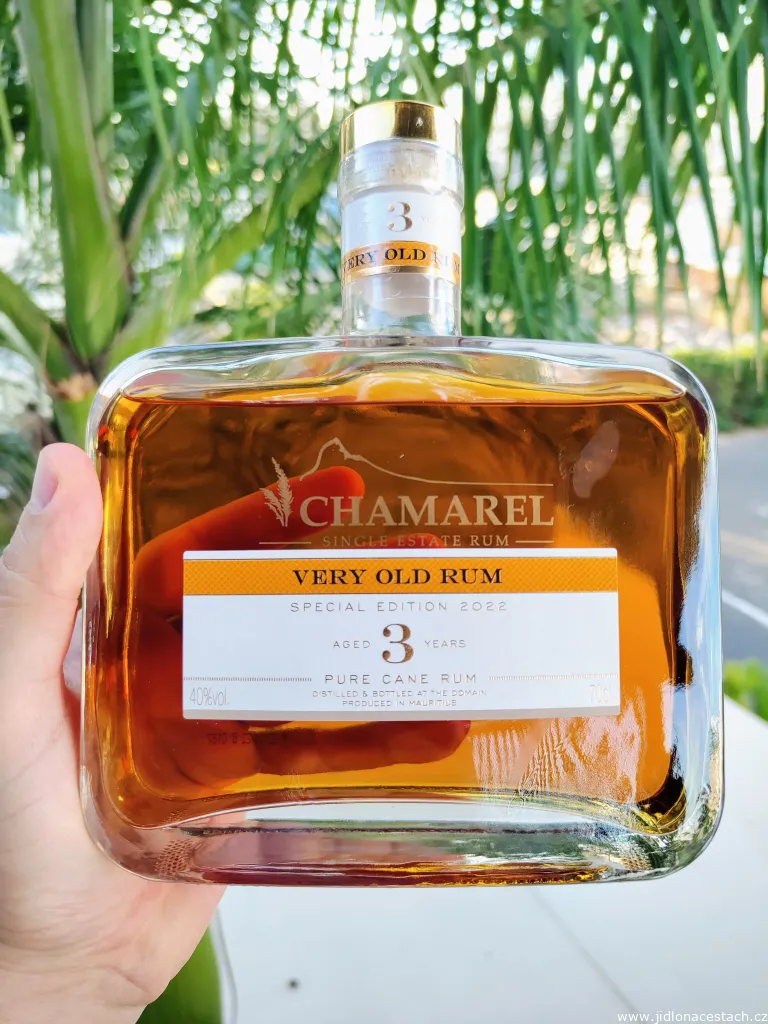
Rum is nothing new here; only its better half is. In the middle of the 18th century, governor Mahé de La Bourdonnais founded the island's first distillery, and what came out of it was something called tafia, a rough forerunner of rum for the locals and for export to Madagascar. Decent rum didn't arrive until 1852, when Pierre Charles Harel tried distilling properly on an estate near Pamplemousses, and from then on the story belongs to the sugar mills: Medine and Grays have been distilling from molasses for about a hundred years, the family-run Saint Aubin built its distillery in 2003, and the youngest of them, Rhumerie de Chamarel, has been working exclusively from juice since 2008. Saint Aubin, for its part, claims it had its first juice rum three years before the law allowed it - the sources don't agree on the year the ban ended.
What a Barrel Does in the Tropics and What VSOP Means
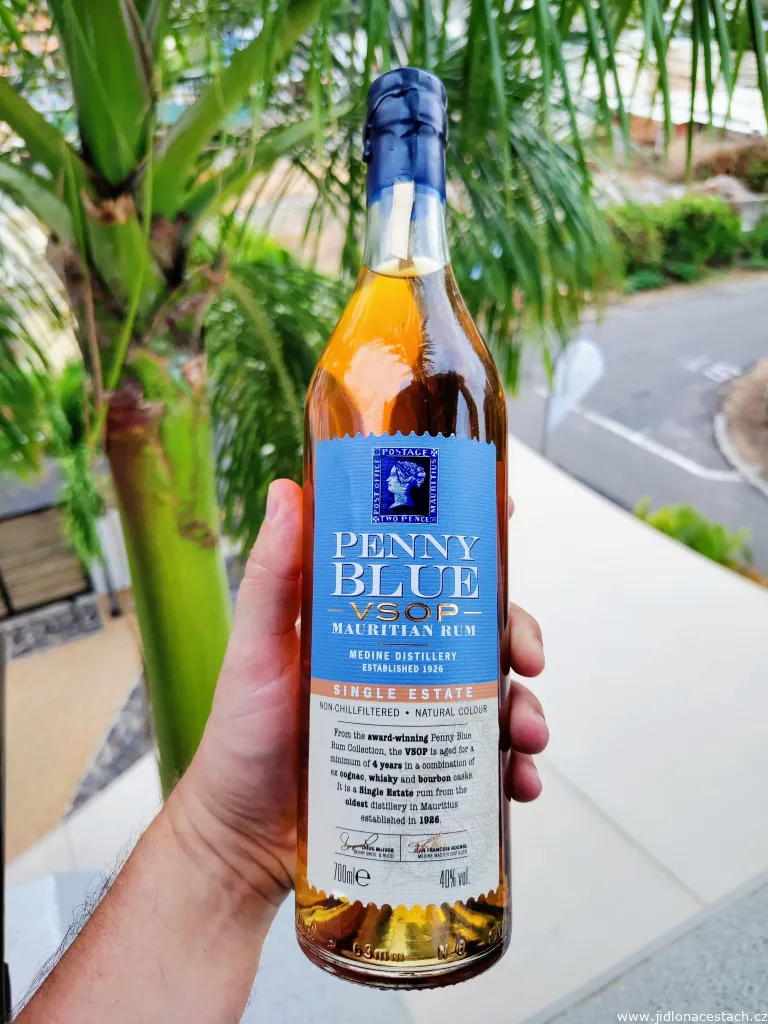
White rum goes straight from the column still into the bottle; brown rum has to spend time in a barrel. Most barrels in the world are made of American white oak and only reach rum after bourbon, which under American law may be aged only in new barrels - rum gets its wood secondhand, and that is its good fortune. In the Mauritian heat, up to a tenth of the barrel evaporates every year. The letters on the label are borrowed from cognac: VS means at least two years in the barrel, VSOP four to five, XO six and more. Penny Blue VSOP from the Medine distillery borrows its name from the most famous Mauritian postage stamp of 1847, rare thanks to a printing error that reads "Post Office" instead of "Post Paid".
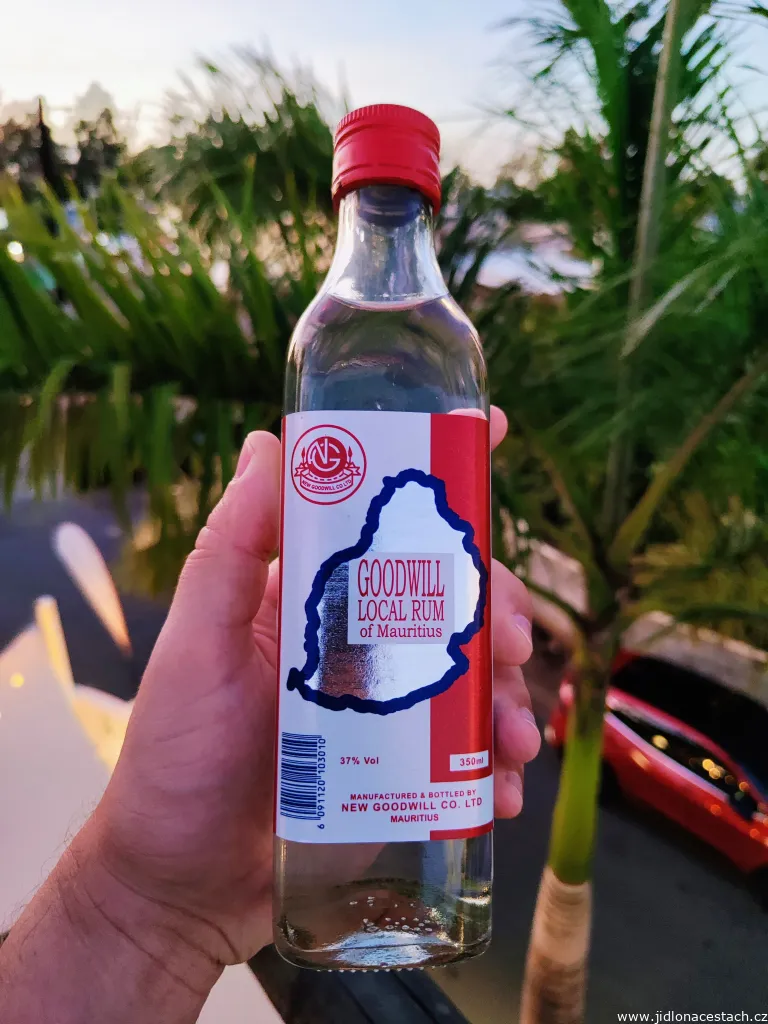
How you drink it depends on the price: the expensive stuff neat and slowly, the cheap stuff with cola or with fruit juice, which island shops sell neat for a few rupees. The cheapest rums, Goodwill among them, are bottled by an association of bottlers that the state pushed into existence in 1961 to keep the domestic spirit under control, and in a cocktail with mango juice they do the job just fine. The map of the island on the Goodwill label is said to be the only map that gets you lost and takes you nowhere. And if you want to bring rum home, don't buy it in a supermarket or at the airport: the website godutyfree.mu takes orders between thirty days and twenty-four hours before departure and hands the bottle over at the airport at the Tax Refund desk - in other words, after you have checked in.
Four Bottles and One Airport Desk
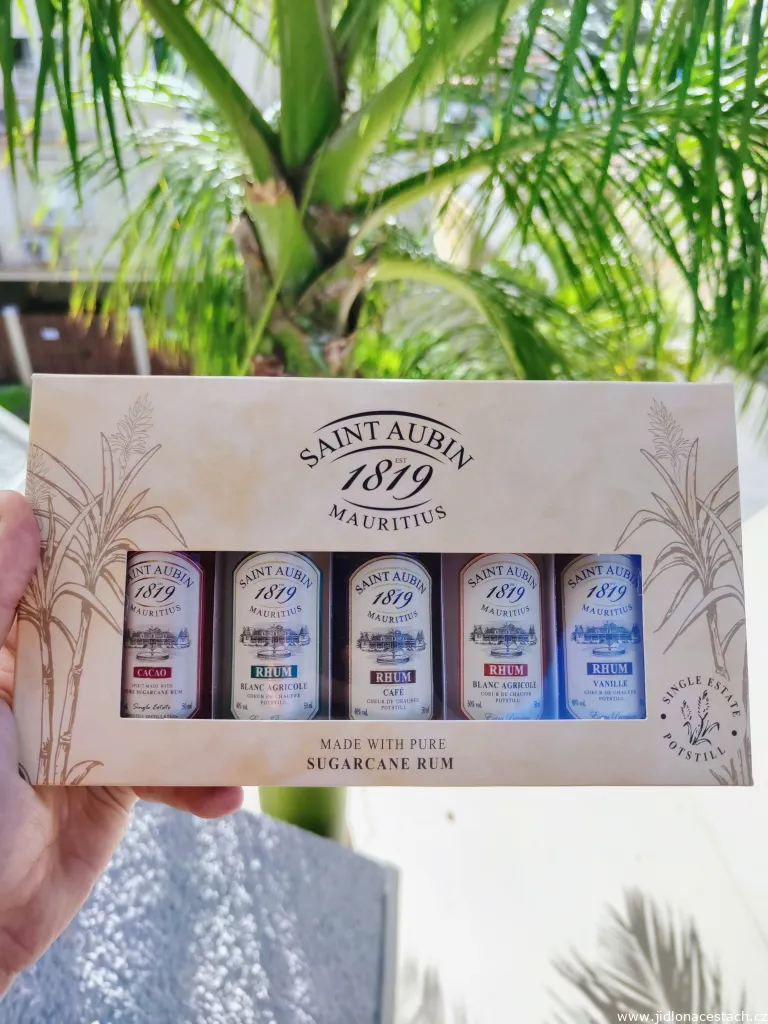
Rhumerie de Chamarel includes the tasting in the price of the tour, and in the shop on site I picked up a three-year-old juice rum for 1,500 MUR (30 EUR), cheaper than in a supermarket. At the Winners supermarket I then bought a four-year-old Penny Blue VSOP for 1,200 MUR (24 EUR), and that is the bottle I would bring back if I were only allowed one: dried fruit and vanilla from the barrel on the nose, round in the mouth, no burn, with a long sweet finish where the molasses comes through. A tasting set of five 50 ml bottles of Saint Aubin cost 750 MUR (15 EUR): the little bottles flavored with coffee, cocoa and vanilla fit in your carry-on, but it is more of a souvenir than a lesson in rum (see what to bring back from Mauritius). A small Goodwill for 150 MUR (3 EUR) went into a cocktail with fruit juice, where nobody expects anything of it.
Back home I sat down at the computer and compared the prices of Penny Blue: 1,200 MUR (24 EUR) in the supermarket, 33.50 EUR in the airport shop and 15.50 EUR if you order in advance and collect it at the desk. So the one bottle I would bring back from Mauritius is at its cheapest exactly at the moment you are already leaving the island.


